

Existing law authorizes a person to file a petition with the superior court seeking a judgment recognizing their change of gender to female, male, or nonbinary, including a person who is under 18 years of age. Existing law authorizes a person to file a single petition to simultaneously change the petitioner's name and recognize the change to the petitioner's gender and sex identifier, as specified. Existing law requires that either of those petitions, if filed by a person under 18 years of age, and any papers associated with the proceeding, be kept confidential by the court. Existing law requires the court to limit access to these records to specified individuals, including, among others, the minor, the minor's parents, and their attorney. This bill would expand the above-described confidentiality protections to other petitioners regardless of age. The bill would also expand these protections to court records associated with a proceeding under separate provisions of existing law for a change of name to conform a petitioner's name to their gender identity. The bill would require the court to limit access to the court records in these proceedings to certain individuals, as specified. The bill would apply these confidentiality provisions in the case of (1) a petition filed on or after July 1, 2026; (2) a petition filed before July 1, 2026, if the petitioner files a request to keep the records confidential, as specified; or (3) records that were previously made confidential by statute or otherwise. The bill would prohibit a person or private entity, other than the petitioner, from publicly posting one of the above-described confidential records on the internet or otherwise. The bill would make a violation of these confidentiality requirements an injury and, commencing 6 months after the effective date of this bill, would authorize a person or entity to institute proceedings for injunctive relief, declaratory relief, or a writ of mandate to enforce them. The bill would require a court to award reasonable attorney's fees and costs to a plaintiff who prevails on a cause of action against a private party pursuant to this authority. The bill would also authorize a petitioner who has been harmed by a disclosure or continuing disclosure of records, as specified, to, commencing 6 months after the effective date of this bill, bring a civil action against a person or private entity that caused the harm. The bill would require a person or private entity found liable to pay actual damages or statutory damages, punitive damages, and reasonable attorney's fees and costs, as specified. The bill would, on or before July 1, 2026, require the Judicial Council, as necessary, to develop forms and rules to implement the bill's provisions. Under the bill, nothing in these provisions would preclude a court from granting a motion to seal all court records of a person's change of name or gender and sex identifier, or both, pursuant to a specified California Rule of Court. The bill would state that whether a transgender person's gender identity conforms with their assigned sex at birth is intimate personal information entitled to protection under the right to privacy, and that a transgender person has a privacy interest in concealing their transgender identity. The bill would make legislative findings and declarations in support of its provisions. The bill would declare that its provisions are severable. Existing constitutional provisions require that a statute that limits the right of access to the meetings of public bodies or the writings of public officials and agencies be adopted with findings demonstrating the interest protected by the limitation and the need for protecting that interest. This bill would make legislative findings to that effect. This bill would declare that it is to take effect immediately as an urgency statute.
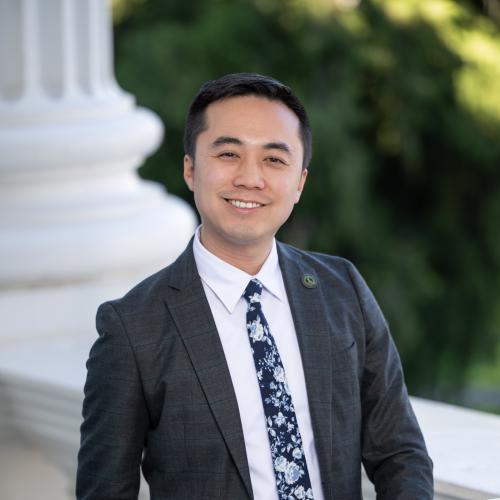
Asm. Alex Lee
Sponsored bills
Existing law establishes procedures for an adult petitioner to obtain a court order for a change of name to conform to the petitioner's gender identity. Existing law requires the court to make an order to show cause with regard to the petition and a process for persons interested to make known any objection to the change of name by filing a written objection within 6 weeks of the making of the order. Existing law requires, in the case of a conforming name change petition for a minor that does not include the signatures of both living parents, the petition and the order to show cause to be served as prescribed on the nonsigning parent within 30 days of the order. This bill, commencing July 1, 2026, would eliminate the mechanism to file an objection to an adult petitioner's change of name to conform to the petitioner's name to the petitioner's gender identity. The bill would require the court to enter an order granting the petition without a hearing within 6 weeks of the petition's filing, as specified. The bill would require, for a change of name to conform a minor petitioner's name to their gender identity signed by all living parents of the minor, the court to enter, within 6 weeks of the filing of the petition and without a hearing, an order that the change of name is granted. The bill would require, if the petition is not signed by all living parents of the minor, the court to make an order reciting specified information, and require the petition and the order to be served on any parent who did not sign the petition within 4 weeks of the date of the order. The bill would require that no hearing date be set unless an objection is timely filed and shows good cause for opposing the name change. Existing law authorizes a person to file a petition with the superior court for a court order to issue a new marriage license and certificate, confidential marriage license and certificate, or birth certificate to reflect a change in gender and sex identifier. Existing law provides a process for specified individuals to be given notice and an opportunity to respond to the petition, as specified, including that any objection to the petition must be filed within 6 weeks of the making of the order or the court will, without hearing, enter an order granting the petition. Existing law requires, if no service on any party is required, the court to grant the petition without a hearing if no written objection is timely filed within 6 weeks of the filing of the petition. Existing law requires the petitioner to file a judgment ordering a new birth certificate or marriage license and certificate to be filed with the State Registrar or county clerk, as applicable, within 30 days from the date of the judgment. This bill, commencing July 1, 2026, would eliminate the requirement that a petitioner file the judgment within 30 days from the date of the judgment.
Existing law prohibits the prosecuting attorney, attorney for the defendant, or investigator for either the prosecution or the defendant from interviewing, questioning, or speaking to a victim or witness whose name has been disclosed pursuant to existing law without first clearly identifying themselves and identifying the full name of the agency by whom they are employed, and identifying whether they represent, or have been retained by, the prosecution or the defendant. Under existing law, if an interview takes place in person, the party is also required to show the victim or witness a business card, official badge, or other form of official identification before commencing the interview or questioning. This bill would require a peace officer, as defined, or a prosecuting attorney, before any initial formal interview of an immediate family member of a person who has been killed or seriously injured by a peace officer, to clearly identify themselves and if the interview takes place in person, to show identification, to inform the person of the status of their family member, to inform the person that they are conducting a formal interview for the purposes of an investigation, as specified, and to inform the person that they have a choice to come to the station for the formal interview if they are asked to go and can have a trusted support person with them. The bill would provide that its provisions do not apply if the immediate family member is under custodial interrogation, as specified, or if the delay would result in the loss or destruction of evidence or pose an imminent threat to public safety. By increasing duties on local law enforcement, this bill would impose a state-mandated local program. The California Constitution requires the state to reimburse local agencies and school districts for certain costs mandated by the state. Statutory provisions establish procedures for making that reimbursement. This bill would provide that, if the Commission on State Mandates determines that the bill contains costs mandated by the state, reimbursement for those costs shall be made pursuant to the statutory provisions noted above.
Existing law establishes the Medi-Cal program, which is administered by the State Department of Health Care Services and under which qualified low-income individuals receive health care services. The Medi-Cal program is, in part, governed and funded by federal Medicaid program provisions. Existing law generally imposes penalties on a person who negligently, willfully, or maliciously discloses the results of a human immunodeficiency virus (HIV) test to a third party in a manner that identifies or provides identifying characteristics of the person to whom the test results apply, as specified. Existing law, notwithstanding the above-described restrictions, authorizes the recording of the HIV test results by the physician who ordered the test in the test subject's medical record and authorizes other disclosure of the results without written authorization of the test subject, or the subject's representative, to the test subject's providers of health care, excluding a regulated health care service plan, for purposes of diagnosis, care, or treatment of the patient. This bill would authorize a provider of health care to disclose the results of an HIV test that identifies or provides identifying characteristics of a Medi-Cal beneficiary without written authorization of the test subject, or the subject's representative, to the Medi-Cal managed care plan to which the beneficiary is assigned, if applicable, and to external quality review organizations conducting external quality reviews of Medi-Cal managed care plans, for the purpose of administering quality improvement programs, including, but not limited to, value-based payment programs and healthy behavior incentive programs, designed to improve HIV care for Medi-Cal beneficiaries. Under the bill, HIV test results that do not identify or provide identifying characteristics of the test subjects would be authorized for disclosure without written authorization by the Medi-Cal managed care plan to departmental staff for the above-described purpose. The bill would make certain clarifying or declaratory statements with regard to related provisions.
The California Environmental Quality Act (CEQA) requires a lead agency, as defined, to prepare, or cause to be prepared, and certify the completion of an environmental impact report on a project that it proposes to carry out or approve that may have a significant effect on the environment or to adopt a negative declaration if it finds that the project will not have that effect. CEQA also requires a lead agency to prepare a mitigated negative declaration for a project that may have a significant effect on the environment if revisions in the project would avoid or mitigate that effect and there is no substantial evidence that the project, as revised, would have a significant effect on the environment. CEQA, until January 1, 2030, exempts from its requirements active transportation plans, pedestrian plans, or bicycle transportation plans for the restriping of streets and highways, bicycle parking and storage, signal timing to improve street and highway intersection operations, and the related signage for bicycles, pedestrians, and vehicles. This bill would extend the operation of the above-mentioned exemption indefinitely. The bill would also exempt a transit comprehensive operational analysis, as defined, a transit route readjustment, or other transit agency route addition, elimination, or modification, from the requirements of CEQA. Because a lead agency would be required to determine whether a plan qualifies for this exemption, the bill would impose a state-mandated local program. CEQA, until January 1, 2030, exempts from its requirements certain transportation-related projects, such as pedestrian and bicycle facilities, transit prioritization projects, public projects located on a site that is wholly within the boundaries of an urbanized area or urban cluster, as provided, for the institution or increase of bus rapid transit, bus, or light rail service, including the construction or rehabilitation of stations, terminals, or existing operations facilities, and public projects for the construction or maintenance of infrastructure of facilities to charge, refuel, or maintain zero-emission public transit buses, trains, or ferries, as provided. CEQA requires, except as provided, those exempted projects to be carried out by a local agency and meet certain requirements, including certain labor requirements. This bill would extend the operation of the above-mentioned exemption until January 1, 2040. The bill would exempt from the requirements of CEQA a public project for the protection and improvement of bus rapid transit, bus, or light rail service, including the protection, operation, and maintenance, public projects for the protection, improvement, institution, or increase of microtransit, paratransit, shuttle, and ferry, and for the protection, maintenance, construction, operation, or rehabilitation of stops that will be exclusively used by zero-emission, near-zero-emission, low oxide of nitrogen engine, compressed natural gas fuel, fuel cell, or hybrid powertrain vehicles, rail or cable cars, rolling stock, or vessels. The bill would, until January 1, 2032, exempt from the requirements of CEQA a public project for the protection, improvement, institution, or increase of microtransit, paratransit, shuttle, bus, ferry, bus rapid transit, or light rail service, including the protection, maintenance, construction, operation, or rehabilitation of stops, stations, terminals, or existing operations facilities, if used primarily by near-zero-emission, low oxide of nitrogen engine, compressed natural gas fuel, or hybrid powertrain vehicles, except as provided. The bill would exclude from this exemption certain public projects for the construction or rehabilitation of a ferry terminal, as provided, and, except as provided, public projects for transit services operated by a transportation network company, as defined. Because a lead agency would be required to determine whether a project qualifies for this exemption, the bill would impose a state-mandated local program. CEQA exempts from its requirements a project that consists exclusively of a combination of any of the components of specified transportation-related projects. This bill would extend the operation of the above-mentioned exemption until January 1, 2040. The bill would, until January 1, 2040, exempt from the requirements of CEQA a project that combines any of those specified transportation-related projects and a housing development project that is either subject to a nondiscretionary approval or is exempt from CEQA, as provided. Because a lead agency would be required to determine whether a project qualifies for this exemption, the bill would impose a state-mandated local program. Existing law exempts from the requirements of CEQA public projects for the institution or increase of passenger rail service, other than light rail service that is eligible for a specified exemption, including the construction or rehabilitation of stations, terminals, or existing operations facilities, which will be exclusively used by zero-emission trains. This bill would extend the operation of the above-mentioned exemption until January 1, 2040. The bill would exempt from the requirements of CEQA public projects for the improvement of passenger rail service, other than light rail service eligible for a specified exemption, including the maintenance of stations, terminals, or existing operations facilities, which will be exclusively used by zero-emission trains, public projects for the maintenance, construction, or rehabilitation of stations, terminals, or existing operations facilities which will be exclusively used by zero-emission certified Tier 4 or cleaner rolling stock or locomotives, as provided. The bill would exclude from this exemption public projects located in certain air basins for the maintenance, construction, or rehabilitation of stations, terminals, or existing operations facilities that will be used by certified Tier 4 or cleaner rolling stock or locomotives that are not zero-emission rolling stock or locomotives. Because a lead agency would be required to determine whether a project qualifies for this exemption, the bill would impose a state-mandated local program. Existing law requires certain CEQA-exempt projects exceeding specified dollar amounts to meet certain criteria, as provided. This bill would instead require certain CEQA-exempt projects that are, based on the project engineer's cost estimate, anticipated to exceed a specified dollar amount, to meet certain criteria, as provided. The bill would require the Office of Land Use and Climate Innovation, beginning January 1, 2026, and every two years thereafter, to adjust these amounts to reflect changes in the Consumer Price Index, as provided, and publish the updated amounts on its internet website. The bill would authorize the Office of Land Use and Climate Innovation to implement, interpret, or make specific that provision without taking any regulatory action. This bill would declare that its provisions are severable. The California Constitution requires the state to reimburse local agencies and school districts for certain costs mandated by the state. Statutory provisions establish procedures for making that reimbursement. This bill would provide that no reimbursement is required by this act for a specified reason.
(1) The United States Constitution generally requires a state to give full faith and credit to the public acts, records, and judicial proceedings of every other state. Existing law generally authorizes a California court or attorney to issue a subpoena if a foreign subpoena has been sought in this state but prohibits the issuance of a subpoena based on another state's law that interferes with a person's right to allow a child to receive gender-affirming health care or gender-affirming mental health care. Existing law generally prohibits a provider of health care, a health care service plan, or a contractor from disclosing medical information regarding a patient, enrollee, or subscriber without first obtaining an authorization unless an exception applies, including that the disclosure is in response to a subpoena. Existing law prohibits a provider of health care, a health care service plan, or a contractor from releasing medical information related to a person or entity allowing a child to receive gender-affirming health care or gender-affirming mental health care in response to a civil action, including a foreign subpoena, based on another state's law that authorizes a person to bring a civil action against a person or entity that allows a child to receive gender-affirming health care or gender-affirming mental health care. This bill would additionally prohibit a provider of health care, a health care service plan, or a contractor from releasing medical information related to a person seeking or obtaining gender-affirming health care or gender-affirming mental health care in response to a criminal or civil action, including a foreign subpoena, based on another state's law that interferes with an individual's right to seek or obtain gender-affirming health care or gender-affirming mental health care. The bill would also prohibit a provider of health care, health care service plan, contractor, or employer from cooperating with or providing medical information to an individual, agency, or department from another state or, to the extent permitted by federal law, to a federal law enforcement agency that would identify an individual and that is related to an individual seeking or obtaining gender-affirming health care, as specified. The bill would prohibit these entities from releasing medical information related to sensitive services, as defined, in response to a foreign subpoena that is based on a violation of another state's laws authorizing a criminal action against a person or entity for provision or receipt of legally protected health care activity, as defined. The bill would also generally prohibit the issuance of a subpoena based on a violation of another state's law that interferes with a person's right to seek or obtain gender-affirming health care or gender-affirming mental health care, as specified. (2) Existing law requires the Department of Justice to maintain the Controlled Substance Utilization Review and Evaluation System (CURES) for the electronic monitoring of the prescribing and dispensing of certain controlled substances by a health care practitioner authorized to prescribe, order, administer, furnish, or dispense those controlled substances. Existing law authorizes the department to enter into an agreement with an entity operating an interstate data sharing hub, or an agency operating a prescription drug monitoring program in another state, for purposes of interstate data sharing of prescription drug monitoring program information. Existing law limits the entities to which data may be provided from CURES, as well as the type of data that may be released and the uses to which it may be put. This bill would prohibit a state or local agency or employee, appointee, officer, contractor, or official or any other person acting on behalf of a public agency from knowingly providing any CURES data or knowingly expending any resources in furtherance of any interstate investigation or proceeding seeking to impose civil, criminal, or disciplinary liability based upon another state's law for the provision or receipt of legally protected health care activity, as defined. The bill would prohibit the department from sharing data with an out-of-state law enforcement agency without a warrant, subpoena, or court order and would prohibit an out-of-state user from providing any data in furtherance of an investigation or proceeding to impose liability based on another state's law for the provision or receipt of legally protected health care activity. This bill would make it a misdemeanor for a person to access the CURES database when not authorized by law and would make it a misdemeanor for a person who is authorized to access the database to knowingly furnish information from the CURES database to a person who is not authorized by law to receive that information. By creating new crimes, the bill would impose a state-mandated local program. (3) This bill would provide that its provisions are severable. (4) This bill would incorporate additional changes to Section 11165 of the Health and Safety Code proposed by AB 82 to be operative only if this bill and AB 82 are enacted and this bill is enacted last. (5) The California Constitution requires the state to reimburse local agencies and school districts for certain costs mandated by the state. Statutory provisions establish procedures for making that reimbursement. This bill would provide that no reimbursement is required by this act for a specified reason. (6) This bill would declare that it is to take effect immediately as an urgency statute.
Under existing law, a prisoner can reduce their term of imprisonment by earning credit for, among other things, continuous incarceration, good behavior, and participation in approved rehabilitative programming. Existing law makes an inmate of a county jail or state prison who has completed training for assignment to a conservation camp, state or county facility, or a correctional institution as an inmate firefighter, or who is assigned to a state or county facility or a correctional institution as an inmate firefighter, and who is eligible to earn one day of credit for every one day of incarceration, instead eligible to earn 2 days of credit for every one day served in that assignment or after completing that training. Existing law authorizes a juvenile court to order placement of a ward at the Pine Grove Youth Conservation Camp if specified criteria are met, including if the county has entered into a contract with the Department of Corrections and Rehabilitation and the department has found the ward amenable. Existing law authorizes the department to enter into contracts with counties to operate the Pine Grove Youth Conservation Camp through a state-local partnership, or other management arrangement, to train justice-involved youth, as specified, in wildland firefighting skills. This bill would require an incarcerated individual hand crew member, in addition to receiving credits, and a ward or youth hand crew member placed at the Pine Grove Youth Conservation Camp to be paid an hourly wage equal to $7.25 while assigned to an active fire incident. The bill would require that wage rate to be reviewed annually. The bill would require the Department of Corrections and Rehabilitation and counties to maintain regulations regarding an administrative adjudication and remedy process for any disputes over sums owned pursuant to these provisions. This bill would declare that it is to take effect immediately as an urgency statute.
Existing law declares every contract by which anyone is restrained from engaging in a lawful profession, trade, or business of any kind to be void, except as expressly provided. Existing law provides for a system of labor standards enforcement administered by the Labor Commissioner. This bill would, for contracts entered into on or after January 1, 2026, make it unlawful to include in any employment contract, or to require a worker to execute as a condition of employment or a work relationship a contract that includes, specified contract terms, including a term that requires the worker to pay an employer, training provider, or debt collector for a debt if the worker's employment or work relationship with a specific employer terminates. The bill would declare these contracts as contracts that restrain a person from engaging in a lawful profession, trade, or business, and as void and contrary to public policy, except as provided. This bill would authorize a worker who has been subjected to the above-described prohibited conduct regarding a contract or its terms or a work representative to bring an action on behalf of that worker, other persons similarly situated, or both, in any court of competent jurisdiction. The bill would make a person who violates these provisions liable for specified civil penalties and relief.
(1) Under existing law, a caregiver who is 18 years of age or older and signs a caregiver's authorization affidavit under penalty of perjury for a minor who lives in their home is authorized to enroll the minor in school and consent to school-related medical care on behalf of the minor. Under existing law, a caregiver who is 18 years of age or older, signs the caregiver's authorization affidavit under penalty of perjury, and who is a certain type of relative of the minor who lives in their home, has the same rights to authorize medical care and dental care for the minor that are given to guardians, as specified. Under existing law, a person who acts in good faith reliance on a completed caregiver's authorization affidavit to provide medical or dental care, without actual knowledge of facts contrary to those stated on the affidavit, is not subject to criminal or civil liability or professional disciplinary action for that reliance, but is not relieved from liability for violations of other provisions of law. This bill, the Family Preparedness Plan Act of 2025, would revise the definition of relative to expand the type of relative who is authorized to execute a caregiver's authorization affidavit and grant them the same rights to authorize school-related medical care, as defined, for the minor that are given to guardians, as specified. By expanding who is authorized to sign a caregiver's authorization affidavit for these purposes under penalty of perjury, this bill would expand the crime of perjury, thereby imposing a state-mandated local program. This bill would amend the statutory form for a caregiver's authorization affidavit. (2) Existing law generally provides for the establishment and administration of guardianships. Existing law authorizes a court to appoint joint guardians of a person, an estate, or a person and an estate. Existing law requires a nomination of a guardian to become effective when made, and remain effective, unless stated otherwise in writing, as specified. This bill would authorize a court, in its discretion, to appoint a custodial parent and a person nominated by the custodial parent as joint guardians of the person of the minor, if the custodial parent will be temporarily unavailable due to specified circumstances, including, among other things, an immigration-related administrative action, as specified. The bill would make all records, petitions, orders, and documents related to these proceedings confidential, as specified. The bill would provide that absence is a basis for a delayed effectiveness of a guardianship and that such circumstances would not be a basis for subsequent legal incapacity for the nomination. (3) Existing law prohibits, except as required by state or federal law or as required to administer a state or federally supported educational program, school officials and employees of a local educational agency, as defined, from collecting information or documents regarding citizenship or immigration status of pupils or their family members. Existing law requires the governing board or body of a local educational agency to perform specified actions relating to pupils and immigration status, including, among others, providing information to parents and guardians, as appropriate, regarding their child's right to a free public education, regardless of immigration status or religious beliefs. Existing law requires the Attorney General, by April 1, 2018, in consultation with the appropriate stakeholders, to publish model policies limiting assistance with immigration enforcement at public schools, to the fullest extent possible consistent with federal and state law, as specified. Existing law requires all local educational agencies to adopt the model policies developed by the Attorney General, or equivalent policies, by July 1, 2018. This bill would revise the information disclosure requirements to require the governing board or body of a local educational agency to provide information related to specified guidance on immigration enforcement issued by the Attorney General and would require that information to be revised as necessary to be consistent with any revisions or updates to the Attorney General's guidance. This bill would also require local educational agencies to revise their model policies as necessary to be consistent with any revisions or updates to the model policies developed by the Attorney General, as specified. By imposing additional duties on local educational agencies, the bill would impose a state-mandated local program. (4) Existing law, the California Child Day Care Facilities Act, provides for the licensure and regulation of child daycare facilities, including daycare centers and daycare homes, by the State Department of Social Services. The act exempts certain types of facilities from licensure under its provisions, including California state preschool programs that meet certain requirements, including, among other things, that the programs are operated by local educational agencies in a school building. Similar to the provisions related to local educational agencies described above, this bill would prohibit licensed child daycare facilities, as defined, employees of licensed child daycare facilities, and license-exempt California state preschool program facilities from collecting information or documents regarding citizenship or immigration status of children or their family members, except as required by state or federal law or as required to administer a state or federally supported educational program. The bill would require the licensee or administrator of a licensed child day care facility, as applicable, to report to the department and the Attorney General any requests for information or access to the facility by an officer or employee of a law enforcement agency. The bill would authorize license-exempt California state preschool program facilities to make that report to the State Department of Education and the Attorney General. The bill would require the State Department of Social Services to provide any information on California state preschool programs collected pursuant to those provisions to the Superintendent of Public Instruction. The bill would require a licensed child daycare facility and a license-exempt California state preschool program facility to first exhaust any parental instruction relating to the child's care found in the child's emergency contact information if an employee of the facility is aware that a child's parent or authorized representative is not available to care for the child. The bill would require licensees or administrators of those facilities to request that parents or authorized representatives update their emergency contact information. The bill would require the Attorney General, by April 1, 2026, in consultation with the appropriate stakeholders, to publish model policies limiting assistance with immigration enforcement at child daycare facilities and license-exempt California state preschool program facilities similar to the model policies developed for local educational agencies described above. The bill would require the State Department of Social Services to inform licensed daycare facilities, and the State Department of Education to inform license-exempt California state preschool program facilities, of the model policies. The bill would require all California state preschool programs to adopt the model policies developed by the Attorney General, or equivalent policies, as soon as possible, but in no event later than July 1, 2026. The bill would require California state preschool programs to update these policies to conform with any revisions or updates to the model policies developed by the Attorney General. The bill would require a licensed child daycare facility and license-exempt California state preschool program facilities to provide the parent or authorized representative with information about how to access those model policies. The bill would require the State Department of Social Services to inform licensed child day care facilities, and the State Department of Education to inform license-exempt California state preschool program facilities, of any revisions or updates to the model policies and require any information, policies, or guidance provided by facilities to parents or authorized representatives to be updated to include any revisions or updates to the model policies issued by the Attorney General. The bill would authorize the State Department of Social Services to administer these provisions by interim licensing standards until regulations are adopted. (5) This bill would provide that its provisions are severable. (6) Existing constitutional provisions require a statute that limits the right of access to the meetings of public bodies or the writings of public officials and agencies to be adopted with findings demonstrating the interest protected by the limitation and the need for protecting that interest. This bill would make legislative findings to that effect. (7) The California Constitution requires the state to reimburse local agencies and school districts for certain costs mandated by the state. Statutory provisions establish procedures for making that reimbursement. This bill would provide that with regard to certain mandates no reimbursement is required by this act for a specified reason. With regard to any other mandates, this bill would provide that, if the Commission on State Mandates determines that the bill contains costs so mandated by the state, reimbursement for those costs shall be made pursuant to the statutory provisions noted above. This bill would incorporate additional changes to Section 234.7 of the Education Code proposed by AB 49, AB 419, or both, to be operative only if this bill and AB 49, AB 419, or both, are enacted and this bill is enacted last.
(1) Existing law prescribes the duties of the State Registrar of Vital Statistics (State Registrar) and local registrars of births and deaths with respect to the registration of certificates of live birth, fetal death, or death, and marriage licenses. Existing law requires the State Registrar to prescribe and furnish all record forms for use in carrying out the provisions governing vital records and prohibits the use of any record form or format other than those prescribed by the State Registrar. Existing law requires every live birth, fetal death, death, and marriage that occurs in the state to be registered with the local registrar. Existing law requires certificates of live birth, fetal death, or death, and a marriage license to include specified information, such as the full name of the child on a certificate of live birth and the full names of the parties to be married on a marriage license. Existing law also requires the county clerk to issue a confidential marriage license, as specified, on a form prescribed by the State Registrar. This bill would require, commencing no earlier than 2 years after an appropriation of funds by the Legislature, the State Registrar to require the use of a diacritical mark on an English letter within a name field to be properly recorded, when applicable, on a certificate of live birth, fetal death, death, marriage license and certificate, or confidential marriage license and certificate, and would require the use of a diacritical mark to be deemed an acceptable entry by the State Registrar. The bill would provide that the absence or presence of a diacritical mark on a certificate of live birth, fetal death, or death, or a marriage license and certificate or confidential marriage license and certificate does not render the document invalid nor affect any constructive notice imparted by proper recordation of the document. The bill would authorize the State Registrar to develop a list of acceptable diacritical marks for use on a certificate of live birth, fetal death, or death, or a marriage license and certificate or confidential marriage license and certificate through all-county letters or similar instructions from the State Registrar without taking further regulatory actions. The bill would authorize the State Registrar to remove any diacritical marks on the birth, fetal death, death, and marriage license and certificate data before furnishing the vital statistics to a federal, state, or local government agency. The bill would authorize, beginning July 1, 2026, if a name is not accurately recorded because of the absence of a diacritical mark on an English letter in any certificate of live birth, fetal death, death, or marriage already registered, the person asserting the omission, or the person's conservator, or if a minor, the person's parent or guardian, to make an affidavit under oath, as specified, stating the changes necessary to make the record correct. The bill would require the affidavit to be supported by the affidavit of one other person having knowledge of the facts and be filed with the State Registrar. The bill would require the State Registrar to, review the request and, if the request is accompanied with the payment of a specified fee, to issue an amendment to any certificate of live birth, fetal death, death, or marriage with the accurate name identified in the request. The bill would also authorize, if a name field of either of the parties married or their parents is not accurately recorded because of the absence of a diacritical mark on an English letter on any confidential license and certificate of marriage already registered, the party asserting the omission to make an affidavit, under oath, stating the changes necessary to make the record correct and file it with the county clerk. The bill would authorize the county clerk to charge a fee, not to exceed the amount of the fee for any other amended confidential marriage license and certificate issued by the county clerk and not to exceed the reasonable cost to provide the amended marriage license and certificate. The bill would require the county clerk to review the amendment for acceptance for filing, and if accepted, file the amendment and note the fact of the amendment, with its date, on the otherwise unaltered original confidential license and certificate of marriage. By requiring the affidavit to be under oath, the bill would expand the crime of perjury, thereby imposing a state-mandated local program. By increasing duties on county clerks, the bill would impose a state-mandated local program. (2) Existing law requires the collection of specified fees for certified copies of a fetal death record, death record, a birth certificate, marriage record, or marriage dissolution record. Existing law requires all applicants for certified copies of the above-described records to pay an additional fee of $3 to be collected by the State Registrar, the local registrar, county recorder, or county clerk, as appropriate. This bill would increase the additional fee charged for certified copies of the above-described records to $5. (3) The California Constitution requires the state to reimburse local agencies and school districts for certain costs mandated by the state. Statutory provisions establish procedures for making that reimbursement. This bill would provide that with regard to certain mandates no reimbursement is required by this act for a specified reason. With regard to any other mandates, this bill would provide that, if the Commission on State Mandates determines that the bill contains costs so mandated by the state, reimbursement for those costs shall be made pursuant to the statutory provisions noted above.