This measure would proclaim April 10, 2026, as Dolores Huerta Day in California and would encourage all public schools and educational institutions to conduct exercises remembering her, recognizing her accomplishments, and familiarizing pupils with her contributions to California.
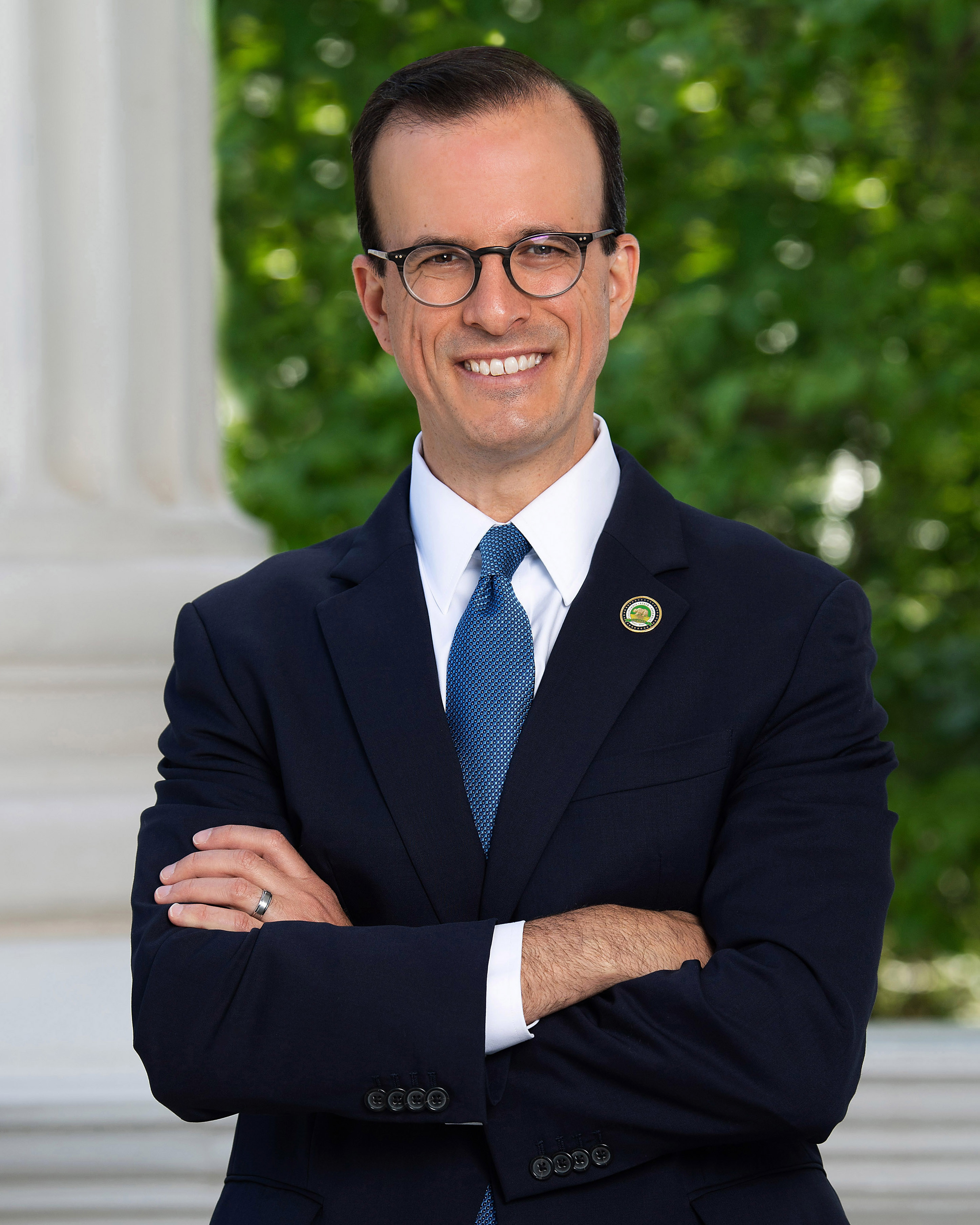
Rep. Marc Berman
Sponsored bills
Maddy summaryCalifornia House Resolution 136 designates the second week of September each year as Home Hardening Week to promote fire safety measures for residents. The resolution cites rising wildfire risks and insurance costs as reasons for encouraging homeowners to use fire-resistant building materials and manage defensible space around their properties. It urges local organizations and county boards of supervisors to distribute information about these protective steps, which studies suggest can significantly increase the likelihood that a home survives a wildfire.
Existing law requires the California Community Colleges, on or before July 1, 2027, to adopt a common course numbering system for all general education requirement courses and transfer pathway courses, and requires each community college campus, on or before July 1, 2027, to incorporate common course numbers from the adopted system into its course catalog. The Budget Act of 2021 allocated $10,000,000 to the Chancellor of the California Community Colleges to establish a workgroup to support the development of that system. That workgroup recommended, among other things, the development of a common course numbering template for each course subject to the requirement described above. This bill would require the Intersegmental Committee of the Academic Senates of the University of California, the California State University, and the California Community Colleges, on or before July 1, 2027, to establish an agreement for implementing streamlined system-level articulation by using the common course numbering templates, rather than individual course review, as provided. If the intersegmental committee has not established an agreement on or before July 1, 2027, the bill would require the respective administrative bodies of the segments, on or before December 31, 2027, to establish an agreement for implementing streamlined system-level articulation by using the common course numbering templates, rather than individual course review, as provided. This bill would require, commencing with the fall term of the 2028–29 academic year, the streamlined system-level articulation agreement to be the only articulation agreement used for community college courses subject to the common course numbering system described above. This bill would require, on or before June 1 of each year, the respective administrative bodies of the California Community Colleges and the California State University, and request the University of California, to publicly post on their respective internet websites a report on the results of the streamlined systemwide articulation agreement, as provided. This bill would require each campus of the California Community Colleges and the California State University, and request each campus of the University of California, to publicly post, on or before June 1 of each year, the name and contact information of the articulation lead or individual responsible for managing the course articulation process at the campus. By imposing additional duties on community college districts, the bill would impose a state-mandated local program. This bill would require the office of the Chancellor of the California Community Colleges, in consultation with the administrative bodies of the California State University and the University of California, to identify a limited-term funding plan that would provide funding to the California State University and the University of California to support the intersegmental implementation of the common course numbering system, as provided. The California Constitution requires the state to reimburse local agencies and school districts for certain costs mandated by the state. Statutory provisions establish procedures for making that reimbursement. This bill would provide that, if the Commission on State Mandates determines that the bill contains costs mandated by the state, reimbursement for those costs shall be made pursuant to the statutory provisions noted above.

Existing law requires the Department of Justice to keep a centralized list of all persons who are licensed firearms dealers and satisfy certain requirements, including having a valid federal firearms license and a regulatory or business license required by local government. Existing law requires the department to remove a person from the list if the person's federal license has expired or been revoked. Existing law, beginning on January 1, 2024, requires the department to conduct inspections of firearms dealers at least every 3 years, except as provided, to ensure compliance with specified requirements. As part of the department's inspections of firearms dealers, existing law requires the department to audit a dealer's records that includes a sampling of at least 25% but no more than 50% of each record type. Existing law requires the department to assess annual fees not to exceed specified amounts to cover the reasonable costs of inspecting and maintaining this list and other similar centralized lists. This bill would require the department to remove from the list a person who fails to comply with the requirements to be on the list and authorize the department to remove a person from the list who fails to remedy specified violations discovered as a result of the above-described inspections. The bill would subject a person removed from the list for failure to remedy specified violations to a fine and would authorize that person to be ineligible to be placed on the list for a period of 2 years. The bill would require the department to conduct a yearly inspection of the 10 firearm dealer locations with the highest percentage of firearms that were recovered by law enforcement and found to be illegally possessed, used in a crime, or suspected to have been used in a crime, as specified, pursuant to a certain yearly report. The bill would, for the fees charged for inspecting and maintaining the above-described lists, instead require the department to assess a reasonable annual fee. The bill would prohibit a fee adjustment from exceeding 15% over the previous year and exceeding the amount necessary to cover the costs described above.
Under existing state law, the Pharmacy Law, the California State Board of Pharmacy licenses and regulates the practice of pharmacy in this state. Existing law sets forth various disciplinary actions, including license suspension or revocation, against licensees for offenses committed under those licensing provisions. Existing law requires discipline proceedings to be conducted in accordance with the administrative adjudicative provisions of the Administrative Procedure Act (APA) . Existing law authorizes an agency to formulate and issue a decision by settlement, as provided, except in an adjudicative proceeding to determine whether an occupational license should be revoked, suspended, limited, or conditioned, existing law prohibits a settlement from being made before issuance of the agency pleading. This bill would authorize the board and licensee to enter into a stipulated settlement and disciplinary order to license discipline without and in advance of the filing of an agency pleading, notwithstanding the above-referenced requirement concerning the APA, and if prescribed conditions are met, including, among others, that the licensee willingly waives the administrative adjudicative procedures of the APA and the licensee submitted mitigation and rehabilitation information, as provided. The bill would require a specified committee of the board to consider the mitigation and rehabilitation information and authorize the committee to extend a stipulated settlement and discipline order offer to the licensee, as provided. The bill would require that the stipulated settlement and disciplinary order be agreed to in writing between the committee and the licensee within 60 calendar days of the date of the licensee's waiver of the administrative adjudicative procedures of the APA, as provided. The bill would provide that the stipulated settlement and disciplinary order is contingent upon approval by the board, as provided.
Maddy summaryThis bill serves as a commemorative resolution to mark the 50th anniversary of the Surface Mining and Reclamation Act of 1975. It does not create new laws or alter existing regulations but instead formally acknowledges the milestone achievement of the original legislation. The measure is intended to honor the history of mining and land reclamation efforts established by the 1975 act.
This measure would acknowledge and celebrate 50 years of coastal protection and affirm the state's longstanding commitment to protecting its coastal waters, as specified.
Maddy summaryThis bill designates June 2026 as Men's Mental Health Month to raise awareness about mental health issues affecting men. The measure is a formal proclamation that does not change laws or allocate funding, but rather encourages public recognition of the topic. Once passed, it serves as an official declaration without imposing new requirements on individuals or organizations.
This measure would declare the month of June 2026 as Alzheimer's Disease and Brain Awareness Month, and would urge all Californians to commemorate the month of June 2026 as Alzheimer's Disease and Brain Awareness Month.
Maddy summaryThis bill designates June 23, 2026, as Social Media Harms Victim Remembrance Day in California. The measure requires the state to officially proclaim this date, creating a specific day for remembrance. It does not change laws or impose new requirements on individuals or organizations. The primary effect is to establish a formal date for commemoration within the state.