

Existing law authorizes cities and counties, subject to certain limitations and approval requirements, to levy a transactions and use tax for general or specific purposes, in accordance with the procedures and requirements set forth in the Transactions and Use Tax Law, including a requirement that the combined rate of all taxes that may be imposed in accordance with that law in the county not exceed 2%. This bill would authorize the Counties of Alameda and Santa Clara to impose a transactions and use tax for general or specific purposes at a rate of no more than 0.5% or 0.625%, respectively, and the City of Santa Fe Springs to impose a transactions and use tax for general or specific purposes at a rate of no more than 1% that, in combination with other transactions and use taxes, would exceed the above-described combined rate limit of 2%, if either county or the city adopts an ordinance proposing the tax and the ordinance proposing the tax is approved by the voters, subject to applicable voter approval requirements, as specified. The bill would repeal this authorization on December 31, 2022, for either county or the city if an ordinance proposing the tax has not been approved by that date in that county or city. The bill would also make a technical conforming correction. This bill would make legislative findings and declarations as to the necessity of a special statute for the Counties of Alameda and Santa Clara and the City of Santa Fe Springs.
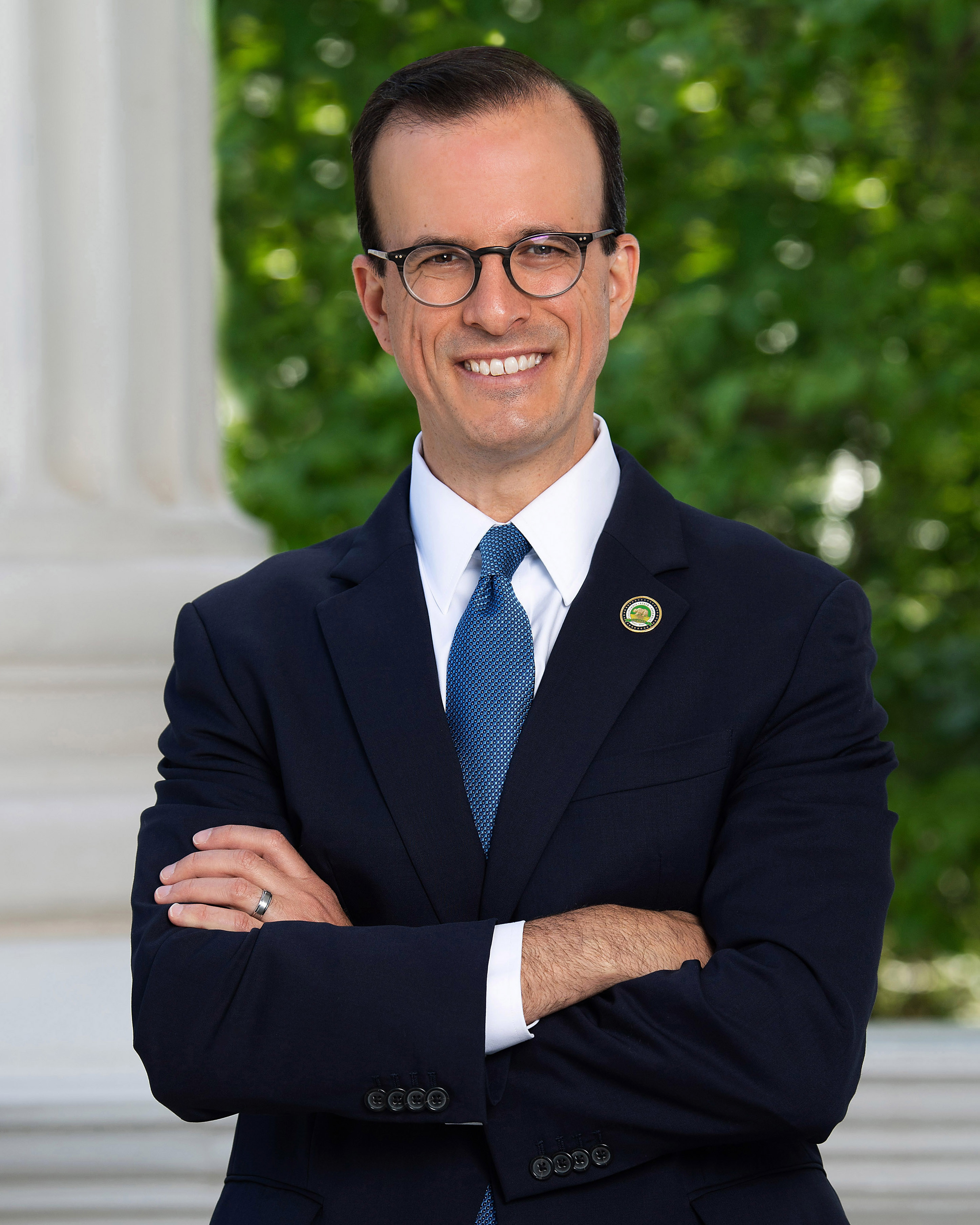
Asm. Marc Berman
Sponsored bills
Existing law authorizes various local governmental entities, subject to certain limitations and approval requirements, to levy transactions and use taxes for general purposes in accordance with the procedures and requirements set forth in the Transactions and Use Tax Law, including a requirement that the combined rate of all taxes that may be imposed in accordance with that law in the county not exceed 2%. This bill would authorize the Peninsula Corridor Joint Powers Board, by a resolution approved by 23 of the board and with the approval of specified entities, to levy a tax pursuant to the Transactions and Use Tax Law at a rate not to exceed 0.125%, with net revenues from the tax to be used by the board for operating and capital purposes of the Caltrain rail service, subject to 23 voter approval of a regional measure submitted by the board to voters of the Counties of San Francisco, San Mateo, and Santa Clara. The bill would authorize the board to exceed the 2% limit described above to impose the retail transactions and use tax. This bill would make legislative findings and declarations as to the necessity of a special statute for the Counties of San Francisco, San Mateo, and Santa Clara.
(1) Existing law creates the Metropolitan Transportation Commission (MTC) as a regional agency in the 9-county San Francisco Bay area with comprehensive regional transportation planning and other related responsibilities. Existing law creates the Bay Area Toll Authority (BATA) as a separate entity governed by the same governing board as MTC and makes BATA responsible for the programming, administration, and allocation of toll revenues from the state-owned toll bridges in the San Francisco Bay area. Existing law authorizes BATA to increase the toll rates for certain purposes, including to meet its bond obligations, provide funding for certain costs associated with the bay area state-owned toll bridges, including for the seismic retrofit of those bridges, and provide funding to meet the requirements of certain voter-approved regional measures. Existing law provided for submission of 2 regional measures to the voters of 7 bay area counties in 1988 and 2004 relative to specified increases in bridge auto tolls on the bay area state-owned toll bridges, subject to approval by a majority of the voters. This bill would require the City and County of San Francisco and the other 8 counties in the San Francisco Bay area to conduct a special election, to be known as Regional Measure 3, on a proposed increase in the amount of the toll rate charged on the state-owned toll bridges in that area to be used for specified projects and programs. The bill would require BATA to select the amount of the proposed increase, not to exceed $3, to be placed on the ballot for voter approval. If approved by the voters, the bill would authorize BATA, beginning 6 months after the election approving the toll increase, to phase in the toll increase over a period of time and to adjust the toll increase for inflation after the toll increase is phased in completely. The bill would specify that, except for the inflation adjustment, providing funding to meet the requirements of voter approved regional measures, and as otherwise specified in statute, the toll increase adopted pursuant to the results of this election may not be changed without the statutory authorization of the Legislature. By requiring this election, the bill would impose a state-mandated local program. The bill would require BATA to reimburse from toll revenues, as specified, the counties and the City and County of San Francisco for the cost of submitting the measure to the voters. This bill would require BATA to establish an independent oversight committee within 6 months of the effective date of the Regional Measure 3 toll increase with a specified membership, to ensure the toll revenues generated by the toll increase are expended consistent with a specified expenditure plan. The bill would require BATA to submit an annual report to the Legislature on the status of the projects and programs funded by the toll increase. (2) Existing law authorizes BATA to vary the toll structure on each of the bay area state-owned toll bridges and to provide discounts for vehicles classified by BATA as high-occupancy vehicles. This bill would additionally authorize BATA to provide discounts for vehicles that pay for tolls electronically or through other non-cash methods and to charge differential rates based on the chosen method. This bill, with respect to the Regional Measure 3 toll increase, would require BATA to provide a 50% discount on the amount of that toll increase on the 2nd bridge crossing for those commuters using a two-axle vehicle, who pay tolls electronically or through other noncash methods and who cross 2 bridges during commute hours, as specified. Existing law, if BATA establishes high-occupancy vehicle lane fee discounts or access for vehicles classified by BATA as high-occupancy vehicles for any bridge, requires BATA to collaborate with the Department of Transportation to reach agreement on how the occupancy requirements shall apply on each segment of highway that connects with that bridge. This bill would instead require BATA to establish those occupancy requirements in consultation with the department. (3) Existing law establishes the San Francisco Bay Area Rapid Transit District (BART) , governed by a board of directors, with specified powers and duties relative to the construction and operation of a rapid transit system. This bill would create the Independent Office of the BART Inspector General within BART. The bill would provide for the board of directors to nominate 3 persons to the Governor and for the Governor to appoint one of those nominees to serve as the Inspector General for a 4-year term. The bill would require the Inspector General to be removed from office by the board of directors, subject to the approval of the Governor, under certain circumstances. The bill would specify the duties and responsibilities of the Inspector General and would require the Inspector General to submit an annual report to the board of directors and the Legislature. The bill would provide for the office to receive $1,000,000 from an allocation of bridge toll revenue from BATA and, in the second and subsequent years of operation of the office, would authorize BATA to increase that amount, as specified. The bill would make these provisions operative upon an affirmative vote to increase tolls on the bay area state-owned toll bridges pursuant to Regional Measure 3 or related provisions. (4) Existing law authorizes the Santa Clara Valley Transportation Authority (VTA) to conduct, administer, and operate a value pricing high-occupancy toll (HOT) lane program on 2 corridors included in the high-occupancy vehicle lane system in Santa Clara County. Existing law authorizes a HOT lane established as part of this program on State Highway Route 101 to extend into the County of San Mateo as far as the high-occupancy lane in the County of San Mateo existed as of January 1, 2011, subject to agreement of the City/County Association of Governments of San Mateo County. This bill would delete the authorization for a HOT lane to extend into the specified portion of San Mateo County as part of a value pricing program established on 2 corridors in Santa Clara County. The bill would instead authorize VTA to specifically conduct, administer, and operate a value pricing high-occupancy toll lane program on State Highway Route 101 in San Mateo County in coordination with the City/County Association of Governments of San Mateo County and the San Mateo County Transportation Authority, as prescribed. (5) The California Constitution requires the state to reimburse local agencies and school districts for certain costs mandated by the state. Statutory provisions establish procedures for making that reimbursement. This bill would provide that, if the Commission on State Mandates determines that the bill contains costs mandated by the state, reimbursement for those costs shall be made pursuant to the statutory provisions noted above.
(1) Existing law, the Political Reform Act of 1974, provides for the comprehensive regulation of campaign financing and activities. The act requires a committee that supports or opposes ballot measures to name and identify itself using a name or phrase that clearly identifies the economic or other special interests of its major donors of $50,000 or more. The act also requires that the identity of a common employer shared by major donors be disclosed. This bill would repeal these provisions. (2) The act defines "expenditure" as a payment, a forgiveness of a loan, a payment of a loan by a 3rd party, or an enforceable promise to make a payment, unless it is clear from the surrounding circumstances that it is not made for political purposes. This bill, which would be known as the California Disclose Act, would describe circumstances in which a payment would be made for political purposes within the meaning of the definition of "expenditure." (3) The act prohibits a candidate or committee from sending a mass mailing unless the name, street address, and city of the candidate or committee are shown on the outside of each piece of mail in the mass mailing, as specified. This bill would additionally require the name of such an entity to be disclosed in a mass electronic mailing, as defined, that the entity sends. The bill would provide that these disclosure requirements do not apply if the mass mailing or mass electronic mailing is paid for by an independent expenditure. (4) The act prohibits a candidate, committee, or slate mailer organization from expending campaign funds to pay for specified telephone calls that advocate support of, or opposition to, a candidate, ballot measure, or both, unless the name of the organization that authorized or paid for the call is disclosed to the recipient of the call during the course of each call. This bill would instead apply these requirements to a candidate, a candidate controlled committee established for an elective office for the controlling candidate, a political party committee, and a slate mailer organization that expends campaign funds to pay for such telephone calls. The bill would provide that these disclosure requirements do not apply if the telephone call is paid for by an independent expenditure. (5) The act also requires advertisements, as defined, to include prescribed disclosure statements, including, among others, a requirement that the disclosure statements include the names of the persons who made the 2 highest cumulative contributions, as defined, to the committee paying for the advertisement. This bill would repeal and recast provisions of the act relating to advertisement disclosure statements. The bill would revise the definition of "advertisement" to exclude a number of communications, including communications that involve wearing apparel, sky writing, and certain electronic media communications, as specified. The bill would also replace existing advertisement disclosure statements with newly prescribed disclosure statements that identify the name of the committee paying for the advertisement and the top contributors to that committee. The bill would define "top contributors" for purposes of these provisions as the persons from whom the committee paying for the advertisement received its 3 highest cumulative contributions, as specified. The bill would exempt certain committees, including committees that make independent expenditures totaling $1,000 or more in a calendar year, from the requirement to disclose the top contributors in advertisement disclosure statements. The bill would also prescribe location and format criteria for the disclosure statements that are specific to radio and telephone, television and video, print, and electronic media advertisements. (6) The act imposes, in addition to other penalties, a fine of up to triple the amount of the cost of an advertisement on a person who violates the disclosure requirements for advertisements. This bill would revise the scope of violations subject to that fine by specifying that it applies to certain disclosure requirements and intentional violations. (7) The act prohibits a person from making a contribution as an intermediary on behalf of another person without disclosing to the recipient of the contribution specified information about both the intermediary and the source of the contribution. The act also prohibits a person from making a contribution to a committee on the condition or with the agreement that it will be contributed to a particular candidate unless the contribution is disclosed in compliance with those requirements for contributions made by an intermediary. This bill would prohibit a person from making a contribution to a committee or candidate that is earmarked unless the contribution is disclosed in compliance with the requirements for contributions made by an intermediary. The bill would also describe circumstances in which a contribution is deemed to be earmarked. The bill would impose additional disclosure requirements in connection with earmarked contributions from one committee to another. (8) Because a violation of the act is punishable as a misdemeanor, this bill would impose a state-mandated local program. The California Constitution requires the state to reimburse local agencies and school districts for certain costs mandated by the state. Statutory provisions establish procedures for making that reimbursement. This bill would provide that no reimbursement is required by this act for a specified reason. (9) The Political Reform Act of 1974, an initiative measure, provides that the Legislature may amend the act to further the act's purposes upon a 23 vote of each house of the Legislature and compliance with specified procedural requirements. This bill would declare that it furthers the purposes of the act. This bill would declare that it is to take effect immediately as an urgency statute.
Existing law establishes rules of the road for the operation of a vehicle on state highways and roads. Existing law requires motor vehicles being driven outside of a business or residence district in a caravan or motorcade, whether or not towing other vehicles, to be operated so as to allow sufficient space and in no event less than 100 feet between each vehicle or combination of vehicles so as to enable any other vehicle to overtake or pass. Existing law authorizes the Department of Transportation, in coordination with the Department of the California Highway Patrol, to conduct testing of technologies that enable drivers to safely operate motor vehicles with less than 100 feet between each vehicle or combination of vehicles and would exempt motor vehicles participating in this testing from the above-described rule. Existing law requires the department to report its findings from the testing to the Legislature on or before July 1, 2017. Existing law repeals these provisions on January 1, 2018. This bill would postpone that repeal until January 1, 2020, and would require the department to submit an updated report to the Legislature on or before July 1, 2019. The bill would prohibit a person from operating a motor vehicle participating in this testing unless the person holds a valid driver's license of the appropriate class for the participating vehicle.
(1) The Planning and Zoning Law requires a city or county to adopt a general plan for land use development within its boundaries that includes, among other things, a housing element. Existing law provides for various reforms and incentives intended to facilitate and expedite the construction of affordable housing. This bill would authorize a city, county, or city and county, including a charter city, charter county, or charter city and county, to establish by ordinance a housing sustainability district that meets specified requirements, including authorizing residential use within the district through the ministerial issuance of a permit. The bill would authorize the city, county, or city and county to apply to the Department of Housing and Community Development for approval for a zoning incentive payment and require the city, county, or city and county to provide specified information about the proposed housing sustainability district ordinance. The bill would require the department to approve a zoning incentive payment if the ordinance meets the above-described requirements and the city's housing element is in compliance with specified law. The bill would also require the department, each October 1 following the approval of the housing sustainability district, to issue a certificate of compliance if the city, county, or city and county meets specified criteria pertaining to the continued compliance with these provisions or to deny certification, as provided. The bill would provide that a city, county, or city and county with a housing sustainability district would be entitled to a zoning incentive payment, subject to appropriation of funds for that purpose, and require that 12 the amount be provided upon zone approval by the department and 12 the amount upon verification by the department of the issuance of permits for the projected units of residential construction within the zone, provided that the city, county, or city and county has received a certificate of compliance for the applicable year. The bill, if the city, county, or city and county reduces the density of sites within the district from specified levels, would require the city, county, or city and county to return the full amount of zoning incentive payments it has received to the department. The bill would also authorize a developer to develop a project in a housing sustainability district in accordance with the already existing land use approval procedures that would otherwise apply to the parcel in the absence of the establishment of the housing sustainability district pursuant to its provisions, as provided. The bill would authorize a city, county, or city and county to incorporate provisions in its housing sustainability district ordinance prescribing the contents of an application for a permit for residential development, to adopt design review standards, and to charge a project application fee to defray the costs of preparation, adoption, and administration of the housing sustainability district plan, as provided. The bill would require that a housing sustainability district ordinance be effective for no more than 10 years, but would authorize the city, county, or city and county to renew the ordinance for not more than 10 years. The bill would also require that prevailing wages be paid, and a skilled workforce employed, in connection with all projects within the housing sustainability district, as provided. The bill would establish procedures for review of an application by an approving authority, including requiring the approving authority to conduct a public hearing on an application and issue a written decision within 120 days of receipt of the application. The bill, if a proposed development within a housing sustainability district includes any parcels being used for affordable housing, would require that the approving authority condition approval of the application on the applicant's agreement to replace those affordable housing units. The bill would also prescribe procedures for review of a decision of the approving authority to deny or approve with conditions an application for a permit in the superior court. The bill would authorize the department to adopt, amend, and repeal standards, forms, or definitions to implement its provisions and exempt those standards, forms, or definitions from specified provisions of the Administrative Procedure Act governing rulemaking. The bill would require the department to publish a report containing specified information about the housing sustainability district program on its Internet Web site no later than November 1, 2018, and each November 1 thereafter. (2) The California Environmental Quality Act (CEQA) requires a lead agency, as defined, to prepare, or cause to be prepared, and certify the completion of, an environmental impact report (EIR) on a project that it proposes to carry out or approve that may have a significant effect on the environment or to adopt a negative declaration if it finds that the project will not have that effect. CEQA also requires a lead agency to prepare a mitigated negative declaration for a project that may have a significant effect on the environment if revisions in the project would avoid or mitigate that effect and there is no substantial evidence that the project, as revised, would have a significant effect on the environment. This bill would require a lead agency, when designating housing sustainability districts, to prepare an EIR for the designation, as specified. The bill would exempt from CEQA housing projects undertaken in the housing sustainability districts that meet specified requirements. (3) This bill would declare that its provisions are not severable. The bill would also make findings that it addresses a matter of statewide concern. (4) This bill would incorporate additional changes to Section 65582.1 of the Government Code proposed by SB 35 to be operative only if this bill and SB 35 are enacted and this bill is enacted last.
Existing law requires the Natural Resources Agency, in collaboration with the Ocean Protection Council, to create, update biannually, and post on an Internet Web site a Planning for Sea Level Rise Database describing steps being taken throughout the state to prepare for, and adapt to, sea level rise. Existing law further requires that various public agencies and private entities provide to the agency, on a biannual basis, sea level rise planning information, as defined, that is under the control or jurisdiction of the public agencies or private entities, and requires the agency to determine the information necessary for inclusion in the database, as prescribed. Existing law repeals these provisions on January 1, 2018. This bill would postpone that repeal until January 1, 2023.
Under existing law, the Public Utilities Commission has regulatory authority over public utilities, including water corporations, as defined. Under the Public Utilities Act, a public utility is required to seek commission approval prior to selling, leasing, assigning, mortgaging, or otherwise disposing of or encumbering any property necessary or useful in the performance of its duties to the public. Existing law authorizes regional park and open-space districts to acquire, and to lease or dispose of, real property, and rights in real property, within or without the regional district, that are necessary to the full exercise of the regional district's powers. This bill would authorize the San Jose Water Company to sell lands in the Upper Guadalupe River watershed, including the Los Gatos Creek and Saratoga Creek watersheds, to the Midpeninsula Regional Open Space District until January 1, 2023, as specified. The bill would require the water company to invest the net proceeds, if any, from the sale of land authorized by the bill in water system infrastructure, plant, facilities, and properties that are necessary or useful in the performance of its duties to the public. The bill would require the investment of the net proceeds to be included among the water company's other utility property upon which the commission authorizes the water company to earn a reasonable rate of return, as specified. The bill would provide that these requirements apply to the investment of the net proceeds from the sale for a period of 8 consecutive years, as prescribed, and would require the balance of any net proceeds and interest on the proceeds that is not invested after the 8-year period to be allocated solely to the water company ratepayers.
This measure would recognize September 11, 2017, as a day of solemn commemoration and extend the Legislature's deepest sympathies to the victims of the September 11, 2001 attacks.
Existing law provides for apprenticeship programs within the Division of Apprenticeship Standards, which is within the Department of Industrial Relations, sponsored by specific entities and employers, and requires the Chief of the Division of Apprenticeship Standards to perform various functions with respect to apprenticeship programs and the welfare of apprentices. This bill would require the Division of Apprenticeship Standards, in collaboration with the California Firefighter Joint Apprenticeship Committee (CAL-JAC) , to develop a statewide firefighter preapprenticeship program designed to recruit candidates from underrepresented groups. This bill would require the preapprenticeship program to meet specified objectives. This bill would also require CAL-JAC to deliver the pilot classes established by the preapprenticeship program using existing facilities and training models. This bill would require CAL-JAC to provide the program model to fire protection agencies, and would authorize a fire protection agency to then use that model and related resources to establish a local preapprenticeship program for recruiting candidates from underrepresented groups. This bill would reference an appropriation made in the Budget Act of 2017–18 to the division to establish the preapprenticeship program and would require the division to use those funds for specified purposes. This bill would declare that it is to take effect immediately as an urgency statute.