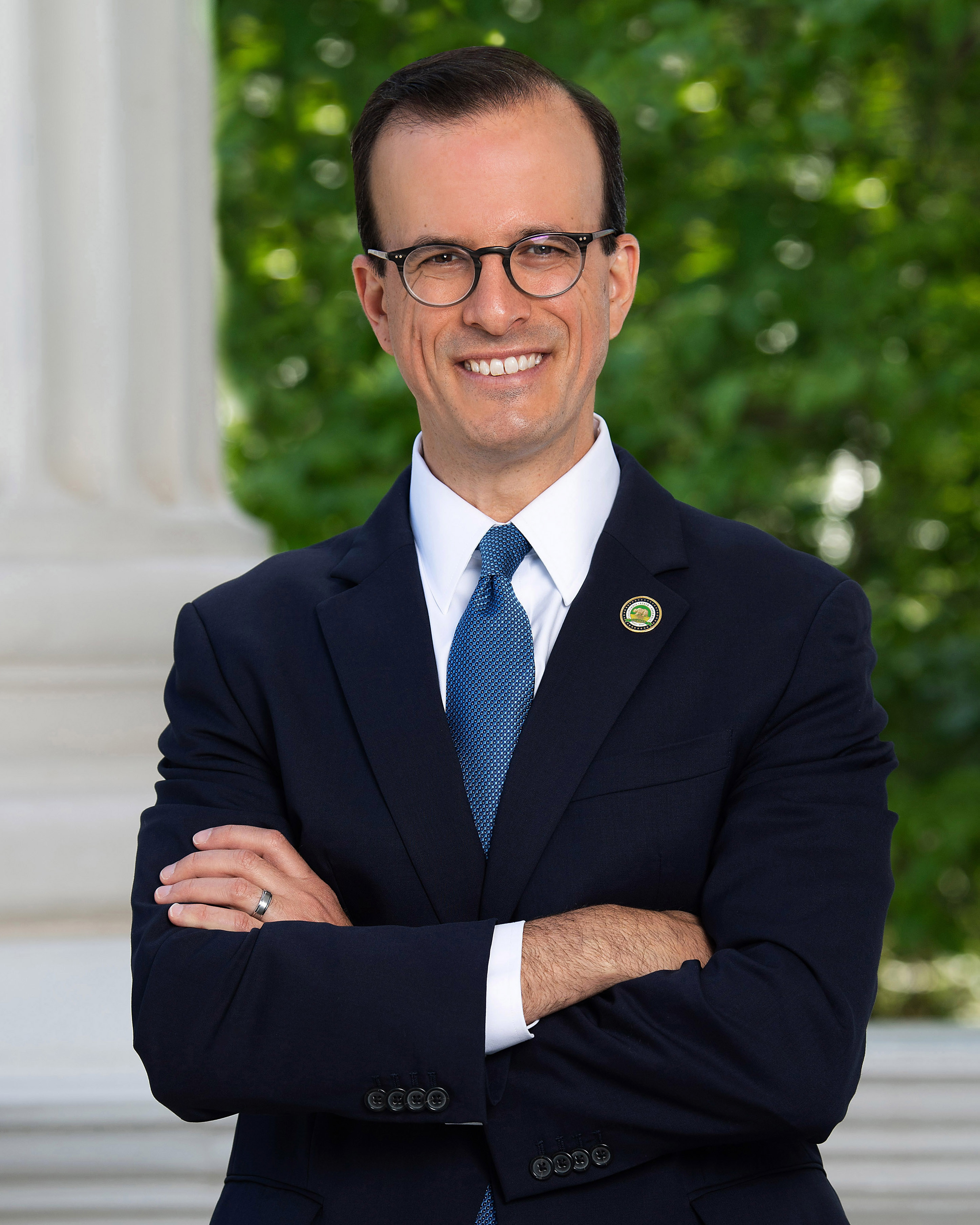
Photo of Marc Berman
D California Assembly · District 23 On the 2026 ballot

Asm. Marc Berman

Compare
Total votes
21,430
all sessions
Attendance
95%
1,013 missed
Near the chamber average
With party
99%
of cast votes
Near the chamber average
Bipartisan score
0%
crosses aisle rarely
Near the chamber average
Sponsored
2,112
bills & resolutions
Near the chamber average
Committees
8
assignments
2,112 bills and resolutions

Sponsored bills

Total
2,112
Primary
229
Co-sponsor
1,883
This page
2,112
matching current filters
Co-sponsor SCR 137
Signed into law · California Senate · Co-sponsor
Relative to Foster Care Month.

This measure would recognize the month of May 2018 as Foster Care Month as an opportunity to raise awareness about the challenges that children, and particularly lesbian, gay, bisexual, transgender, queer, and questioning (LGBTQ) youth, face in the foster care system, as specified.

Signed into law May 29, 2018 1 co-sponsor
Primary AB 2278
In committee · California Assembly · Lead sponsor
Local Government Renewable Energy Self-Generation Program.

Under existing law, the Public Utilities Commission has regulatory authority over public utilities, including electrical corporations. Existing law authorizes the commission to fix the rates and charges for every public utility and requires that those rates and charges be just and reasonable. Existing law authorizes a local government to receive a bill credit, as specified, to be applied to a designated benefiting account for electricity exported to the electrical grid by an eligible renewable generating facility, as defined, and requires the commission to approve a rate tariff for the benefiting account. Existing law provides specific rules for the calculation of these bill credits. Under existing law, an electrical corporation is obligated to provide a bill credit to a benefiting account designated by a local government only until the combined statewide cumulative rated generating capacity of all eligible renewable generating facilities within the service territories of the state's 3 largest electrical corporations reaches 250 megawatts. Existing law provides that any bill credit applicable to a benefiting account is credited to the generation component of electricity usage charges and reduces the bill up to the amount of those charges during a billing cycle. If the bill credit exceeds the generation component in a billing cycle, the surplus is carried over as a financial credit to the next billing cycle, except that when the last billing cycle of a 12-month period is reached, any remaining credit is reset to zero. These provisions are known as the Local Government Renewable Energy Self-Generation Program. This bill would revise how the bill credit is calculated, as specified, and, for these purposes, would require the electrical corporation, until January 1, 2044, to use the time-of-use periods and seasonal definitions that were in effect on January 1, 2017. The bill would require a tariff approved by the commission as part of the program to remain in effect for the operating life of the associated eligible renewable generating facility. The bill would repeal the requirement that when the last billing cycle of a 12-month period is reached, any remaining credit is reset to zero. The bill would prohibit the commission from implementing its provisions unless the commission determines that the implementation of these provisions would not result in cost shifting among customers. Under existing law, a violation of the Public Utilities Act or an order or direction of the commission is a crime. Because the provisions of this bill would require an order or other action of the commission to implement, and a violation of that order or action would be a crime, the bill would impose a state-mandated local program. The California Constitution requires the state to reimburse local agencies and school districts for certain costs mandated by the state. Statutory provisions establish procedures for making that reimbursement. This bill would provide that no reimbursement is required by this act for a specified reason.


In committee May 25, 2018 0 co-sponsors
Primary AB 2607
In committee · California Assembly · Lead sponsor
Veterans: Medical Foster Home Pilot Program.

Existing law establishes the Department of Veterans Affairs, which is responsible for administering various programs and services for the benefit of veterans. Existing law provides for the licensure of residential care facilities for the elderly, community care facilities, and residential care facilities for persons with chronic, life-threatening illness by the State Department of Social Services. Existing law exempts from the application of these provisions specified facilities, including general acute care hospitals and clinics. Existing law authorizes the California State Auditor, upon the request by the Joint Legislative Audit Committee and to the extent funding is available, to audit a state or local governmental agency, as defined, or any other publicly created entity. Existing law, Chapter 650 of the Statutes of 2014, established the Medical Foster Home Pilot Program from June 1, 2015, until January 1, 2018, which authorized a United States Department of Veterans Affairs (USDVA) facility to establish a medical foster home that is not subject to licensure or regulation as a residential care facility for the elderly, a community care facility, or a residential care facility for persons with chronic, life-threatening illness, pursuant to specified federal requirements. Existing law required the USDVA facility establishing the home to agree to be subject to the jurisdiction of the California State Auditor, and further required the USDVA to obtain criminal background information for caregivers and specified individuals residing in the home. This bill would reestablish the Medical Foster Home Pilot Program, until January 1, 2022, under substantially similar requirements as the previous pilot program. The bill would state the intent of the Legislature that the California State Auditor, through a request to the Joint Legislative Audit Committee, conduct an audit evaluating the pilot program created by this bill no sooner than January 1, 2020, as specified. The bill additionally would require medical foster home caregivers and individuals, other than veteran residents, over 18 years of age and who reside in the medical foster home to register as independent home care aides, under existing provisions, including a background examination, as specified. An applicant for registration as an independent home care aide is required to submit to the State Department of Social Services a signed declaration, under penalty of perjury, regarding any prior criminal convictions. By requiring additional individuals to register as independent home care aides, the bill would expand the scope of the crime of perjury, thereby imposing a state-mandated local program. The California Constitution requires the state to reimburse local agencies and school districts for certain costs mandated by the state. Statutory provisions establish procedures for making that reimbursement. This bill would provide that no reimbursement is required by this act for a specified reason.
In committee May 25, 2018 0 co-sponsors
Co-sponsor AB 1886
In committee · California Assembly · Co-sponsor
Payment of expenses.

Existing law requires that all expenses authorized and necessarily incurred to prepare for and conduct an election be paid from the county treasuries, except as otherwise provided. This bill would require the state to pay expenses authorized and necessarily incurred to prepare for and conduct certain vacancy elections, as specified.

In committee May 25, 2018 1 co-sponsor
Co-sponsor AB 2265
In committee · California Assembly · Co-sponsor
High school diplomas: State Seal of STEM.

Existing law establishes the Golden State Seal Merit Diploma for the purpose of recognizing pupils who have mastered the high school curriculum. Existing law also establishes the State Seal of Biliteracy to recognize high school graduates who have attained a high level of proficiency in speaking, reading, and writing in one or more languages in addition to English. This bill would establish a State Seal of STEM to recognize high school graduates who have attained a high level of proficiency in science, technology, engineering, and mathematics fields. The bill would establish criteria for the receipt of the State Seal of STEM, would require the Superintendent of Public Instruction to prepare and deliver to participating school districts an appropriate insignia to be affixed to pupil diplomas or transcripts, and would require participating school districts to maintain appropriate records and affix the appropriate insignia to diplomas or transcripts of recipient pupils. The bill would not become operative until both (1) data from the statewide administration of specified state science assessments are available and (2) the State Board of Education, in a public meeting, makes specified declarations. The bill's provisions would be inoperative on July 31, 2026, and repealed on January 1, 2027.

In committee May 25, 2018 1 co-sponsor
Co-sponsor ACR 213
Signed into law · California Assembly · Co-sponsor
Autism: sensory-friendly movie screenings.

This measure would declare the support of the Legislature for the expansion of sensory-friendly movie screenings and similar programs for people with autism, and would encourage families to attend a sensory-friendly movie screening during April 2018, which is National Autism Awareness Month.

Signed into law May 24, 2018 1 co-sponsor
Co-sponsor AJR 37
Signed into law · California Assembly · Co-sponsor
Relative to the Armenian Genocide.

This measure would, among other things, designate the year 2018 as "State of California Year of Commemoration of the Anniversary of the Armenian Genocide of 1915–1923," would designate April 24, 2018, as "State of California Day of Commemoration of the 103rd Anniversary of the Armenian Genocide of 1915–1923," and would call upon the President of the United States and the United States Congress to formally and consistently reaffirm the historical truth that the atrocities committed against the Armenian people constituted genocide.

Signed into law May 24, 2018 1 co-sponsor
Showing 1,821 to 1,830 of 2,112 bills