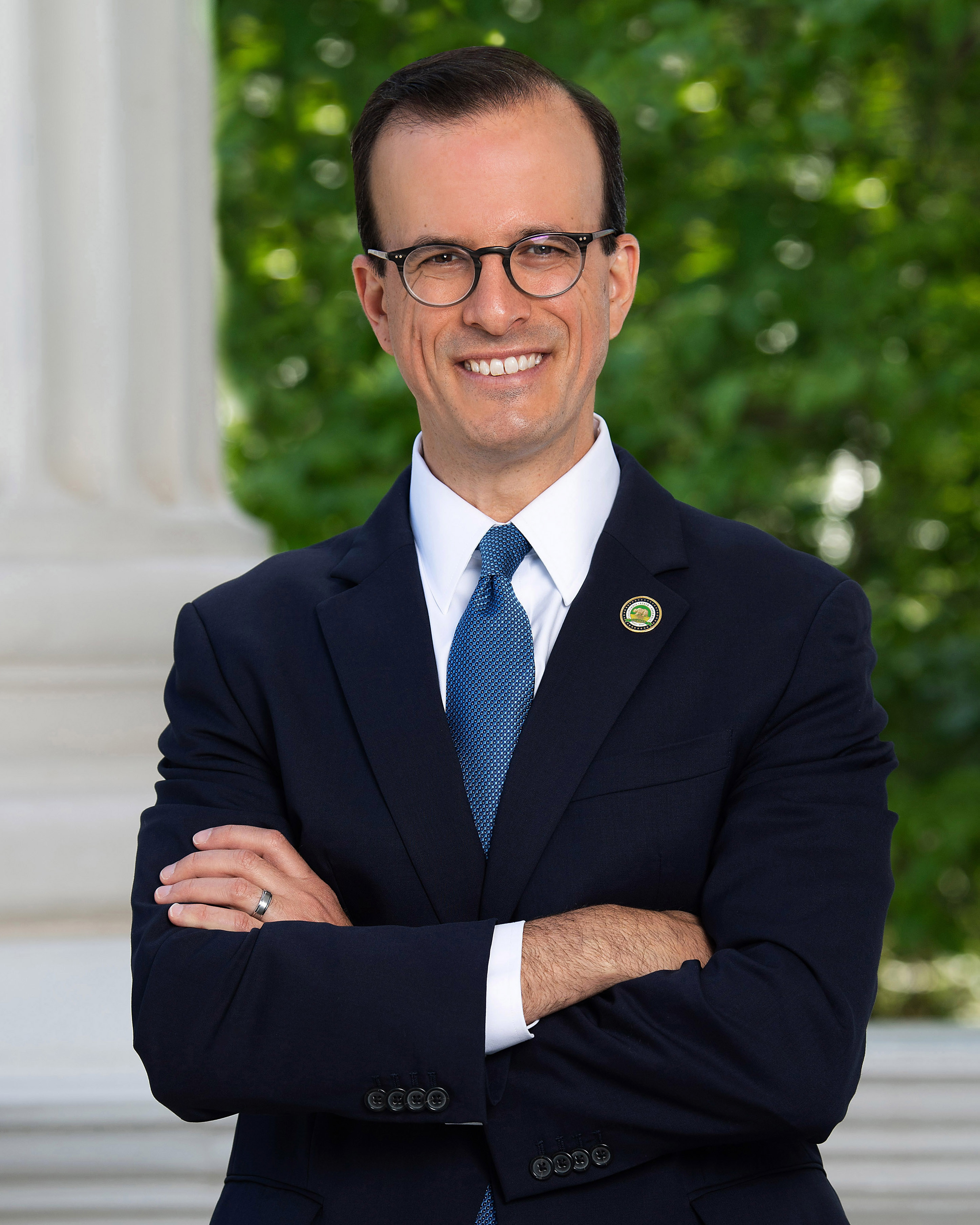
Photo of Marc Berman
D California Assembly · District 23 On the 2026 ballot

Asm. Marc Berman

Compare
Total votes
21,430
all sessions
Attendance
95%
1,013 missed
Near the chamber average
With party
99%
of cast votes
Near the chamber average
Bipartisan score
0%
crosses aisle rarely
Near the chamber average
Sponsored
2,112
bills & resolutions
Near the chamber average
Committees
8
assignments
2,112 bills and resolutions

Sponsored bills

Total
2,112
Primary
229
Co-sponsor
1,883
This page
2,112
matching current filters
Co-sponsor SJR 22
Signed into law · California Senate · Co-sponsor
Relative to the Tijuana River Valley.

This measure would urge the federal government and the United States Section of the International Boundary and Water Commission to take immediate action to adequately address cross-border pollution in the Tijuana River Valley.

Signed into law Sep 11, 2018 1 co-sponsor
Co-sponsor SCR 110
Signed into law · California Senate · Co-sponsor
Relative to sex characteristics.

This measure would, among other things, call upon stakeholders in the health professions to foster the well-being of children born with variations of sex characteristics through the enactment of policies and procedures that ensure individualized, multidisciplinary care, as provided.

Signed into law Sep 11, 2018 1 co-sponsor
Co-sponsor SJR 14
Signed into law · California Senate · Co-sponsor
Relative to Confederate names and statues.

This measure would urge the Congress and the President of the United States to rename any federal buildings, parks, roadways, highway markers, landmarks, or other federally owned property, such as United States military bases, that bear the names of elected or military leaders of the Confederate States of America and would urge the Congress that statues or busts of elected or military leaders of the Confederate States of America in the United States Capitol be removed and placed in museums where they can be viewed in proper historic context.

Signed into law Sep 11, 2018 1 co-sponsor
Primary AB 2230
Signed into law · California Assembly · Lead sponsor
Civil actions.

(1) Existing law authorizes a court to determine a motion for a new trial or a motion to set aside and vacate a judgment within 60 days after the mailing of notice of entry of judgment by the clerk of the court, or 60 days after service on the moving party by any party of written notice of entry of judgment, or, if that notice has not been given, within 60 days after filing the first notice of intention to move for a new trial or to set aside and vacate a judgment. This bill would extend each of the periods described above to 75 days and make nonsubstantive, technical changes to these provisions. (2) Existing law establishes procedures for conducting discovery in civil actions. Existing law provides that, in the case of interrogatories, demands for inspection, and requests for admissions, a party who objects to a discovery response for specified reasons may file a motion to compel a further response. Under the California Rules of Court, this motion must be accompanied by a separate statement providing information necessary to understand each discovery request and all the responses to it that are at issue. This bill would allow the court to require, in lieu of a separate statement, a concise outline of the discovery request and each response in dispute. The bill would provide that these provisions would become operative on January 1, 2020.

Signed into law Sep 10, 2018 0 co-sponsors
Co-sponsor SB 100
Signed into law · California Senate · Co-sponsor
California Renewables Portfolio Standard Program: emissions of greenhouse gases.

(1) Under existing law, the Public Utilities Commission (PUC) has regulatory authority over public utilities, including electrical corporations, while local publicly owned electric utilities, as defined, are under the direction of their governing boards. The California Renewables Portfolio Standard Program requires the PUC to establish a renewables portfolio standard requiring all retail sellers, as defined, to procure a minimum quantity of electricity products from eligible renewable energy resources, as defined, so that the total kilowatthours of those products sold to their retail end-use customers achieve 25% of retail sales by December 31, 2016, 33% by December 31, 2020, 40% by December 31, 2024, 45% by December 31, 2027, and 50% by December 31, 2030. The program additionally requires each local publicly owned electric utility, as defined, to procure a minimum quantity of electricity products from eligible renewable energy resources to achieve the procurement requirements established by the program. The Legislature has found and declared that its intent in implementing the program is to attain, among other targets for sale of eligible renewable resources, the target of 50% of total retail sales of electricity by December 31, 2030. This bill would revise the above-described legislative findings and declarations to state that the goal of the program is to achieve that 50% renewable resources target by December 31, 2026, and to achieve a 60% target by December 31, 2030. The bill would require that retail sellers and local publicly owned electric utilities procure a minimum quantity of electricity products from eligible renewable energy resources so that the total kilowatthours of those products sold to their retail end-use customers achieve 44% of retail sales by December 31, 2024, 52% by December 31, 2027, and 60% by December 31, 2030. Under existing law, a local publicly owned electric utility is not required to procure more than a specified minimum quantity of eligible renewable energy resources under the program if it receives more than 50% of its retail sales from hydroelectric generation, as specified. This bill would revise those provisions, limit the applicability of this exception to large hydroelectric generation, and reduce that threshold to 40%. (2) Existing law establishes the California Environmental Protection Agency, establishes the State Air Resources Board within the agency as the entity with responsibility for control of emissions from motor vehicles, and designates the state board as the air pollution control agency for all purposes set forth in federal law. The California Global Warming Solutions Act of 2006 establishes the state board as the state agency charged with monitoring and regulating sources of emissions of greenhouse gases that cause global warming. The Warren-Alquist State Energy Resources Conservation and Development Act establishes the State Energy Resources Conservation and Development Commission (Energy Commission) and requires it to conduct an ongoing assessment of the opportunities and constraints presented by all forms of energy, to encourage the balanced use of all sources of energy to meet the state's needs, and to seek to avoid possible undesirable consequences of reliance on a single source of energy. This bill would state that it is the policy of the state that eligible renewable energy resources and zero-carbon resources supply 100% of retail sales of electricity to California end-use customers and 100% of electricity procured to serve all state agencies by December 31, 2045. The bill would require that the achievement of this policy for California not increase carbon emissions elsewhere in the western grid and that the achievement not allow resource shuffling. The bill would require the PUC and the Energy Commission, in consultation with the state board, to take steps to ensure that a transition to a zero-carbon electric system for the State of California does not cause or contribute to greenhouse gas emissions increases elsewhere in the western grid. The bill would require the PUC, Energy Commission, state board, and all other state agencies to incorporate that policy into all relevant planning. The bill would require the PUC, Energy Commission, state board, and all other state agencies to ensure actions taken in furtherance of these purposes achieve specified objectives. The bill would require the PUC, Energy Commission, and state board to utilize programs authorized under existing statutes to achieve that policy and, as part of a public process, issue a joint report to the Legislature by January 1, 2021, and every 4 years thereafter, that includes specified information relating to the implementation of the policy. (3) Under existing law, a violation of the Public Utilities Act or any order, decision, rule, direction, demand, or requirement of the PUC is a crime. Because certain of the provisions of this bill would be a part of the act and because a violation of an order or decision of the PUC implementing its requirements would be a crime, the bill would impose a state-mandated local program. By expanding the requirements placed upon a local publicly owned electric utility, the bill would impose a state-mandated local program. The California Constitution requires the state to reimburse local agencies and school districts for certain costs mandated by the state. Statutory provisions establish procedures for making that reimbursement. This bill would provide that no reimbursement is required by this act for specified reasons.


Signed into law Sep 10, 2018 1 co-sponsor
Co-sponsor ACR 215
Signed into law · California Assembly · Co-sponsor
Relative to the 23 Asilomar AI Principles.

This measure would express the support of the Legislature for the 23 Asilomar AI Principles as guiding values for the development of artificial intelligence and of related public policy.

Signed into law Sep 7, 2018 1 co-sponsor
Primary AB 2552
Vetoed · California Assembly · Lead sponsor
Elections: ballot contents.

Existing law sets forth various ballot printing specifications, including a requirement that each group of candidates to be voted on be preceded on the ballot by the designation of the office for which they are running, and the words "vote for one" or "vote for no more than two," or more, according to the number to be nominated or elected. This bill would require that the number of candidates to be nominated or elected be printed in boldface type or in a contrasting color that is not black or gray. By requiring local elections officials to revise the content of ballots, this bill would create a state-mandated local program. The bill would require the Secretary of State to establish a ballot design advisory committee to make recommendations for improving ballot design and the readability of ballot instructions. The bill would require the committee to make its recommendations by January 1, 2020. The California Constitution requires the state to reimburse local agencies and school districts for certain costs mandated by the state. Statutory provisions establish procedures for making that reimbursement. This bill would provide that, if the Commission on State Mandates determines that the bill contains costs mandated by the state, reimbursement for those costs shall be made pursuant to the statutory provisions noted above.

Vetoed Sep 7, 2018 0 co-sponsors
Co-sponsor ACR 277
Signed into law · California Assembly · Co-sponsor
Relative to Epilepsy Awareness Month.

This measure would proclaim November 2018 as Epilepsy Awareness Month and call for a recommitment to increasing awareness and understanding of those living with epilepsy.

Signed into law Sep 7, 2018 1 co-sponsor
Co-sponsor AJR 46
Signed into law · California Assembly · Co-sponsor
Federal zero tolerance immigration policy: family separation.

This measure would urge President Trump, United States Attorney General Sessions, the United States Department of Justice, the United States Department of Homeland Security, and all other relevant federal departments to immediately cease the implementation of the "zero tolerance" federal immigration policy and to not propose any additional inhumane immigration policies in the future. The measure would further call for compassion and decency for all individuals, families, and children who arrive at our borders seeking a better life.

Signed into law Sep 6, 2018 1 co-sponsor
Showing 1,711 to 1,720 of 2,112 bills