

Existing law requires a school district or county superintendent of schools maintaining a kindergarten or any of grades 1 to 12, inclusive, to provide a needy pupil, as defined, one nutritionally adequate free or reduced-price meal during each schoolday, and authorizes the school district or county superintendent of schools to use funds available from any federal program, including the federal School Breakfast Program, or state program to comply with that requirement, as provided. This bill would authorize a school district, county office of education, private nonprofit school, charter school, or residential child care institution, as defined, that participates in the federal School Breakfast Program, commencing with the 2019–20 school year, after submitting certain documentation to the State Department of Education for approval, to provide universal breakfast, to the maximum extent practicable. The bill would define "universal breakfast" to mean a nutritionally adequate breakfast that complies with, and qualifies for reimbursement under, the federal School Breakfast Program and that is provided to every pupil at no charge. Existing law imposes various requirements relating to the nutritional quality of meals and other food and drinks provided to pupils, including breakfasts and lunches provided to pupils using state funds and all food and drinks sold on public school campuses, as provided. Existing law requires the department to ensure that the nutrition levels of meals served to schoolage children pursuant to the federal National School Lunch Act be of the highest quality and greatest nutritional value possible. This bill would revise those nutritional quality requirements to require that those breakfasts and lunches qualify for reimbursement under, and other food and drinks sold on public school campuses are consistent with the requirements for, the most current meal pattern for the federal School Breakfast Program or the federal School Lunch Program, as specified. The bill would revise the requirement on the department to instead require the department to monitor schools participating in the federal National School Lunch Program or federal School Breakfast Program to ensure that the nutrition levels of meals qualify those meals for reimbursement under those same federal laws. Existing law authorizes the governing board of any school district to establish cafeterias in the schools under its jurisdiction, and authorizes the moneys received for the sale of food or for any services performed by the cafeterias to be paid into the county treasury to the credit of the cafeteria fund of the particular school district. Existing law requires the cafeteria fund to be used only for those expenditures authorized by the governing board of the school district that are defined in the California School Accounting Manual. This bill would authorize the governing board of a school district to authorize expenditures from the cafeteria fund or cafeteria account to provide universal breakfast. The bill would provide that the cost of purchasing a mobile food facility may be a charge against the cafeteria fund, upon prior approval by the department. The bill would require a local educational agency that uses federal reimbursements from any of the federal child nutrition programs to purchase a mobile food facility to use the mobile food facility only to support the administration of those federal child nutrition programs, and would require that a mobile food facility used for any purposes other than to support the administration of federal child nutrition programs be purchased entirely from funding sources other than the cafeteria fund. Existing law authorizes the department to award grants of up to $15,000 per schoolsite on a competitive basis to school districts, county superintendents of schools, or entities approved by the department, limited to an amount subject to budget appropriations each fiscal year, for nonrecurring expenses incurred in initiating or expanding specified school breakfast programs and summer food service programs. This bill would specify that the grants may be expended for a federal summer meals program, instead of a summer food service program.
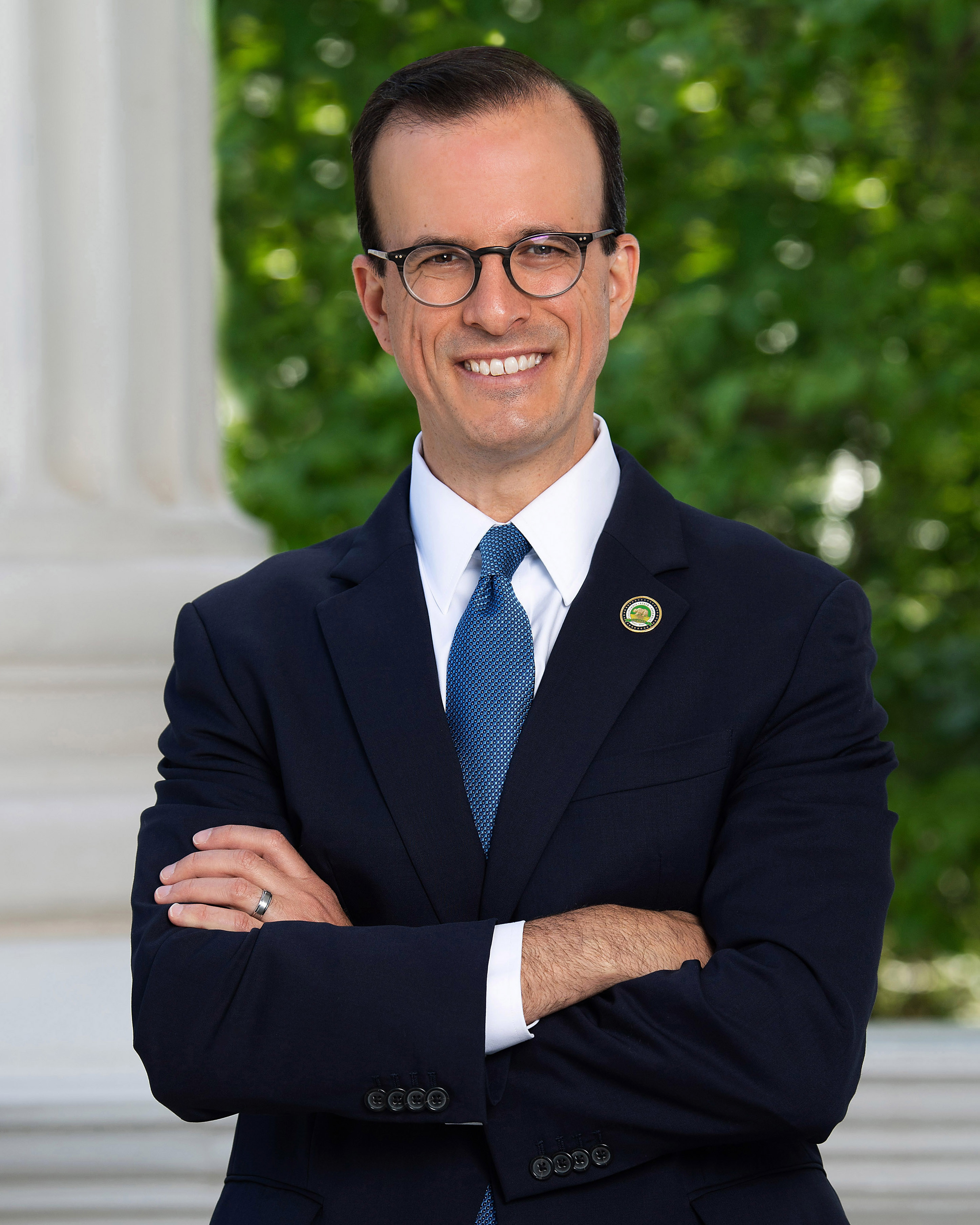
Asm. Marc Berman
Sponsored bills
Existing law, the Licensed Marriage and Family Therapist Act, the Educational Psychologist Practice Act, the Clinical Social Worker Practice Act, and the Licensed Professional Clinical Counselor Act, provides for the licensure and regulation of marriage and family therapists, educational psychologists, clinical social workers, and professional clinical counselors, respectively, by the Board of Behavioral Sciences. Existing law requires a person applying for licensure as a marriage and family therapist, educational psychologist, clinical social worker, or professional clinical counselor to complete specified coursework and training, requires licensees to complete specified continuing education requirements, and requires a licensee on inactive status to complete certain continuing education requirements as a condition of having his or her license reactivated. This bill, on or after January 1, 2021, would require an applicant for licensure as a marriage and family therapist, an educational psychologist, a clinical social worker, or a professional clinical counselor to complete a minimum of 6 hours of coursework or applied experience under supervision in suicide risk assessment and intervention. The bill would require, as a one-time requirement, a licensed marriage and family therapist, educational psychologist, clinical social worker, or professional clinical counselor to have completed this suicide risk assessment and intervention training requirement prior to the time of his or her first renewal after January 1, 2021. The bill would also require an applicant for reactivation or for reinstatement to an active license status on or after January 1, 2021, to have completed this suicide risk assessment and intervention training requirement. The bill would require that proof of compliance with requirements be certified under penalty of perjury and be retained for submission to the board upon request. By expanding the crime of perjury, the bill would impose a state-mandated local program. The California Constitution requires the state to reimburse local agencies and school districts for certain costs mandated by the state. Statutory provisions establish procedures for making that reimbursement. This bill would provide that no reimbursement is required by this act for a specified reason.
Existing law, the Alcoholic Beverage Control Act, is administered by the Department of Alcoholic Beverage Control and regulates the granting of licenses for the manufacture, distribution, and sale of alcoholic beverages within the state. Under existing law, any violation of the Alcoholic Beverage Control Act is a misdemeanor, as provided. This bill would require a beer wholesaler to comply with specified requirements for any sale or offer of sale of beer within the state. By expanding existing crimes by imposing additional duties on a licensee under the Alcoholic Beverage Control Act, the bill would impose a state-mandated local program. The California Constitution requires the state to reimburse local agencies and school districts for certain costs mandated by the state. Statutory provisions establish procedures for making that reimbursement. This bill would provide that no reimbursement is required by this act for a specified reason.
Under existing law, a person may not be registered to vote except by affidavit of registration. Existing law authorizes a person who is at least 16 years of age and otherwise meets all voter eligibility requirements to preregister to vote by submitting his or her affidavit of registration, which, if properly executed, will be deemed effective as of the date the affiant will be 18 years of age. Existing law requires a county elections official to prepare specified information on registered voters in the county, including the total number of voters and the number of voters registered as preferring each qualified political party, and to provide notice to the Secretary of State that the information is available. This bill would require a county elections official to also include specified information on persons who have preregistered to vote. By imposing additional duties on county elections officials, the bill would impose a state-mandated local program. Existing law provides that certain information on a voter's affidavit of registration, including the voter's home address and signature, is confidential and prohibits disclosure of the information except in specified circumstances. This bill would additionally provide that the affidavit of registration of a preregistered person who is not yet a registered voter is confidential, and would prohibit its disclosure to any person without exception. This bill would incorporate additional changes to Section 2187 of the Elections Code proposed by AB 3258 to be operative only if this bill and AB 3258 are enacted and this bill is enacted last. The California Constitution requires the state to reimburse local agencies and school districts for certain costs mandated by the state. Statutory provisions establish procedures for making that reimbursement. This bill would provide that, if the Commission on State Mandates determines that the bill contains costs mandated by the state, reimbursement for those costs shall be made pursuant to the statutory provisions noted above.
Existing law requires that the vote by mail ballot be made available to any registered voter. Existing law requires a county elections official to establish a free access system that allows a vote by mail voter to learn if his or her vote by mail ballot was counted and, if not, the reason why the ballot was not counted. Existing federal law, the Help America Vote Act of 2002 (HAVA) , provides federal funding for states to carry out specified activities, such as improving voting systems and technology and methods for casting and counting votes. This bill would require the Secretary of State to establish a system that a county elections official may use to allow a vote by mail voter to track and receive information about his or her vote by mail ballot through the mail system and as the vote by mail ballot is processed by the county elections official. The bill would require the Secretary of State to make the system available for use by each county and would authorize a county to use the system to satisfy the requirement to establish the existing free access system described above. The bill would require the Secretary of State to use federal funds provided to the state pursuant to HAVA to develop the system, and would require the Secretary of State to implement these provisions only to the extent that these funds are available.
Existing law requires the governing board or body of a local educational agency that serves pupils in grades 7 to 12, inclusive, to, before the beginning of the 2017–18 school year, adopt a policy on pupil suicide prevention, as specified, that specifically addresses the needs of high-risk groups. This bill would require the governing board or body of a local educational agency that serves pupils in grades 7 to 12, inclusive, to review, at minimum every 5th year, its policy on pupil suicide prevention and, if necessary, update its policy. By imposing additional duties on local educational agencies, the bill would impose a state-mandated local program. The California Constitution requires the state to reimburse local agencies and school districts for certain costs mandated by the state. Statutory provisions establish procedures for making that reimbursement. This bill would provide that, if the Commission on State Mandates determines that the bill contains costs mandated by the state, reimbursement for those costs shall be made pursuant to the statutory provisions noted above.
Existing law authorizes the Department of Motor Vehicles to establish contracts for electronic programs that allow qualified private industry partners to join the department in providing services that include processing and payment programs for vehicle registration and titling transactions, and services related to reporting vehicle sales and producing temporary license plates. Existing law requires the department to charge a $3 transaction fee for the provision of the information and services, and to deposit the fees collected into the Motor Vehicle Account. Existing law authorizes the private industry partner to pass on the transaction fee to the customer, as specified. Existing law requires the department, for a specified period, to charge private industry partners an additional $1 transaction fee for the implementation of the private industry partners' proportionate share of departmentwide system improvements. Existing law prohibits a private industry partner from passing on the $1 fee to the customer. This bill would delete the prohibition against passing on the $1 transaction fee to the consumer. The bill would specify that the $1 is to be imposed both in addition to, and in accordance with, the $3 transaction fee. Existing law authorizes the Department of Motor Vehicles to allow a person to submit any document required to be submitted to the department by using electronic media, as specified, instead of requiring the actual submittal of the original document. If a signature is required on a document in order to complete a transaction, the requirement may be satisfied for an electronically submitted document if the signature is also submitted electronically and the department retains information verifying the identity of the person submitting the electronic signature. This bill would eliminate the requirement that the department retain information verifying the identity of the person submitting the electronic signature. The bill would make additional technical, nonsubstantive changes. This bill would declare that it is to take effect immediately as an urgency statute.
Existing law provides for various public social services programs for purposes of providing on behalf of the general public, and within the limits of public resources, reasonable support and maintenance for needy and dependent families and persons, including, among others, the California Work Opportunity and Responsibility to Kids (CalWORKs) program, under which each county provides cash assistance and other benefits to qualified low-income families and individuals, CalFresh, under which supplemental nutrition assistance benefits allocated to the state by the federal government are distributed to eligible individuals by each county, and the Cash Assistance Program for Aged, Blind, and Disabled Legal Immigrants (CAPI) , which provides cash benefits to aged, blind, and disabled legal immigrants who meet specified criteria. This bill would authorize, if it is within its capacity, a county to communicate with applicants for, or recipients of, benefits under those programs via computer-generated text message. The bill would authorize a notice of action to be sent via computer-generated text message only using a link to a secure online portal, but would not require any other communications sent via computer-generated text message to be sent in this manner unless required by federal law or guidance. The bill would require all electronic technology used pursuant to these provisions to be in compliance with state information technology policy and related state and federal law. The bill would require the State Department of Social Services to implement these provisions through an all-county letter or similar instruction no later than July 1, 2019, as specified.
This measure would urge the Congress and the President of the United States to support the retention of, and investment in, the Amtrak National Network of passenger trains, specifically the California Zephyr, the Coast Starlight, the Southwest Chief, and the Sunset Limited, as vital components of the state's rail program and would also urge Congress to reject President Trump's proposed Fiscal Year 2019 federal budget cuts to Amtrak and restore full funding for the Amtrak National Network through the appropriations process.
Existing law requires the Governor's Office of Business and Economic Development (GO-Biz) to develop and implement an International Trade and Investment Program that serves specified purposes. Existing law authorizes the Director of GO-Biz to establish and terminate international trade and investment offices outside of the United States if certain conditions are met. Existing law also authorizes GO-Biz to designate a nonprofit entity to operate international trade and investment offices outside of the United States. This bill would require the Director of GO-Biz to establish a process for accepting letters of interest from public and private entities that are interested in partnering with the state to operate an international trade and investment office in a foreign country. The bill would require the office to review the letters of interest and determine whether they are complete within 30 days of submittal. The bill would also require the director to make a determination, within 90 days of receipt of a complete letter of interest, as to whether to request a full proposal, as specified, for the operation of the office. Existing law authorizes GO-Biz to accept nonstate moneys for the purposes of operating an international trade and investment office. Existing law requires private sector moneys for these purposes to be deposited in the Economic Development and Trade Promotion Account, which is continuously appropriated to the Director of GO-Biz for these purposes. This bill would additionally authorize the moneys in the account to be used for the support of the operation of an international trade and investment office. By expanding the purposes of a continuously appropriated fund, this bill would make an appropriation.