

Passed Sep 6, 2023
1 co-sponsor
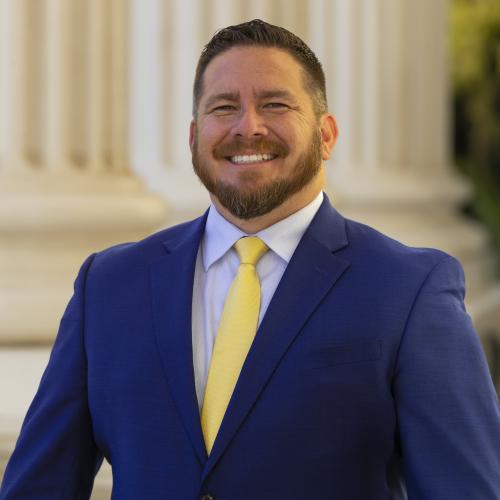
Asm. Juan Alanis
Total votes
10,307
all sessions
Attendance
93%
551 missed
Lower than 85% of chamber peers
With party
95%
of cast votes
Near the chamber average
Bipartisan score
3%
crosses aisle rarely
Near the chamber average
Sponsored
1,102
bills & resolutions
Higher than 91% of chamber peers
Committees
19
assignments
1,102 bills and resolutions
Sponsored bills
Total
1,102
Primary
101
Co-sponsor
1,001
This page
1,102
matching current filters
Relative to the 50th anniversary of hip hop.
This measure would recognize the 50th anniversary of hip hop on August 11, 2023, as a time of celebration, pride, and nostalgia for the citizens of California.
Signed into law Sep 5, 2023
1 co-sponsor
Passed Sep 5, 2023
1 co-sponsor
Pharmacy: electronic prescriptions.
Existing law, the Pharmacy Law, establishes in the Department of Consumer Affairs the California State Board of Pharmacy to license and regulate the practice of pharmacy. The Pharmacy Law authorizes a prescriber or a prescriber's authorized agent to electronically enter a prescription into a pharmacy's or hospital's computer from a location outside of the pharmacy or hospital. The Pharmacy Law makes those provisions inapplicable to prescriptions for controlled substances classified in Schedule II, III, IV, or V, except as permitted pursuant to specified provisions. That law generally punishes a knowing violation of its provisions as a misdemeanor. This bill would delete the provision making the authorization to electronically enter a prescription inapplicable to controlled substances. The bill would also authorize a pharmacist located and licensed in the state to, on behalf of a licensed health care facility, from a location outside of the facility, verify medication chart orders for appropriateness before administration consistent with federal requirements, as established in the health care facility's policies and procedures. The bill would require a health care facility to maintain a record of a pharmacist's verification of a medication chart order pursuant to that provision, as specified. By expanding the scope of the crime of violating the Pharmacy Law, this bill would impose a state-mandated local program. The California Constitution requires the state to reimburse local agencies and school districts for certain costs mandated by the state. Statutory provisions establish procedures for making that reimbursement. This bill would provide that no reimbursement is required by this act for a specified reason. This bill would declare that it is to take effect immediately as an urgency statute.
Signed into law Sep 1, 2023
1 co-sponsor
University of California: California Native American Graves Protection and Repatriation Act of 2001.
The California Constitution provides that the University of California constitutes a public trust, and requires the university to be administered by the Regents of the University of California, a corporation in the form of a board, with full powers of organization and government, subject to legislative control only for specified purposes. The California Native American Graves Protection and Repatriation Act of 2001 requires all agencies and museums, which is defined to include higher education institutions, that receive state funding and have possession or control over collections of California Native American human remains and associated funerary objects to inventory those remains and objects for repatriation to the appropriate California Indian tribes, as specified. As a condition for using state funds to handle and maintain Native American human remains and cultural items, this bill would require the office of the President of the University of California to comply with various requirements regarding repatriation of Native American human remains and cultural items, as provided.
Passed Sep 1, 2023
1 co-sponsor
Reports submitted to legislative committees.
Existing law requires a state agency that is required or requested by law to submit a report to the Members of either house of the Legislature generally to submit the report in a specified manner and to post the report on the state agency's internet website. This bill would additionally require a state agency to post on its internet website any report required or requested by law, or identified in the Legislative Analyst's Supplemental Report of the Budget Act, that the state agency submits to a committee of the Legislature or to the Members of either house of the Legislature. Existing law requires the Legislative Counsel to make various categories of legislative information available to the public in an electronic form. This bill would additionally require the Legislative Counsel to make available to the public a link to the list of state and local agency reports submitted by state and local agencies to a committee of the Legislature or to the Members of either house of the Legislature generally, as specified.
Signed into law Sep 1, 2023
1 co-sponsor
Atmospheric rivers: research: reservoir operations.
Existing law establishes the Atmospheric Rivers: Research, Mitigation, and Climate Forecasting Program in the Department of Water Resources. Existing law requires the department, upon an appropriation for purposes of the program, to research climate forecasting and the causes and impacts that climate change has on atmospheric rivers, to operate reservoirs in a manner that improves flood protection, and to reoperate flood control and water storage facilities to capture water generated by atmospheric rivers. This bill would rename that program the Atmospheric Rivers Research and Forecast Improvement Program: Enabling Climate Adaptation Through Forecast-Informed Reservoir Operations and Hazard Resiliency (AR/FIRO) Program. The bill would require the department to research, develop, and implement new observations, prediction models, novel forecasting methods, and tailored decision support systems to improve predictions of atmospheric rivers and their impacts on water supply, flooding, post-wildfire debris flows, and environmental conditions. The bill would also require the department to utilize relevant information to operate reservoirs in a manner that improves flood protection in the state and to reoperate flood control and water storage facilities to capture water generated by atmospheric rivers and other storms.
Signed into law Sep 1, 2023
1 co-sponsor
Lake and streambed alteration agreements: exemptions.
Existing law prohibits a person, a state or local governmental agency, or a public utility from substantially diverting or obstructing the natural flow of, or substantially changing or using any material from the bed, channel, or bank of, any river, stream, or lake, or depositing or disposing of debris, waste, or other material containing crumbled, flaked, or ground pavement where it may pass into any river, stream, or lake, unless prescribed requirements are met, including written notification to the Department of Fish and Wildlife regarding the activity. Existing law requires the department to determine whether the activity may substantially adversely affect an existing fish and wildlife resource and, if so, to provide a draft lake or streambed alteration agreement to the person, agency, or utility. Existing law prescribes various requirements for lake and streambed alteration agreements. Existing law also establishes various exemptions from these provisions, including exemptions for specified emergency work. This bill would additionally exempt from these provisions the temporary operation of existing infrastructure or temporary pumps being used to divert flood stage flows, as identified by the California Nevada River Forecast Center or the State Water Resources Control Board, or near-flood stage flows, as defined, to groundwater recharge as long as certain conditions are met. The bill would also make conforming changes.
Passed Sep 1, 2023
1 co-sponsor
Passed Sep 1, 2023
1 co-sponsor
Pupil health: opioid antagonists.
Existing law authorizes school districts, county offices of education, and charter schools to provide emergency naloxone hydrochloride or another opioid antagonist to school nurses or voluntary trained personnel, and authorizes those nurses and voluntary trained personnel to use naloxone hydrochloride or another opioid antagonist to provide emergency medical aid to persons suffering, or reasonably believed to be suffering, from an opioid overdose, as provided. This bill would require each individual public school operated by a school district, county office of education, or charter school that has elected to make a school nurse or trained personnel available at the school pursuant to those provisions to maintain at least two units of naloxone hydrochloride or another opioid antagonist for purposes of those authorizations.
Passed Sep 1, 2023
1 co-sponsor
Ask Maddy
·
AI policy assistant
Ask Maddy about Juan Alanis
Scope: california
Hi! I can help you understand Juan Alanis's legislative record. What would you like to know?
Try one of these
i
Maddy answers using official bill text and legislative records. Always verify before sharing.
Sources cited inline