

Existing law classifies controlled substances into 5 schedules and places the greatest restrictions and penalties on the use of those substances placed in Schedule I. Opiates, including fentanyl, are classified in Schedule II. Existing law prohibits a person from possessing for sale or purchasing for purposes of sale specified controlled substances, including fentanyl, and punishes a violation of that prohibition by imprisonment in a county jail for 2, 3, or 4 years. Existing law also prohibits transporting, importing into this state, selling, furnishing, administering, or giving away specified controlled substances, including fentanyl, and punishes a violation of that prohibition by imprisonment in a county jail for 3, 4, or 5 years. Existing law also prohibits the trafficking of specified controlled substances, including fentanyl, and punishes a violation of that prohibition by imprisonment in a county jail for 3, 6, or 9 years. This bill would impose an additional punishment of 3, 4, or 5 years to a person who is convicted of the crimes mentioned above involving fentanyl or a fentanyl analog that was designed, shaped, colored, advertised, or packaged in such a way as to resemble food or candy. By imposing a new enhancement to the penalty of a crime, this bill would impose a state-mandated local program. The California Constitution requires the state to reimburse local agencies and school districts for certain costs mandated by the state. Statutory provisions establish procedures for making that reimbursement. This bill would provide that no reimbursement is required by this act for a specified reason.
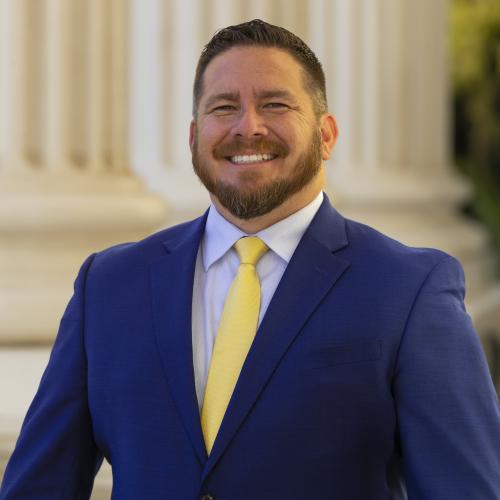
Asm. Juan Alanis
Sponsored bills
Existing law, until January 1, 2026, makes it a misdemeanor to commit organized retail theft. Existing law defines organized retail theft to include, among other acts, acting as an agent of another individual or group of individuals to steal merchandise from one or more merchant's premises or online marketplaces as part of an organized plan to commit theft. Under existing law, acts of organized retail theft that are committed on 2 or more separate occasions within a 12-month period and that have an aggregate value that exceeds $950 are punishable as a misdemeanor or a felony. This bill would require the Milton Marks "Little Hoover" Commission on California State Government Organization and Economy to submit a report to the Legislature describing the reported retail thefts, as specified. This bill would also require state and local law enforcement to collect and provide data on retail theft to the commission, as specified. This bill would require the commission to issue its report to the Legislature no later than January 1, 2026. By imposing new duties on local entities, the bill would impose a state-mandated local program. The California Constitution requires the state to reimburse local agencies and school districts for certain costs mandated by the state. Statutory provisions establish procedures for making that reimbursement. This bill would provide that, if the Commission on State Mandates determines that the bill contains costs mandated by the state, reimbursement for those costs shall be made pursuant to the statutory provisions noted above.
Existing law requires the State Energy Resources Conservation and Development Commission to continuously carry out studies, research projects, data collection, and other activities required to assess the nature, extent, and distribution of energy resources to meet the needs of the state. This bill would make nonsubstantive changes to that provision.
Existing law declares that the protection of the public interest in the development of the water resources of the state is of vital concern to the people of the state and that the state shall determine in what way the water of the state, both surface and underground, should be developed for the greatest public benefit. Existing law establishes within the Natural Resources Agency the State Water Resources Control Board and the California regional water quality control boards. Existing law requires the work of the state board to be divided into at least 2 divisions, known as the Division of Water Rights and the Division of Water Quality. This bill would establish a statewide goal to increase above- and below-ground water storage capacity by a total of 3,700,000 acre-feet by the year 2030 and a total of 4,000,000 acre-feet by the year 2040. The bill would require the Department of Water Resources, in consultation with the state board, to take reasonable actions to promote or assist efforts to achieve the statewide goal, as provided. The bill would require the department, beginning July 1, 2027, and on or before July 1 every 2 years thereafter until January 1, 2043, in consultation with the state board, to prepare and submit a report to the Legislature on the progress made to achieve the statewide goal.
Existing law, the Motor Vehicle Fuel Tax Law, imposes a tax upon each gallon of motor vehicle fuel removed from a refinery or terminal rack in this state, entered into this state, or sold in this state, at a specified rate per gallon. Existing unfair competition laws establish a statutory cause of action for unfair competition, including any unlawful, unfair, or fraudulent business act or practice and unfair, deceptive, untrue, or misleading advertising and acts prohibited by false advertisement laws. This bill would suspend the imposition of the tax on motor vehicle fuels for one year. The bill would require that all savings realized based on the suspension of the motor vehicle fuels tax by a person other than an end consumer, as defined, be passed on to the end consumer, and would make the violation of this requirement an unfair business practice, in violation of unfair competition laws, as provided. The bill would require a seller of motor vehicle fuels to provide a receipt to a purchaser that indicates the amount of tax that would have otherwise applied to the transaction. This bill would also direct the Controller to transfer a specified amount from the General Fund to the Motor Vehicle Fuel Account in the Transportation Tax Fund. By transferring General Fund moneys to a continuously appropriated account, this bill would make an appropriation. This bill would declare that it is to take effect immediately as an urgency statute.
Existing law establishes the Natural Resources Agency, composed of departments, boards, conservancies, and commissions responsible for the restoration, protection, and management of the state's natural and cultural resources. Existing law establishes in the agency the Department of Water Resources, which manages and undertakes planning with regard to water resources in the state. This bill would require the agency, and each department, board, conservancy, and commission within the agency, to take all reasonable steps to approve the necessary permits for specified projects that meet certain employment conditions within 180 days from receiving a complete permit application. The bill would require the department, board, conservancy, or commission responsible for issuing a permit to post updates on its internet website for each permit application explaining how the permit approval process is progressing and the estimated time until the permit is approved.
Existing law declares that it is the policy of the state that no adoptable animal should be euthanized if it can be adopted into a suitable home. Existing law also declares that it is the policy of the state that no treatable animal should be euthanized.. This bill, Bowie's Law, would require all animal shelters, as defined, to provide public notice on their internet website at least 72 hours before euthanizing any dog, cat, or rabbit, except as provided. The bill would require that notice to indicate that the animal is subject to euthanasia and to include information about the animal and its availability for adoption. The bill would authorize an animal shelter to provide this public notice for less than 72 hours if the animal shelter makes certain determinations. The bill would, for each instance where the animal shelter provides public notice for less than 72 hours, require the animal shelter to document the reason and to keep it on file and available for public inspection, as provided. By imposing new requirements on a public animal control agency or shelter, the bill would constitute a state-mandated local program. The bill would also require the Department of Food and Agriculture to conduct a study on the overcrowding of California's animal shelters, the ways in which the state might address animal shelter overcrowding, and the feasibility of a statewide database of dogs and cats that provides public notice and information at the statewide level, as specified. The bill would require the department to, on or before January 1, 2026, submit a report on its study findings to the Legislature, as provided. The bill would repeal these study and reporting requirements on January 1, 2027. The California Constitution requires the state to reimburse local agencies and school districts for certain costs mandated by the state. Statutory provisions establish procedures for making that reimbursement. This bill would provide that, if the Commission on State Mandates determines that the bill contains costs mandated by the state, reimbursement for those costs shall be made pursuant to the statutory provisions noted above.
Existing law prohibits an act of sexual intercourse accomplished against a person's will by means of force, violence, duress, menace, or fear of immediate and unlawful bodily injury on the person or another. Existing law provides a greater punishment for this offense if the victim is a minor, as specified. Existing law also prohibits an act of sexual intercourse with a person who is incapable, because of a mental disorder or developmental or physical disability, of giving legal consent, and this is known or reasonably should be known to the person committing the act. This bill would impose a greater punishment for prohibited acts of sexual intercourse, as defined, if the victim is a developmentally disabled minor, as specified and defined, and the person committing the prohibited acts knows or should have known that the person is developmentally disabled. The bill would specifically require a person who commits these offenses upon a person who is 10 years of age or younger to be prosecuted pursuant to another statute providing even greater punishment. By increasing the punishment for crime, this bill would create a state-mandated local program. The California Constitution requires the state to reimburse local agencies and school districts for certain costs mandated by the state. Statutory provisions establish procedures for making that reimbursement. This bill would provide that no reimbursement is required by this act for a specified reason.
(1) Existing law establishes the Youth Reinvestment Grant Program within the Board of State and Community Corrections to grant funds, upon appropriation, to local jurisdictions and Indian tribes for the purpose of implementing trauma-informed diversion programs for minors, as specified. This bill would repeal these provisions. The bill would reestablish the Youth Reinvestment Grant Program, to be administered by the Office of Youth and Community Restoration, for the purpose of implementing a mixed-delivery system of trauma-informed health and development diversion programs for youth, as specified. The bill would create the Youth Reinvestment Fund to be used, upon appropriation by the Legislature, by the office for the purposes of the program. The bill would require applicants for the program to be nongovernmental agencies or tribal governments, as specified. The bill would provide that an applicant under this program be awarded no less than $50,000, and no more than $2,000,000, and would specify the requirements of diversion programs to qualify for funding under these provisions. (2) Existing law establishes, until January 1, 2025, the California Violence Intervention and Prevention Grant Program, administered by the Board of State and Community Corrections, to award competitive grants for the purpose of violence intervention and prevention. This bill would establish, upon appropriation by the Legislature, the Department of Justice Violence Reduction Grant Program to be administered by the department for the purpose of supporting evidence-based, focus-deterrence collaborative programs that conduct outreach to targeted gangs and offer supportive services to preemptively reduce and eliminate violence and gang involvement. The bill would require the department to award grants on a competitive basis, with preference given to cities and local jurisdictions that are disproportionately impacted by violence and gang involvement. The bill would require the department to form a grant selection advisory committee, as specified. The bill would require grantees to report to the department, in a form and at intervals prescribed by the department, regarding the progress in achieving the grant objectives, and would require the department to report to the Legislature on the impact of violence prevention initiatives supported by the grant program. (3) Existing law requires the governing board of a school district to give diligent care to the health and physical development of pupils and authorizes the governing board of a school district to employ properly certified persons for the work. Existing law requires a school of a school district or county office of education and a charter school to notify pupils and parents or guardians of pupils no less than twice during the school year on how to initiate access to available pupil mental health services on campus or in the community, or both, as provided. This bill would also establish, upon appropriation by the Legislature, within the California Health and Human Services Agency a program to evaluate applications and award grants, in 5-year cycles, to schools to implement the Trauma Intervention Program to implement evidence-based interventions for pupils impacted by trauma. The bill would give the priority to the Counties of Alameda, Fresno, Merced, Tulare, Kern, and Los Angeles, as specified. The bill would require the agency to open eligibility for grants every 5 years, with priority to the top 6 counties that have the highest rate of violent crime and homicide, as reported by the Department of Justice's annual crime data report. The bill would also require grants to be awarded to a research organization to conduct a study on the effects of the treatment, including any effect on subsequent criminality. This bill would make legislative findings and declarations as to the necessity of a special statute for the Counties of Alameda, Fresno, Merced, Tulare, Kern, and Los Angeles. (4) Existing law requires the State Department of Public Health, in cooperation with the State Department of Education, to establish a Public School Health Center Support Program, upon appropriation by the Legislature, to assist school health centers, which are defined as centers or programs, located at or near local educational agencies, that provide age-appropriate health care services at the program site or through referrals, as specified. This bill would rename the program as the School-Based Health Center Support Program and would redefine a school-based health center to mean a student-focused health center or clinic that is located at or near a school or schools, is organized through school, community, and health provider relationships, and provides age-appropriate, clinical health care services onsite by qualified health professionals. The bill would authorize a school-based health center to provide primary medical care, behavioral health services, or dental care services onsite or through mobile health or telehealth. The bill would authorize the State Department of Public Health to contract with other entities for the purpose of providing assistance in specified areas to school-based health centers that receive grant moneys. Existing law requires the department, subject to an appropriation, to establish a grant program within the Public School Health Center Support Program to provide technical assistance and funding for the expansion, renovation, and retrofitting of existing school health centers and the development of new school health centers. Existing law requires a health center receiving grant funds to meet or have a plan to meet specified requirements relating to the provision of certain services. This bill would make changes to certain service requirements relating to, among other things, primary medical care, substance use disorder services, population health, and integrated and individualized support. Existing law requires, subject to an appropriation, that planning grants under the program be available in amounts between $25,000 and $50,000 for a 6- to 12-month period for specified uses. This bill would instead require that planning grants be available in amounts between $50,000 and $100,000, inclusive, for up to a 24-month period. Existing law requires, subject to an appropriation, that facilities and startup grants be available in amounts between $20,000 and $250,000 per year for a 3-year period for the purpose of establishing a school health center, with the potential addition of $100,000 in the first year for facilities construction, purchase, or renovation. This bill would instead require that facilities and startup grants be available in amounts between $300,000 and $850,000, inclusive, for a 3-year period. The bill would make certain changes to preference-related criteria. Existing law requires, subject to an appropriation, that sustainability grants be available in amounts between $25,000 and $125,000 per year for a 3-year period for the purpose of operating a school health center, or enhancing programming at a fully operational school health center, and sets forth certain criteria for those grants. This bill would delete those provisions and would instead require that expansion grants be available in amounts between $150,000 and $300,000, inclusive, for up to a 3-year period for the purpose of renovating and improving an existing school-based health center or enhancing and expanding programming at a fully operational school-based health center, as specified. The bill would require that sustainability grants be available in amounts between $150,000 and $300,000, inclusive, per year for the purpose of operating a school health center. The bill would set forth certain eligibility-related criteria for these grants. This bill would require the department, subject to an appropriation, to administer grants pursuant to this program beginning on or before January 1, 2025. Existing law requires the program, in collaboration with the State Department of Education, to act as a liaison for school-based health centers. This bill would delete that provision. Existing law requires the State Department of Education to establish an Office of School-Based Health Programs for the purpose of assisting local educational agencies regarding the current health-related programs under the purview of the department, as specified. This bill would require the office to work with the State Department of Public Health in supporting the School-Based Health Center Support Program. (5) Existing law requires the Director of Parks and Recreation to establish the Outdoor Equity Grants Program to increase the ability of underserved and at-risk populations to participate in outdoor environmental educational experiences at state parks and other public lands where outdoor environmental education programs take place. This bill would create a grant program, subject to an appropriation, under the Department of Parks and Recreation to award grants to tribal and local governments and community-based organizations for the purpose of supporting existing and creating new parks and recreation opportunities and supporting existing and creating new summer programs for youth in order to create and enhance recreation- and health-based interventions for youth during peak times of violence. The bill would require the department to develop criteria, procedures, and accountability measures to implement the grant program and to administer the grant program to ensure priority is given to underserved populations, as specified. The bill would require the department to give priority for funding to outdoor recreation- and health-based intervention programs during peak times of violence that primarily provide outreach to and serve youth who are impacted by violence and gang involvement in their communities. The bill would also require the department to annually report to the appropriate policy, budget, and fiscal committee of the Legislature regarding the effectiveness of the programs awarded funding in achieving the overall objectives of the grant program. (6) Existing law establishes the California Gang, Crime, and Violence Prevention Partnership Program for the purposes of reducing gang, criminal activity, and youth violence in specified communities. Existing law requires the Department of Justice to disburse all available funds to community-based organizations and nonprofit agencies that meet specified program requirements. This bill would repeal those provisions.
Existing law establishes the California State University, under the administration of the Trustees of the California State University, as one of the segments of public postsecondary education in the state. This bill would establish the Legislative Internship Program under the administration of the California State University's Center for California Studies to provide paid internship opportunities at offices of the Legislature, to qualified applicants, as provided. The bill would establish the Legislative Internship Program Fund as the initial depository of all moneys appropriated, donated, or otherwise received for the program, and upon appropriation by the Legislature, would require the Center for California Studies to distribute moneys in the fund to program participants, as specified. Existing law requires all appropriations for contingent expenses of the Senate and the Assembly and legislative committees thereof to be available and disbursed, as provided. This bill would prohibit these funds from being used to provide a paid internship position pursuant to the Legislative Internship Program.