

Passed Feb 29, 2024
1 co-sponsor
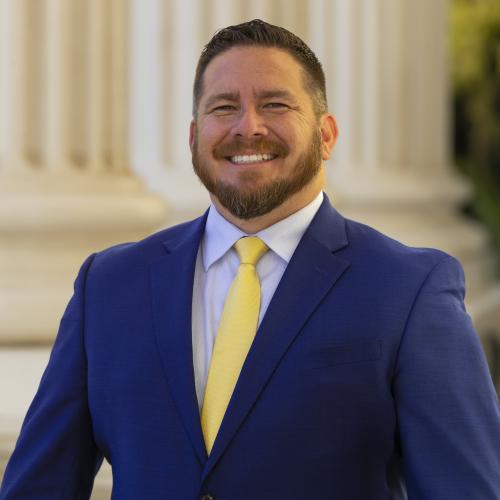
Asm. Juan Alanis
Total votes
10,307
all sessions
Attendance
93%
551 missed
Lower than 85% of chamber peers
With party
95%
of cast votes
Near the chamber average
Bipartisan score
3%
crosses aisle rarely
Near the chamber average
Sponsored
1,102
bills & resolutions
Higher than 91% of chamber peers
Committees
19
assignments
1,102 bills and resolutions
Sponsored bills
Total
1,102
Primary
101
Co-sponsor
1,001
This page
1,102
matching current filters
Passed Feb 29, 2024
1 co-sponsor
Homelessness: California Interagency Council on Homelessness.
Existing law requires the Governor to create the California Interagency Council on Homelessness, and specifies the duties of the coordinating council to include creating partnerships among state agencies and departments, local government agencies, and specified federal agencies and private entities, for the purpose of arriving at specific strategies to end homelessness. Existing law requires agencies and departments administering state programs to collaborate with the California Interagency Council on Homelessness to adopt guidelines and regulations to incorporate core components of Housing First. This bill would repeal Housing First policies and related requirements, thereby removing the requirement on those state agencies and departments to incorporate core components of Housing First.
In committee Feb 26, 2024
1 co-sponsor
California Environmental Quality Act: disclosure: identity and interests.
The California Environmental Quality Act (CEQA) requires a lead agency, as defined, to prepare, or cause to be prepared, and certify the completion of an environmental impact report (EIR) on a project that it proposes to carry out or approve that may have a significant effect on the environment or to adopt a negative declaration if it finds that the project will not have that effect. CEQA also requires a lead agency to prepare a mitigated negative declaration for a project that may have a significant effect on the environment if revisions in the project would avoid or mitigate that effect and there is no substantial evidence that the project, as revised, would have a significant effect on the environment. CEQA requires the courts to give an action or proceeding alleging noncompliance with CEQA preference over all other civil actions. CEQA requires superior courts in counties with a population of more than 200,000 people to designate one or more judges to develop expertise in CEQA and certain related laws so that those judges will be available to hear and quickly resolve actions or proceedings alleging noncompliance with CEQA. This bill would require, in all actions or proceedings brought pursuant to the provisions of CEQA, that a filing party include with the filing a disclosure of the identity and interests of the party, as provided. The bill would authorize a court to request more information as needed, including, but not limited to, financial statements and testimony, in the event a filing party that has previously brought an action or proceeding concerning a project makes a subsequent filing in an action or proceeding concerning the same project. Because the bill would impose additional duties on a lead agency that is a filing party to an action or proceeding, the bill would impose a state-mandated local program. The California Constitution requires the state to reimburse local agencies and school districts for certain costs mandated by the state. Statutory provisions establish procedures for making that reimbursement. This bill would provide that no reimbursement is required by this act for a specified reason.
In committee Feb 26, 2024
0 co-sponsors
Agriculture Trust Fund: audit.
Existing law creates the Agriculture Trust Fund, the activities of which are subject to audit at least once every 2 years. Existing law provides that the trust fund is for the exclusive purpose of implementing and continuing agricultural programs, as specified. This bill would instead require that those trust fund activities be subject to an audit at least once every year.
In committee Feb 20, 2024
0 co-sponsors
Passed Feb 20, 2024
1 co-sponsor
Crimes: money laundering.
Existing law makes it a crime to engage in money laundering, defined as conducting a transaction involving a monetary instrument of specified value through a financial institution with the specific intent to promote or facilitate criminal activity or knowing that the monetary instrument represents the proceeds of or is derived from the proceeds of criminal activity. This bill would make a technical, nonsubstantive change to that provision.
In committee Feb 15, 2024
0 co-sponsors
Office of Management and Budget: Uniform Guidance.
This measure would urge the federal Office of Management and Budget to update its Uniform Guidance in order to improve job creation, quality, and equity.
Signed into law Feb 15, 2024
1 co-sponsor
Relative to National Human Trafficking Awareness Month.
This measure would recognize the month of January 2024 as National Human Trafficking Awareness Month.
Signed into law Feb 15, 2024
1 co-sponsor
Railroad employee safety.
Existing law grants the Division of Occupational Safety and Health jurisdiction over the safety and health of railroad employees, as specified. Existing law authorizes a conductor to place a pusher engine ahead of the caboose, as defined, if conditions warrant it for the safety of the occupants of a caboose. This bill would make nonsubstantive changes to provisions relating to the above-described authority of a conductor.
In committee Feb 14, 2024
0 co-sponsors
Ask Maddy
·
AI policy assistant
Ask Maddy about Juan Alanis
Scope: california
Hi! I can help you understand Juan Alanis's legislative record. What would you like to know?
Try one of these
i
Maddy answers using official bill text and legislative records. Always verify before sharing.
Sources cited inline