

The Horse Racing Law authorizes a thoroughbred racing association or fair to distribute the audiovisual signal and accept wagers on the results of out-of-state thoroughbred races conducted in the United States during the calendar period the association or fair is conducting a race meeting, including days on which there is no live racing being conducted by the association or fair, without the consent of the organization that represents horsemen and horsewomen participating in the race meeting and without regard to the amount of purses. Under that law, the total number of thoroughbred races imported by associations or fairs on a statewide basis under these provisions are required to not exceed 50 per day on days when live thoroughbred or fair racing is being conducted in the state, with the exception of specified races. This bill would exempt from the 50 imported race per day limitation, races imported that are part of the race card of the Whitney Stakes.
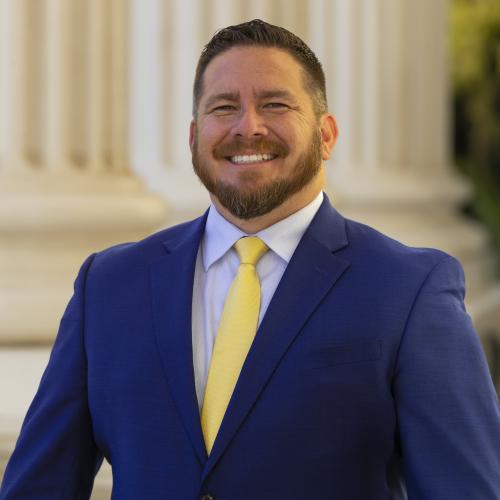
Asm. Juan Alanis
Sponsored bills
Existing law, until January 1, 2030, requires an application for an order authorizing the interception of wire or electronic communications to be made in writing upon the personal oath or affirmation of the Attorney General, Chief Deputy Attorney General, or Chief Assistant Attorney General, Criminal Law Division, or of a district attorney or person designated to act as district attorney. Until January 1, 2030, existing law authorizes a court to issue an order authorizing interception of wire or electronic communications if the judge finds, among other things, that there is probable cause to believe an individual is committing, has committed, or is about to commit one of several specified offenses, including murder or possession or sale of controlled substances. This bill would additionally authorize a court to issue an order authorizing interception of wire or electronic communications if the judge finds that there is probable cause to believe an individual is committing, has committed, or is about to commit a felony violation of specified statutes relating to the distribution of obscene matter depicting a person under 18 years of age.
Existing law establishes the Department of Transportation and vests it with full possession and control of the state highway system. This bill would require the department to conduct a study to identify certain locations in the state highway system with regard to vehicle collisions, projects that could improve road safety at each of those locations, and common factors, if any, contributing to the delay in the delivery of those projects. The bill would require the department to post the study on its internet website on or before January 1, 2026.
Existing law requires the Interagency Council on Homelessness to set and measure progress toward goals to prevent and end homelessness among youth in California by setting specific, measurable goals aimed at preventing and ending homelessness among youth in the state, including, among others, decreasing the duration and frequency of experiences of homelessness among California's youth. This bill would additionally require the council to set the goals of decreasing the number of young people experiencing homelessness in the state who struggle with food insecurity and decreasing the unemployment rate among young people experiencing homelessness by increasing access to employment opportunities and economic stability.
Existing law requires every person who is in possession of over 25 pounds of avocados that are produced in the state to possess a record of proof of ownership of the avocados, among other requirements related to avocados. Existing law, upon reasonable belief that a person is in unlawful possession of avocados, authorizes the Secretary of Food and Agriculture or any peace officer to seize the avocados and turn the avocados over to the custody of the secretary, as specified. Existing law requires the avocados to be released to the owner, or owner's agent, if the lawful owner is located. If for any reason the avocados are not released to the rightful owner after being in the custody of the secretary for 48 hours or, in the case of highly perishable avocados, a shorter period of time that the secretary deems necessary, existing law authorizes the secretary to either sell the avocados or donate the avocados to a nonprofit charitable organization, as provided. This bill would extend the above-described custody period from 48 hours to 72 hours. The bill would additionally authorize the secretary to donate these avocados to an on-campus food pantry serving students enrolled in an institution of public postsecondary education.
Existing law requires the State Department of Social Services to regulate activities relating to continuing care contracts that govern care provided to a resident in a continuing care retirement community for the duration of the resident's life or a term in excess of one year. Existing law provides that all residents in residential living units, as defined to mean a living unit in a continuing care retirement community, shall have certain specified rights, such as the right to live in an environment that enhances personal dignity, maintains independence, and encourages self-determination, and the right to participate in activities that meet individual physical, intellectual, social, and spiritual needs. Under existing law, in addition to any statutory or regulatory bill of rights required to be provided to residents of residential care facilities for the elderly or skilled nursing facilities, a provider of continuing care retirement services is required to provide a copy of the rights specified for residents in residential living units to each resident at the time or before the resident signs a continuing care contract, and at any time when the resident is proposed to be moved to a different level of care. A violation of these provisions is subject to a civil penalty. This bill would revise those provisions to expressly require a continuing care retirement community provider, at the time or before a resident signs a continuing care contract, and when the resident is proposed to be moved to a different level of care, to provide the resident with a copy of the above-described rights, a copy of the residential care facility for the elderly bill of rights, or, if the if the resident is moving into the continuing care retirement community's skilled nursing unit, a copy of the rights applicable to residents of skilled nursing facilities.
Existing law, the Pharmacy Law, provides for the licensure and regulation of pharmacists, pharmacy technicians, and pharmacies by the California State Board of Pharmacy. Existing law requires the board to promulgate regulations that require a standardized, patient-centered, prescription drug label on all prescription medicine dispensed to patients in California. Existing law prohibits a pharmacist from dispensing a prescription except in a container that meets the requirements of state and federal law and is correctly labeled with prescribed information. Existing law makes a violation of its provisions a crime. Existing law requires a dispenser, upon request, to provide translated directions for use, as prescribed. Existing law authorizes a dispenser to use translations made available by the board pursuant to specified regulations of the board and provides that a dispenser is not required to provide translated directions for use beyond the languages that the board has made available or beyond the directions that the board has made available in translated form. Existing law authorizes a dispenser to provide their own translated directions for use to comply with these provisions and prohibits the provisions from being construed to prohibit a dispenser from providing translated directions for use in languages beyond those that the board has made available or beyond the directions that the board has made available in translated form. This bill would also expressly require a dispenser to provide translated directions for use in the languages the board has made available. This bill, except as specified, would require a dispenser, if a person informs a pharmacy that the person identifies as a person who is blind, has low-vision, or is otherwise print disabled, to provide to the person or their authorized representative, at no additional cost, an accessible prescription label affixed to the container that meets prescribed requirements. If the accessible prescription label does not fit on the container, the bill would require the dispenser, upon dispensing the prescription drug, to provide the patient or their authorized representative with a supplemental document that otherwise meets those prescribed requirements. The bill would not apply to prescriptions issued by a veterinarian. The bill would require the board to promulgate regulations necessary to implement the bill. By imposing new requirements on dispensers, the violation of which would be a crime, the bill would impose a state-mandated local program. The California Constitution requires the state to reimburse local agencies and school districts for certain costs mandated by the state. Statutory provisions establish procedures for making that reimbursement. This bill would provide that no reimbursement is required by this act for a specified reason.
The Alcoholic Beverage Control Act provides for the issuance of various categories of alcoholic beverage licenses, including the imposition of fees, conditions, and restrictions in connection with the issuance of those licenses. The act provides that any on-sale licensee authorized to sell wine may also sell soju, an imported Korean alcoholic beverage, as specified, and shochu, an imported Japanese alcoholic beverage, as specified. This bill would provide that any on-sale licensee authorized to sell wine may also sell domestically produced soju and shochu, as specified.
Existing law establishes the Office of Vital Records within the State Department of Public Health. Existing law prescribes the duties of the State Registrar of Vital Statistics (State Registrar) and local registrars of births and deaths with respect to the registration of certificates of live birth, fetal death, or death, and marriage licenses. Existing law prescribes the information to be listed on a certificate of live birth. Existing law requires the State Registrar, upon request and payment of a fee, as specified, to provide an applicant a decorative heirloom certificate of any birth registered to that official, containing only identification information and the seal of the State of California and a facsimile of the State Registrar's signature. This bill would require the State Registrar to, upon request and payment of a fee, provide an applicant a decorative Asian Zodiac heirloom certificate, as specified. The bill would require the decorative Asian Zodiac heirloom certificate to be of a distinctive design as determined by the department to include Asian Zodiac artwork by local artists, the seal of the State of California, and a facsimile of the State Registrar's signature. The bill would require the certificate to contain only identification information, as determined by the State Registrar. The bill would require the department to set the fee for the decorative Asian Zodiac heirloom certificate to capture the reasonable costs of developing, preparing, and providing the decorative Asian Zodiac heirloom certificate. The bill would require the moneys collected by the State Registrar to be deposited with the Treasurer for credit to the Health Statistics Special Fund. The bill would specify that, upon appropriation, the moneys in the fund may be used by the department for the administrative costs of developing, preparing, and providing the decorative Asian Zodiac heirloom certificate, including payment of local artists.
Existing law provides for the licensure and regulation by the State Department of Public Health of health facilities, as defined. Existing law requires a health facility to allow a patient's domestic partner, the children of the patient's domestic partner, and the domestic partner of the patient's parent or child to visit unless no visitors are allowed, the facility reasonably determines that the presence of a particular visitor would endanger the health or safety of a patient, member of the health facility staff, or other visitor to the health facility, or would significantly disrupt the operations of a facility, or the patient has indicated to the health facility staff that the patient does not want this person to visit. A violation of this provision is a misdemeanor. This bill, Dianne's Law, would require a health facility to allow specified persons to visit, including the patient's children and grandparents. The bill would require the health facility to develop alternate visitation protocols, if circumstances require the health facility to restrict visitor access to the facility due to health or safety concerns, that allow visitation to the greatest extent possible while maintaining patient, visitor, and staff health and safety. Notwithstanding the requirement mentioned above, the bill would prohibit a health facility from prohibiting in-person visitation in end-of-life situations unless the patient has indicated to the health facility staff that the patient does not want this person to visit, as specified, and would authorize a health facility to require visitors to adhere to personal protective equipment and testing protocols not greater than those required of facility staff for the duration of their visit. The bill would also require the facility to provide personal protective equipment and testing resources to each visitor for a patient in an end-of-life situation, to the extent that those resources have been made readily available to the facility by state or local entities for that purpose. By expanding an existing crime, the bill would impose a state-mandated local program. The California Constitution requires the state to reimburse local agencies and school districts for certain costs mandated by the state. Statutory provisions establish procedures for making that reimbursement. This bill would provide that no reimbursement is required by this act for a specified reason.