

Existing law, the Knox-Keene Health Care Service Plan Act of 1975, provides for the licensure and regulation of health care service plans by the Department of Managed Health Care, and makes a willful violation of the act a crime. Existing law provides for the regulation of health insurers by the Department of Insurance. Existing law requires specified health care service plans and health insurers to publish and maintain a provider directory or directories with information on contracting providers that deliver health care services to enrollees or insureds, and requires a health care service plan or health insurer to regularly update its printed and online provider directory or directories, as specified. Existing law requires provider directories to include specified information and disclosures. This bill would require a full service health care service plan, specialized mental health or dental plan, health insurer, or specialized mental health or dental insurer to include in its provider directory or directories a statement advising an enrollee or insured to contact the plan or insurer for assistance finding an in-network provider and for an explanation of their rights regarding out-of-network coverage, and would specify the format of the statement. The bill would require the plan or insurer to acknowledge the request within one business day if contacted for that assistance, and to provide a list of in-network providers confirmed to be accepting new patients within 2 business days for a request deemed urgent by the enrollee or insured and 5 business days for a request deemed nonurgent by an enrollee or insured. Because a violation of these provisions by a health care service plan would be a crime, the bill would impose a state-mandated local program. The California Constitution requires the state to reimburse local agencies and school districts for certain costs mandated by the state. Statutory provisions establish procedures for making that reimbursement. This bill would provide that no reimbursement is required by this act for a specified reason.
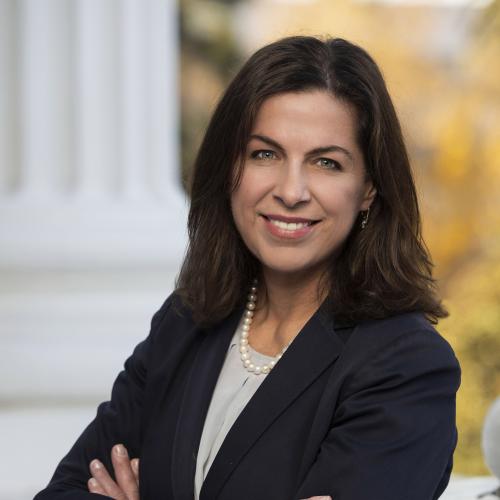
Asm. Diane Papan
Sponsored bills
Existing law provides for the regulation and supervision of dams and reservoirs exclusively by the state. Under existing law, a person who violates certain provisions related to the regulation and supervision of dams and reservoirs or of any approval, order, rule, regulation, or requirement of the Department of Water Resources is guilty of a misdemeanor, as specified. This bill would prohibit the release of stored water from a reservoir owned and operated by the United States in this state if the release is done under false pretenses, which the bill would define to mean a release of water from a reservoir owned and operated by the United States in a manner that is knowingly, designedly, and intentionally under any false or fraudulent representation as to the purpose and intended use of the water. The bill would authorize the State Water Resources Control Board or the Attorney General, as provided, to bring an action for injunctive relief for a violation of the above-described prohibition. By expanding the scope of a crime, the bill would impose a state-mandated local program. The California Constitution requires the state to reimburse local agencies and school districts for certain costs mandated by the state. Statutory provisions establish procedures for making that reimbursement. This bill would provide that no reimbursement is required by this act for a specified reason.
Existing law designates all parks, public campgrounds, monument sites, landmark sites, and sites of historical interest established or acquired by the state, or that are under its control, as the state park system, except as specified. Under existing law, the Department of Parks and Recreation controls the state park system, which is made up of units. Existing law establishes the California State Library within state government and vests control of the library to the State Librarian. Existing law authorizes the State Librarian to, among other things, purchase and maintain materials and equipment as necessary to carry out California State Library programs and services consistent with well-established library standards. The Budget Act of 2024 appropriated money to the department to be available to support the California State Library Parks Pass Program. This bill would authorize the department, at its discretion, and upon appropriation by the Legislature for this purpose, to issue vehicle day use annual passes, free of charge, to the California State Library to support the California State Library Parks Pass Program.
This measure would call on members of the United States Congress to oppose reductions to funding that negatively impact educational services for students with disabilities and would call on the President of the United States and Congress to ensure that services and funding for students with disabilities are uninterrupted.
This measure would recognize February 2025 as Black History Month, urge all citizens to join in celebrating the accomplishments of African Americans during Black History Month, and encourage the people of California to recognize the many talents of African Americans and the achievements and contributions they make to their communities to create equity and equality for education, economics, and social justice. The measure would also recognize the significance in protecting citizens' right to vote and remedying racial discrimination in voting.
Maddy summaryThis is a commemorative resolution, not a bill with policy changes. It recognizes key historical milestones of transgender people in California, including Indigenous gender diversity documented in 1775, 19th-century transgender figures in San Francisco's Tenderloin, early activism like the 1959 Cooper Do-nuts Riot, and legal precedents such as Sir Lady Java's 1967 employment discrimination case. The resolution has no binding effect and does not create new laws or directly affect any individuals or groups. It serves solely to honor these historical contributions.
Maddy summaryThis resolution designates August 2025 as "Chicano Heritage Month" in California. It symbolically recognizes the historical contributions of Chicanos/Chicanas to U.S. society, including their role in cultural, educational, and political movements. The resolution encourages all Californians to acknowledge and celebrate this heritage, without creating new programs, funding, or legal requirements. It directly affects the public by promoting awareness of this cultural identity, aligning with similar declarations like Santa Ana's 2021 adoption. The resolution was unanimously passed by the California Assembly on August 25, 2025.
Maddy summaryThis is a ceremonial House Resolution (not a bill), designating August 2, 2025, as California Disc Golf Day and the month of August 2025 as California Disc Golf Month. It recognizes disc golf's historical origins in California and its community benefits, including physical activity and mental well-being. The resolution has no policy impact, funding requirements, or direct effect on any individuals or organizations. It serves solely as a symbolic acknowledgment of the sport's popularity.
Maddy summaryHouse Resolution 50 designates November 25, 2025, as "Elimination of Violence Against Women Day" in California. It also recognizes the International Day for the Elimination of Violence Against Women on that date and urges policymakers to advance year-round efforts to prevent and eliminate violence against women and girls. This resolution does not create new laws or funding but serves as a symbolic statement of commitment from the California State Assembly. It directly affects the state government and policymakers by formally acknowledging the issue and encouraging ongoing action.
Maddy summaryThis House Resolution (HR 44) recognizes and commends homeless service providers in California during November 2025, designating it as "Homelessness Awareness Month." It acknowledges the critical work of these providers - public and nonprofit staff who deliver services like outreach, housing navigation, and support to people experiencing homelessness. The resolution highlights challenges they face, including low wages and staffing difficulties, but does not create new policies or allocate funding. As a symbolic gesture, it aims to raise awareness of their role in addressing homelessness.