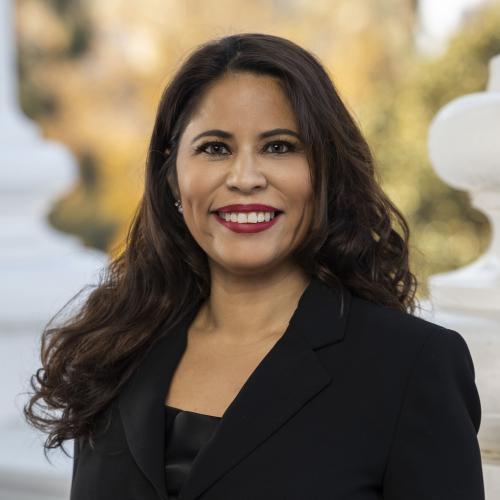
Photo of Liz Ortega
D California Assembly · District 20 On the 2026 ballot

Asm. Liz Ortega

Compare
Total votes
10,051
all sessions
Attendance
87%
1,103 missed
Near the chamber average
With party
99%
of cast votes
Near the chamber average
Bipartisan score
0%
crosses aisle rarely
Near the chamber average
Sponsored
921
bills & resolutions
Near the chamber average
Committees
9
assignments
921 bills and resolutions

Sponsored bills

Total
921
Primary
74
Co-sponsor
847
This page
921
matching current filters
Co-sponsor ACR 103
Signed into law · California Assembly · Co-sponsor
Relative to California Western Monarch Protection Week.

Maddy summaryACR 103 designates the week of July 14-18, 2025, as "California Western Monarch Protection Week." The bill is purely ceremonial, recognizing efforts to protect monarch butterflies in California. It does not create new laws, funding, or obligations. The measure serves to raise public awareness about monarch conservation during that specific week.

Signed into law Sep 5, 2025 1 co-sponsor
Co-sponsor HR 67
Passed · California Assembly · Co-sponsor
Relative to All California Day.

Maddy summaryHR 67 designates November 9 as "All California Day" to celebrate California's shared history and cultural ties with Baja California and Baja California Sur. The resolution encourages community events and cultural celebrations across the state to honor this interconnected heritage, including contributions from Indigenous peoples and Mexican heritage communities. As a ceremonial resolution (not a binding law), it has no direct regulatory or financial impact on any specific group or policy. The measure was adopted by the California Assembly on September 4, 2025.

Passed Sep 4, 2025 1 co-sponsor
Co-sponsor HR 58
Passed · California Assembly · Co-sponsor
Relative to California Promotoras Month.

Maddy summaryThis House Resolution (HR 58) declares October 2025 as "California Promotoras Month" to formally recognize the work of promotoras - community health workers who serve as cultural brokers and connect underserved communities (particularly Latino populations) to essential services like health, housing, and disaster response. It acknowledges their role in improving community resilience and access to resources, while highlighting the need for better support, training, and equitable compensation for this workforce. The resolution is symbolic and does not create new laws, funding, or programs; it solely aims to raise awareness and honor promotoras' contributions through a designated month of recognition.

Passed Sep 4, 2025 1 co-sponsor
Co-sponsor HR 70
Passed · California Assembly · Co-sponsor
Relative to Direct Support Professional Recognition Week.

Maddy summaryThis is a symbolic resolution, not a substantive bill. It designates September 7-13, 2025, as "Direct Support Professional Recognition Week" in California. The resolution acknowledges direct support professionals who assist Californians with intellectual and developmental disabilities (IDD) through the state's Lanterman Act system, which serves over 450,000 residents. It formally recognizes their role in enabling community inclusion and independence but does not create new policies, funding, or legal obligations.

Passed Sep 4, 2025 1 co-sponsor
Co-sponsor HR 71
Passed · California Assembly · Co-sponsor
Relative to National Fried Rice Day.

Maddy summaryThis symbolic resolution recognizes September 20, 2025, as National Fried Rice Day in California, highlighting the dish's cultural significance to Asian American communities and its connection to California's rice-growing economy (noting the state's status as the second-largest rice producer). It has no legal effect or policy changes - it serves solely to celebrate culinary traditions and community diversity. The resolution was adopted by the California Assembly with no opposing votes.

Passed Sep 4, 2025 1 co-sponsor
Primary AB 1234
Passed · California Assembly · Lead sponsor
Employment: nonpayment of wages: complaints.

Existing law authorizes the Labor Commissioner to investigate employee complaints and to provide for a hearing in any action to recover wages, penalties, and other demands for compensation. Existing law requires the Labor Commissioner to determine all matters arising under the commissioner's jurisdiction. Existing law makes any employer or other person acting on behalf of an employer who violates or causes to be violated specified provisions regulating hours and days of work in any order of the Industrial Welfare Commission to be subject to a civil penalty, as specified. This bill would revise and recast the provisions relating to the process for the Labor Commissioner to investigate, hold a hearing, and make determinations relating to an employee's complaint. The bill would set forth timelines for the Labor Commissioner to notify parties of an employee complaint, as provided, and for the defendant to respond, as provided. The bill would require the Labor Commissioner, if the Labor Commissioner determines to prosecute the action or that no action will be taken, to notify the parties within 30 days of receipt of the defendant's answer. If the Labor Commissioner does not make either of those determinations, the bill would require the Labor Commissioner, within 90 days of receipt of the defendant's answer, to conduct an investigation of the employee complaint, make an estimated appraisal of the amount of wages, damages, penalties, expenses, and other compensation owed, and to determine all the parties liable for the assessment. The bill would set forth a process for the Labor Commissioner's investigation, assessment, and determination, including authorizing the Labor Commissioner to issue a subpoena for records and requiring the Labor Commissioner to issue a formal complaint. This bill would require the Labor Commissioner, within 90 days of the issuance of the formal complaint, to set a hearing date and would set forth procedures for the hearing. The bill would require the Labor Commissioner, within 15 days of the hearing, or upon a failure of the defendant to answer or appear, to file in the office of the Division of Labor Standards Enforcement a copy of the order, decision, or award. This bill would authorize the Labor Commissioner, in an order, decision, or award granted pursuant to specified provisions to impose an administrative fee of up to 30% of the award, as provided. The bill would require the administrative fee to be deposited into the Wage Recovery Fund, which would be created by the bill. The bill would require the money in the fund, upon appropriation, to be disbursed by the Labor Commissioner only to persons determined by the Labor Commissioner to have been damaged by the failure to pay wages and penalties and for other damages by an employer. The bill would require a disbursement to be made pursuant to a claim for recovery from the fund in accordance with procedures prescribed by the Labor Commissioner and would require any disbursed funds subsequently recovered by the Labor Commissioner from a liable party, as provided, to be returned to the fund. The bill would require the Labor Commissioner to waive any or all of the administrative fee upon request by a defendant, if specified conditions are met. This bill would classify an appeal filed in a superior court relating to the Labor Commissioner's order, decision, or award as an unlimited civil case. The bill would grant a court hearing the action jurisdiction over the entire wage dispute, including related wage claims not raised in front of the Labor Commissioner, but would prohibit the court from consolidating the action with any other actions not arising out of, or related to, the underlying order, decision, or award, absent an executed agreement in writing by all parties.

Passed Sep 3, 2025 0 co-sponsors
Co-sponsor HR 65
Passed · California Assembly · Co-sponsor
Relative to Filipino American History Month.

Maddy summaryThis House Resolution designates a month as Filipino American History Month in California. It recognizes the historical contributions of Filipino Americans to the state, including early settlement (dating to 1587), agricultural labor, community building (such as "Little Manila" in Stockton), and military service during World War II. As a symbolic resolution, it does not create new laws, policies, or direct effects on any specific group.

Passed Sep 2, 2025 1 co-sponsor
Co-sponsor SB 442
Passed · California Senate · Co-sponsor
Grocery retail store and retail drug establishment employees: self-service checkout.

Existing law imposes certain requirements on grocery employers, as defined, upon the purchase or change in control of a grocery establishment, including requiring a successor grocery employer to retain eligible grocery workers for a specified period after transfer of the grocery establishment. This bill would prohibit a grocery retail store or a retail drug establishment, as those terms are defined, from providing a self-service checkout option for customers unless specified conditions are satisfied, including having at least one manual checkout station staffed by an employee who is available to any given customer at the time that a self-service checkout option is made available to that customer. This bill would require a grocery retail store or retail drug establishment that offers self-service checkout to include self-service checkout in the employer's illness and prevention program, as required by regulations of the Division of Occupational Safety and Health. The bill also would require a grocery retail store or retail drug establishment that intends to implement self-checkout to notify workers and their collective bargaining representatives at least 60 days in advance of the implementation, as specified. The bill would not preempt any city, county, or city and county ordinance that provides equal or greater protection to workers. This bill would make an employer who violates the bill's provisions subject to a civil penalty of $1,000 per violation per day, not to exceed an aggregate penalty of $200,000.

Passed Aug 29, 2025 1 co-sponsor
Co-sponsor SB 332
Passed · California Senate · Co-sponsor
Investor-Owned Utilities Accountability Act.

(1) Existing law vests the State Energy Resources Conservation and Development Commission (Energy Commission) with various responsibilities for developing and implementing the state's energy policies. This bill would require the Energy Commission to select a research institute, as defined, to conduct a comparative analysis of the benefits and challenges of transitioning the electrical corporations to a public entity, nonprofit public benefit corporation, or mutual benefit corporation in order to identify a recommended model, as provided. The bill would require the research institute to complete the analysis on or before January 1, 2029, and, upon completion, to submit the analysis to the Legislature and the Energy Commission. The bill would require the Energy Commission to make a draft of the analysis available to the public for comment before submitting the final draft to the Legislature, and would limit the cost of conducting the analysis to $5,000,000. This bill would require the research institute to conduct the first phase of the comparative analysis and to submit an interim report, on or before December 31, 2026, to the Energy Commission on threshold legal issues, as provided. The bill would require the Energy Commission to convene a group of state attorneys from the legal departments of state agencies that regulate electrical corporations to advise the research institute on the first phase of the comparative analysis, as specified. This bill would, upon completion of the analysis by the research institute, require the Energy Commission to present the analysis at a publicly noticed business meeting on or before September 30, 2029. (2) Existing law vests the Public Utilities Commission (PUC) with regulatory authority over public utilities, including electrical corporations and gas corporations, while local publicly owned utilities are under the direction of their governing boards. Existing law prohibits an electrical corporation, gas corporation, or water corporation from terminating a customer's residential service for nonpayment of a delinquent account in certain circumstances, including, among other circumstances, unless the corporation first gives notice to the customer of the delinquency and impending termination, during the pendency of an investigation by the corporation of the customer's dispute or complaint, or when the customer has been granted an extension of the period for payment of a bill. This bill would require each electrical corporation and gas corporation, on or before March 1, 2026, and each local publically owned electric utility, on or before March 1, 2027, and annually thereafter, to post specified information concerning terminations of service due to nonpayment on their respective internet websites, as provided. (3) Existing law requires the Director of the Office of Energy Infrastructure Safety to issue a safety certification that is valid for 12 months after the date of issuance to an electrical corporation if the electrical corporation provides documentation that it is meeting certain requirements and that it has an approved executive incentive compensation structure that is structured to promote safety as a priority and to ensure public safety and utility financial stability with performance metrics, as specified. This bill would additionally require that the electrical corporation's executive incentive compensation structure is structured to ensure ratepayer affordability, as provided. The bill would also require, for purposes of the safety certification, that documentation related to compensation include specified dollar amounts. Existing law requires the PUC to develop policies, rules, or regulations with a goal of reducing the statewide level of gas and electrical service disconnections for nonpayment by residential customers, as specified. Existing law requires the PUC to include in an annual report to the Legislature information on residential and household gas and electrical service disconnections, disaggregated by certain customer categories. This bill would require the PUC to provide any public nonconfidential data collected pursuant to the above-described provisions to the Office of Energy Infrastructure Safety for the purpose of reviewing ratepayer affordability when assessing executive compensation under the above-described provisions. (4) Under existing law, a violation of the Public Utilities Act or any order, decision, rule, direction, demand, or requirement of the PUC is a crime. Because certain provisions of this bill would be part of the act and a violation of a PUC action implementing the bill's requirements would be a crime, the bill would impose a state-mandated local program. In addition, to the extent the bill would impose new requirements on local publicly owned utilities, the bill would impose a state-mandated local program. The California Constitution requires the state to reimburse local agencies and school districts for certain costs mandated by the state. Statutory provisions establish procedures for making that reimbursement. This bill would provide that no reimbursement is required by this act for specified reasons.


Passed Aug 29, 2025 1 co-sponsor
Co-sponsor AB 1109
Passed · California Assembly · Co-sponsor
Evidentiary privileges: union agent-represented worker privilege.

Existing law governs the admissibility of evidence in court proceedings and generally provides a privilege as to communications made in the course of certain relations, including the attorney-client, physician-patient, and psychotherapist-patient relationship, as specified. Under existing law, the right of any person to claim those evidentiary privileges is waived with respect to a communication protected by the privilege if any holder of the privilege, without coercion, has disclosed a significant part of the communication or has consented to a disclosure. This bill would establish a privilege between a union agent, as defined, and a represented employee or represented former employee to refuse to disclose any confidential communication between the employee or former employee and the union agent made while the union agent was acting in the union agent's representative capacity, except as specified. The bill would permit a represented employee or represented former employee to prevent another person from disclosing a privileged communication, except as specified. The bill would further provide that this privilege may be waived in accordance with existing law and does not apply in criminal proceedings.

Passed Aug 29, 2025 1 co-sponsor
Showing 301 to 310 of 921 bills
Previous 1 … 30 31 32 … 93 Next