

Existing law grants to a depicted individual a cause of action against a person who creates and intentionally discloses sexually explicit material if the person knows, or reasonably should have known, that the depicted individual in that material did not consent to its creation or disclosure or who intentionally discloses sexually explicit material that the person did not create if the person knows the depicted individual in that material did not consent to the creation of the sexually explicit material. Existing law defines "sexually explicit material" for purposes of that provision to mean any portion of an audiovisual work that shows the depicted individual performing in the nude or appearing to engage in, or being subjected to, sexual conduct and defines "depicted individual" to mean an individual who appears, as a result of digitization, to be giving a performance the individual did not actually perform or to be performing in an altered depiction. Existing law authorizes a plaintiff to recover, among other relief, statutory damages of not less than $1,500 but not more than $30,000, or $150,000 for a malicious violation, as prescribed. This bill would revise and recast the provision described above to additionally grant to a depicted individual a cause of action against a person who knows, or reasonably should know, that the depicted individual was a minor when the digitized sexually explicit material was created and would additionally grant a cause of action to that depicted individual against a person who knowingly facilitates or recklessly aids or abets conduct prohibited by that provision. The bill would define "digitized sexually explicit material" to mean any portion of a visual or audiovisual work created or substantially altered through digitization, including an image, that shows the depicted individual in the nude or appearing to engage in, or being subjected to, sexual conduct. This bill would make a person that provides a service that enables the ongoing operation of a deepfake pornography service presumed to be engaged in knowing facilitation or reckless aiding or abetting, as described above, if a depicted individual or public prosecutor provides the person with evidence sufficient to demonstrate that the person is providing services that enable the ongoing operation of a deepfake pornography service that engages in conduct described in the provisions described above, and the person fails to take all necessary steps to stop providing services that enable the ongoing operation of a deepfake pornography service within 30 days of receiving that evidence, as specified. This bill would increase the maximum statutory damages available to a depicted individual to $50,000 if the violation was not malicious and $250,000 for a malicious violation and would authorize certain public attorneys to bring a civil action to enforce these provisions, as specified.
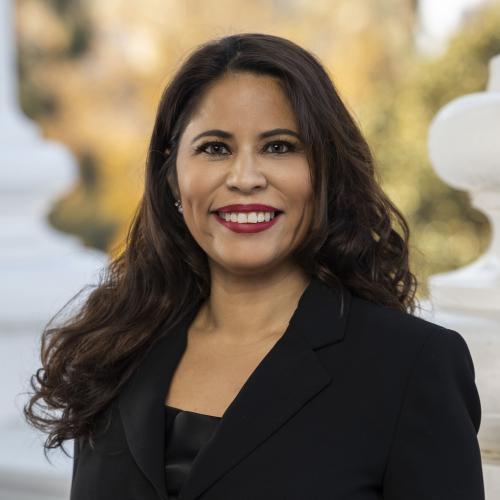
Asm. Liz Ortega
Sponsored bills
Existing law generally regulates social media platforms, including, among other laws, the Protecting Our Kids from Social Media Addiction Act that prohibits an operator of an addictive internet-based service or application, including a social media platform, from providing an addictive feed, as defined, to a minor user, except as prescribed. This bill would enact the Social Media Warning Law that would require a covered platform, as defined, to display a certain black box warning to certain users each day the user initially accesses the social media platform, again after 3 hours of cumulative active use, and thereafter at least once per hour of cumulative active use, as prescribed. This bill would specify that its provisions shall not be interpreted to serve as the basis for a private right of action, as specified. The bill would make its provisions operative on January 1, 2027, and would declare these provisions severable.
Existing law establishes the Division of Labor Standards Enforcement, headed by the Labor Commissioner, within the Department of Industrial Relations, for the purpose of enforcing labor laws. Existing law prescribes the duties and rights of employers and employees relating to specified labor laws, including, among other things, workers' compensation and notice requirements related to inspections conducted by an immigration agency. This bill would establish the Workplace Know Your Rights Act. The bill would require an employer, on or before February 1, 2026, and annually thereafter, to provide a stand-alone written notice to each current employee of specified workers' rights, including, among other things, the categories described above, as well as constitutional rights of an employee when interacting with law enforcement at the workplace, as specified. The bill would also require the employer to provide the written notice to each new employee upon hire and to provide the written notice annually to an employee's authorized representative, if any. This bill would require the Labor Commissioner to develop a template notice that an employer may use to comply with the notice requirement described above. The bill would require the Labor Commissioner to post the template notice on its internet website on or before January 1, 2026, and to post an updated template notice annually thereafter. The bill would also require the Labor Commissioner, on or before July 1, 2026, to develop a video for employees advising them of their rights under the areas described above and to develop a video for employers advising them of their rights and requirements under those areas, as provided. The bill would require the Agricultural Labor Relations Board, the Public Employment Relations Board, and the Attorney General's office to provide specified input for the template notice and the videos. This bill would require an employer, if an employee has designated an emergency contact for this purpose, to notify the designated emergency contact if the employee is arrested or detained on their worksite. If the arrest or detention occurs during work hours, or during the performance of the employee's job duties, but not on the worksite, the bill would require the employer to notify the employee's designated emergency contact only if the employer has actual knowledge of the arrest or detention of the employee. The bill would require an employer to provide an employee the opportunity to name an emergency contact on or before March 30, 2026, for an existing employee, and at the time of hiring for a new employee hired after March 30, 2026. This bill would prohibit an employer from discharging, threatening to discharge, demoting, suspending, or in any manner discriminating or retaliating against an employee for exercising or attempting to exercise their rights under the bill, as provided. This bill would require the Labor Commissioner to enforce the bill, as specified, and would also alternatively authorize enforcement by a public prosecutor. The bill would provide that an employer who violates the bill may be subject to a penalty of up to $500 per employee for each violation, except that the penalty for a violation of the provisions relating to emergency contacts would be an amount up to $500 per employee for each day the violation occurs, up to a maximum of $10,000 per employee.
(1) Under existing law, a caregiver who is 18 years of age or older and signs a caregiver's authorization affidavit under penalty of perjury for a minor who lives in their home is authorized to enroll the minor in school and consent to school-related medical care on behalf of the minor. Under existing law, a caregiver who is 18 years of age or older, signs the caregiver's authorization affidavit under penalty of perjury, and who is a certain type of relative of the minor who lives in their home, has the same rights to authorize medical care and dental care for the minor that are given to guardians, as specified. Under existing law, a person who acts in good faith reliance on a completed caregiver's authorization affidavit to provide medical or dental care, without actual knowledge of facts contrary to those stated on the affidavit, is not subject to criminal or civil liability or professional disciplinary action for that reliance, but is not relieved from liability for violations of other provisions of law. This bill, the Family Preparedness Plan Act of 2025, would revise the definition of relative to expand the type of relative who is authorized to execute a caregiver's authorization affidavit and grant them the same rights to authorize school-related medical care, as defined, for the minor that are given to guardians, as specified. By expanding who is authorized to sign a caregiver's authorization affidavit for these purposes under penalty of perjury, this bill would expand the crime of perjury, thereby imposing a state-mandated local program. This bill would amend the statutory form for a caregiver's authorization affidavit. (2) Existing law generally provides for the establishment and administration of guardianships. Existing law authorizes a court to appoint joint guardians of a person, an estate, or a person and an estate. Existing law requires a nomination of a guardian to become effective when made, and remain effective, unless stated otherwise in writing, as specified. This bill would authorize a court, in its discretion, to appoint a custodial parent and a person nominated by the custodial parent as joint guardians of the person of the minor, if the custodial parent will be temporarily unavailable due to specified circumstances, including, among other things, an immigration-related administrative action, as specified. The bill would make all records, petitions, orders, and documents related to these proceedings confidential, as specified. The bill would provide that absence is a basis for a delayed effectiveness of a guardianship and that such circumstances would not be a basis for subsequent legal incapacity for the nomination. (3) Existing law prohibits, except as required by state or federal law or as required to administer a state or federally supported educational program, school officials and employees of a local educational agency, as defined, from collecting information or documents regarding citizenship or immigration status of pupils or their family members. Existing law requires the governing board or body of a local educational agency to perform specified actions relating to pupils and immigration status, including, among others, providing information to parents and guardians, as appropriate, regarding their child's right to a free public education, regardless of immigration status or religious beliefs. Existing law requires the Attorney General, by April 1, 2018, in consultation with the appropriate stakeholders, to publish model policies limiting assistance with immigration enforcement at public schools, to the fullest extent possible consistent with federal and state law, as specified. Existing law requires all local educational agencies to adopt the model policies developed by the Attorney General, or equivalent policies, by July 1, 2018. This bill would revise the information disclosure requirements to require the governing board or body of a local educational agency to provide information related to specified guidance on immigration enforcement issued by the Attorney General and would require that information to be revised as necessary to be consistent with any revisions or updates to the Attorney General's guidance. This bill would also require local educational agencies to revise their model policies as necessary to be consistent with any revisions or updates to the model policies developed by the Attorney General, as specified. By imposing additional duties on local educational agencies, the bill would impose a state-mandated local program. (4) Existing law, the California Child Day Care Facilities Act, provides for the licensure and regulation of child daycare facilities, including daycare centers and daycare homes, by the State Department of Social Services. The act exempts certain types of facilities from licensure under its provisions, including California state preschool programs that meet certain requirements, including, among other things, that the programs are operated by local educational agencies in a school building. Similar to the provisions related to local educational agencies described above, this bill would prohibit licensed child daycare facilities, as defined, employees of licensed child daycare facilities, and license-exempt California state preschool program facilities from collecting information or documents regarding citizenship or immigration status of children or their family members, except as required by state or federal law or as required to administer a state or federally supported educational program. The bill would require the licensee or administrator of a licensed child day care facility, as applicable, to report to the department and the Attorney General any requests for information or access to the facility by an officer or employee of a law enforcement agency. The bill would authorize license-exempt California state preschool program facilities to make that report to the State Department of Education and the Attorney General. The bill would require the State Department of Social Services to provide any information on California state preschool programs collected pursuant to those provisions to the Superintendent of Public Instruction. The bill would require a licensed child daycare facility and a license-exempt California state preschool program facility to first exhaust any parental instruction relating to the child's care found in the child's emergency contact information if an employee of the facility is aware that a child's parent or authorized representative is not available to care for the child. The bill would require licensees or administrators of those facilities to request that parents or authorized representatives update their emergency contact information. The bill would require the Attorney General, by April 1, 2026, in consultation with the appropriate stakeholders, to publish model policies limiting assistance with immigration enforcement at child daycare facilities and license-exempt California state preschool program facilities similar to the model policies developed for local educational agencies described above. The bill would require the State Department of Social Services to inform licensed daycare facilities, and the State Department of Education to inform license-exempt California state preschool program facilities, of the model policies. The bill would require all California state preschool programs to adopt the model policies developed by the Attorney General, or equivalent policies, as soon as possible, but in no event later than July 1, 2026. The bill would require California state preschool programs to update these policies to conform with any revisions or updates to the model policies developed by the Attorney General. The bill would require a licensed child daycare facility and license-exempt California state preschool program facilities to provide the parent or authorized representative with information about how to access those model policies. The bill would require the State Department of Social Services to inform licensed child day care facilities, and the State Department of Education to inform license-exempt California state preschool program facilities, of any revisions or updates to the model policies and require any information, policies, or guidance provided by facilities to parents or authorized representatives to be updated to include any revisions or updates to the model policies issued by the Attorney General. The bill would authorize the State Department of Social Services to administer these provisions by interim licensing standards until regulations are adopted. (5) This bill would provide that its provisions are severable. (6) Existing constitutional provisions require a statute that limits the right of access to the meetings of public bodies or the writings of public officials and agencies to be adopted with findings demonstrating the interest protected by the limitation and the need for protecting that interest. This bill would make legislative findings to that effect. (7) The California Constitution requires the state to reimburse local agencies and school districts for certain costs mandated by the state. Statutory provisions establish procedures for making that reimbursement. This bill would provide that with regard to certain mandates no reimbursement is required by this act for a specified reason. With regard to any other mandates, this bill would provide that, if the Commission on State Mandates determines that the bill contains costs so mandated by the state, reimbursement for those costs shall be made pursuant to the statutory provisions noted above. This bill would incorporate additional changes to Section 234.7 of the Education Code proposed by AB 49, AB 419, or both, to be operative only if this bill and AB 49, AB 419, or both, are enacted and this bill is enacted last.
Existing law, subject to available funding, requires the State Department of Social Services to contract with qualified nonprofit legal services organizations to provide legal services to unaccompanied undocumented minors who are transferred to the care and custody of the federal Office of Refugee Resettlement and who are present in this state or are residing with a family member or other sponsor. Existing law requires contracts awarded pursuant to the above-described provision to be executed with qualified nonprofit legal services organizations that meet certain requirements, including having experience representing individuals in removal proceedings and asylum applications. This bill would, subject to available funding, provide legal counsel to immigrant youth in the State of California. The bill would define immigrant youth. The bill would require the department to allocate funding for these purposes, and would require the department to consider whether federal funding has been made available and dispersed to organizations or relevant projects in the state in determining the amount and allocation of contracts awarded. The bill would require the department to contract with qualified nonprofit legal services organizations that meet the above-described requirements or an office of the public defender that meets certain requirements. The bill would also authorize the department to fund social work services contracted by qualified nonprofit legal services organizations to assist immigrant youth.
Existing law creates the Vocational Nurse Education Program within the Department of Health Care Access and Information for persons agreeing to serve in an eligible county health facility, state-operated health facility, or a health workforce shortage area, before completing vocational nursing school. Existing law authorizes a person who qualifies for admission to a vocational nursing program to apply for funding under the program, as specified. Existing law establishes the Vocational Nurse Education Fund for the purpose of promoting the education of vocational nurses and related administrative costs. This bill would create the California Nurse-Midwifery Education Fund within the department for the purpose of establishing California-based, master's level, nurse-midwifery education programs within the California State University, the University of California, or both. The bill would require the department to administer the fund, and receive moneys from the General Fund for these purposes upon appropriation by the Legislature. The bill would require the department to establish a competitive application criteria to ensure the optimal sites selection for the education programs within the California State University system or the University of California, would require the department to ensure that a master's degree is an option for students as the culminating degree of the education programs receiving funds, and would require the education programs to meet specified requirements. The bill would also require the fund to support the annual operating costs for the development, operation, and maintenance of the education programs through the graduation of the first cohort of matriculated students, or 5 years, whichever is shorter.
Existing law, the Contractors State License Law, establishes the Contractors State License Board to license and regulate contractors and establishes the registrar of contractors as the executive officer and secretary of the board. Existing law requires the registrar, upon receipt of the Labor Commissioner's finding of a willful or deliberate violation of the Labor Code by a licensee or transmission to the board of citations or other actions taken by the Division of Occupational Safety and Health, to initiate disciplinary action against the licensee within 18 months. This bill would authorize the Attorney General to bring a civil action to impose discipline upon, to deny an application for, or to deny continued maintenance of, a contractor's license for failing to pay its workers the full amount of wages the workers are entitled to under state law or because the contractor has not fulfilled a wage judgment or is in violation of an injunction or court order regarding the payment of wages to its workers. The bill would require the Attorney General to notify the registrar before bringing a civil action and would authorize the board to intervene in a proceeding brought pursuant to the bill's provisions. The bill would require a court to issue an order directing the registrar to suspend or revoke, to deny an application for, or to deny the continued maintenance of, a contractor's license under terms specified by the court.
Existing law prohibits any person from selling, leasing, or transferring any firearm unless the person is licensed as a firearms dealer, as specified. Existing law prescribes certain requirements and prohibitions for licensed firearms dealers. A violation of any of these requirements or prohibitions is grounds for forfeiture of a firearms dealer's license. For purposes of these provisions, existing law defines "machinegun" to mean, among other definitions, any weapon that shoots or is designed to shoot automatically more than one shot, without manual reloading, by a single function of the trigger. This bill would, on and after July 1, 2026, prohibit a licensed firearms dealer to sell, offer for sale, exchange, give, transfer, or deliver any semiautomatic machinegun-convertible pistol, except as specified. For these purposes, the bill would define "machinegun-convertible pistol" as any semiautomatic pistol with a cruciform trigger bar that can be readily converted by hand or with common household tools into a machinegun by the installation or attachment of a pistol converter, as specified, and "pistol converter" as any device or instrument that, when installed in or attached to the rear of the slide of a semiautomatic pistol, replaces the backplate and interferes with the trigger mechanism and thereby enables the pistol to shoot automatically more than one shot by a single function of the trigger. The bill would make a violation of these provisions punishable by a fine, a 2nd violation punishable by a fine that may result in a suspension or revocation of the dealer's license and removal from certain centralized lists maintained by the Department of Justice, and a 3rd violation punishable as a misdemeanor that shall result in the revocation of the dealer's license and removal from certain centralized lists. Existing law prohibits the manufacture, sale, possession, or transportation of a machinegun, except as authorized. A violation of these prohibitions is punishable as a felony. This bill would expand the above definition of "machinegun" to include any machinegun-convertible pistol equipped with a pistol converter and, thus, prohibit the manufacture, sale, possession, or transportation of a machinegun-convertible pistol equipped with a pistol converter. Existing law, subject to certain exceptions, generally makes it an offense to manufacture or sell an unsafe handgun, as defined, and requires the Department of Justice to compile a roster listing all of the handguns that have been tested and determined not to be unsafe handguns. Existing law establishes criteria for determining if a handgun is an unsafe handgun, including, for firearms manufactured after a certain date and not already listed on the roster, the lack of a chamber load indicator and a magazine disconnect mechanism. For any pistol listed on the roster on January 1, 2026, that was not subject to the above-described requirements to be on the list because it was submitted for testing before specified dates, that is thereafter only modified to change the design features that brought the pistol within the definition of a machinegun-convertible pistol, and that is submitted to an independent certified laboratory for testing pursuant to the above-described testing provisions before January 1, 2027, this bill would authorize that pistol to be submitted for testing and added to the roster without meeting those requirements. This bill would make these provisions severable. This bill would incorporate additional changes to Section 3273.50 of the Civil Code proposed by AB 1263 to be operative only if this bill and AB 1263 are enacted and this bill is enacted last. By creating a new crime and expanding the application of an existing crime, this bill would create a state-mandated local program. The California Constitution requires the state to reimburse local agencies and school districts for certain costs mandated by the state. Statutory provisions establish procedures for making that reimbursement. This bill would provide that no reimbursement is required by this act for a specified reason.
The California FAIR Plan Association is a joint reinsurance association in which all insurers licensed to write basic property insurance participate in administering a program for the equitable apportionment of basic property insurance for persons who are unable to obtain that coverage through normal channels. Existing law requires the association's plan of operation and any amendment to the plan to be approved by the Insurance Commissioner. Existing law establishes the California Infrastructure and Economic Development Bank and authorizes it to issue bonds to provide funds for the payment of costs of a project for a participating party or upon request by a state entity. This bill would authorize the association, if granted prior approval from the commissioner, to request the California Infrastructure and Economic Development Bank to issue bonds, and would authorize the bank to issue those bonds to finance the costs of claims, to increase liquidity and claims-paying capacity of the association, and to refund bonds previously issued for that purpose. The bill would specify that the association is a participating party and that financing all or any portion of the costs of claims or to increase liquidity and the claims-paying capacity of the association is a project for bond purposes. The bill would authorize the bank to loan the proceeds of issued bonds to the association, and would authorize the association to enter into a loan agreement with the bank and to enter into a line of credit agreement or other agreement This bill would require the association, if the above-described bonds, loan agreements, or lines of credit received the prior approval of the commissioner, and if the association is unable to timely and fully meet its repayment obligation, to assess members in the amounts and at the times necessary to timely pay in full all obligations of the association with respect to those bonds, loan agreements, lines of credit, and other agreements, as specified. The bill would authorize the association to secure those bonds, loan agreements, lines of credit, and other agreements by a statutory lien, as specified. Existing law establishes the California Infrastructure and Economic Development Bank Fund, a continuously appropriated fund, for the purpose of implementing the objectives of the bank. To the extent that the bill would result in additional revenues being deposited into the California Infrastructure and Economic Development Bank Fund, the bill would make an appropriation. This bill would declare that it is to take effect immediately as an urgency statute.
(1) Existing law authorizes a local authority, as defined, to adopt a program to regulate sidewalk vendors if the program complies with specified standards. These standards include restricting the local authority from requiring a sidewalk vendor to operate within specific parts of the public right-of-way, except when that restriction is directly related to objective health, safety, or welfare concerns. A violation of these provisions is punishable only by an administrative fine, as specified. This bill would prohibit a local authority, except as otherwise required by state or federal law, from providing voluntary consent to any individual to access, review, or obtain certain records of the local authority that include personally identifiable information of any sidewalk vendors in the jurisdiction without a subpoena or judicial warrant. The bill would also prohibit a local authority and its personnel from disclosing or providing in writing, verbally, or in any other manner personally identifiable information of any sidewalk vendor that is requested, except pursuant to a subpoena or a valid judicial warrant. The bill would define "personally identifiable information," for these purposes, to include an individual's name, business name, home address, business address, birthdate, telephone number, California driver's license or identification, and other related information. The bill would also define "immigration enforcement" for these purposes. Existing law authorizes a local authority to adopt additional requirements regulating the time, place, and manner of sidewalk vending if the requirements are directly related to objective health, safety, or welfare concerns. These include requiring the sidewalk vendor to obtain from the local authority a permit or valid business license, provided that the local authority issuing the permit or business license accepts a California driver's license or identification number, an individual taxpayer identification number, or a municipal identification number in lieu of a social security number for the issuance of a permit or business license, and that the number collected is not disclosed, except as specified. This bill would also prohibit a local authority, in the above-described circumstances, from inquiring into or collecting information about an individual's immigration or citizenship status, place of birth, or individual criminal history, or requiring an applicant to submit fingerprints, complete a LiveScan fingerprinting, or submit to a background check as part of an application for a permit or business license. The bill would require a local authority that inquired into or collected information or documentation regarding an individual's place of birth or criminal history, required an applicant to submit fingerprints or complete a LiveScan fingerprinting, or performed a background check before January 1, 2026, to destroy those records on or before March 1, 2026, unless those records are expressly required by law to be preserved. The bill would provide that specified personally identifiable information collected by a local authority is exempt from disclosure under the California Public Records Act. This bill would prohibit an agency or department of a local authority, including any nonpublic entity working on the local authority's behalf, as provided, from using local authority moneys or personnel to investigate, interrogate, detain, detect, or arrest persons for certain purposes, and from engaging in specified activities related to immigration enforcement, when enforcing certain provisions regulating sidewalk vendors. The bill, for specified contracts between a nonpublic entity and a local authority entered into or modified on or after January 1, 2026, would require a nonpublic entity to explicitly agree to adhere to these provisions and would immediately terminate the contract if it is found that the nonpublic entity has violated these provisions. (2) Existing law, the California Retail Food Code (the code) , establishes uniform health and sanitation standards for, and provides for regulation by the State Department of Public Health of, retail food facilities and requires local health agencies to enforce these provisions. Existing law requires compact mobile food operations to meet specified health and safety standards. For purposes of the code, a "compact mobile food operation," means a mobile food facility that operates from an individual or from a pushcart, stand, display, pedal-driven cart, wagon, showcase, rack, or other nonmotorized conveyance. Existing law makes a violation of these provisions by an operator or employee of a compact mobile food operation or a sidewalk vendor punishable only by an administrative fine, as specified. This bill would prohibit an enforcement agency, including any nonpublic entity working on the enforcement agency's behalf, as provided, from using enforcement agency moneys or personnel to investigate, interrogate, detain, detect, or arrest persons for certain purposes, and from engaging in specified activities related to immigration enforcement, when enforcing certain provisions regulating compact mobile food operations. The bill, for specified contracts between a nonpublic entity and an enforcement agency entered into or modified on or after January 1, 2026, would require a nonpublic entity to explicitly agree to adhere to these provisions and would immediately terminate the contract if it is found that the nonpublic entity has violated these provisions. This bill would also prohibit an enforcement agency from providing voluntary consent to any individual to access, review, or obtain certain records of the enforcement agency that include personally identifiable information of any sidewalk vendor or operator or employee of a compact mobile food operation in the jurisdiction without a subpoena or judicial warrant. The bill would further prohibit a local authority and its personnel from disclosing or providing in writing, verbally, or in any other manner personally identifiable information of any sidewalk vendor that is requested, except pursuant to a subpoena or a valid judicial warrant. Existing law prohibits a food facility from being open for business without a valid permit and requires a permit to be issued by the enforcement agency when investigation has determined that the proposed facility and its methods of operation conform to code requirements. This bill would require a permit application for a compact mobile food operation to comply with specified requirements. In this regard, the bill would require an enforcement agency to accept a California driver's license or identification number, an individual taxpayer identification, or a municipal identification number in lieu of a social security number. The bill would also prohibit an enforcement agency from, among other things, inquiring into the individual's immigration status, citizenship status, or criminal history, as prescribed. The bill would further require an enforcement agency that inquired into or collected information or documentation regarding an individual's place of birth or criminal history, required an applicant to submit fingerprints or complete a LiveScan fingerprinting, or performed a background check before January 1, 2026, to destroy those records on or before March 1, 2026, unless those records are expressly required by law to be preserved. The bill would provide that specified personally identifiable information collected by an enforcement agency is exempt from disclosure under the California Public Records Act. The bill would make other related changes to these provisions. To the extent the bill would impose new requirements on local governmental agencies, it would create a state-mandated local program. Existing constitutional provisions require that a statute that limits the right of access to the meetings of public bodies or the writings of public officials and agencies be adopted with findings demonstrating the interest protected by the limitation and the need for protecting that interest. This bill would make legislative findings to that effect. The California Constitution requires the state to reimburse local agencies and school districts for certain costs mandated by the state. Statutory provisions establish procedures for making that reimbursement. This bill would provide that, if the Commission on State Mandates determines that the bill contains costs mandated by the state, reimbursement for those costs shall be made pursuant to the statutory provisions noted above.