Maddy summaryACR 127 designates February 2-6, 2026, as National School Counseling Week. This is a symbolic resolution recognizing the role of school counselors, with no new policies or funding changes. It directly affects no specific group but aims to raise awareness for school counseling services during that week. The resolution was unanimously adopted by the Assembly on February 5, 2026.
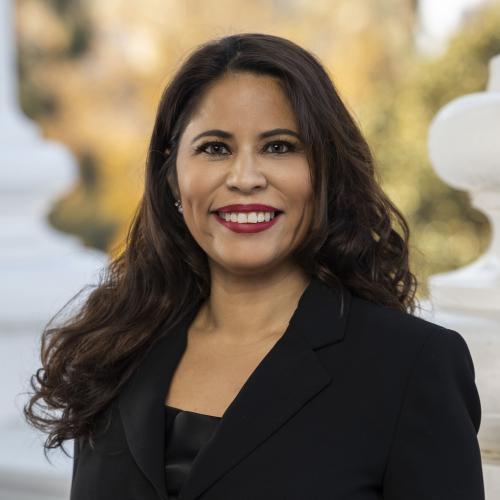
Asm. Liz Ortega
Sponsored bills
Existing law prohibits the smoking of tobacco products in various public and private places and also authorizes a landlord of a residential dwelling unit to prohibit the smoking of tobacco products on the property or in any building or portion of the building, including in any dwelling unit, in accordance with specified requirements. This bill would prohibit the smoking of tobacco products in a state-subsidized multiunit housing development, as defined, for which a certificate of occupancy is issued on or after January 1, 2027.
Maddy summaryThis bill is a House Resolution that formally declares March 2026 as Women's History Month in California. It aims to honor the historical and ongoing contributions of women across various fields such as business, science, and civil rights. The resolution does not create new laws or change existing policies but serves to recognize and celebrate the achievements of women throughout history.
Maddy summaryThis bill designates March 2026 as Colorectal Cancer Awareness Month in California to highlight the disease's impact and promote screening efforts. It directly affects all Californians by encouraging early detection through regular check-ups and new testing options, particularly for younger adults and underserved communities facing higher risks. The resolution aims to increase public knowledge about prevention and treatment advancements without mandating specific actions or funding changes.
Existing law authorizes the Public Utilities Commission to fix the rates and charges for public utilities, including electrical corporations and gas corporations, and requires those rates and charges to be just and reasonable. Under existing law, a regulated public utility is prohibited from using ratepayer funds for advocacy-related activities that are political or do not otherwise benefit ratepayers. This bill would prohibit, except as provided, each electrical corporation or gas corporation from recording to accounts that contain expenses that the electrical corporation or gas corporation recovers from ratepayers, or otherwise recovering from ratepayers, direct or indirect costs of opposing the municipalization of electrical or gas service, as specified. The bill would require the commission to monitor and investigate compliance and noncompliance with the prohibition. Existing law authorizes the commission, each commissioner, and each officer and person employed by the commission to inspect the accounts, books, papers, and documents of any public utility. This bill would specify that the Public Advocate's Office of the Public Utilities Commission has the same authority to discover information and review the accounts of a public utility as the commission. Under existing law, a violation of the Public Utilities Act or any order, decision, rule, direction, demand, or requirement of the commission is a crime. Because the above-described provisions would be part of the act and a violation of a commission action implementing the bill's requirements would be a crime, this bill would impose a state-mandated local program. The California Constitution requires the state to reimburse local agencies and school districts for certain costs mandated by the state. Statutory provisions establish procedures for making that reimbursement. This bill would provide that no reimbursement is required by this act for a specified reason.

Existing law establishes in the Department of Industrial Relations the Division of Labor Standards Enforcement under the direction of the Labor Commissioner and authorizes the Labor Commissioner to investigate employee complaints and recover civil penalties for violations of labor law, as prescribed. Existing law requires an employer who pays wages to a resident employee for services performed either within or without this state, or to a nonresident employee for services performed in this state, to deduct and withhold from those wages a sum which is substantially equivalent to the amount of tax reasonably estimated to be due under the Personal Income Tax Law resulting from the inclusion in the gross income of the employee of the wages which were subject to withholding. Existing law requires the Employment Development Department to have the powers and duties necessary to administer the reporting, collection, refunding to the employer, and enforcement of taxes required to be withheld by employers, as described above. This bill would require, within 60 days of a final judgment being entered against an employer requiring payment to an employee or to the state, as specified, the judgment debtor employer to provide documentation to the Labor Commissioner that the judgment is fully satisfied, a certain bond has been posted, or the judgment debtor entered into an agreement for the judgment to be paid in installments, as prescribed, and is in compliance with that agreement. The bill would make a judgment debtor employer who fails to comply with that provision liable for a civil penalty. The bill would require, if a judgment debtor employer does not comply with that provision, the Labor Commissioner to provide written notice to the judgment debtor employer that the Labor Commissioner will submit the unsatisfied judgment to the Tax Support Division of the Employment Development Department as a notice of potential tax fraud, as prescribed, and that the civil penalty is due within 90 days of the notice.
Existing law establishes various advisory boards and commissions in state government with specified duties and responsibilities. This bill would create the California Latino Commission to address the inequities faced by the Latino community in housing, education, economic mobility, labor, and health care. The commission would consist of 9 members who have demonstrated expertise in specified areas, including housing policy and advocacy and economic development. The bill would task the commission with, among other things, collecting and analyzing data, developing recommendations, and monitoring the implementation of state programs and policies affecting the Latino community, as specified. The bill would require the commission to work with other state agencies and to submit an annual report to the Governor and the Legislature. The bill would establish that the commission and its activities would be supported by appropriations by the Legislature from the General Fund and grants from federal and private sources. The bill would repeal these provisions on January 1, 2036.
Existing law generally regulates social media platforms, including by requiring a social media company to post terms of service for each social media platform owned or operated by the company in a manner reasonably designed to inform all users of the social media platform of the existence and contents of the terms of service, as prescribed. Existing law generally prohibits a person from using violence or intimidation to interfere with another person's enjoyment of certain rights or because of certain attributes of that person, including the person's political affiliation, race, or sexual orientation, and punishes violations of that law with certain civil penalties or as misdemeanors, as prescribed. This bill would make a social media platform, as defined, that violates the above-referenced provisions of law relating to personal rights through its algorithms that relay content to users or aids, abets, acts in concert, or conspires in violation of those laws, or is a joint tortfeasor in an action alleging a violation of those laws, liable for specified civil penalties. The bill would declare its provisions to be severable and would declare attempted waiver of its provisions to be void and unenforceable. This bill would become operative on January 1, 2027.
Maddy summaryACR 116 is a ceremonial resolution honoring Reverend Dr. Martin Luther King, Jr. and commemorating Martin Luther King Jr. Day. It does not create new laws or affect specific groups, as it is a symbolic gesture of recognition. The measure was adopted by the Assembly on January 16, 2026, and is now pending in the Senate Committee on Rules and Legislative Services. This type of resolution typically serves to acknowledge historical figures or events without implementing policy changes.
Maddy summaryACR 118 designates January 13, 2026, as Korean American Day in recognition of Korean American contributions. This ceremonial resolution does not create new laws or affect policy; it simply formally proclaims a specific date for observance. The bill directly affects public acknowledgment of Korean American heritage within the state. It has advanced through committee approval and passed the Assembly with unanimous support.