

The Budget Act of 2026 appropriates, for the 2026–27 fiscal year, $1,000,000,000 from the General Fund to the State Department of Education to administer the California Community Schools Partnership Program to distribute funding to local educational agencies, as defined, in accordance with a specified formula, to support a network of their eligible schoolsites to implement new, and provide ongoing support for existing, community schools, as provided. Existing law authorizes a local educational agency who receives funds under these provisions to retain up to 10% of the total funds awarded for its eligible schoolsites each fiscal year to be used for specified activities, including, among other things, administering community schools established at eligible schoolsites. This bill, to be known as the It Takes a Village Act of 2026, would (1) require any retained funds described above to be used consistent with a specified community schools framework, as provided, and (2) authorize a local educational agency that retains those funds to also use those funds to serve as a network lead for multiple schoolsites located in a Promise Neighborhood, as provided. By expanding the purposes for which previously appropriated moneys may be expended, the bill would make an appropriation. This bill would incorporate additional changes to Section 8903 of the Education Code proposed by AB 133 or SB 133 to be operative only if this bill and either AB 133 or SB 133 are enacted and this bill is enacted last.
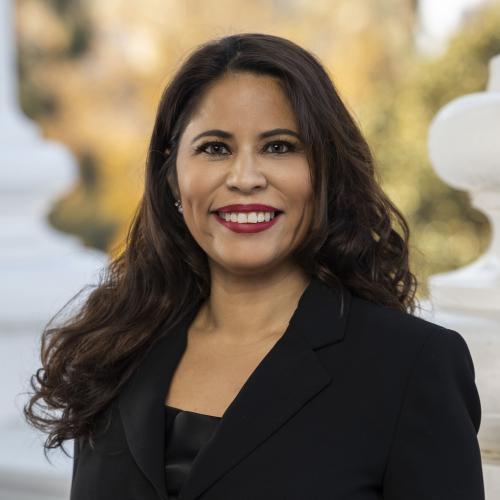
Rep. Liz Ortega
Sponsored bills
Existing law provides that every executive or ministerial officer, employee, or appointee of the State of California, or any county or city therein, or any political subdivision thereof, who knowingly asks, receives, or agrees to receive any emolument, gratuity, or reward, or any promise thereof excepting such as may be authorized by law for doing an official act, is guilty of a misdemeanor. Existing law exempts from that offense certain employment by a peace officer while off duty, as specified. Existing law also provides that a peace officer shall not be prohibited from engaging in other employment while off duty, as specified. This bill would, notwithstanding those provisions, prohibit certain peace officers from engaging in any form of secondary employment, including contract based or as an individual contractor, that involves engaging in arresting, detaining, transporting, or deporting individuals pursuant to federal or out-of-state immigration laws. The bill would provide that failure to comply with this provision may constitute, for certain purposes, an act of serious misconduct and that it is grounds for decertification as a peace officer. The bill would require certain peace officers to report to their employing law enforcement agency any conditional offer of secondary employment relating to immigration enforcement. The bill would require the law enforcement agency to maintain specified records related to secondary employment. By imposing additional duties on local law enforcement agencies, this bill would impose a state-mandated local program. The bill would also explicitly state that these records related to secondary employment of certain peace officers are public records for the purposes of the California Public Records Act. The California Constitution requires the state to reimburse local agencies and school districts for certain costs mandated by the state. Statutory provisions establish procedures for making that reimbursement. This bill would provide that, if the Commission on State Mandates determines that the bill contains costs mandated by the state, reimbursement for those costs shall be made pursuant to the statutory provisions noted above.
The Public Employees' Retirement Law (PERL) establishes the Public Employees' Retirement System (PERS) to provide a defined benefit to members of the system based on final compensation, credited service, and age at retirement, subject to certain variations. Existing law creates the Public Employees' Retirement Fund, which is continuously appropriated for purposes of PERS, including depositing employer and employee contributions. Under the California Constitution, assets of a public pension or retirement system are trust funds. The California Public Employees' Pension Reform Act of 2013 (PEPRA) establishes a variety of requirements and restrictions on public employers offering defined benefit pension plans. In this regard, PEPRA restricts the amount of compensation that may be applied for purposes of calculating a defined pension benefit for a new member, as defined, by restricting it to specified percentages of the contribution and benefit base under a specified federal law with respect to old age, survivors, and disability insurance benefits. Existing law, the Teachers' Retirement Law, establishes the State Teachers' Retirement System (STRS) and creates the Defined Benefit Program of the State Teachers' Retirement Plan, which provides a defined benefit to members of the program, based on final compensation, creditable service, and age at retirement, subject to certain variations. This bill, for service performed on and after January 1, 2027, would prohibit the pensionable compensation for calendar year 2027 used to calculate the defined benefit paid to a new member of a retirement system subject to PEPRA who retires from the system from exceeding specified percentages of the contribution and benefit base under the specified federal law with respect to old age, survivors, and disability insurance benefits. The bill would make related, conforming changes to these provisions on pensionable compensation. The bill also would require a new member of STRS to be subject to specified limits of the Teachers' Retirement Law. PEPRA requires each retirement system that offers a defined benefit plan for safety members of the system to use one of 3 formulas for safety members, 2% at age 57, 2.5% at age 57, or 2.7% at age 57. This bill would establish new retirement formulas, for employees first hired on or after January 1, 2027, as 2.5% at age 55, 2.7% at age 55, or 3% at age 55, subject to certain exceptions. For new members hired on or after January 1, 2013, who are safety members, the bill would require employers to adjust the formulas for service performed on or after January 1, 2027, to offer the formula that has the same fraction at age 55 as the fraction at age 57 in the formula the employer offered pursuant to existing law. The bill would authorize a public employer and a recognized employee organization to negotiate a prospective increase to the retirement benefit formulas for safety members and new safety members, consistent with the formulas permitted under PEPRA, including the new formulas described above. This bill would authorize an employer and its employees to agree in a memorandum of understanding to be subject to a higher safety plan or a lower safety plan, subject to certain requirements, including that the memorandum of understanding is collectively bargained in accordance with applicable laws. By increasing the contribution to continuously appropriated funds, and by increasing expenditures from those funds, this bill would make an appropriation.
Existing law creates within the Department of Corrections and Rehabilitation, under the Undersecretary for Operations, the Division of Adult Institutions, among others, and requires each division to be headed by a director, who is appointed by the Governor, as specified. Existing law also requires the Governor to appoint 4 subordinate officers to the division, as specified. Existing law requires each subordinate officer appointed to oversee an identified category of adult institutions, one of which oversees female offender facilities. This bill would instead require the Governor to appoint 3 subordinate officers, as specified, who would oversee an identified category of male adult institutions, and one subordinate officer, as specified, who would oversee female adult institutions. The bill would create within the department, and under the Undersecretary for Operations, the Division of Female Programs and Services. The bill would require the director of this division to be responsible solely for female adult institutions and community facilities housing female offenders. The bill would require the director to report to the undersecretary and to have a minimum of 5 years of experience serving a female correctional population in a custody setting. The bill would also require this new division to manage and provide oversight of adult female programs, including prisons, conservation camps, and parole and community programs and to develop gender-responsive, trauma-informed, culturally sensitive approaches to program and policy development. Existing law requires the department to create a Female Offender Reform Master Plan and present it to the Legislature by a specified date. Existing law requires the department to, among other things, create policies and operational practices that are designed to ensure a safe and productive institutional environment for female offenders. This bill would require the department to provide a report to the Legislature on the implementation of the plan, and update statistics contained in the plan, by March 1, 2027, and every 3 years thereafter. The bill would require the department to maintain the plan, including subsequent updates and reports, in consultation with the commission and others, as specified. The bill would also require the department to post the plan, any reports, and any updates to the plan to the department's internet website. This bill would require the department to establish the Gender Responsive Strategies Commission (GRSC) to develop active partnerships and to support successful implementation of gender responsive practices and rehabilitation programs for incarcerated individuals. The bill would require the GRSC to be composed of 19 representatives, as specified, and would require the department, by June 1, 2027, and annually thereafter, to provide a written report to the Legislature on appointments to the GRSC and the department's response and progress toward implementing the GRSC's recommendations. Existing law also requires the department to contract with nationally recognized gender-responsive experts in prison operational practices, staffing, classification, substance abuse, trauma treatment services, mental health services, transitional services, and community corrections to, among other things, conduct a staffing analysis of all current job classifications assigned to each prison that houses only females, as specified, and develop programs and training for department staff in correctional facilities. This bill would require the department, through this contract, no later than March 1, 2027, and every 3 years thereafter, to prepare and submit to the Legislature an updated staffing analysis and would require a comprehensive review of the office's policies and practices and other aspects of women-centered corrections developed to enhance safety and rehabilitative efforts, as specified. The bill would also require the training program to include training at the academy and, for those working in a female prison, 40 hours of initial training with a curriculum specifically focused on working with the population within female institutions and an 8-hour annual training thereafter. Existing law requires the secretary of the department to expand the existing prison ombudsperson program to ensure the comprehensive deployment of ombudspersons throughout the state prison system with specific focus on the maximum security institutions. This bill would instead require the Undersecretary for Operations to perform this duty and would require the undersecretary to appoint an ombudsperson solely assigned to adult female institutions.
The California Fair Employment and Housing Act establishes the Civil Rights Department within the Business, Consumer Services, and Housing Agency and requires the department to, among other things, bring civil actions to enforce the act. Existing law requires, on or before September 1, 2024, the Department of Technology to conduct, in coordination with other interagency bodies as it deems appropriate, a comprehensive inventory of all high-risk automated decision systems that have been proposed for use, development, or procurement by, or are being used, developed, or procured by, any state agency. This bill would generally regulate the development and deployment of an automated decision system (ADS) used to make consequential decisions, as defined. The bill would define "automated decision system" to mean a computational process derived from machine learning, statistical modeling, data analytics, or artificial intelligence that issues simplified output, including a score, classification, or recommendation, that is designed or used to assist or replace human discretionary decisionmaking and materially impacts natural persons. This bill would require a developer of a covered ADS, as defined, to take certain actions, including providing a potential deployer instructions explaining how the covered ADS should be used by the deployer to make or facilitate a consequential decision. This bill would require a deployer of a covered ADS to take certain actions, including provide certain disclosures to a subject of a consequential decision made or facilitated by the covered ADS that results in an adverse outcome, as defined, and provide the subject with an opportunity to appeal the outcome of the consequential decision, as prescribed. This bill would authorize the Attorney General to bring a specified civil action for noncompliance.
The California FAIR Plan Association is a joint reinsurance association in which all insurers licensed to write basic property insurance participate to administer a program for the equitable apportionment of basic property insurance for persons who are unable to obtain that coverage through normal channels. Existing law requires the association to implement programs to help reduce the number of existing FAIR Plan policies, including clearinghouse programs in which a participating insurer offers homeowners or commercial insurance to FAIR Plan policyholders. Existing law requires an agent or broker transacting basic property insurance to assist a person in obtaining basic property insurance coverage by one of several specified methods, including making an application for insurance through the FAIR Plan. On and after January 1, 2028, this bill would authorize the association to share policyholder information with insurers participating in the clearinghouse program, as specified, to allow a participating insurer to offer a policy to a FAIR Plan policyholder and, if there is an agent or broker of record listed on the policy, would require the insurer to make the offer simultaneously to the agent or broker of record and the FAIR Plan policyholder. Commencing May 1, 2027, the bill would require a participating insurer to report to the association on a quarterly basis the number of policies it has issued to FAIR Plan policyholders. The bill would require the association to report aggregated numbers within 30 days, as specified, and post and quarterly update on its internet website a list of participating insurers in the clearinghouse programs. The bill would require the association to provide all policyholders with a notice regarding their coverage options at least annually, including with the initial policy issuance and upon each renewal. The bill would require an agent or broker transacting basic property insurance to assist a person in obtaining basic property insurance coverage by providing the person with information on the clearinghouse programs, among other specified assistance. The bill would require the association to require registered agents and brokers to complete the association's department-approved training on the association's and the broker's responsibility to advise policyholders on the voluntary market options. This bill would incorporate additional changes to Section 10095 of the Insurance Code proposed by AB 1680 to be operative only if this bill and AB 1680 are enacted and this bill is enacted last. This bill would incorporate additional changes to Section 10095.5 of the Insurance Code proposed by AB 2061 to be operative only if this bill and AB 2061 are enacted and this bill is enacted last.
Existing law grants to higher education employees the right to form, join, and participate in the activities of employee organizations for purposes of representation on all matters of employer-employee relations and for the purpose of meeting and conferring. Existing law, for the California State University, prohibits written memoranda reached that require budgetary or curative action by the Legislature or other agencies from being effective unless that action has been taken, and requires an appropriate request for financing or budgetary funding for all state-funded employees or for necessary legislation to be forwarded to the Legislature and the Governor or other funding agencies. Existing law requires the entire memorandum to be referred back to the parties for further meeting and conferring when the memorandum requires legislative action and the Legislature or the Governor fails to fully fund the memorandum or take the requisite curative action, except as specified. This bill would require the above-described determination of whether a memorandum requires legislative action and the Legislature or the Governor fails to fully fund the memorandum or take the requisite curative action to be made by the Public Employment Relations Board by written notification to the parties.
(1) Existing law, the California Fair Employment and Housing Act (FEHA) , establishes the Civil Rights Department to enforce civil rights laws with respect to housing and employment, as prescribed. The FEHA recognizes and declares to be a civil right the opportunity to seek, obtain, and hold employment and housing without discrimination because of a specified characteristic. The FEHA makes certain discriminatory practices based on those characteristics unlawful. The FEHA also declares that its purpose is to provide effective remedies that will eliminate these discriminatory practices. The FEHA defines terms used in connection with unlawful practices. These include "sex," which includes pregnancy or medical conditions related to pregnancy, childbirth or medical conditions related to childbirth, and breastfeeding or medical conditions related to breastfeeding. This bill would include perimenopause, menopause, or postmenopause or other related medical conditions within the above definition of sex. The FEHA separately defines the term "medical condition" to mean either a health impairment related to or associated with a diagnosis of cancer or a record or history of cancer or specified genetic characteristics. The Unruh Civil Rights Act (Unruh Act) establishes that all persons within the jurisdiction of the state are free and equal and, regardless of their sex, race, color, religion, ancestry, national origin, disability, medical condition, genetic information, marital status, sexual orientation, citizenship, primary language, or immigration status are entitled to the full and equal accommodations, advantages, facilities, privileges, or services in all business establishments, as prescribed. The Unruh Act defines "sex" to include, among other things, pregnancy, childbirth, or medical conditions related to pregnancy or childbirth. This bill would provide that "medical condition" as used in the definition of "sex" in FEHA and the Unruh Act includes, but is not limited to, the conditions included in the definition of "medical condition" in FEHA. (2) Existing law requires the Civil Rights Department to provide a poster on discrimination in employment to an employer or a member of the public upon request. Existing law requires the poster to be available at each office of the department and requires each employer to post the poster in a prominent and accessible location in the workplace, as prescribed. This bill would require the department, on or before July 1, 2027, to update the poster to notify people of their rights and protections in regard to perimenopause, menopause, postmenopause, or related medical conditions. (3) This bill would incorporate additional changes to Section 51 of the Civil Code proposed by AB 2563 to be operative only if this bill and AB 2563 are enacted and this bill is enacted last. This bill would incorporate additional changes to Section 12926 of the Government Code proposed by AB 2563 to be operative only if this bill and AB 2563 are enacted and this bill is enacted last.
Existing law, including, but not limited to, property tax law, the Sales and Use Tax Law, the Personal Income Tax Law, the Corporation Tax Law, the Motor Vehicle Fuel Tax Law, the law governing the taxation of insurers, the Use Fuel Tax Law, and the Diesel Fuel Tax Law, provides for tax expenditures, including exemptions, deductions, exclusions, and credits against the taxes imposed by those laws. The bill would require the Legislative Analyst's Office (LAO) to comprehensively assess the major tax expenditures, as defined, of the state, write and publish a report on each major tax expenditure, and make a recommendation to the Legislature based on each report. In this regard, the bill would require LAO, as part of the comprehensive assessments, to identify any savings that the Legislature can realize by reducing or limiting the major tax expenditures, and require them to consider certain criteria when finalizing each report, including the extent to which the major tax expenditure is a cost-effective use of resources compared to other options to address the same purpose, intent, or goal. The bill would require LAO to complete and publish on its internet website its first report on a major tax expenditure by January 1, 2028, and to complete and publish on its internet website each subsequent report on a major tax expenditure annually in a sequence determined by the office thereafter until the fifth and final report is submitted on January 1, 2032. The bill would require the Senate Committee on Revenue and Taxation and the Assembly Committee on Revenue and Taxation, to hold a joint public hearing on these reports by each August 15 of the second year of the legislative session, as specified. To the extent that LAO needs access to taxpayer data and information, the bill would require the Franchise Tax Board, the California Department of Tax and Fee Administration, and the Employment Development Department to ensure that relevant anonymized taxpayer data is made available and ensure that appropriate levels of data security and privacy protections are in place for transferred or sensitive data. The bill would repeal its provisions on January 1, 2033. The bill would make findings and declarations relating to these provisions.
Existing law establishes the Medi-Cal program, which is administered by the State Department of Health Care Services and under which qualified low-income individuals receive health care services. The Medi-Cal program is in part governed by, and funded pursuant to, federal Medicaid program provisions. Under existing law, certain vision care benefits are covered under the Medi-Cal program, relating to, among other things, optometric and optician services and eyeglasses, as specified. This bill would require the department, by no later than January 1, 2028, to establish a list of performance measures to ensure that the vision services under the Medi-Cal program meet quality and access criteria. The bill would require that the performance measures be designed to evaluate utilization, access, and availability of Medi-Cal vision services. The bill would require certain information within the performance measures, relating to providers and examinations, among other factors. The bill would require the department, when evaluating performance measures, to consider certain criteria, including trended data and other state performance and quality measures. The bill would require the department to report on each performance measure only to the extent that the department has existing data sources from which to calculate the applicable measure, as specified. The bill would specify a timeline for the posting of performance measures and data on the department's internet website. The bill would also require the department to establish benchmarks for each performance measure and to annually prepare a summary report on complaints and grievances, as specified.