Maddy summaryThis House Resolution officially designates September as Black Music Month to honor the significant contributions of Black artists to American culture. The measure recognizes a wide range of musical genres, including jazz, blues, gospel, and hip-hop, by highlighting their historical origins and influential figures. While the text celebrates these artistic achievements, it does not impose any new legal requirements or funding mandates.
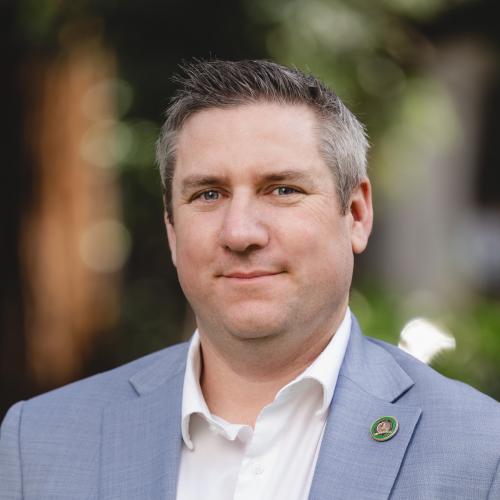
Rep. Chris Rogers
Sponsored bills
(1) Existing law, until January 1, 2030, generally prohibits a person from possessing, importing, shipping, or transporting in the state, or from placing, planting, or causing to be placed or planted in any water in the state, invasive mussels, and authorizes the Director of Fish and Wildlife or the director's designee to engage in various enforcement activities, including ordering the areas in conveyance that contain water be drained, dried, or decontaminated, as provided. Existing law requires a public or private agency that operates a water supply system to cooperate with the Department of Fish and Wildlife to implement measures to avoid infestation by invasive mussels and to control or eradicate any infestation that may occur in a water supply system. Existing law requires, if invasive mussels are detected, the operator of a water supply system to, in cooperation with the department, prepare and implement a plan to control or eradicate invasive mussels within the system, and eliminate or minimize any potential downstream transport of an invasive mussel. Existing law requires, on or before December 31, 2026, the department to review all approved plans and require all plans that do not specifically address all invasive mussel species known to be present in bodies of water in the state as of January 1, 2026, to be updated or revised appropriately to include all invasive mussel species, on or before September 30, 2027. Existing law requires every invasive mussel species to be addressed in a plan no later than 180 days from the date that the species is listed in a certain regulation. Existing law defines "invasive mussel" for these purposes as any nonnative detrimental mussel, as provided. Under existing law, except as otherwise provided, any violation of the Fish and Game Code, or of any rule, regulation, or order made or adopted under the code, is a crime. This bill would prohibit a conveyance from being launched until a specified drying period has completed, as provided. By expanding the scope of a crime, this bill would impose a state-mandated local program. The bill would require the department to require water supply system operators to update their plans to address all invasive mussel species present in the operator's water system as of January 1, 2026, as provided. The bill would require a plan to address every invasive mussel species detected in a water supply system after January 1, 2026, no later than 180 days from the date the species is detected. The bill would require a plan to minimize or eliminate the spread of invasive mussels. The bill would revise the definition of "invasive mussel" to mean any nonnative biofouling mussel, as provided. By expanding the scope of a crime, the bill would impose a state-mandated local program. This bill would enact a comprehensive inspection and decontamination program to be administered by the department under which the department would license inspection and decontamination stations with qualified inspectors to inspect and decontaminate conveyances for aquatic invasive species and issue certificates of compliance or notices of noncompliance, as prescribed by standards adopted by the department. The bill would establish a length of 2 years for those licenses and qualifications and would impose related application fees. The bill would impose requirements on various entities as part of the program, including requiring inspection and decontamination stations and waterbody managers to use a specified data sharing system for tracking the movement of conveyances, equipment, and other vectors among California waterbodies. Because a violation of these provisions would be a crime, the bill would impose a state-mandated local program. (2) Existing law establishes a registration fee and a renewal fee for vessels, and imposes an additional fee, known as the invasive mussel infestation prevention fee, on a vessel required to pay the registration fee or renewal fee, as provided. Existing law requires the Division of Boating and Waterways to issue a vessel an invasive mussel infestation prevention sticker to the vessel owner upon payment of the invasive mussel infestation prevention fee. Existing law authorizes a vessel operator to be issued a citation for operating a vessel or a recreational vessel in nonmarine waters without a valid state-issued invasive mussel infestation prevention sticker. This bill would enact similar provisions that would impose an additional invasive mussel infestation prevention fee of $20 per nonmotorized vessel every 2 years, as specified. The bill would require the Department of Fish and Wildlife to issue an invasive mussel infestation prevention sticker to be affixed to the nonmotorized vessel upon payment of the invasive mussel infestation prevention fee. The bill would authorize a vessel operator to be issued a citation for operating a nonmotorized vessel without that valid state-issued invasive mussel infestation prevention sticker. This bill would require the $20 fee to be deposited into the Nonmotorized Vessel Invasive Mussel Infestation Prevention Account, which the bill would create within the Harbors and Watercraft Revolving Fund. Moneys in the account would be available, upon appropriation by the Legislature, for reasonable regulatory costs of the department and the division and for specified grants. The bill would require any citation moneys to be deposited into the Nonmotorized Vessel Invasive Mussel Infestation Prevention Penalty Account, which the bill would create within the Harbors and Watercraft Revolving Fund. Moneys in the penalty account would be available, upon appropriation by the Legislature, for specified grants and to expend on certain educational materials and signage. (3) The California Constitution requires the state to reimburse local agencies and school districts for certain costs mandated by the state. Statutory provisions establish procedures for making that reimbursement. This bill would provide that no reimbursement is required by this act for a specified reason. (4) Existing constitutional provisions require that a statute that limits the right of access to the meetings of public bodies or the writings of public officials and agencies be adopted with findings demonstrating the interest protected by the limitation and the need for protecting that interest. This bill would make legislative findings to that effect.
Existing law establishes the Department of Housing and Community Development in the Business, Consumer Services, and Housing Agency. Existing law, the California Building Standards Law, establishes the California Building Standards Commission. Existing law requires the commission to approve and adopt building standards and to codify those standards in the California Building Standards Code. Existing law, the State Housing Law, establishes statewide construction and occupancy standards for buildings used for human habitation. Existing law, until January 1, 2033, requires the commission and the department, commencing with the next triennial edition of the code adopted after January 1, 2023, to research and develop, and authorizes the commission and the department to propose for adoption by the commission, mandatory building standards for the installation of electric vehicle charging stations in existing multifamily dwellings, hotels, motels, and nonresidential developments, as specified. This bill would authorize the commission, commencing with the first triennial edition of the code adopted after June 1, 2031, to adopt, approve, codify, and publish building energy standards for building electrical circuit features to enable a qualified plug-in photovoltaic system, as defined, to function as an energy source within the electrical circuit of a single-family residential dwelling, multiunit residential dwelling, or nonresidential development, that is constructed after that edition is adopted, as specified. The bill would, for purposes of that requirement, require the department to research, develop, and propose for adoption building standards for a qualified plug-in photovoltaic system to function as an energy source within the electrical circuit of a single-family residential dwelling, multiunit residential dwelling, or nonresidential development, as specified. The bill would require the commission and the department, in satisfying those requirements, to, among other things, consult with certain interested parties and invite the participation of the public at large in the development of those building energy standards through open consensus-based processes.
Existing law declares the established policy of the state that every human being has the right to access sufficient affordable and healthy food. Existing law defines food insecurity as the occasional or constant lack of access to the food one needs to live a healthy life and the uncertainty of being able to acquire enough food to meet the needs of an individual or household due to insufficient money or other resources. Existing law establishes the University of California, under the administration of the Regents of the University of California, as one of the segments of public postsecondary education within this state. The University of California comprises 10 institutions of higher education located at various campuses, including in the City of Los Angeles. This bill, the Count Hunger Act, would encourage the University of California, Los Angeles, in administering the California Health Interview Survey, to expand the portion of the survey relating to food insecurity to include households with incomes at or below 400% of the federal poverty level. The bill would further encourage the University of California, Los Angeles, to make available statewide, regional, and county-level data regarding food insecurity among households with incomes at or below 400% of the federal poverty level through the AskCHIS reporting tool or a successor public reporting platform, as specified. The bill would encourage these provisions to be undertaken only to the extent that the University of California, Los Angeles, determines sufficient resources are available.
Existing federal law, the Indian Child Welfare Act of 1978 (ICWA) , governs the proceedings for determining the placement of an Indian child when that child is removed from the custody of the child's parent or guardian. Existing law specifies that the state is committed to protecting the essential tribal relations and best interest of an Indian child by promoting practices in accordance with ICWA. Existing law also provides for the state and an Indian tribe to enter into an agreement regarding the care and custody of Indian children and jurisdiction over Indian child custody proceedings. Existing law establishes, in order to provide additional funds to eligible Indian tribes that have entered into an agreement with the state pursuant to those provisions, the Tribally Approved Homes Compensation Program to provide funds to recruit and approve homes for the purpose of foster or adoptive placement of an Indian child and the Tribal Dependency Representation Program to provide funds to pay for legal counsel to represent the Indian tribe in a California Indian child custody proceeding. This bill would establish the Tribal Foster Care Prevention Program to provide funding to assist any federally recognized Indian tribe located in California, or with lands that extend into California, in funding the costs associated with services aimed at preserving families and preventing the entry of children into foster care. The bill would require an Indian tribe that seeks funding for this purpose to submit an annual letter of interest to the department. The bill would require the department, subject to an appropriation in the annual Budget Act for this purpose, to provide each Indian tribe that enters into a specified agreement and submits a letter of interest an annual allocation. The bill would require an Indian tribe that receives funds to submit a progress report regarding the number of Indian children and their families served to the department on or before September 30 following the close of the fiscal year in which funding was received. This bill would authorize the department to issue written guidance to implement, interpret, or make specific these provisions without taking any regulatory action.
(1) Under existing law, the State Water Resources Control Board and the 9 California regional water quality control boards regulate water quality and prescribe waste discharge requirements in accordance with the Porter-Cologne Water Quality Control Act (act) and the National Pollutant Discharge Elimination System (NPDES) permit program. Under the act, the State Water Resources Control Board is authorized to adopt water quality control plans for waters for which quality standards are required by the federal Clean Water Act, as specified, and that in the event of a conflict, those plans supersede regional water quality control plans for the same waters. This bill would authorize the state board to adopt water quality control plans for nexus waters, which the bill would define as all waters of the state that are not also navigable, except as specified. The bill would require any water quality standard that was submitted to, and approved by, or is awaiting approval by, the United States Environmental Protection Agency or the state board that applied to nexus waters as of May 24, 2023, to remain in effect, as provided. The bill would require the state board and regional boards to include nexus waters in all federal Clean Water Act processes, including, but not limited to, the California Integrated Report and the establishment of total maximum daily loads, as specified. (2) Existing law requires a regional board, after any necessary hearing, to prescribe requirements as to the nature of any proposed discharge, existing discharge, or material change in an existing discharge, except discharges into a community sewer system, with relation to the conditions existing in the disposal area or receiving waters upon, or into which, the discharge is made or proposed and sets forth what the requirements are to include. This bill would require the above-described discharge requirements to, in the case of discharges from any point source to nexus waters, implement, at a minimum, the requirements of provisions implementing the Federal Water Pollution Control Act and acts amendatory thereof or supplementary thereto. (3) The act authorizes the imposition of civil penalties for violations of certain waste discharge requirements, including violation of a cease and desist order or a cleanup and abatement order, and requires that penalties imposed pursuant to these provisions be deposited into the Waste Discharge Permit Fund, to be expended by the state board, upon appropriation by the Legislature, for specified purposes related to water quality. For violations of certain other waste discharge requirements, the act imposes specified civil penalties, the proceeds of which are deposited into the continuously appropriated State Water Pollution Cleanup and Abatement Account. This bill would require, commencing January 1, 2026, and each calendar year thereafter, the state board's executive director to adjust civil monetary penalties, as specified, including the civil penalties for the above-described provisions. The bill would require moneys collected in accordance with these annual adjustments to be deposited into the Penalty Adjustment Account, that the bill would establish within the Waste Discharge Permit Fund, and upon appropriation by the Legislature, be expended by the state board for purposes of cleaning up and abating the effects of waste on waters of the state. (4) Existing law generally provides for enforcement and implementation of the act. This bill would authorize specified entities, including the Attorney General and the state board, to bring an action to enforce certain provisions related to nexus waters or waste discharge requirements for nexus waters, as provided. (5) The act provides various provisions related to waste discharge to ensure consistency with the requirements for state programs implementing the Federal Water Pollution Control Act and acts amendatory thereof or supplementary thereto. The act defines the terms "navigable waters," "administrator," "pollutants," "biological monitoring," "discharge," and "point sources" as having the same meanings as in the Federal Water Pollution Control Act. This bill would provide that "waste discharge requirements" include waste discharge requirements issued for discharges to nexus waters, and "discharge" includes any addition of a pollutant to a nexus water from any point source. The bill would provide that for purposes of compliance with the Federal Water Pollution Control Act, nexus waters shall be treated as though they are navigable waters and navigable waters of the United States. The bill would require waste discharge requirements adopted or amended for discharges to nexus waters to be adopted pursuant to and in accordance with the requirements of provisions implementing the Federal Water Pollution Control Act and acts amendatory thereof or supplementary thereto, as specified. (6) The act requires a person who discharges pollutants or proposes to discharge pollutants to the navigable waters of the United States within the jurisdiction of this state or a person who discharges dredged or fill material or proposes to discharge dredged or fill material into the navigable waters of the United States within the jurisdiction of this state to file a report of the discharge, except as specified. The act prohibits the discharge of pollutants or dredged or fill material or the operation of a publicly owned treatment works or other treatment works treating domestic sewage by any person, except as authorized by waste discharge requirements or dredged or fill material permits. This bill would require a person to file a report for discharges to nexus waters. The bill would apply the above-described prohibition to nexus waters.

Existing law prohibits a person from causing, permitting, or aiding or abetting the fighting, worrying, or injuring of a cock. Existing law provides that a violation of this provision is a misdemeanor, as provided. Existing law generally regulates the production of poultry, eggs, and egg products. This bill would prohibit, on and after January 1, 2028, a person from keeping more than 25 roosters that are movement constrained through the use of an enclosure or tether, except as specified. The bill would subject a person who violates this prohibition to a civil penalty not to exceed $2,500 for each violation, as provided, and would provide that each day a rooster is kept in violation of that prohibition constitutes a separate and distinct violation. The bill would require, before a civil action is brought to recover this civil penalty, a written notice to be provided granting a minimum of 14 days to correct the violation, as provided. The bill would require any civil penalties recovered pursuant to these provisions to be paid to the county in which the civil action was brought. The bill would define, among other terms, "rooster" and "enclosure" for purposes of these provisions.
This measure would recognize the importance of access to local and state parks, trails, open space, and facilities for the health, wellness, development, inspiration, and safety of all Californians and would declare the month of July 2026 as "Parks Make Life Better!®" Month.
Maddy summaryThis bill serves as a commemorative resolution to mark the 50th anniversary of the Surface Mining and Reclamation Act of 1975. It does not create new laws or alter existing regulations but instead formally acknowledges the milestone achievement of the original legislation. The measure is intended to honor the history of mining and land reclamation efforts established by the 1975 act.
This measure would acknowledge and celebrate 50 years of coastal protection and affirm the state's longstanding commitment to protecting its coastal waters, as specified.