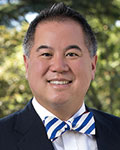
Photo of Phil Ting
D California Assembly · District 19 · Former member

Asm. Phil Ting

Contact Email
Compare
Total votes
25,223
all sessions
Attendance
97%
568 missed
Higher than 85% of chamber peers
With party
99%
of cast votes
Near the chamber average
Bipartisan score
0%
crosses aisle rarely
Near the chamber average
Sponsored
2,434
bills & resolutions
Near the chamber average
Committees
0
assignments
2,434 bills and resolutions

Sponsored bills

Total
2,434
Primary
338
Co-sponsor
2,096
This page
2,434
matching current filters
Co-sponsor ACR 114
Signed into law · California Assembly · Co-sponsor
Relative to Grand Jury Awareness Month.

This measure would proclaim the month of March 2016 as Grand Jury Awareness Month in California, recognize those who volunteer in a grand jury, and encourage all Californians to learn about its role in the judicial system.

Signed into law Apr 14, 2016 1 co-sponsor
Primary AB 2039
In committee · California Assembly · Lead sponsor
Solid waste: home-generated sharps.

(1) The stated purpose of the California Integrated Waste Management Act of 1989, administered by the Department of Resources Recycling and Recovery, is to reduce, recycle, and reuse solid waste generated in the state to the maximum extent feasible in an efficient and cost-effective manner to conserve water, energy, and other natural resources. That act requires a pharmaceutical manufacturer selling or distributing medication that is intended to be self-injected at home to submit, on an annual basis, to the department a plan supporting the safe collection and proper disposal of specified waste devices, known as home-generated sharps. This bill would require a producer of home-generated sharps or a stewardship organization designated by the producer to submit a home-generated sharps stewardship plan by July 1, 2018, to the Department of Resources Recycling and Recovery. The bill would require the plan to provide for the development and implementation of a recovery program to reduce the generation of, and manage the end of life of, home-generated sharps, and to include specified elements, including provisions to meet specified minimum collection rates for the home-generated sharps subject to the plan. This bill would provide for the review and approval of the plan by the department. The bill would require the department upon the date a plan is approved, to post on its Internet Web site a list of producers covered by the approved plan. This bill would require a producer or stewardship organization, by April 1, 2020, and every year thereafter, to prepare and submit to the department an annual report describing the activities carried out pursuant to its plan during the previous calendar year. The department would be required to review and either approve or disapprove the report and, if the annual report does not demonstrate the achievement of the required collection rate increase, would authorize the department to impose a civil penalty on the producer or stewardship organization or to require the program to take additional actions with regard to improving and increasing the number of home-generated sharps collection points, ensuring accessibility to those points, and providing additional education and outreach activities. This bill would require a producer or stewardship organization submitting a plan to the department to pay the department an annual administrative fee in an amount that is sufficient to cover the department's full costs of administering and enforcing these provisions. The bill would require the department to deposit the fees in the Safe Sharps Disposal Account, which the bill would establish in the Integrated Waste Management Fund, for the department's expenditure upon appropriation by the Legislature, to administer and enforce the bill's requirements. This bill would authorize the department to impose an administrative civil penalty on a person who violates the bill's requirements. The department would be required to deposit all penalties collected into the Safe Sharps Disposal Penalty Account, which the bill would create in the Integrated Waste Management Fund, available upon appropriation by the Legislature, to enforce the bill's requirements. The bill would require the department, by February 1, 2018, to appoint a stakeholder advisory committee to provide specific recommendations and strategic guidance to producers and stewardship organizations. The bill would also require the stakeholder advisory committee to annually report to the department on the progress of the producers' and stewardship organizations' implementation of the bill's provisions. (2) The Medical Waste Management Act, administered by the State Department of Public Health, prohibits a person from knowingly placing home-generated sharps waste in certain types of containers, requires that home-generated sharps waste be transported only in a sharps container, as defined in that act, or another container approved by the department or local enforcement agency, and requires that this waste be managed only at specified locations. This bill would additionally allow home-generated sharps waste to be managed at a facility or collection point operated pursuant to an approved home-generated sharps stewardship plan.

In committee Apr 12, 2016 0 co-sponsors
Co-sponsor SB 3
Signed into law · California Senate · Co-sponsor
Minimum wage: in-home supportive services: paid sick days.

(1) Under existing law, the Healthy Workplaces, Healthy Families Act of 2014, an employee who, on or after July 1, 2015, works in California for the same employer for 30 or more days within a year from the commencement of employment is entitled to paid sick days, as specified. Existing law requires an employee to accrue paid sick days at the rate of not less than one hour per every 30 hours worked subject to specified use and accrual limitations. For the purposes of the act, an "employee" does not include a provider of in-home supportive services, as described. This bill, on and after July 1, 2018, would entitle a provider of in-home supportive services who works in California for 30 or more days within a year from the commencement of employment to paid sick days, subject to specified full amount of leave time amounts and that rate of accrual. The bill would require the State Department of Social Services, in consultation with stakeholders, to convene a workgroup to implement paid sick leave for in-home supportive services providers and to issue guidance in that regard by December 1, 2017. The bill would authorize the department to implement that paid sick leave without complying with the Administrative Procedure Act. (2) On and after July 1, 2014, existing law requires the minimum wage for all industries to be not less than $9 per hour. On and after January 1, 2016, existing law requires the minimum wage for all industries to be not less than $10 per hour. This bill would require the minimum wage for all industries to not be less than specified amounts to be increased from January 1, 2017, to January 1, 2022, inclusive, for employers employing 26 or more employees and from January 1, 2018, to January 1, 2023, inclusive, for employers employing 25 or fewer employees, except when the scheduled increases are temporarily suspended by the Governor, based on certain determinations. The bill would also require the Director of Finance, after the last scheduled minimum wage increase, to annually adjust the minimum wage under a specified formula. On or before July 28, 2017, and on or before every July 28 thereafter until the minimum wage is a specified amount for employers employing 26 or more employees, the bill would require the Director of Finance to annually determine, based on certain factors, whether economic conditions can support a scheduled minimum wage increase and certify that determination to the Governor and the Legislature. The bill would also require the State Board of Equalization to publish specified retail sales and use tax information on its Internet Web site to be used by the Director of Finance in making that determination. On or before July 28, 2017, and on or before every July 28 thereafter until the minimum wage is a specified amount for employers employing 26 or more employees, in order to ensure that the General Fund can support the next scheduled minimum wage increase, the bill would also require the Director of Finance to annually determine and certify to the Governor and the Legislature whether the General Fund would be in a deficit in the current fiscal year, or in either of the following 2 fiscal years.


Signed into law Apr 4, 2016 1 co-sponsor
Co-sponsor ACR 132
Signed into law · California Assembly · Co-sponsor
Relative to V-Day.

This measure would proclaim February 14, 2016, as V-Day to encourage all Californians to become more aware about and prevent violence against women.

Signed into law Mar 17, 2016 1 co-sponsor
Co-sponsor SCR 99
Signed into law · California Senate · Co-sponsor
Relative to the 28th Annual State Scientist Day.

This measure would declare May 18, 2016, as the 28th Annual State Scientist Day, as a tribute to the dedication and professionalism of the state scientists who work on behalf of all the residents of California.

Signed into law Mar 17, 2016 1 co-sponsor
Showing 1,931 to 1,940 of 2,434 bills