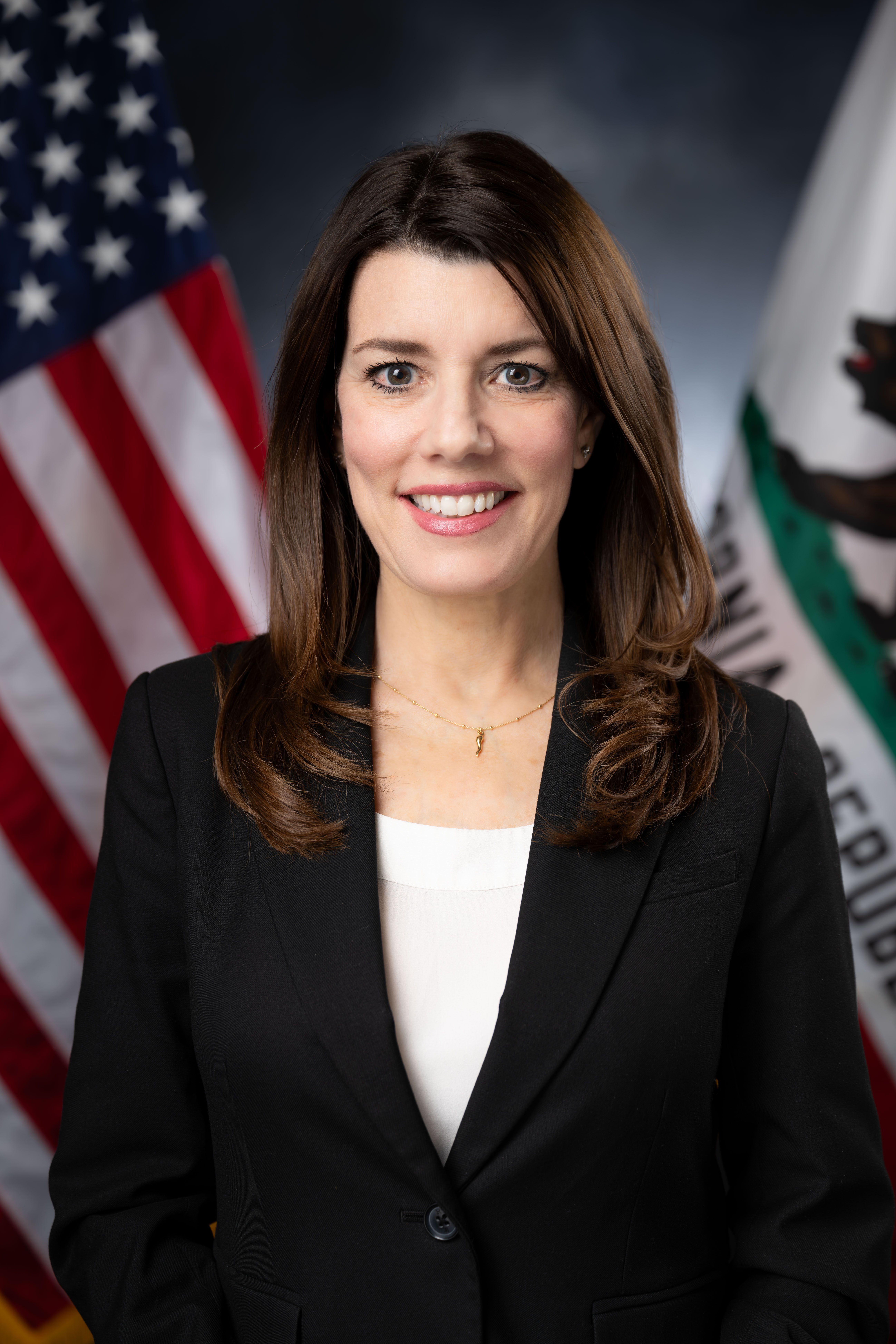
Photo of Catherine Stefani
D California Assembly · District 19 On the 2026 ballot

Asm. Catherine Stefani

Compare
Total votes
5,047
all sessions
Attendance
97%
125 missed
Near the chamber average
With party
100%
of cast votes
Near the chamber average
Bipartisan score
0%
crosses aisle rarely
Near the chamber average
Sponsored
429
bills & resolutions
Near the chamber average
Committees
11
assignments
429 bills and resolutions

Sponsored bills

Total
429
Primary
44
Co-sponsor
385
This page
429
matching current filters
Co-sponsor HR 131
Passed · California Assembly · Co-sponsor
Relative to Student Cancer Education, Detection, and Prevention Week.

Maddy summaryCalifornia Assembly Resolution 131 proclaims October 11 through 17, 2026, as Student Cancer Education, Detection, and Prevention Week. The resolution encourages middle schools, high schools, colleges, public health agencies, pediatricians, and community health providers to promote educational campaigns on cancer prevention and detection. These efforts aim to inform students about risk factors, warning signs, and the importance of timely screenings to support better health outcomes for young people in the state.

Passed Aug 13, 2026 1 co-sponsor
Co-sponsor AB 1810
Passed · California Assembly · Co-sponsor
Firearms: dealer centralized list.

Existing law requires the Department of Justice to keep a centralized list of all persons who are licensed firearms dealers and satisfy certain requirements, including having a valid federal firearms license and a regulatory or business license required by local government. Existing law requires the department to remove a person from the list if the person's federal license has expired or been revoked. Existing law, beginning on January 1, 2024, requires the department to conduct inspections of firearms dealers at least every 3 years, except as provided, to ensure compliance with specified requirements. As part of the department's inspections of firearms dealers, existing law requires the department to audit a dealer's records that includes a sampling of at least 25% but no more than 50% of each record type. Existing law requires the department to assess annual fees not to exceed specified amounts to cover the reasonable costs of inspecting and maintaining this list and other similar centralized lists. This bill would require the department to remove from the list a person who fails to comply with the requirements to be on the list and authorize the department to remove a person from the list who fails to remedy specified violations discovered as a result of the above-described inspections. The bill would subject a person removed from the list for failure to remedy specified violations to a fine and would authorize that person to be ineligible to be placed on the list for a period of 2 years. The bill would require the department to conduct a yearly inspection of the 10 firearm dealer locations with the highest percentage of firearms that were recovered by law enforcement and found to be illegally possessed, used in a crime, or suspected to have been used in a crime, as specified, pursuant to a certain yearly report. The bill would, for the fees charged for inspecting and maintaining the above-described lists, instead require the department to assess a reasonable annual fee. The bill would prohibit a fee adjustment from exceeding 15% over the previous year and exceeding the amount necessary to cover the costs described above.

Passed Aug 13, 2026 1 co-sponsor
Co-sponsor AB 2201
Passed · California Assembly · Co-sponsor
Medi-Cal: eligibility redetermination.

Existing law establishes the Medi-Cal program, which is administered by the State Department of Health Care Services and under which qualified low-income individuals receive health care services. The Medi-Cal program is in part governed by, and funded pursuant to, federal Medicaid program provisions. Existing federal law, enacted on July 4, 2025, sets forth various changes to Medicaid eligibility with regard to community engagement reporting, redeterminations, retroactive coverage, and cost sharing, among other factors, for certain Medicaid populations. Existing law, for purposes of acquiring information necessary to conduct eligibility redeterminations, requires a county to gather information available to the county that is relevant to the beneficiary's Medi-Cal eligibility before contacting the beneficiary. This bill would require the county, in the case of an annual or 6-month redetermination, to verify countable income and assets at renewal without requesting additional verification information or documentation if any of specified sets of conditions are met, relating to certain financial data sources. This bill would require that these provisions be implemented subject to an appropriation made by the Legislature. By creating new duties for counties relating to Medi-Cal eligibility determinations or redeterminations, the bill would impose a state-mandated local program. The California Constitution requires the state to reimburse local agencies and school districts for certain costs mandated by the state. Statutory provisions establish procedures for making that reimbursement. This bill would provide that, if the Commission on State Mandates determines that the bill contains costs mandated by the state, reimbursement for those costs shall be made pursuant to the statutory provisions noted above.

Passed Aug 13, 2026 1 co-sponsor
Co-sponsor HR 112
Passed · California Assembly · Co-sponsor
Relative to Black Music Month.

Maddy summaryThis House Resolution officially designates September as Black Music Month to honor the significant contributions of Black artists to American culture. The measure recognizes a wide range of musical genres, including jazz, blues, gospel, and hip-hop, by highlighting their historical origins and influential figures. While the text celebrates these artistic achievements, it does not impose any new legal requirements or funding mandates.

Passed Aug 13, 2026 1 co-sponsor
Primary AB 2208
Passed · California Assembly · Lead sponsor
Medi-Cal: cost sharing and accessibility.

Existing law establishes the Medi-Cal program, which is administered by the State Department of Health Care Services and under which qualified low-income individuals receive health care services. The Medi-Cal program is in part governed by, and funded pursuant to, federal Medicaid program provisions. Existing federal law, enacted on July 4, 2025, sets forth various changes to Medicaid eligibility with regard to community engagement reporting, redeterminations, cost sharing, and retroactive coverage, among other factors, for certain Medicaid populations, including beneficiaries between 19 and 64 years of age, inclusive, with income up to 138% of the federal poverty level, commonly known as Medicaid expansion adults. The above-described federal law requires the state, beginning on October 1, 2028, to impose deductions, cost sharing, or similar charges determined appropriate by the state, in an amount greater than $0, with respect to certain care, items, or services furnished to Medicaid expansion adults, with income exceeding 100% and up to 138% of the federal poverty level, as determined by the state. The federal law excludes certain services from these provisions and prohibits the charge from exceeding $35. This bill would, no sooner than October 1, 2028, set a copayment of $0.01 for nonemergency services for the above-described population, as specified. The bill would authorize the provider to collect, retain, or waive the copayment amount. The bill would not apply the copayment requirements to emergency services, family planning services, or any services under certain categories. The bill would prohibit a service provider from denying care or services to an individual solely because of nonpayment of copayment. The bill would create an exemption from a copayment requirement for any visit, service, device, or item for which the Medi-Cal program's payment is $10 or less. The bill would prohibit the total aggregate amount of deductions, cost sharing, or similar charges imposed for all individuals in a family from exceeding 5% of the family income. Existing law requires the department to develop a single, accessible, standardized paper, electronic, and telephone application for insurance affordability programs, including Medi-Cal, for use by all entities authorized to make an eligibility determination for those programs. Existing law authorizes all insurance affordability programs to accept self-attestation for age, date of birth, family size, household income, state residence, pregnancy, work or community engagement activities or exemptions, and any other applicable criteria needed to determine eligibility, to the extent permitted by state and federal law. This bill would instead require those programs to accept self-attestation, to the extent permitted by state and federal law. Existing law requires department, the California Health and Human Services Agency, and the California Health Benefit Exchange (Exchange) board to establish a process for receiving and acting on stakeholder suggestions and concerns regarding the Exchange, as specified. Existing law requires this process to include regular updates on the work to analyze, prioritize, and implement corrections to confirmed defects and proposed enhancements to the eligibility systems and to monitor screening and evaluation for Medi-Cal eligibility. The bill would instead require the establishment of a process for receiving and acting on stakeholder suggestions and concerns regarding the functionality, accuracy, and legally appropriate determination of specified electronic eligibility systems and public internet websites that support Medi-Cal and the Exchange. The bill would also instead require the process to include regular updates on the work to analyze, prioritize, and implement corrections to confirmed defects and proposed enhancements to the eligibility systems and to monitor screening and evaluation for insurance affordability program eligibility. To the extent these provisions expand duties for counties relating to Medi-Cal and insurance affordability program eligibility, the bill would impose a state-mandated local program. The California Constitution requires the state to reimburse local agencies and school districts for certain costs mandated by the state. Statutory provisions establish procedures for making that reimbursement. This bill would provide that, if the Commission on State Mandates determines that the bill contains costs mandated by the state, reimbursement for those costs shall be made pursuant to the statutory provisions noted above.

Passed Aug 13, 2026 0 co-sponsors
Co-sponsor AB 1914
Passed · California Assembly · Co-sponsor
General plan elements: childcare.

The Planning and Zoning Law requires the legislative body of a city or county to adopt a comprehensive, long-term general plan that includes various elements, including, among others, a land use, circulation, housing, safety, and environmental justice element. Existing law requires a city or county to update its general plan elements subject to certain criteria and timelines. This bill would require a city, county, or city and county, no later than January 1, 2033, to prepare and adopt a childcare plan or integrate a childcare plan into the next adoption of the city, county, or city and county's general plan to address the childcare needs of the jurisdiction, as specified. The bill would include findings that changes proposed by this bill address a matter of statewide concern rather than a municipal affair and, therefore, apply to all cities, including charter cities. The California Constitution requires the state to reimburse local agencies and school districts for certain costs mandated by the state. Statutory provisions establish procedures for making that reimbursement. This bill would provide that no reimbursement is required by this act for a specified reason.


Passed Aug 13, 2026 1 co-sponsor
Co-sponsor SB 970
Passed · California Senate · Co-sponsor
Military or overseas voters.

Existing law regulates the voting procedures for military or overseas voters to register to vote, to apply for voting ballots, and to vote. Existing law requires, among other things, unvoted voting materials to be electronically transmitted to a military or overseas voter. This bill would require the Secretary of State to promulgate regulations to facilitate the secure return of ballots from military or overseas voters delivered through secure methods.

Passed Aug 13, 2026 1 co-sponsor
Primary AB 1734
Passed · California Assembly · Lead sponsor
Count Hunger Act.

Existing law declares the established policy of the state that every human being has the right to access sufficient affordable and healthy food. Existing law defines food insecurity as the occasional or constant lack of access to the food one needs to live a healthy life and the uncertainty of being able to acquire enough food to meet the needs of an individual or household due to insufficient money or other resources. Existing law establishes the University of California, under the administration of the Regents of the University of California, as one of the segments of public postsecondary education within this state. The University of California comprises 10 institutions of higher education located at various campuses, including in the City of Los Angeles. This bill, the Count Hunger Act, would encourage the University of California, Los Angeles, in administering the California Health Interview Survey, to expand the portion of the survey relating to food insecurity to include households with incomes at or below 400% of the federal poverty level. The bill would further encourage the University of California, Los Angeles, to make available statewide, regional, and county-level data regarding food insecurity among households with incomes at or below 400% of the federal poverty level through the AskCHIS reporting tool or a successor public reporting platform, as specified. The bill would encourage these provisions to be undertaken only to the extent that the University of California, Los Angeles, determines sufficient resources are available.

Passed Aug 13, 2026 0 co-sponsors
Primary AB 1245
Passed · California Assembly · Lead sponsor
State contracts: certification process: forced labor and human trafficking.

Existing law requires a contract entered into by any state agency for the procurement or laundering of apparel, garments, or corresponding accessories, or the procurement of equipment, materials, or supplies, other than procurement related to a public works contract, to require that a contractor certify that nothing furnished to the state pursuant to the contract has been laundered or produced by certain types of labor, including forced labor, as defined. Existing law makes any person who falsely certifies pursuant to these provisions guilty of a misdemeanor. This bill would, for a contract entered into or renewed on or after January 1, 2027, with an estimated value that exceeds $550,000, revise the above contracting requirements to also require a contractor to certify that the contract complies with specified requirements relating to human trafficking, including certain prohibitions on contractors, contractor employees, subcontractors, subcontractor employees, and their agents. The bill would revise the definition of forced labor to mean knowingly providing or obtaining labor or services of a person by, among other things, threats of serious harm to, or physical restraint against, that person or another person. This bill would require contractors and subcontractors to notify employees of specified prohibited activities and the actions that may be taken against them for violations. The bill would provide that a contractor is ineligible for, and shall not bid on, or submit a proposal for, a contract under these provisions if the contractor has failed to certify its compliance. The bill would also require a contractor to exercise due diligence in ensuring that its subcontractors comply with those requirements, including requiring each subcontractor to sign a certification. By expanding the scope of a crime, the bill would impose a state-mandated local program. This bill would, for a contract that has an estimated value that exceeds $550,000, require, before a contract or subcontract is awarded, a proposed contractor or proposed subcontractor to provide a certification to the contracting officer or contractor, as applicable, that states the contractor or subcontractor has implemented a compliance plan, as specified, and has conducted due diligence that either (1) to the best of the contractor's or subcontractor's knowledge and belief, certain parties have not engaged in any specified prohibited activities or (2) if the contractor or subcontractor is aware of abuses relating to the specified prohibited activities, then certain parties have taken the appropriate remedial and referral actions. This bill would require a contractor or subcontractor to take specified actions to ensure compliance with the above-described provisions, including requiring the contractor or subcontractor to disclose to the contracting officer and the state agency with oversight information sufficient to identify the nature and extent of a violation of a prohibited activity. The bill would specify certain actions a contractor would be required to take if a contractor, contractor employee, subcontractor, subcontractor employee, or agent violates these provisions or specified provisions, including, among others, notifying its employees of the actions that will be taken against the employee or agent for violations. Existing law authorizes certain sanctions to be imposed if a contractor knew or should have known that the apparel, garments, corresponding accessories, equipment, materials, or supplies furnished to the state were laundered or produced in violation of specified conditions, including, among others, voiding the contract under which the prohibited apparel, garments, or corresponding accessories, equipment, materials, or supplies were laundered or provided at the option of the state agency and removing the contractor from the bidder's list for a period not to exceed 360 days. This bill would, for a contract entered into or renewed on or after January 1, 2027, with an estimated value that exceeds $550,000, authorize additional sanctions, including, among others, requiring a contractor to remove a contractor employee from the performance of the contract, requiring the contractor to terminate a subcontractor, and suspending contract payments until the contractor has taken appropriate remedial action. The bill would also specify that these requirements govern contracts and subcontracts entered into by a state agency, regardless of place of performance. Existing law authorizes a contractor to request a hearing before an administrative law judge when sanctions are imposed. Existing law requires the administrative law judge to consider any measures the contractor has taken to ensure compliance with the above-described provisions and authorizes the administrative law judge to waive any or all sanctions if it is determined that the contractor has acted in good faith. This bill would, for a contract entered into or renewed on or after January 1, 2027, with an estimated value that exceeds $550,000, authorize the administrative law judge to additionally consider mitigating factors and aggravating factors, as specified. Existing law authorizes a state agency that investigates a complaint against a contractor for violation of the above-described provisions to limit its investigation to evaluating the information provided by the person or entity submitting the complaint and information provided by the contractor. This bill would, for a contract entered into or renewed on or after January 1, 2027, with an estimated value that exceeds $550,000, authorize the state agency to limit its investigation to credible information. The bill would require the contracting officer, upon receipt of credible information regarding a violation of specified provisions, to promptly notify the state agency with oversight, the agency debarring and suspending official, and law enforcement officials with jurisdiction over the alleged offense, as specified. The bill would authorize the contracting officer to direct the contractor to take specific steps to abate the alleged violation or enforcement of the requirements of its compliance plan. The California Constitution requires the state to reimburse local agencies and school districts for certain costs mandated by the state. Statutory provisions establish procedures for making that reimbursement. This bill would provide that no reimbursement is required by this act for a specified reason.
Passed Aug 13, 2026 0 co-sponsors
Co-sponsor ACR 157
Signed into law · California Assembly · Co-sponsor
Surface Mining and Reclamation Act of 1975: 50th anniversary.

Maddy summaryThis bill serves as a commemorative resolution to mark the 50th anniversary of the Surface Mining and Reclamation Act of 1975. It does not create new laws or alter existing regulations but instead formally acknowledges the milestone achievement of the original legislation. The measure is intended to honor the history of mining and land reclamation efforts established by the 1975 act.

Signed into law Aug 12, 2026 1 co-sponsor
Showing 81 to 90 of 429 bills
Previous 1 … 8 9 10 … 43 Next