

Existing law establishes the requirements for a continuance to be granted in a criminal case, including a showing of good cause. Existing law defines "good cause" for this purpose to include, but not be limited to, cases involving specified crimes, including murder and domestic violence, and to apply when the prosecuting attorney assigned to the case has another trial, preliminary hearing, or motion to suppress in progress in that court or another court. This bill would expand the types of cases that may support a finding of good cause to include a felony elder or dependent adult abuse violation where the victim is a cognitively impaired adult, as specified. The bill would define "cognitively impaired adult" for these purposes. This bill would incorporate additional changes to Section 1050 of the Penal Code proposed by AB 1656 to be operative only if this bill and AB 1656 are enacted and this bill is enacted last.
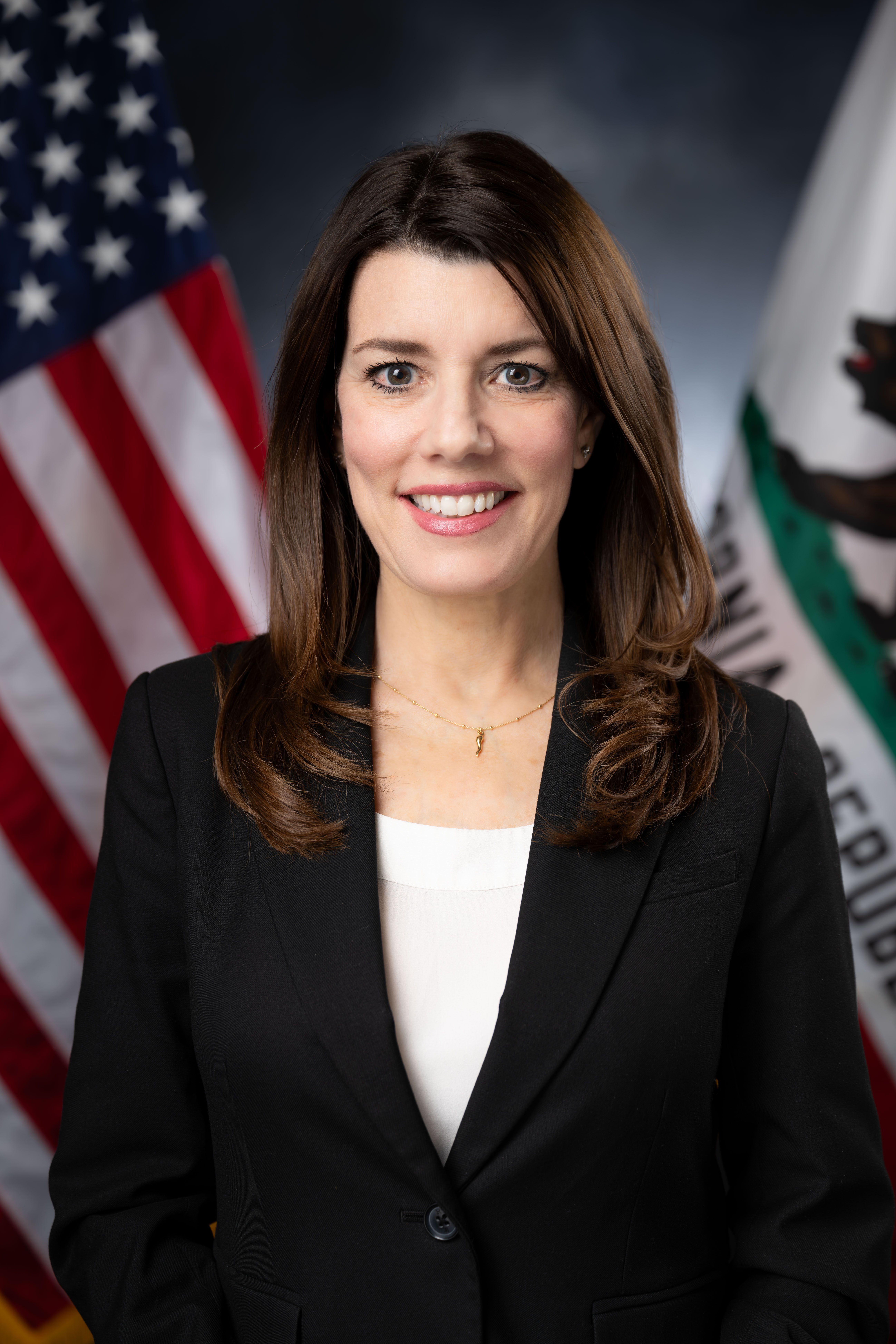
Rep. Catherine Stefani
Sponsored bills
Existing law governs the dissolution of marriage and legal separation. Existing law prohibits a judgment of dissolution of marriage from being made final until 6 months have expired from the date of service of a copy of the summons and petition or the date of appearance of the respondent, whichever occurs first. Existing law authorizes a court to extend the 6-month period for good cause shown. Existing law also requires a court to enter a judgment dissolving a marriage when 6 months have expired from the date of the filing of a joint petition for summary dissolution, unless a revocation has been filed. This bill would additionally authorize the court to reduce or waive the 6-month period described above for good cause shown, as specified, provided that the parties have resolved all material issues related to the dissolution.
Existing law establishes the Domestic Violence Prevention Act for the purpose of preventing acts of domestic violence, abuse, and sexual abuse and providing for a separation of the persons involved in the domestic violence for a period sufficient to enable those persons to seek a resolution of the causes of the violence. Existing law authorizes a court to issue an ex parte protective order enjoining a party from, among other things, disturbing the peace of the other party. Existing law provides that disturbing the peace of the other party refers to conduct that includes coercive control, as defined, which includes unreasonably engaging in specified actions, including isolating the other party from friends, relatives, or other sources of support. Existing law makes an intentional and knowing violation of a protective order punishable as a misdemeanor. This bill would include forced marriage for purposes of the act. The bill would define "forced marriage" as a spousal relationship in which one or both parties do not or cannot consent and one or both parties are compelled, through force, fraud, coercion, duress, abuse of power, or coercive control, to enter, attempt to enter, or maintain, a marriage, regardless of whether the marriage is legally valid. If a protective order is sought to protect against a forced marriage, the bill would authorize all persons engaged in conduct to arrange, officiate, finance, or facilitate a forced marriage or attempted forced marriage to be included in one action as respondents. The bill would provide that coercive control, for purposes of the act, includes interfering with, threatening, or attempting to prevent a party or witness from participating in a court proceeding. The bill would provide that conduct undertaken to compel, attempt to compel, prepare for, or facilitate a forced marriage constitutes disturbing the peace of the other party, as specified. The bill would require the provisions of the act to be liberally construed. The bill would authorize a court to grant relief regardless of whether a marriage has occurred or whether a purported marriage would be legally valid in this state or any other jurisdiction. Because a violation of a protective order is punishable as a crime, by expanding the bases for the issuance of these orders, the bill would expand an existing crime, thereby imposing a state-mandated local program. The California Constitution requires the state to reimburse local agencies and school districts for certain costs mandated by the state. Statutory provisions establish procedures for making that reimbursement. This bill would provide that no reimbursement is required by this act for a specified reason.
This measure would urge the President of the United States and Congress of the United States to immediately restore full and consistent funding and staffing for the National Park Service.
Maddy summaryCalifornia Assembly Resolution 140 designates August 2026 as Children's Get Offline and Get Outdoors Month to promote awareness of the benefits of screen-free play for child development. The resolution cites research linking excessive social media use and reduced free play time to increased rates of anxiety, depression, and other behavioral issues among teenagers. It encourages families and communities to support unstructured outdoor activities and highlights ongoing federal efforts to protect children's mental health through technology guardrails.
This measure would designate the Yerba Buena Tunnel on Interstate 80, located between postmile 7.719R and 7.821R in the City and County of San Francisco, as the Emperor Norton Tunnel. The measure would also request the Department of Transportation to determine the cost of appropriate signs showing this special designation, and upon receiving donations from nonstate sources covering that cost, to erect those signs.
Existing law authorizes a court to issue an ex parte restraining order to prevent abuse based on reasonable proof of a past act or acts of abuse. Existing law authorizes the order to be issued solely on the affidavit or testimony of the person requesting the ex parte restraining order. Existing law requires the ex parte order to be issued or denied on the same day the application is submitted to the court, except as specified. Existing law prohibits an ex parte restraining order from being denied solely because the other party was not provided with notice. This bill would instead prohibit a court from requiring that notice be provided to the party to be restrained in advance of accepting a filing for, or deciding, an application for an ex parte restraining order. The bill would also prohibit a court from requiring an explanation or declaration for not providing notice in advance of accepting a filing for, or deciding, an application for an ex parte restraining order. The bill would prohibit a court from adopting or maintaining any rule, form, or practice that is inconsistent with these provisions.
This measure would urge President Donald J. Trump to avoid raising the cost of living for American consumers by rescinding the tariffs that he has imposed since taking office in January 2025 and refunding the American people for the costs passed on to them by his tariffs. The measure would also urge the United States Congress to enact a joint resolution to rescind President Trump's tariffs and to oppose all future unilateral and arbitrary tariff increases imposed by President Trump.
Existing law prohibits the Golden Gate Bridge, Highway and Transportation District from issuing general obligation or revenue bonds, or any other form of long-term indebtedness, except to finance an interim system of buses and ferries or to finance capital improvements or modifications relating to seismic safety of the Golden Gate Bridge. This bill would authorize the district to accept contributions and loans from this state and the United States for the purpose of financing capital improvements or modifications related to seismic safety on the Golden Gate Bridge, as specified.
Maddy summaryCalifornia Assembly Resolution 137 formally recognizes the Diwali festival scheduled for November 8, 2026, and encourages state residents to participate in the celebration. The resolution highlights the cultural significance of the holiday for Indian Americans and South Asian communities, noting its themes of unity, joy, and the triumph of light over darkness. It also acknowledges that California previously designated Diwali as an official state holiday in 2025. This measure serves as a commemorative statement rather than a law with new regulatory or financial provisions.