

Existing law sets wage, hour, meal break requirements, and other working conditions for employees and requires an employer to pay overtime wages as specified to an employee who works in excess of a workday or workweek, as defined, and imposes criminal penalties for the violation of these requirements. Existing law exempts agricultural employees from these requirements. Under existing law, the function of the Department of Industrial Relations is to, among other things, foster, promote, and develop the welfare of the wage earners of California, to improve their working conditions, and to advance their opportunities for profitable employment. This bill would remove the exemption for agricultural employees regarding hours, meal breaks, and other working conditions, including specified wage requirements, and would create a schedule that would phase in overtime requirements for agricultural workers, as defined, over the course of 4 years, from 2019 to 2022, inclusive. Beginning January 1, 2022, the bill would require any work performed by a person, employed in an agricultural occupation, in excess of 12 hours in one day to be compensated at the rate of no less than twice the employee's regular rate of pay. The bill would authorize the Governor to delay the implementation of these overtime pay provisions if the Governor also suspends the implementation of a scheduled state minimum wage increase, as specified. The bill would require the Department of Industrial Relations to update a specified wage order for consistency with these provisions. The bill would create a state-mandated local program by including agricultural employees as a class of employees protected by criminal penalties under existing law. The California Constitution requires the state to reimburse local agencies and school districts for certain costs mandated by the state. Statutory provisions establish procedures for making that reimbursement. This bill would provide that no reimbursement is required by this act for a specified reason.
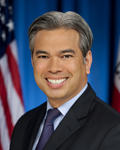
Sponsored bills
This measure would designate the month of May 2016 as Bone Marrow Donation Awareness Month.
This measure would proclaim the month of May 2016 as Bladder Cancer Awareness Month.
This measure would proclaim the month of February 2016 as Teen Dating Violence Awareness and Prevention Month, and would encourage all Californians to observe Teen Dating Violence Awareness and Prevention Month with programs and activities that raise awareness about teen dating violence.
This measure would recognize April 17, 2016, as World Hemophilia Day.
This measure would request the President and the Congress of the United States to express their support for access to comprehensive reproductive health care, including the services provided by Planned Parenthood, and to oppose efforts to eliminate federal funding for Planned Parenthood.
Existing law authorizes the State Department of Developmental Services to contract with regional centers to provide services and supports to persons with developmental disabilities, in accordance with the person's individual program plan. As part of the individual program plan, the regional center may refer an adult consumer to habilitation services, including work activity programs or supported employment programs. Existing law declares the policy of the state, known as the Employment First Policy, that opportunities for integrated, competitive employment be given the highest priority for working age individuals with developmental disabilities. This bill would require the department to provide a clear financial incentive in order to encourage the development of and support for consumers in individual supported employment in integrated work settings. The bill would require the incentive to establish at least a 10% rate differential for individual supported employment services. The bill would authorize the department to adjust the rate for individual placement supported employment services to administer the incentive payment, as specified. The bill would also require the department to review the need for clarifying placement fees and bonus payments, as specified.
The Political Reform Act of 1974 generally prohibits a public official, as defined, from making, participating in making, or using his or her official position to influence a governmental decision in which the official has a financial interest. The act also requires the disclosure of specified financial interests of certain public officials on a statement of economic interests, which is filed annually. The act imposes certain restrictions on postgovernmental employment of specified public officials of state and local agencies. This bill would require each state agency and each local agency that maintains an Internet Web site to make publicly available on that Internet Web site the statements of economic interests filed by the specified public officials. This bill would prohibit an elected or appointed officer of a state or local agency, while holding office and for a period of one year after leaving office, from engaging in specified conduct, including maintaining employment with, as specified, or being a compensated consultant of that agency or, for compensation, aiding, advising, consulting with, or assisting an entity with a permit, regulatory action, or enforcement action pending before the agency. A violation of the act is punishable as a misdemeanor. By expanding the scope of an existing crime, this bill would impose a state-mandated local program. The bill would also impose a state-mandated local program by increasing the duties imposed on local officials. The California Constitution requires the state to reimburse local agencies and school districts for certain costs mandated by the state. Statutory provisions establish procedures for making that reimbursement. This bill would provide that with regard to certain mandates no reimbursement is required by this act for a specified reason. With regard to any other mandates, this bill would provide that, if the Commission on State Mandates determines that the bill contains costs so mandated by the state, reimbursement for those costs shall be made pursuant to the statutory provisions noted above. The Political Reform Act of 1974, an initiative measure, provides that the Legislature may amend the act to further the act's purposes upon a 23 vote of each house and compliance with specified procedural requirements. This bill would declare that it furthers the purposes of the act.
Existing law, the Donahoe Higher Education Act, sets forth the missions and functions of the 4 segments comprising the state's postsecondary education system. These segments are the University of California, administered by the Regents of the University of California, the California State University, administered by the Trustees of the California State University, the California Community Colleges, administered by the Board of Governors of the California Community Colleges, and independent institutions of higher education. This bill would establish the 9-member Blue Ribbon Commission on Public Postsecondary Education, and specify its membership and duties. The bill would require the commission to publish a report on designated subjects and submit this report to designated governmental entities by March 31, 2018. The bill would require the Office of the Blue Ribbon Commission on Public Postsecondary Education to close on June 30, 2018, and would repeal the provisions of the bill on January 1, 2019. The bill would require, upon that repeal, all of the documents and working papers of the commission to become the property of the State Archives.
Existing law requires the Superintendent of Public Instruction to administer all California state preschool programs, which include part-day age and developmentally appropriate programs for 3- and 4-year-old children, as provided. Existing law provides that 3- and 4-year-old children are eligible for the state part-day preschool program if the family meets one of several eligibility requirements, including income eligibility. This bill would require the State Department of Education, in consultation with the State Board of Education and the State Advisory Council on Early Learning and Care, on or before January 1, 2018, to submit to the Legislature and the Department of Finance a plan that provides a multiyear plan for providing access to income-eligible children to high-quality prekindergarten programs for a minimum of one year before enrollment in kindergarten and a multiyear plan for ensuring that publicly funded prekindergarten programs include specified elements.