

Agricultural workers: wages, hours, and working conditions.
Summary
Existing law sets wage, hour, meal break requirements, and other working conditions for employees and requires an employer to pay overtime wages as specified to an employee who works in excess of a workday or workweek, as defined, and imposes criminal penalties for the violation of these requirements. Existing law exempts agricultural employees from these requirements. Under existing law, the function of the Department of Industrial Relations is to, among other things, foster, promote, and develop the welfare of the wage earners of California, to improve their working conditions, and to advance their opportunities for profitable employment. This bill would remove the exemption for agricultural employees regarding hours, meal breaks, and other working conditions, including specified wage requirements, and would create a schedule that would phase in overtime requirements for agricultural workers, as defined, over the course of 4 years, from 2019 to 2022, inclusive. Beginning January 1, 2022, the bill would require any work performed by a person, employed in an agricultural occupation, in excess of 12 hours in one day to be compensated at the rate of no less than twice the employee's regular rate of pay. The bill would authorize the Governor to delay the implementation of these overtime pay provisions if the Governor also suspends the implementation of a scheduled state minimum wage increase, as specified. The bill would require the Department of Industrial Relations to update a specified wage order for consistency with these provisions. The bill would create a state-mandated local program by including agricultural employees as a class of employees protected by criminal penalties under existing law. The California Constitution requires the state to reimburse local agencies and school districts for certain costs mandated by the state. Statutory provisions establish procedures for making that reimbursement. This bill would provide that no reimbursement is required by this act for a specified reason.
Bill status
failed
3 of 5 stages cleared
Introduction
Feb 2016
Committee Review
Apr 2016
Assembly Passage
Jun 2016
Senate Passage
Governor
Introduced Feb 19, 2016
Last action Jun 2, 2016
Floor votes · Assembly Jun 2, 2016
How they voted
38–26
Passed · 7 other
Total votes 71
Jun 2, 2016
D
Democratic46
82% Yea
I
Independent1
100% Nay
R
Republican24
95% Nay
Vote distribution
All Yea
All Nay
Mixed
No data
Full legislative history
Actions timeline
Total actions
16
Key actions
3
Committee
5
Amendments
2
Jun 2, 2016
Assembly · Passed
Assembly Vote: pass (38-26-7)
assembly
Jun 1, 2016
Lower · Passed
Read second time and amended. Ordered returned to second reading.
lower
May 31, 2016
Introduced
From committee: Amend, and do pass as amended. (Ayes 14. Noes 6.) (May 27).
lower
Apr 20, 2016
Committee
In committee: Set, first hearing. Referred to APPR. suspense file.
lower
Apr 7, 2016
Committee
From committee: Do pass and re-refer to Com. on APPR. (Ayes 5. Noes 2.) (April 6). Re-referred to Com. on APPR.
lower
Mar 31, 2016
Committee
Re-referred to Com. on L. & E.
lower
Mar 10, 2016
Committee
Referred to Com. on L. & E.
lower
Feb 21, 2016
Lower · Passed
From printer. May be heard in committee March 22.
lower
Feb 19, 2016
Introduced
Introduced. To print.
lower
1 primary · 22 co-sponsors
Sponsors
Role
Legislator
Party
State
District
P

Lorena Gonzalez
DDemocratic
Co

Autumn R. Burke
DDemocratic
Co
CL
Carol Liu
DDemocratic
Co

Cristina Garcia
DDemocratic
Co
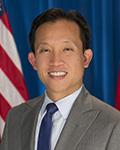
David Chiu
DDemocratic
Co
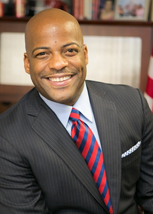
Isadore Hall
DDemocratic
Co

Jim Beall
DDemocratic
Co
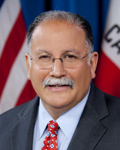
Jose Medina
DDemocratic
Co
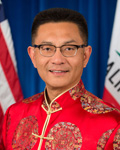
Kansen Chu
DDemocratic
Co
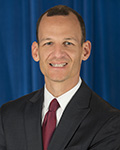
Kevin McCarty
DDemocratic
Co

Loni Hancock
DDemocratic



Ask Maddy
·
AI policy assistant
Ask Maddy about AB 2757
Scope: CA
Hi! I can help you understand AB 2757. What would you like to know?
Try one of these
i
Maddy answers using official bill text and legislative records. Always verify before sharing.
Sources cited inline