

Existing law provides that the Secretary of the Department of Corrections and Rehabilitation or the Board of Parole Hearings, or both, may, for specified reasons, recommend to the court that a prisoner's sentence be recalled, and that a court may recall a prisoner's sentence. When a defendant who was under 18 years of age at the time of the commission of a crime has served at least 15 years of his or her sentence, existing law allows the defendant to submit a petition for recall and resentencing, and authorizes the court, in its discretion, to recall the sentence and to resentence the defendant, provided that the new sentence is not greater than the initial sentence. This bill would require the Board of Parole Hearings to conduct a youth offender parole hearing to consider release of offenders who committed specified crimes prior to being 18 years of age and who were sentenced to state prison. The bill would make a person eligible for release on parole at a youth offender parole hearing during the 15th year of incarceration if the person meeting these criteria received a determinate sentence, during the 20th year if the person received a sentence that was less than 25 years to life, and during the 25th year of incarceration if the person received a sentence that was 25 years to life. The bill would require the board, in reviewing a prisoner's suitability for parole, to give great weight to the diminished culpability of juveniles as compared to adults, the hallmark features of youth, and any subsequent growth and increased maturity of the prisoner in accordance with relevant case law. The bill would require that, in assessing growth and maturity, psychological evaluations and risk assessment instruments, if used by the board, be administered by licensed psychologists employed by the board and take into consideration the diminished culpability of juveniles as compared to that of adults, the hallmark features of youth, and any subsequent growth and increased maturity of the individual. The bill would permit family members, friends, school personnel, faith leaders, and representatives from community-based organizations with knowledge about the young person prior to the crime or his or her growth and maturity since the commission of the crime to submit statements for review by the board. Existing law requires the board to meet with each inmate sentenced pursuant to certain provisions of law during his or her 3rd year of incarceration for the purpose of reviewing his or her file, making recommendations, and documenting activities and conduct pertinent to granting or withholding postconviction credit. This bill would instead require the board to meet with those inmates, including those who are eligible to be considered for parole pursuant to a youth offender parole hearing, during the 6th year prior to the inmate's minimum eligible parole release date. The bill would also require the board to provide an inmate additional, specified information during this consultation, including individualized recommendations regarding the inmate's work assignments, rehabilitative programs, and institutional behavior, and to provide those findings and recommendations, in writing, to the inmate within 30 days following the consultation. Existing law, added by Proposition 8, adopted June 8, 1982, and amended by Proposition 36, adopted November 6, 2012, commonly known as the Three Strikes law, requires increased penalties for certain recidivist offenders in addition to any other enhancement or penalty provisions that may apply, including individuals with current and prior convictions of a serious felony, as specified. Existing law, as amended by Proposition 83, adopted November 7, 2006, commonly known as Jessica's Law, requires a person convicted of certain felonies under specified circumstances to be committed to prison for a term of years to life. This bill would exempt from its provisions inmates who were sentenced pursuant to the Three Strikes law or Jessica's Law, or sentenced to life in prison without the possibility of parole. The bill would not apply to an individual to whom the bill would otherwise apply, but who, subsequent to attaining 18 years of age, commits an additional crime for which malice aforethought is a necessary element of the crime or for which the individual is sentenced to life in prison.
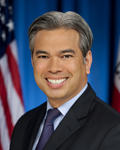
Sponsored bills
Existing law authorizes the board of supervisors of Alameda County to establish an independent hospital authority strictly and exclusively dedicated to the management, administration, and control of the Alameda County Medical Center, and sets forth the powers and duties of the hospital authority, including, but not limited to, the power to contract for services required to meet its obligations. This bill would prohibit the hospital authority from entering into any contract with any private person or entity before January 1, 2024, to replace services being provided by physicians and surgeons who are employed by the hospital authority and in a recognized collective bargaining unit as of March 31, 2013, with services provided by a private person or entity without clear and convincing evidence that the needed medical care can only be delivered cost-effectively by a private contractor. The bill would require that the authority, prior to entering into a contract for any of those services, negotiate with the representative of the recognized collective bargaining unit of its physician and surgeon employees over the decision to privatize, and would require unresolved disputes to be submitted to final binding arbitration. Existing law establishes the hospital authority as a district for the purposes of providing retirement benefits under the County Employees Retirement Law of 1937 and provides that employees of the hospital authority are eligible to participate in the county employees' retirement system to the extent permitted by law. Existing law establishes the Alameda County Employees' Retirement Association as a retirement system pursuant to the provisions of the County Employees Retirement Law of 1937. This bill would limit the participation of certain employees of the hospital authority, including those who are employees of a facility that is acquired by, or merged into, the hospital authority, in the Alameda County Employees' Retirement Association, subject to specified criteria. This bill would make legislative findings and declarations as to the necessity of a special statute for resolving the unique needs faced by the county with respect to the operation and administration of the medical center. This bill would declare that it is to take effect immediately as an urgency statute.
This measure would urge the Congress of the United States to reauthorize the federal Workforce Investment Act of 1998 and to include specified policies and strategies in support of the act.
This measure would urge the United States Congress and the President to establish new entrepreneur and science, technology, engineering, or mathematics-related visa categories for legal immigrants as part of comprehensive federal immigration reform, that would, among other things, create an Entrepreneur's Visa for legal immigrants, provide authorization to adjust the status of not more than 50,000 aliens who have earned a master's degree or a doctorate degree, as specified, to that of aliens conditionally admitted for permanent residence, and eliminate per-country caps for employment-based immigrant visas.
This measure would proclaim the week of August 11 through August 17, 2013, as National Health Center Week.
This measure would declare that the Legislature recognizes the importance of engaging with young people to influence decisions that affect their quality of life and well-being, and that the Student and Youth Bill of Rights serves as a framework to guide and inform the youth of the state in organizing and advocating policy issues on their own behalf.
This measure would recognize the 25th anniversary of Little Saigon.
This measure would acknowledge that the State of California made a grievous mistake that injured loyal employees who were dedicated to serving the people of California when it dismissed over 300 Americans of Japanese ancestry as a result of Senate Concurrent Resolution 15 (SCR 15) of 1942 by Senator John Swan. This measure would resolve to issue a public apology to the state civil service employees who were dismissed.
This bill would recognize June 25, 2013, and every June 25th thereafter as United States Korean War Veterans Day.
This measure would recognize the month of September every year as California Native American Heritage Month, would encourage Californians to participate in appropriate observances that celebrate and commemorate California Native Americans, and would applaud and encourage the observance of California Indian Nations for their outstanding contributions to this state.