

Existing law provides that in a civil action brought by a plaintiff to challenge a housing development project that meets or exceeds the requirements for low- or moderate-income housing, a defendant may seek an order requiring the plaintiff to furnish an undertaking as security for costs and damages that may be incurred by the defendant if the bringing of the action would result in preventing or delaying the project, as specified. Existing law authorizes the court to limit the amount of the undertaking or to decline to require the plaintiff to furnish an undertaking if the court determines that, based on evidence submitted by the plaintiff, furnishing an undertaking would cause the plaintiff to suffer undue economic hardship. This bill would expand the type of civil actions for which motions for undertaking may be filed to include actions that challenge a community-serving project, as defined.
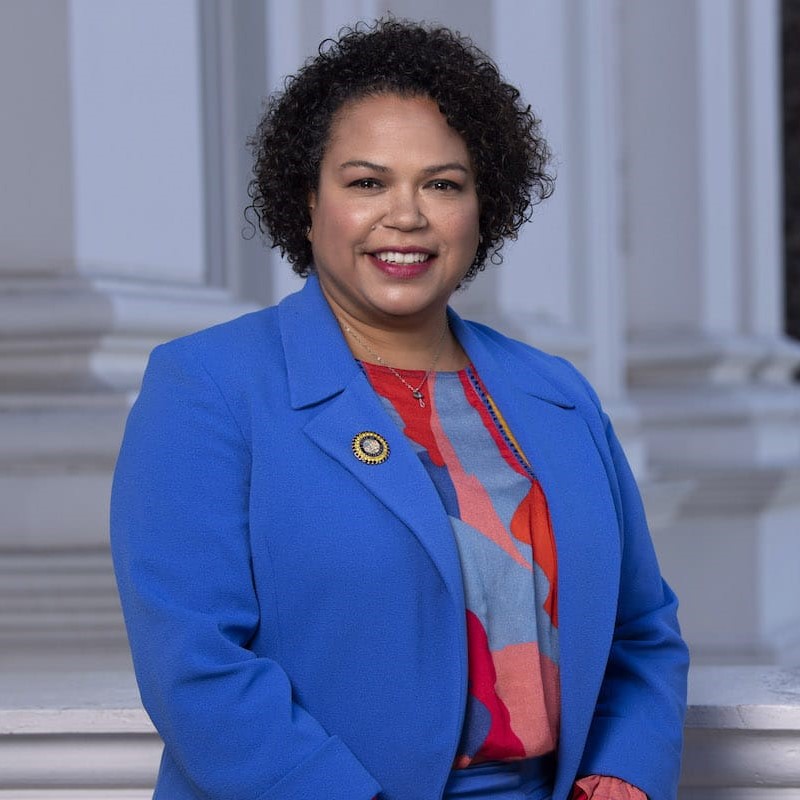
Asm. Mia Bonta
Sponsored bills
Existing law allows a person who was arrested or convicted of a nonviolent offense while they were a victim of human trafficking, intimate partner violence, or sexual violence, to petition the court, under penalty of perjury, for vacatur relief. Existing law requires, to receive that relief, that the crime for which the person was arrested or convicted was a nonviolent offense and that the person establish, by clear and convincing evidence, that the arrest or conviction was the direct result of being a victim of human trafficking, intimate partner violence, or sexual violence. Existing law authorizes the court to vacate the conviction if it concludes that the petitioner was a victim of one of those crimes at the time of the alleged commission of the offense, the arrest was a direct result of being a victim of that offense, and the vacatur is in the best interest of justice. This bill would allow that relief for a person arrested or convicted of any offense, except murder, as specified. Because this bill would authorize more petitions to be filed under penalty of perjury, by expanding the scope of the crime of perjury, this bill would impose a state-mandated local program. If a court issues an order for a person who was arrested or convicted of an offense while they were a victim of intimate partner violence or sexual violence, existing law requires the court to order the law enforcement agency having jurisdiction over the offense, the Department of Justice, and any law enforcement agency that arrested the petitioner or participated in the arrest of the petitioner to seal their records of the arrest and the court order to seal and destroy the records within 3 years from the date of the arrest, or within one year after the court order is granted, whichever occurs later, and thereafter to destroy their records of the arrest and the court order to seal and destroy those records. This bill would require the court to also order any law enforcement agency that has taken action or maintains records related to or because of the offense, including, but not limited to, departments of probation, rehabilitation, corrections, and parole, to seal and destroy their records. The bill would require those agencies to seal their records of arrest and the court order to seal and destroy the records within one year from the date of arrest, or within 90 days after the court order is granted, whichever occurs later. The bill would require the agencies to destroy these records within one year of the date of the court order. By increasing duties on local law enforcement, this bill would impose a state-mandated local program. The bill would also require the Department of Justice to notify the petitioner and the petitioner's counsel that the department has complied with the order to seal the arrest records by the applicable deadline. Existing law creates an affirmative defense against a charge of a crime that the person was coerced to commit the offense as a direct result of being a victim of human trafficking, intimate partner violence, or sexual violence at the time of the offense and when the person had reasonable fear of harm. Existing law prohibits this defense from being used with respect to a violent felony, as defined. This bill would allow that defense to be used with respect to a violent felony, except for murder, as specified. The California Constitution requires the state to reimburse local agencies and school districts for certain costs mandated by the state. Statutory provisions establish procedures for making that reimbursement. This bill would provide that with regard to certain mandates no reimbursement is required by this act for a specified reason. With regard to any other mandates, this bill would provide that, if the Commission on State Mandates determines that the bill contains costs so mandated by the state, reimbursement for those costs shall be made pursuant to the statutory provisions noted above.
This measure would call on members of the United States Congress to oppose reductions to funding that negatively impact educational services for students with disabilities and would call on the President of the United States and Congress to ensure that services and funding for students with disabilities are uninterrupted.
This measure would recognize February 2025 as Black History Month, urge all citizens to join in celebrating the accomplishments of African Americans during Black History Month, and encourage the people of California to recognize the many talents of African Americans and the achievements and contributions they make to their communities to create equity and equality for education, economics, and social justice. The measure would also recognize the significance in protecting citizens' right to vote and remedying racial discrimination in voting.
Existing law establishes the Instructional Quality Commission and requires the commission to, among other things, recommend curriculum frameworks to the State Board of Education. Existing law requires the commission, when the history-social science curriculum framework is next revised, on or after January 1, 2025, to consider providing for inclusion, in that curriculum framework, related evaluation criteria, and accompanying instructional materials, of instruction on the treatment and perspectives of Native Americans during the Spanish colonization of California and the Gold Rush Era. This bill would require the commission, when the state board next revises the history-social science curriculum framework or adopts new instructional materials, on or after January 1, 2026, to consider including content on the historical, social, economic, and political contributions of African Americans during the Spanish colonization of California, the Gold Rush Era, and Antebellum, as provided.
Maddy summaryHouse Resolution 50 designates November 25, 2025, as "Elimination of Violence Against Women Day" in California. It also recognizes the International Day for the Elimination of Violence Against Women on that date and urges policymakers to advance year-round efforts to prevent and eliminate violence against women and girls. This resolution does not create new laws or funding but serves as a symbolic statement of commitment from the California State Assembly. It directly affects the state government and policymakers by formally acknowledging the issue and encouraging ongoing action.
The California Constitution establishes the Citizens Redistricting Commission, which is required to adjust the boundary lines of congressional, Senate, Assembly, and State Board of Equalization districts in the year following the year in which the national census is taken at the beginning of each decade. This measure, which would include a legislative finding that it is in response to redistricting in Texas in 2025, would, notwithstanding the authority of the Citizens Redistricting Commission, require the state to temporarily use the congressional districts reflected in AB 604 of the 2025–26 Regular Session for every congressional election until the new congressional boundary lines are drawn by the commission in 2031.
Maddy summaryThis is a commemorative resolution (not a law), passed by the California Assembly on August 18, 2025. It recognizes the 105th anniversary of the 19th Amendment's ratification (August 18, 1920), which guaranteed women the right to vote. The resolution acknowledges California's earlier 1911 suffrage victory and notes that women of color and women with disabilities faced continued barriers to voting until the Voting Rights Act (1965) and ADA (1990), respectively. The Assembly urges all Californians to celebrate this milestone.
Existing law requires a driver approaching, among others, a stationary marked Caltrans vehicle that is displaying flashing lights to approach with due caution and either change lanes to a lane not immediately adjacent to the vehicle, or, if unable to safely do so, slow to a reasonable and prudent speed, as specified. Existing law makes a violation of that provision an infraction, punishable by a fine of not more than $50. This bill would expand that requirement to apply to all marked highway maintenance vehicles, as defined, and would also make that requirement applicable to any other stationary vehicle displaying flashing hazard lights or another warning device, including, but not limited to, cones, flares, or retroreflective devices. By expanding the scope of a crime, this bill would impose a state-mandated local program. The California Constitution requires the state to reimburse local agencies and school districts for certain costs mandated by the state. Statutory provisions establish procedures for making that reimbursement. This bill would provide that no reimbursement is required by this act for a specified reason.
Maddy summaryThis resolution designates October 18, 2025, as Huell Howser Day to honor his contributions to California's history, culture, and people. It directly affects Californians by formally recognizing Huell Howser's legacy through a state-recognized observance. The bill has no policy changes or financial implications - it solely creates a commemorative date.