Maddy summaryThis bill designates June 9, 2026, as FSGS Awareness Day to highlight focal segmental glomerulosclerosis, a rare kidney disease that causes scarring and can lead to kidney failure. The resolution aims to increase public understanding of the condition, which disproportionately affects African American communities and often requires dialysis or transplants. By establishing an official awareness day, the bill seeks to support patients and families while encouraging efforts to improve early diagnosis and access to specialized care.
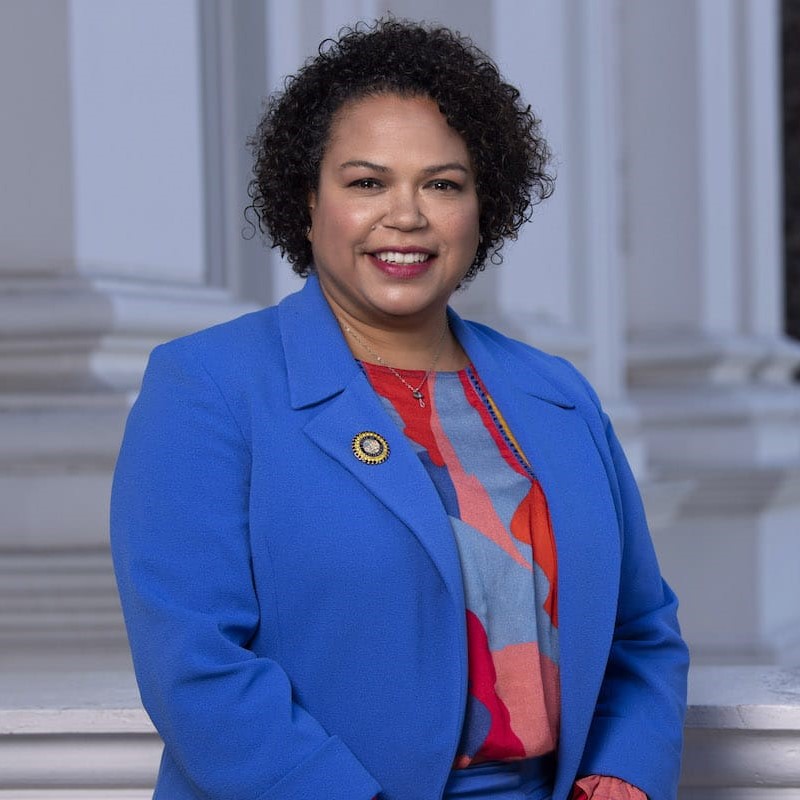
Asm. Mia Bonta
Sponsored bills
This resolution would state, among other things, that the Legislature supports the establishment of a Mexican Consulate in the County of Kern to strengthen the state's relationship with Mexico and empower immigrant communities.
This measure would express the intent of the Legislature to formalize a sister-state relationship between the State of Zacatecas in Mexico and the State of California, in recognition of their shared heritage, economic opportunities, and mutual commitment to prosperity, dignity, and understanding.
This measure would establish a formal sister state relationship between the State of California and Lagos State, Nigeria, to promote collaboration across key strategic areas.
This measure would proclaim the month of May 2026 as Anterior Cruciate Ligament (ACL) Injury Awareness Month and encourage schools, youth sports organizations, athletic programs, and health professionals to promote evidence-based injury prevention education and training.
Maddy summaryThis bill designates the month of May 2026 as National Stroke Awareness Month. The primary effect is to officially recognize this time period for public education and awareness campaigns regarding stroke prevention and treatment. It does not alter laws, allocate funding, or impose new requirements on individuals or organizations. The measure serves as a symbolic gesture to highlight the importance of stroke awareness during the specified month.
This measure would recognize the historical wrongdoing committed against California Native Americans and urge the federal government to work alongside tribal leaders to address historic injustices, uphold treaty obligations, and ensure equitable access to resources, healthcare, education, and environmental stewardship.
This measure would recognize May 4, 2026, to May 8, 2026, inclusive, and every first full week of May thereafter, as Black Health Equity Advocacy Week and commend the California Black Health Network and other organizations throughout the state for their efforts to improve the health, well-being, and life expectancy of Black Californians.
Existing law establishes the Medi-Cal program, which is administered by the State Department of Health Care Services and under which qualified low-income individuals receive health care services. The Medi-Cal program is in part governed by, and funded pursuant to, federal Medicaid program provisions. Existing federal law, Public Law 119-21, enacted on July 4, 2025, sets forth various changes to different health care programs, including certain requirements for Medicaid eligibility with regard to work or community engagement reporting, redeterminations, and cost sharing, among other factors, for certain Medicaid populations pursuant to a specified implementation timeline. Existing law, the federal Patient Protection and Affordable Care Act, imposes a certain assessment on an applicable large employer, as defined, that offers full-time employees and their dependents the opportunity to enroll in minimum essential coverage, and for whom one or more full-time employees have been certified as having enrolled in a qualified health plan for which a premium tax credit or cost-sharing reduction is allowed or paid. This bill would create the Employer Responsibility for Medi-Cal Trust Fund to consist of new taxes and deposits, including employer penalties specified in the Budget Act of 2026. The bill would continuously appropriate moneys in the fund to the department to fund the costs of administering the Medi-Cal program in a manner necessary to prevent loss of or to restore health care coverage, benefits, or access to care following the passage of Public Law 119-21 and subsequent state budget actions. The bill would state that these provisions would become operative only if the Medicaid provisions of Public Law 119-21 are not repealed prior to January 1, 2027. By creating a continuously appropriated fund, the bill would make an appropriation. This bill would declare that it is to take effect immediately as an urgency statute.

This measure would recognize the significance of Vesak Day to people of Buddhist faith and extend sincere best wishes to the state's Buddhist community in celebrating Vesak Day.