

Existing law, the California Values Act, prohibits a California law enforcement agency, defined as including both state and local agencies but excluding the Department of Corrections and Rehabilitation, from providing a person's release date or responding to a request for notification of a release date, unless that information is available to the public. The bill would prohibit the Department of Corrections and Rehabilitation from detaining on the basis of a hold request, providing an immigration authority with release date information, or responding to a notification request, transferring to an immigration authority, or facilitating or assisting with a transfer request any individual who is eligible for release pursuant to specified provisions, including, among others, youth offender, elderly, and medical parole releases. Existing law requires the Department of Corrections and Rehabilitation to cooperate with the United States Department of Homeland Security by providing the use of prison facilities, transportation, and general support, as needed, for the purposes of conducting and expediting deportation hearings and subsequent placement of deportation holds on undocumented immigrants who are incarcerated in state prison. Existing law requires the department to identify inmates serving terms in state prison who are undocumented aliens subject to deportation. Existing law would require the department, upon the enactment of any federal law requiring these persons to be incarcerated in federal prison, to provide this information to the federal government, as specified. This bill would repeal these provisions.
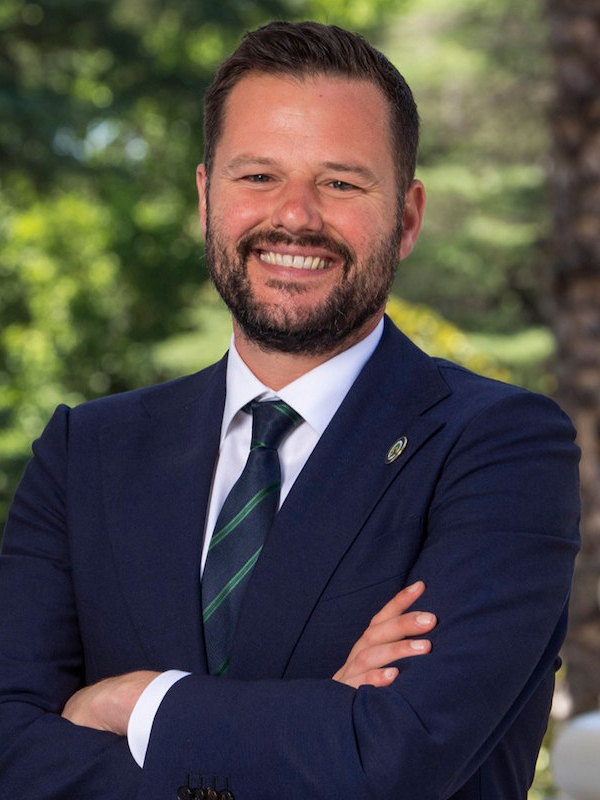
Asm. Matt Haney
Sponsored bills
Existing law sets forth various programs relating to opioid overdose prevention and treatment, including, among others, standing orders for the distribution of an opioid antagonist, a naloxone grant program, and a grant program to reduce fentanyl overdoses and use throughout the state. Existing law establishes the Medi-Cal program, which is administered by the State Department of Health Care Services and under which qualified low-income individuals receive health care services. The Medi-Cal program is, in part, governed and funded by federal Medicaid program provisions. Under existing law, the pharmacist service of furnishing naloxone hydrochloride is a covered Medi-Cal benefit. The Medi-Cal program also covers certain medications to treat opioid use disorders as part of narcotic treatment program services, or as part of medication-assisted treatment services within the Drug Medi-Cal Treatment Program, as specified. Existing law, the Knox-Keene Health Care Service Plan Act of 1975, provides for the licensure and regulation of health care service plans by the Department of Managed Health Care and makes a willful violation of the act a crime. Existing law provides for the regulation of health insurers by the Department of Insurance. This bill would make legislative findings relating to the United States Food and Drug Administration (FDA) approving a certain naloxone hydrochloride nasal spray for nonprescription use. Under the bill, prescription or nonprescription naloxone hydrochloride or another drug approved by the FDA for the complete or partial reversal of an opioid overdose would be a covered benefit under the Medi-Cal program. The bill would require a health care service plan contract or health insurance policy that provides coverage for prescription drugs and that is issued, amended, delivered, or renewed on or after January 1, 2025, to cover prescription and nonprescription naloxone hydrochloride and all other drugs or products approved by the FDA for the complete or partial reversal of an opioid overdose. The bill would prohibit a health care service plan contract or health insurance policy that provides coverage for prescription drugs from imposing any cost-sharing requirements for that coverage exceeding $10 per package of medication, as specified, would require point-of-sale coverage for over-the-counter, FDA-approved naloxone hydrochloride or another FDA-approved drug or product for the complete or partial reversal of an opioid overdose at in-network pharmacies, and would prohibit a high deductible health plan from imposing cost sharing, as specified. The bill would repeal these provisions on January 1, 2030. Because a willful violation of these provisions by a health care service plan would be a crime, the bill would impose a state-mandated local program. The California Constitution requires the state to reimburse local agencies and school districts for certain costs mandated by the state. Statutory provisions establish procedures for making that reimbursement. This bill would provide that no reimbursement is required by this act for a specified reason.
Existing law requires the Department of Human Resources to establish and adjust salary ranges for each class of position in the state civil service. Existing law requires the department, with respect to the collective bargaining process for specified bargaining units, to submit to the parties meeting and conferring and to the Legislature a report containing the department's findings relating to the salaries of employees in comparable occupations in private industry and other governmental agencies, in accordance with certain timeframes. Existing law requires the state, in order to recruit and retain the highest qualified employees in specified classifications, to consider the estimated average total compensation paid to employees in comparable occupations. This bill would require the University of California, Berkeley, Labor Center (Center) , in recognition of the need to retain skilled state scientists, to undertake a study of existing salary structure and issues currently impacting horizontal and vertical salary relationships as compared to historical relationships, and to provide recommendations, if applicable, for alternative salary models for State Bargaining Unit 10 (Professional Scientific) rank-and-file employees. The bill would require the Center to consult with the Department of Human Resources and the scientists' exclusive bargaining representative to identify the study's parameters and objectives. The bill would require, by April 30, 2024, the Center to report to the Director of Finance, the Chairperson of the Joint Legislative Budget Committee, and the chairpersons of relevant legislative policy and budget committees the study's findings, as specified. The bill would require the Center's report to include information regarding advantages of any alternative salary model included in the recommendations, the transition costs and ongoing costs associated with any recommended alternative salary model, and ways that alternative models address issues of horizontal and vertical salary relationships as compared to historical relationships. The bill would specify that preparation of the report required under the bill shall not delay or prejudice the collective bargaining process required under existing law. The bill would require any increase in salary resulting from the study to be implemented through the negotiation of a memorandum of understanding as required by existing law.
Existing law requires the collection of specified fees for certified copies of a birth certificate, marriage record, or marriage dissolution record. Existing law imposes fees upon the application for an original class C or M driver's license or a renewal of a driver's license or for a license to operate a different class of vehicle, as described. This bill would instead exempt persons who are recipients of specified assistance programs from payment of a fee for certified copies of a birth certificate, marriage record, or marriage dissolution record. The bill would, beginning July 1, 2027, also exempt a person who can verify their status as a homeless person or homeless child or youth from payment of a fee upon the application for an original or renewal of a driver's license. The bill would require the verification of homeless status to be subject to regulations adopted by the Department of Motor Vehicles and may be made by a homeless services provider, as defined. By establishing an exemption as to fees paid for receipt of certified copies of vital records, this bill would create a state-mandated local program. The bill would make all these provisions operative only to the extent that funding is provided by express reference for these purposes. The California Constitution requires the state to reimburse local agencies and school districts for certain costs mandated by the state. Statutory provisions establish procedures for making that reimbursement. This bill would provide that, if the Commission on State Mandates determines that the bill contains costs mandated by the state, reimbursement for those costs shall be made pursuant to the statutory provisions noted above.
Existing law, the Meyers-Milias-Brown Act and the Ralph C. Dills Act, regulate the labor relations of employees and employers of local public agencies and the state, respectively. Those acts grant specified employees, including, among others, certain employees of fire departments, of local public agencies and the state the right to form, join, and participate in the activities of employee organizations of their choosing and require public agency employers, among other things, to meet and confer with representatives of recognized employee organizations and exclusive representatives on terms and conditions of employment. The acts grant the Public Employment Relations Board the power to hear specified disputes in relation to these provisions and to make determinations regarding them. With regard to certain employees of fire departments, existing law provides that those persons do not have the right to strike or recognize a picket line of a labor organization while in the course of the performance of their official duties. This bill would provide, except as specified, that it is not unlawful or a cause for discipline or other adverse action against a public employee for that public employee to refuse to enter property that is the site of a primary strike, perform work for a public employer involved in a primary strike, or go through or work behind a primary strike line. The bill would prohibit a public employer from directing a public employee to take those actions. The bill would authorize a recognized employee organization to inform employees of these rights and encourage them to exercise those rights. The bill would also state that a provision in a public employer policy or collective bargaining agreement that purports to limit or waive the rights set forth in this provision shall be void as against public policy, except that the bill would require the parties to negotiate over the bill's provisions if the bill is in conflict with a collective bargaining agreement entered into before January 1, 2024, as prescribed. The bill would exempt certain public employees of fire departments and certain peace officers from these provisions. The bill would include related legislative findings.
Existing law establishes the State Department of Health Care Services within the California Health and Human Services Agency. Existing law sets forth the department's powers and duties, including receiving federal funds payable directly to the state by the Substance Abuse and Mental Health Services Administration to implement programs that provide services to alleviate the problems related to alcohol and other drug use. The Naloxone Distribution Project (NDP) is administratively created by the department to reduce opioid-related overdose deaths. This bill would require the department, as part of the NDP, to make all United States Food and Drug Administration-approved formulations and dosage strengths of naloxone or any other opioid antagonist that are indicated for the emergency treatment of known or suspected opioid overdose available through the NDP, as specified. The bill would make legislative findings and declarations.
(1) Existing law categorizes certain drugs and other substances as controlled substances and prohibits various actions related to those substances, including their manufacture, transportation, sale, possession, and ingestion. This bill would, on and after January 1, 2025, make lawful the possession, preparation, obtaining, or transportation of, specified quantities of psilocybin, psilocyn, dimethyltryptamine (DMT) , and mescaline, for personal use, as defined, by and with persons 21 years of age or older. The bill would provide penalties for possession of these substances on school grounds, or possession by, or transferring to, persons under 21 years of age. The bill would require the California Health and Human Services Agency to convene a workgroup to study and make recommendations on the establishment of a framework governing the therapeutic use, including facilitated or supported use, of those substances. The bill would require that workgroup to send a report to the Legislature containing those recommendations on or before January 1, 2025. (2) Existing law prohibits the cultivation, transfer, or transportation, as specified, of any spores or mycelium capable of producing mushrooms or other materials that contain psilocybin or psilocyn. This bill would, on and after January 1, 2025, make lawful the cultivation or transportation of specified quantities of spores or mycelium capable of producing mushrooms or other materials that contain psilocybin or psilocyn for personal use, as defined, by and with persons 21 years of age or older. (3) Existing law prohibits the possession of drug paraphernalia, as defined. This bill would exempt from this prohibition, paraphernalia related, as specified, to these specific substances. The bill would also exempt from the prohibition items used for the testing and analysis of controlled substances. (4) Existing law states the intent of the Legislature that the messages and information provided by various state drug and alcohol programs promote no unlawful use of any drugs or alcohol. This bill would repeal those provisions. (5) By eliminating and changing the elements of existing crimes and creating new offenses, and by requiring new duties of local prosecutors, this bill would impose a state-mandated local program. The California Constitution requires the state to reimburse local agencies and school districts for certain costs mandated by the state. Statutory provisions establish procedures for making that reimbursement. This bill would provide that with regard to certain mandates no reimbursement is required by this act for a specified reason. With regard to any other mandates, this bill would provide that, if the Commission on State Mandates determines that the bill contains costs so mandated by the state, reimbursement for those costs shall be made pursuant to the statutory provisions noted above. (6) This bill would state that its provisions are severable.
Existing law establishes within the Department of Industrial Relations the Division of Labor Standards Enforcement and the Division of Occupational Safety and Health, with duties and powers, as prescribed. Existing law, the California Occupational Safety and Health Act of 1973, requires employers to comply with certain standards ensuring healthy and safe working conditions, as specified. The act charges the Division of Occupational Safety and Health with enforcement of the act, subject to oversight by the Chief of the Division of Occupational Safety and Health. The act excludes household domestic service from the definition of "employment." The act requires the chief, or a representative of the chief, to convene an advisory committee for the purposes of creating voluntary guidance and making recommendations to the department and the Legislature on policies the state may adopt to protect the health and safety of privately funded household domestic service employees, except publicly funded household domestic service and family daycare homes, as specified. The act requires the advisory committee to develop voluntary industry-specific occupational health and safety guidance relating to workplace hazards and the prevention or minimization of work-related injuries and illnesses. The act requires the advisory committee to make recommendations, as specified, on additional policies to protect the health and safety of household domestic service employees. Under specified circumstances, a violation of the act is a crime. Existing law requires the Division of Labor Standards Enforcement, upon appropriation of funding for this purpose, to establish and maintain an outreach and education program for the purpose of promoting awareness of, and compliance with, labor protections that affect the domestic work industry and fair and dignified labor standards in this industry and other low-wage industries. Existing law requires the Division of Labor Standards Enforcement to issue a competitive request to community-based organizations (CBOs) to provide education and outreach services in this connection and prescribes requirements for these organizations. Existing law makes CBOs responsible for developing and consulting with the Division of Labor Standards Enforcement regarding the core education and outreach materials, as specified. Existing law requires the Division of Labor Standards Enforcement and CBOs to meet at least biannually to coordinate efforts around outreach, education, and enforcement, including sharing information, in accordance with applicable privacy and confidentiality laws, that will shape and inform the overall enforcement strategy of the division regarding low-wage industries, including the domestic work industry. Existing law prohibits the Division of Labor Standards Enforcement from expending more than 5% of the budget allocation on the administration of the program. This bill would make CBOs responsible for developing and consulting with the Division of Occupational Safety and Health regarding the core education and outreach materials regarding health and safety standards, retaliation, and the division's workplace safety complaint and retaliation process, including specific issues that affect the domestic work industry differently. The bill would make CBOs responsible for all costs related to the development, printing, advertising, or distribution of the education and outreach materials. The bill would require the chief, representatives of the consultation services and enforcement branches of the Division of Occupational Safety and Health, and CBOs to meet periodically, as specified, to coordinate efforts around outreach, education, and enforcement. The bill would prohibit the Division of Labor Standards Enforcement and the Division of Occupational Safety and Health from expending more than 5% of the budget allocation on the administration of the program. This bill, for purposes of the California Occupational Safety and Health Act of 1973, commencing January 1, 2025, would narrow the exclusion of household domestic service from the definition of "employment" to exclude only publicly funded household domestic service and family daycare homes, as specified. The bill would require the Division of Occupational Safety and Health, by January 1, 2025, to adopt industry guidance to assist household domestic service employers on their legal obligations under existing occupational safety and health laws and regulations that apply to the work activity of household domestic service employees. The bill would require the guidance to be consistent with the voluntary industry guidelines established by the advisory committee. The bill would require a household domestic services employer, by January 1, 2025, to comply with, and adhere to, all applicable occupational safety and health regulations. The bill would require the Division of Occupational Safety and Health, if the division determines that additional industry-specific regulations are necessary, to propose those regulations to the standards board for its review, and would require the standards board to adopt regulations by January 1, 2026. By expanding the application of criminal penalties under the act to household domestic service employers, this bill would impose a state-mandated local program. The bill would make related legislative findings and declarations. The California Constitution requires the state to reimburse local agencies and school districts for certain costs mandated by the state. Statutory provisions establish procedures for making that reimbursement. This bill would provide that no reimbursement is required by this act for a specified reason.
Existing law provides for the payment of unemployment compensation benefits and extended benefits to eligible individuals who meet specified requirements. Under existing law, unemployment benefits are paid from the Unemployment Fund, which is continuously appropriated for these purposes. Existing law makes an employee ineligible for benefits if the employee left work because of a trade dispute and specifies that the employee remains ineligible for the duration of the trade dispute. Existing case law holds that employees who left work due to a lockout by the employer, even if it was in anticipation of a trade dispute, are eligible for benefits. This bill would restore eligibility after the first 2 weeks for an employee who left work because of a trade dispute. The bill would codify specified case law that holds that employees who left work due to a lockout by the employer, even if it was in anticipation of a trade dispute, are eligible for benefits. The bill would specify that the bill's provisions do not diminish eligibility for benefits of individuals deprived of work due to an employer lockout or similar action, as specified. Because this bill would expand the categories of people eligible to receive benefits from a continuously appropriated fund, it would make an appropriation.