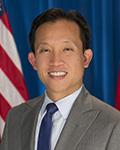
Photo of David Chiu
D California Assembly · District 17

Asm. David Chiu

Compare
Total votes
14,730
all sessions
Attendance
98%
231 missed
Higher than 94% of chamber peers
With party
99%
of cast votes
Near the chamber average
Bipartisan score
0%
crosses aisle rarely
Near the chamber average
Sponsored
1,576
bills & resolutions
Lower than 89% of chamber peers
Committees
0
assignments
1,576 bills and resolutions

Sponsored bills

Total
1,576
Primary
169
Co-sponsor
1,407
This page
1,576
matching current filters
Co-sponsor AB 11
Failed · California Assembly · Co-sponsor
Employment: paid sick days: in-home supportive services.

The Healthy Workplaces, Healthy Families Act of 2014 provides, among other things, that an employee who, on or after July 1, 2015, works in California for 30 or more days within a year from the commencement of employment is entitled to paid sick days for prescribed purposes, to be accrued at a rate of no less than one hour for every 30 hours worked. Existing law provides that an employee under the act does not include a provider of in-home support services, as described. This bill would revise the definition of an employee under the Healthy Workplaces, Healthy Families Act of 2014 to, as of July 1, 2016, include providers of in-home support services, as described.

Failed Feb 1, 2016 1 co-sponsor
Co-sponsor SB 41
died · California Senate · Co-sponsor
Public contracts: 2024 Olympic Games and Paralympic Games.

Existing law provides specified requirements in awarding certain public contracts. This bill would authorize the Governor to sign agreements required by the United States Olympic Committee as part of the bid process for the City of Los Angeles or the City and County of San Francisco to become the United States applicant city and candidate city for the 2024 Olympic Games and Paralympic Games. This bill would make legislative findings and declarations that, among other things, the endorsing municipality, as defined, has developed a self-sufficient bid for financing the games. This bill would authorize the Governor to enter into an agreement for the state to be jointly liable, not to exceed a specified amount, with the Organizing Committee for the Olympic Games (OCOG) , as specified, for obligations of the OCOG, and for any financial deficit relating to the games, as provided. This bill would declare that it is to take effect immediately as an urgency statute.

died Feb 1, 2016 1 co-sponsor
Primary AB 357
died · California Assembly · Lead sponsor
Employment: work hours: Fair Scheduling Act of 2015.

Existing law, with certain exceptions, establishes 8 hours as a day's work and a 40-hour workweek, and requires payment of prescribed overtime compensation for additional hours worked. Existing law establishes the Division of Labor Standards Enforcement in the Department of Industrial Relations for the enforcement of labor laws, including wage claims. Existing federal law provides for the allocation of federal funds through the federal Temporary Assistance for Needy Families (TANF) block grant program to eligible states, with California's version of this program known as the California Work Opportunity and Responsibility to Kids (CalWORKs) program. Under the CalWORKs program, each county provides cash assistance and other benefits to qualified low-income families and individuals, and is prohibited from applying sanctions upon a recipient of CalWORKs for a failure or refusal to comply with program requirements for reasons related to employment, an offer of employment, an activity, or other training for employment for specified reasons, including, but not limited to, that the employment, offer of employment, or work activity does not provide workers' compensation insurance. Existing law establishes a statewide program to enable eligible low-income persons to receive food stamps under the federal Supplemental Nutrition Assistance Program (SNAP) , known in California as CalFresh, and requires counties to implement the program. This bill would make legislative findings and declarations relating to work hour scheduling for employees of food and general retail establishments. The bill would require a food and general retail establishment, as defined, to provide its employees with at least 2 weeks' notice of their schedules. The bill would require a food and general retail establishment to pay those employees additional pay, as specified, for each previously scheduled shift that the food and general retail establishment moves to another date or time or cancels and each previously unscheduled shift that the food and general retail establishment requires an employee to work, and would also require a food and general retail establishment to pay those employees a specified amount for each on-call shift for which the employee is required to be available but is not called in to work. The bill would specify that these provisions do not apply in certain circumstances, including, but not limited to, when operations cannot begin or continue due to causes not within the food and general retail establishment's control. The bill would also require a food and general retail establishment to allow an employee to, upon request, be absent from work without pay for up to 8 hours twice a year to attend any required appointments at the county human services agency, provided that the employee gives reasonable advance notice to the employer of his or her intention to take time off, unless advance notice is not feasible. The bill would prohibit an employer from taking any action against an employee when an unscheduled absence occurs due to a required appointment at the county human services agency if that employee provides specified documentation from the county human services agency. The bill would require the Labor Commissioner to promulgate all regulations and rules of practice and procedure necessary to carry out these provisions. The bill would also prohibit sanctions from being applied upon a recipient of CalWORKs for failure or refusal to comply with CalWORKs program requirements if the employment or offer of employment fails to comply with these provisions. Existing law continuously appropriates moneys from the General Fund to defray a portion of county costs under the CalWORKs program. This bill would instead provide that the continuous appropriation would not be made for purposes of implementing the bill.

died Feb 1, 2016 0 co-sponsors
Co-sponsor SCR 91
Signed into law · California Senate · Co-sponsor
Relative to India Republic Day.

This measure would proclaim January 26, 2016, as India Republic Day, and would urge all Californians to join in celebrating India Republic Day.

Signed into law Feb 1, 2016 1 co-sponsor
Co-sponsor AB 1335
died · California Assembly · Co-sponsor
Building Homes and Jobs Act.

Under existing law, there are programs providing assistance for, among other things, emergency housing, multifamily housing, farmworker housing, homeownership for very low and low-income households, and downpayment assistance for first-time homebuyers. Existing law also authorizes the issuance of bonds in specified amounts pursuant to the State General Obligation Bond Law. Existing law requires that proceeds from the sale of these bonds be used to finance various existing housing programs, capital outlay related to infill development, brownfield cleanup that promotes infill development, and housing-related parks. This bill would enact the Building Homes and Jobs Act. The bill would make legislative findings and declarations relating to the need for establishing permanent, ongoing sources of funding dedicated to affordable housing development. The bill would impose a fee, except as provided, of $75 to be paid at the time of the recording of every real estate instrument, paper, or notice required or permitted by law to be recorded, per each single transaction per single parcel of real property, not to exceed $225. By imposing new duties on counties with respect to the imposition of the recording fee, the bill would create a state-mandated local program. The bill would require that revenues from this fee, after deduction of any actual and necessary administrative costs incurred by the county recorder, be sent quarterly to the Department of Housing and Community Development for deposit in the Building Homes and Jobs Fund, which the bill would create within the State Treasury. The bill would, upon appropriation by the Legislature, require that 20% of the moneys in the fund be expended for affordable owner-occupied workforce housing, 10% of the moneys for housing purposes related to agricultural workers and their families, and would authorize the remainder of the moneys in the fund to be expended to support affordable housing, homeownership opportunities, and other housing-related programs, as specified. The bill would impose certain auditing and reporting requirements and would establish the Building Homes and Jobs Trust Fund Governing Board that would, among other things, review and approve recommendations made by the Department of Housing and Community Development for the distribution of moneys from the fund. This bill would state the intent of the Legislature to enact legislation that would create the Secretary of Housing within state government to oversee all activities related to housing in the state. The California Constitution requires the state to reimburse local agencies and school districts for certain costs mandated by the state. Statutory provisions establish procedures for making that reimbursement. This bill would provide that no reimbursement is required by this act for a specified reason. This bill would declare that it is to take effect immediately as an urgency statute.

died Feb 1, 2016 1 co-sponsor
Primary AB 1065
Failed · California Assembly · Lead sponsor
Employment: unfair practices.

Existing provisions of the California Fair Employment and Housing Act define and prohibit various discriminatory employment practices to protect and safeguard the right and opportunity of all persons to seek, obtain, and hold employment without discrimination, abridgment, or harassment on account of race, religious creed, color, national origin, ancestry, physical disability, mental disability, medical condition, genetic information, marital status, sex, gender, gender identity, gender expression, age, sexual orientation, or military and veteran status. Existing law prohibits an employer or any other person from engaging in, or directing another person to engage in, an unfair immigration-related practice against a person for the purpose of or intent to retaliate against any person for exercising a protected right, as specified. This bill would make it an unlawful employment practice for an employer to request more or different documents than are required under federal law relating to verification that an individual is not an unauthorized alien, or to refuse to honor documents tendered that on their face reasonably appear to be genuine, or to discriminate against an immigrant with authorization to work based upon the specific status or term of status that accompanies the authorization to work, or to attempt to reinvestigate or reverify an incumbent employee's authorization to work unless required to do so by federal law or authority.

Failed Feb 1, 2016 0 co-sponsors
Co-sponsor SB 203
died · California Senate · Co-sponsor
Sugar-sweetened beverages: safety warnings.

(1) Existing federal law, the Federal Food, Drug, and Cosmetic Act, regulates, among other things, the quality and packaging of foods introduced or delivered for introduction into interstate commerce and generally prohibits the misbranding of food. Existing federal law, the Nutrition Labeling and Education Act of 1990, governs state and local labeling requirements, including those that characterize the relationship of any nutrient specified in the labeling of food to a disease or health-related condition. Existing state law, the Sherman Food, Drug, and Cosmetic Law, generally regulates misbranded food and provides that any food is misbranded if its labeling does not conform with the requirements for nutrient content or health claims as set forth in the Federal Food, Drug, and Cosmetic Act and the regulations adopted pursuant to that federal act. Existing law requires that a food facility, as defined, make prescribed disclosures and warnings to consumers, as specified. A violation of these provisions is a crime. Existing state law, the Pupil Nutrition, Health, and Achievement Act of 2001, also requires the sale of only certain beverages to pupils at schools. The beverages that may be sold include fruit-based and vegetable-based drinks, drinking water with no added sweetener, milk, and in middle and high schools, an electrolyte replacement beverage if those beverages meet certain nutritional requirements. This bill would establish the Sugar-Sweetened Beverages Safety Warning Act, which would prohibit a person from distributing, selling, or offering for sale a sugar-sweetened beverage in a sealed beverage container, or a multipack of sugar-sweetened beverages, in this state unless the beverage container or multipack bears a safety warning, as prescribed. The bill also would require every person who owns, leases, or otherwise legally controls the premises where a vending machine or beverage dispensing machine is located, or where a sugar-sweetened beverage is sold in an unsealed container to place a specified safety warning in certain locations, including on the exterior of any vending machine that includes a sugar-sweetened beverage for sale. (2) Under existing law, the State Department of Public Health, upon the request of a health officer, as defined, may authorize the local health department of a city, county, city and county, or local health district to enforce the provisions of the Sherman Food, Drug, and Cosmetic Law. Existing law authorizes the State Department of Public Health to assess a civil penalty against any person in an amount not to exceed $1,000 per day, except as specified. Existing law authorizes the Attorney General or any district attorney, on behalf of the State Department of Public Health, to bring an action in a superior court to grant a temporary or permanent injunction restraining a person from violating any provision of the Sherman Food, Drug, and Cosmetic Law. This bill, commencing July 1, 2016, would provide that any violation of the provisions described in (1) above, or regulations adopted pursuant to those provisions, is punishable by a civil penalty of not less than $50, but no greater than $500. This bill would also create the Sugar-Sweetened Beverages Safety Warning Fund for the receipt of all moneys collected for violations of those provisions. The bill would allocate moneys in this fund, upon appropriation by the Legislature, to the department for the purpose of enforcing those provisions. The bill would make legislative findings and declarations relating to the consumption of sugar-sweetened beverages, obesity, and dental disease.


died Feb 1, 2016 1 co-sponsor
Co-sponsor AB 1357
Failed · California Assembly · Co-sponsor
Children and Family Health Promotion Program.

Existing law provides various programs that prevent disease and promote health. This bill, subject to specified exemptions, would impose a fee on every distributor, as defined, for the privilege of distributing in this state bottled sweetened beverages, at a rate of $0.02 per fluid ounce and for the privilege of distributing concentrate in this state, either as concentrate or as sweetened beverages derived from that concentrate, at the rate of $0.02 per fluid ounce of sweetened beverage to be produced from concentrate. The Board of Equalization would be responsible for administering and collecting the fee and registering the distributors upon whom the fee is imposed. These amounts would be deposited into the Children and Family Health Promotion Trust Fund, created by the bill. The bill would require moneys in the fund, upon appropriation by the Legislature, to be allocated to the State Department of Public Health, the State Department of Health Care Services, the Department of Education, and the Department of Food and Agriculture, as specified, for various purposes of statewide diabetes and childhood obesity treatment and prevention activities and programs, including awarding competitive grants to local governments, nonprofit organizations, school districts, and other entities for activities in support of the bill's objectives. This bill would also authorize the State Public Health Officer, the Director of Health Care Services, the Superintendent of Public Instruction, and the Secretary of Food and Agriculture to establish regulations and provide procedural measures, to bring into effect those purposes. This bill would require the State Department of Public Health, in consultation with the other participating departments, to prepare and adopt an annual program budget, as specified. The bill would establish the Children and Family Health Promotion Administration Account within the fund, to be used, upon appropriation by the Legislature, to reimburse expenditures by the State Department of Public Health in administering and implementing the activities required by the bill, and to repay specified loans from other funds. This bill would make legislative findings and declarations relating to the consumption of sweetened beverages, diabetes, childhood obesity, and dental disease. This bill would declare that it is to take effect immediately as an urgency statute.

Failed Feb 1, 2016 1 co-sponsor
Co-sponsor AB 396
Failed · California Assembly · Co-sponsor
Rental housing discrimination: applications: criminal records.

Existing law generally prohibits housing discrimination with respect to the personal characteristics of race, color, religion, sex, gender, gender identity, gender expression, sexual orientation, marital status, national origin, ancestry, familial status, source of income, disability, or genetic information. This bill would make it unlawful for the owner of any rental housing accommodation to deny the rental or lease of a housing accommodation without first satisfying specified requirements relating to the application process. The bill would prohibit the owner of a rental housing accommodation from inquiring about, or requiring an applicant for rental housing accommodation to disclose, a criminal record during the initial application assessment phase, as defined, unless otherwise required by state or federal law. The bill would permit an owner of a rental housing accommodation to disclose the owner's criminal background check policy on the rental housing accommodation application, as specified, and after successful completion of the initial application assessment phase, to request a criminal background check and inquire about and consider an applicant's criminal record in deciding whether to rent or lease. The bill would require that disclosure and request to include a written disclosure that the applicant may provide evidence demonstrating inaccuracies within the applicant's criminal record or evidence of rehabilitation or other mitigating factors, as defined. The bill would prohibit, in connection with a rental application, the owner of the rental housing accommodation from requiring disclosure of, or, if such information is received, denying a dwelling based in whole or in part on specified information or occurrence, including arrests that did not result in conviction, with specified exceptions, convictions that have been voided, and juvenile justice determinations, among others. The bill would provide that an owner is not liable to any person for accepting or denying a person with a criminal record as a tenant if the owner followed the above-described procedures in accepting that person as a tenant.

Failed Feb 1, 2016 1 co-sponsor
Co-sponsor SCR 88
Signed into law · California Senate · Co-sponsor
Relative to Human Trafficking Awareness Month.

This measure would proclaim the month of January 2016 as Human Trafficking Awareness Month, encourage all Californians to become educated about human trafficking and work to eradicate these criminal practices within and beyond our borders, and encourage Members of the Legislature, as well as organizations, businesses, and individuals, to host or sponsor and attend community events in order to bring visibility and support to efforts made by nongovernmental organizations to recognize and combat human trafficking.

Signed into law Feb 1, 2016 1 co-sponsor
Showing 1,381 to 1,390 of 1,576 bills