

Employment: work hours: Fair Scheduling Act of 2015.
Summary
Existing law, with certain exceptions, establishes 8 hours as a day's work and a 40-hour workweek, and requires payment of prescribed overtime compensation for additional hours worked. Existing law establishes the Division of Labor Standards Enforcement in the Department of Industrial Relations for the enforcement of labor laws, including wage claims. Existing federal law provides for the allocation of federal funds through the federal Temporary Assistance for Needy Families (TANF) block grant program to eligible states, with California's version of this program known as the California Work Opportunity and Responsibility to Kids (CalWORKs) program. Under the CalWORKs program, each county provides cash assistance and other benefits to qualified low-income families and individuals, and is prohibited from applying sanctions upon a recipient of CalWORKs for a failure or refusal to comply with program requirements for reasons related to employment, an offer of employment, an activity, or other training for employment for specified reasons, including, but not limited to, that the employment, offer of employment, or work activity does not provide workers' compensation insurance. Existing law establishes a statewide program to enable eligible low-income persons to receive food stamps under the federal Supplemental Nutrition Assistance Program (SNAP) , known in California as CalFresh, and requires counties to implement the program. This bill would make legislative findings and declarations relating to work hour scheduling for employees of food and general retail establishments. The bill would require a food and general retail establishment, as defined, to provide its employees with at least 2 weeks' notice of their schedules. The bill would require a food and general retail establishment to pay those employees additional pay, as specified, for each previously scheduled shift that the food and general retail establishment moves to another date or time or cancels and each previously unscheduled shift that the food and general retail establishment requires an employee to work, and would also require a food and general retail establishment to pay those employees a specified amount for each on-call shift for which the employee is required to be available but is not called in to work. The bill would specify that these provisions do not apply in certain circumstances, including, but not limited to, when operations cannot begin or continue due to causes not within the food and general retail establishment's control. The bill would also require a food and general retail establishment to allow an employee to, upon request, be absent from work without pay for up to 8 hours twice a year to attend any required appointments at the county human services agency, provided that the employee gives reasonable advance notice to the employer of his or her intention to take time off, unless advance notice is not feasible. The bill would prohibit an employer from taking any action against an employee when an unscheduled absence occurs due to a required appointment at the county human services agency if that employee provides specified documentation from the county human services agency. The bill would require the Labor Commissioner to promulgate all regulations and rules of practice and procedure necessary to carry out these provisions. The bill would also prohibit sanctions from being applied upon a recipient of CalWORKs for failure or refusal to comply with CalWORKs program requirements if the employment or offer of employment fails to comply with these provisions. Existing law continuously appropriates moneys from the General Fund to defray a portion of county costs under the CalWORKs program. This bill would instead provide that the continuous appropriation would not be made for purposes of implementing the bill.
Bill status
died
1 of 4 stages cleared
Introduction
Feb 2015
Committee Review
Floor Vote
Governor
Introduced Feb 17, 2015
Last action Feb 1, 2016
Floor votes
How they voted
No floor votes recorded yet.
Full legislative history
Actions timeline
Total actions
22
Key actions
3
Committee
9
Amendments
4
Jun 1, 2015
Lower · Passed
Read second time and amended. Ordered returned to second reading.
lower
May 28, 2015
Introduced
From committee: Amend, and do pass as amended. (Ayes 11. Noes 6.) (May 28).
lower
May 13, 2015
Committee
In committee: Set, first hearing. Referred to APPR. suspense file.
lower
May 4, 2015
Committee
Re-referred to Com. on APPR.
lower
Apr 28, 2015
Committee
Re-referred to Com. on APPR.
lower
Apr 27, 2015
Lower · Passed
Read second time and amended.
lower
Apr 23, 2015
Introduced
From committee: Amend, and do pass as amended and re-refer to Com. on APPR. (Ayes 4. Noes 3.) (April 22).
lower
Apr 20, 2015
Committee
Re-referred to Com. on L. & E.
lower
Apr 7, 2015
Committee
Re-referred to Com. on L. & E.
lower
Mar 26, 2015
Committee
Re-referred to Com. on L. & E.
lower
Mar 16, 2015
Committee
Re-referred to Com. on L. & E.
lower
Mar 12, 2015
Committee
Referred to Com. on L. & E.
lower
Feb 18, 2015
Lower · Passed
From printer. May be heard in committee March 20.
lower
1 primary · 12 co-sponsors
Sponsors
Role
Legislator
Party
State
District
P
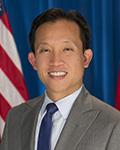
David Chiu
DDemocratic
Co
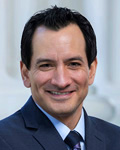
Anthony Rendon
DDemocratic
Co

Connie M. Leyva
DDemocratic
Co

Fran Pavley
DDemocratic
Co
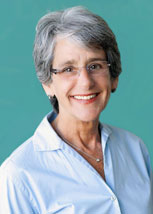
Hannah-Beth Jackson
DDemocratic
Co
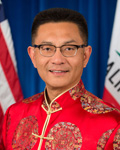
Kansen Chu
DDemocratic
Co

Loni Hancock
DDemocratic
Co

Lorena Gonzalez
DDemocratic
Co
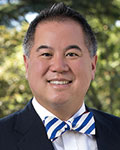
Phil Ting
DDemocratic
Co
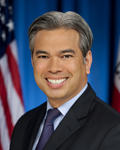
Rob Bonta
DDemocratic
Co
RH
Roger Hernández
DDemocratic

Ask Maddy
·
AI policy assistant
Ask Maddy about AB 357
Scope: CA
Hi! I can help you understand AB 357. What would you like to know?
Try one of these
i
Maddy answers using official bill text and legislative records. Always verify before sharing.
Sources cited inline