

Existing law, the Plastic Microbeads Nuisance Prevention Law, prohibits a person from selling or offering for promotional purposes in the state any personal care products containing plastic microbeads that are used to exfoliate or cleanse in a rinse-off product, including, but not limited to, toothpaste. This bill would enact the Synthetic Polymer Microparticles in Cosmetic and Cleaning Products Prevention Act. The bill would prohibit a synthetic polymer microparticle from being placed on the market in this state as a substance on its own or, where the synthetic polymer microparticles are present to confer a sought-after characteristic, in mixtures in a concentration equal to or greater than 0.01% by weight. The restriction would apply on and after specified dates depending on the type of product, as described, except as otherwise provided. The bill would specify the screening tests and pass criteria to be used for purposes of determining compliance with this prohibition. The bill would make a person who violates this prohibition liable for a civil penalty not to exceed $5,000 per day for each violation, in addition to any other penalty established by law. The bill would authorize the civil penalty to be assessed and recovered in a civil action brought by a city attorney, a district attorney, a county counsel, or the Attorney General in any court of competent jurisdiction.
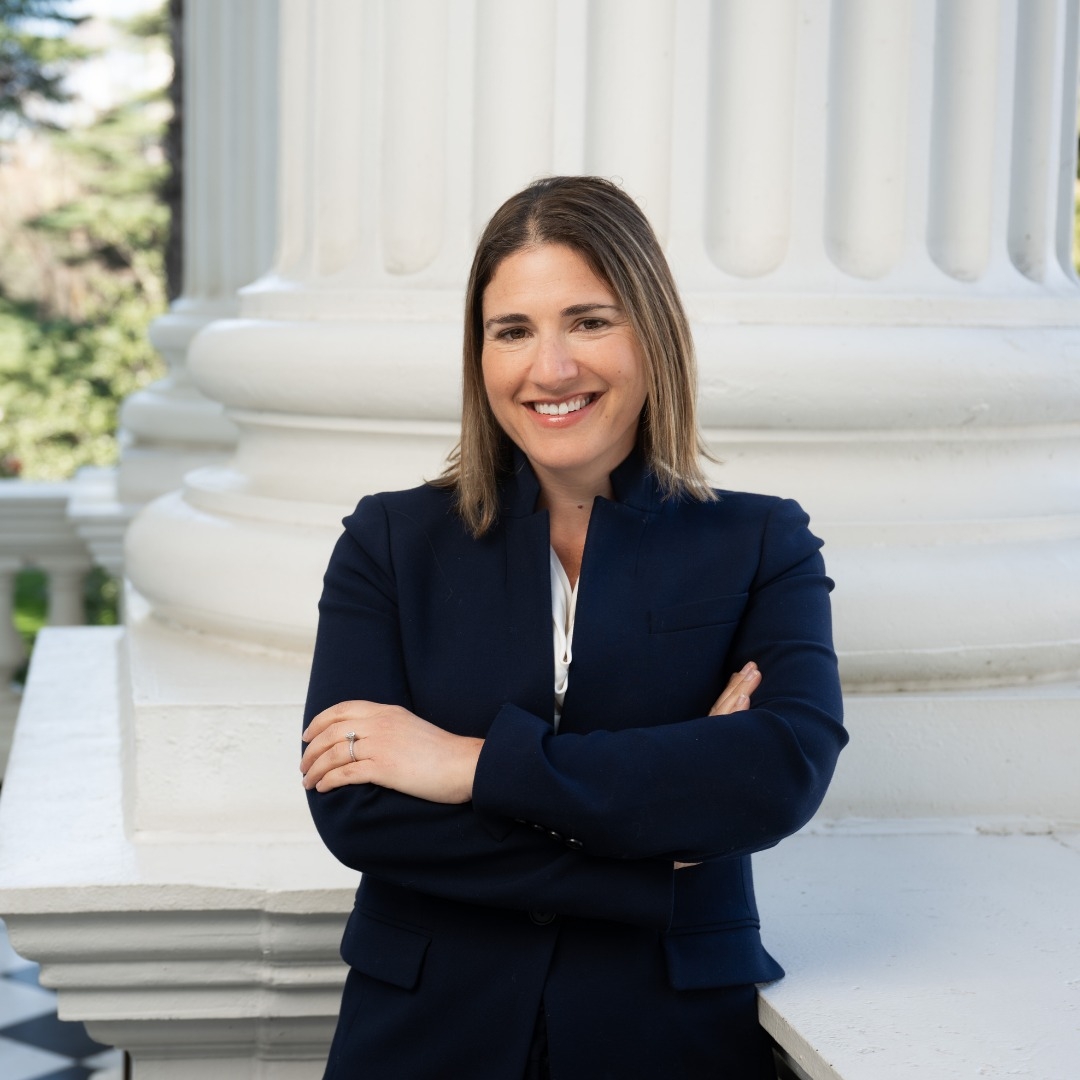
Asm. Rebecca Bauer-Kahan
Sponsored bills
The Personal Income Tax Law, in modified conformity with federal income tax law, generally defines "gross income" as income from whatever source derived, except as specifically excluded, including an exclusion for the amount of student loan indebtedness repaid or canceled pursuant to a specified federal law. This bill, for taxable years beginning on or after January 1, 2024, and before January 1, 2029, would exclude qualified discharge of indebtedness income from gross income. The bill would define "qualified discharge of indebetedness income" for this purpose to mean income that would otherwise be realized from the discharge of student loan debt, as defined, or medical debt that is discharged by a qualifying nonprofit organization. Existing law requires a bill authorizing a new tax expenditure to contain, among other things, specific goals, purposes, and objectives the tax expenditure will achieve, detailed performance indicators, and data collection requirements. This bill would include additional information required for any bill authorizing a new tax expenditure. This bill would take effect immediately as a tax levy.
Existing law makes it unlawful for a person doing business in California and advertising to consumers in California to make any false or misleading advertising claim. Existing law, the Unfair Competition Law, makes various practices unlawful and provides that a person who engages, has engaged, or proposes to engage in unfair competition is liable for a civil penalty, as specified. Existing law prohibits the state from denying or interfering with an individual's fundamental right to choose or obtain an abortion. Existing law, which was previously held unconstitutional by the United States Supreme Court, requires a covered facility to disseminate to its clients a specified notice regarding abortion. Existing law authorizes the Attorney General, city attorney, or county counsel to bring an action to impose a specified civil penalty against covered facilities that fail to comply with these requirements. This bill would prohibit a person doing business in California who is performing, has performed, or intends to perform a pregnancy-related service from advertising using a false or misleading statement related to the person's provision, or lack of provision, of abortion. The bill would make a violation of that prohibition an unfair business practice, and would authorize an entity authorized to enforce unfair competition laws, a district attorney, a county counsel, or a city attorney to file for injunctive relief or seek a civil penalty, as specified. The bill would also authorize a person harmed to bring a private right of action seeking injunctive relief, a monetary penalty of at least $1,000, actual damages, and reasonable attorney's fees.
Existing law provides for the out-of-home placement, including foster care placement, of children who are unable to remain in the custody and care of their parents. Existing law, the federal Social Security Act, provides for benefits for eligible beneficiaries, including survivorship and disability benefits and supplemental security income (SSI) benefits for, among others, blind and disabled children. Existing law requires every youth who is in foster care and nearing emancipation to be screened by the county for potential eligibility for federal Supplemental Security Income and requires that screening to occur when the foster youth is at least 16 years and 6 months of age and not older than 17 years and 6 months of age. This bill, among other things, would require a placing agency to act in accordance with specified guidelines and pursuant to certain requirements when acting as the representative payee or in any other fiduciary capacity for a child or youth, including, among other requirements, ensuring that the child's benefits are not used to pay for, or to reimburse, the placing agency for any costs of the child's care and supervision, as defined. The bill would make these requirements operative January 1, 2024, or 30 days after the department issues the necessary all-county letters and informing materials to county placing agencies, whichever is later. By increasing county duties with respect to foster youth, the bill would impose a state-mandated local program. Existing law requires the State Department of Social Services to convene a workgroup to develop best practice guidelines for county welfare departments to assist eligible children who are in the state's or a county's custody and are qualified in obtaining federal social security and supplemental security income benefits. Existing law requires that workgroup to make recommendations to the department, by December 31, 2006, regarding the feasibility and cost-effectiveness of reserving a designated amount of foster children's social security and SSI/SSP benefits in lieu of reimbursing the county and the state for care and maintenance, and, in making those recommendations, to consider that the reserved benefits would be for the purpose of assisting the foster child in the transfer to self-sufficient living in a manner consistent with federal law. This bill would repeal the requirement for that workgroup to make the above-described recommendations regarding feasibility and cost-effectiveness. The California Constitution requires the state to reimburse local agencies and school districts for certain costs mandated by the state. Statutory provisions establish procedures for making that reimbursement. This bill would provide that no reimbursement is required by this act for a specified reason.
The Unruh Civil Rights Act provides that all persons within the jurisdiction of this state are free and equal, and regardless of their sex, race, color, religion, ancestry, national origin, disability, medical condition, genetic information, marital status, sexual orientation, citizenship, primary language, or immigration status are entitled to the full and equal accommodations, advantages, facilities, privileges, or services in all business establishments of every kind whatsoever. The California Fair Employment and Housing Act protects and safeguards the right and opportunity of all persons to seek, obtain, and hold employment without discrimination, abridgment, or harassment on account of race, religious creed, color, national origin, ancestry, physical disability, mental disability, medical condition, genetic information, marital status, sex, gender, gender identity, gender expression, age, sexual orientation, reproductive health decisionmaking, or veteran or military status. The act establishes the Civil Rights Department within the Business, Consumer Services, and Housing Agency and requires the department to, among other things, bring civil actions to enforce the act. This bill would, among other things, require a deployer, as defined, and a developer of an automated decision tool, as defined, to, on or before January 1, 2025, and annually thereafter, perform an impact assessment for any automated decision tool the deployer uses that includes, among other things, a statement of the purpose of the automated decision tool and its intended benefits, uses, and deployment contexts. The bill would require a deployer or developer to provide the impact assessment to the Civil Rights Department within 60 days of its completion and would punish a violation of that provision with an administrative fine of not more than $10,000 to be recovered in an administrative enforcement action brought by the Civil Rights Department. The bill would authorize certain public attorneys, including the Attorney General, to bring a civil action against a deployer or developer for a violation of the bill. The bill would require a public attorney to, before commencing an action for injunctive relief, provide 45 days' written notice to a deployer or developer of the alleged violations of the bill and would provide a deployer or developer a specified opportunity to cure those violations, if, among other things, the deployer or developer provides the person who gave the notice an express written statement, under penalty of perjury, that the violation has been cured and that no further violations shall occur. By expanding the scope of the crime of perjury, this bill would impose a state-mandated local program. This bill would require a deployer to, at or before the time an automated decision tool is used to make a consequential decision, as defined, notify any natural person that is the subject of the consequential decision that an automated decision tool is being used to make, or be a controlling factor in making, the consequential decision and to provide that person with, among other things, a statement of the purpose of the automated decision tool. The bill would, if a consequential decision is made solely based on the output of an automated decision tool, require a deployer to, if technically feasible, accommodate a natural person's request to not be subject to the automated decision tool and to be subject to an alternative selection process or accommodation, as prescribed. This bill would prohibit a deployer from using an automated decision tool that results in algorithmic discrimination, which the bill would define to mean the condition in which an automated decision tool contributes to unjustified differential treatment or impacts disfavoring people based on their actual or perceived race, color, ethnicity, sex, religion, age, national origin, limited English proficiency, disability, veteran status, genetic information, reproductive health, or any other classification protected by state law. The bill would, on and after January 1, 2026, authorize a person to bring a civil action against a deployer or developer for a violation of that provision. This bill would define "deployer" and "developer" to include a local government agency and would thereby impose a state-mandated local program. The California Constitution requires the state to reimburse local agencies and school districts for certain costs mandated by the state. Statutory provisions establish procedures for making that reimbursement. This bill would provide that with regard to certain mandates no reimbursement is required by this act for a specified reason. With regard to any other mandates, this bill would provide that, if the Commission on State Mandates determines that the bill contains costs so mandated by the state, reimbursement for those costs shall be made pursuant to the statutory provisions noted above.
Existing law prohibits, beginning January 1, 2025, a person or entity from manufacturing, selling, delivering, holding, or offering for sale in commerce any cosmetic product that contains intentionally added perfluoroalkyl and polyfluoroalkyl substances (PFAS) , as defined. Existing law similarly prohibits, beginning January 1, 2025, any person from manufacturing, distributing, selling, or offering for sale in the state any new, not previously owned, textile articles that contain regulated PFAS, except as specified, and requires a manufacturer to use the least toxic alternative when removing regulated PFAS in textile articles to comply with these provisions. This bill would, beginning January 1, 2025, similarly prohibit any person from manufacturing, distributing, selling, or offering for sale in the state any menstrual products that contain regulated PFAS, and requires a manufacturer to use the least toxic alternative when removing regulated PFAS in menstrual products to comply with these provisions. The bill would require a manufacturer of a menstrual product to provide persons that offer the product for sale or distribution in the state with a certificate of compliance stating that the menstrual product is in compliance with these provisions and does not contain any regulated PFAS. The bill would make a violation of these provisions punishable by a civil penalty not to exceed $10,000 per day for each violation, as specified, and would authorize the Attorney General, a city prosecutor, a city or county attorney, a county counsel, or a district attorney to bring an action to enforce these provisions.
Existing law, to protect public health and water quality, regulates a broad range of consumer products and processes, including water softeners, water treatment devices, and backflow prevention devices, among others. This bill would require, on and after January 1, 2029, that all new washing machines sold or offered for sale in California for residential or state use contain a microfiber filtration system, as defined, with a mesh size not greater than 100 micrometers, and bear a label with a specified consumer notice, as provided. The bill would provide that a violation of these provisions is punishable by a specified civil penalty, upon an action brought by the Attorney General, a city attorney, a county counsel, or a district attorney. The bill would also include legislative findings and declarations.
Existing law, the Knox-Keene Health Care Service Plan Act of 1975, provides for the licensure and regulation of health care service plans by the Department of Managed Health Care, and makes a willful violation of the act a crime. Existing law provides for the regulation of health insurers by the Department of Insurance. Existing law requires a health care service plan contract issued, amended, delivered, or renewed on or after January 1, 2000, or an individual or group policy of disability insurance or self-insured employee welfare benefit plan to provide coverage for mammography for screening or diagnostic purposes upon referral by specified professionals. Under existing law, mammography performed pursuant to those requirements or that meets the current recommendations of the United States Preventive Services Task Force is provided to an enrollee or an insured without cost sharing. This bill would require a health care service plan contract, a policy of health insurance that provides hospital, medical, or surgical coverage, or a self-insured employee welfare benefit plan issued, amended, or renewed on or after January 1, 2025, to provide coverage without imposing cost sharing for, among other things, screening mammography and medically necessary diagnostic breast imaging, including diagnostic breast imaging following an abnormal mammography result and for an enrollee or insured indicated to have a risk factor associated with breast cancer, except as specified. The California Constitution requires the state to reimburse local agencies and school districts for certain costs mandated by the state. Statutory provisions establish procedures for making that reimbursement. This bill would provide that no reimbursement is required by this act for a specified reason.