

The California Consumer Privacy Act of 2018 (CCPA) grants to a consumer various rights with respect to personal information, as defined, that is collected by a business, as defined, including a requirement that a business have the affirmative authorization of the consumer or the consumer's parent or guardian, as provided, before selling or sharing the personal information of a consumer that the business has actual knowledge is less than 16 years of age. The California Privacy Rights Act of 2020, approved by the voters as Proposition 24 at the November 3, 2020, statewide general election, amended, added to, and reenacted the CCPA. The CCPA establishes the California Privacy Protection Agency and vests it with full administrative power, authority, and jurisdiction to implement and enforce the CCPA. This bill would, except if certain conditions are met, prohibit a developer, as defined, from using the personal information of a consumer less than 16 years of age, as specified, to train or fine-tune, as defined, an artificial intelligence system or service unless the consumer or the consumer's parent or guardian, as specified, has affirmatively authorized that use of the consumer's personal information. The bill would require, if affirmative authorization is given, a developer to deidentify and aggregate the personal information subject to the authorization before using the personal information to train or retrain an artificial intelligence system or service. The bill would define "artificial intelligence" to mean an engineered or machine-based system that, for explicit or implicit objectives, infers from the input it receives how to generate outputs that can influence physical or virtual environments and would define "train" to mean to expose artificial intelligence to data in order to alter the relationship between inputs and outputs. The California Privacy Rights Act of 2020 authorizes the Legislature to amend the act to further the purposes and intent of the act by a majority vote of both houses of the Legislature, as specified. This bill would declare that its provisions further the purposes and intent of the California Privacy Rights Act of 2020.
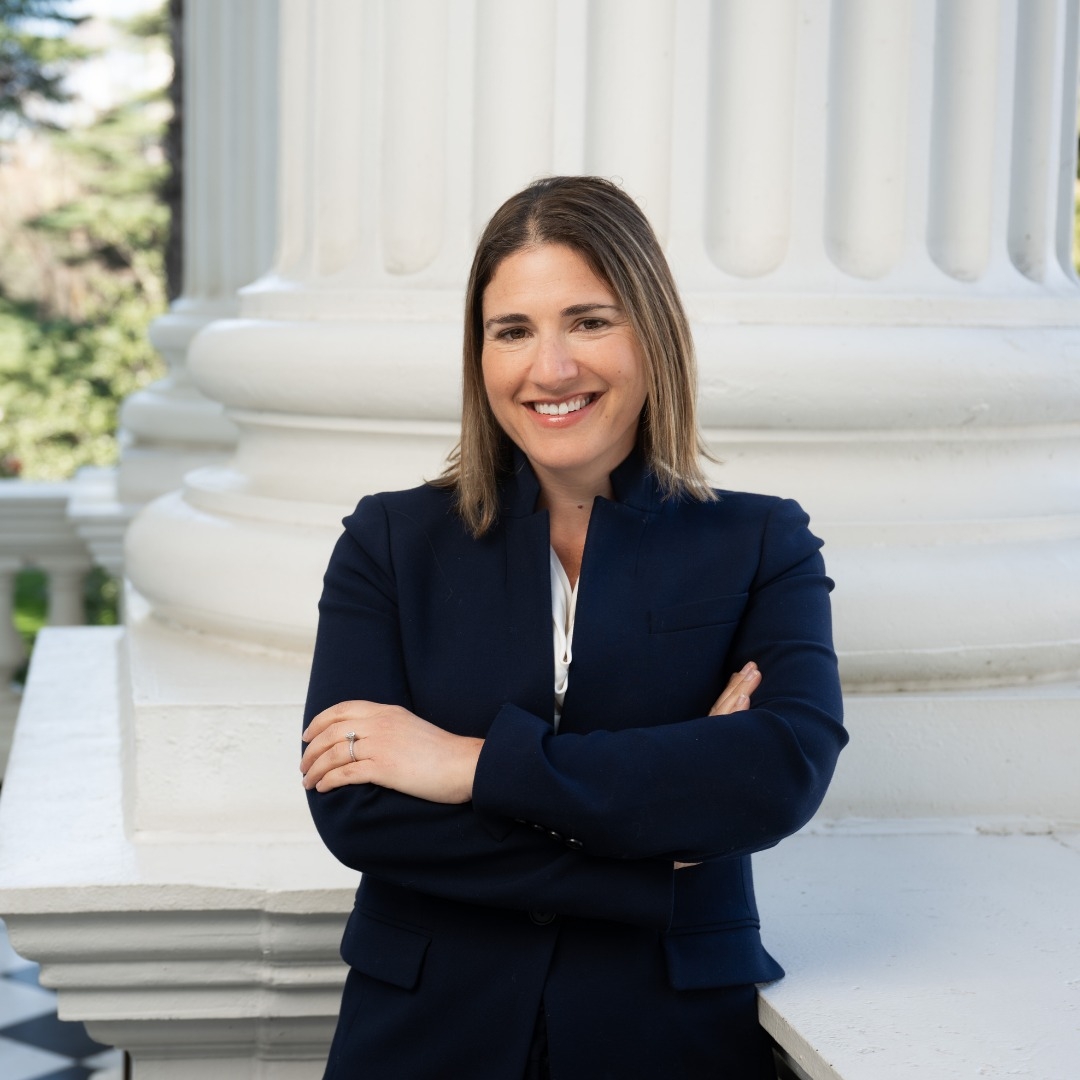
Asm. Rebecca Bauer-Kahan
Sponsored bills
Existing law, the Knox-Keene Health Care Service Plan Act of 1975, provides for the licensure and regulation of health care service plans by the Department of Managed Health Care, and makes a willful violation of the act a crime. Existing law provides for the regulation of health insurers by the Department of Insurance. Existing law generally authorizes a health care service plan or health insurer to use utilization review, under which a licensed physician or a licensed health care professional who is competent to evaluate specific clinical issues may approve, modify, delay, or deny requests for health care services based on medical necessity. Existing law also prohibits a health care service plan that covers prescription drug benefits from limiting or excluding coverage for a drug that was previously approved for coverage if an enrollee continues to be prescribed that drug, as specified. The bill would authorize a licensed health care professional to request, and would require that they be granted, the authority to adjust the dose or frequency of a drug to meet the specific medical needs of the enrollee or insured without prior authorization if specified conditions are met. Under the bill, if the enrollee or insured has been continuously using a prescription drug selected by their prescribing provider for the medical condition under consideration while covered by their current or previous health coverage, the health care service plan or health insurance policy would be prohibited from limiting or excluding coverage of that prescription. With respect to health care service plans, the bill would specify that its provisions do not apply to Medi-Cal managed care plan contracts. Because a willful violation of these provisions by a health care service plan would be a crime, the bill would impose a state-mandated local program. The California Constitution requires the state to reimburse local agencies and school districts for certain costs mandated by the state. Statutory provisions establish procedures for making that reimbursement. This bill would provide that no reimbursement is required by this act for a specified reason.
Existing law requires the Judicial Council to establish judicial training programs for individuals who perform duties in domestic violence matters. Existing law requires the training programs to include a domestic violence session in any orientation session for newly appointed or elected judges and an annual training session in domestic violence. Existing law requires the training programs to include instruction in all aspects of domestic violence, including, but not limited to, the detriment to children of residing with a person who perpetrates domestic violence. This bill would require the Judicial Council to establish, on or before July 1, 2026, judicial training programs for judges related to best practices related to treatment of sexual abuse and assault victims in courtroom cases. This bill would require the development of the training programs to be informed by research and evidence on the impact of sexual abuse and assault on victims. The bill would require, commencing January 1, 2027, that the training programs be provided to all newly appointed or elected judges as part of any orientation session or initial training, and all judicial officers upon assignment to a family court, juvenile court, criminal court, and any others deemed appropriate by the Judicial Council. The bill would also require the training to be made available to all judicial officers on an annual basis. The bill would authorize the Judicial Council to conduct the above-described training either in person or through remote technology.
The California Global Warming Solutions Act of 2006 designates the State Air Resources Board as the state agency charged with monitoring and regulating sources of emissions of greenhouse gases. The act authorizes the state board to include the use of market-based compliance mechanisms. Existing law requires all moneys, except for fines and penalties, collected by the state board as a part of the market-based compliance mechanism to be deposited in the Greenhouse Gas Reduction Fund. Existing law requires the Department of Resources Recycling and Recovery, upon appropriation, to administer a grant program to provide financial assistance to promote the in-state development of infrastructure, food waste prevention, or other projects to reduce organic waste, sort and aggregate or process organic and other recyclable materials into new, value-added products, or divert items from disposal through enhanced reuse opportunities. Existing law requires the grant program to provide eligible financial assistance for certain activities, including activities that expand and improve organic waste diversion and recycling, including, but not limited to, the recovery of food for human consumption and food waste prevention. Existing law specifies eligible infrastructure projects for purposes of the program, including, but not limited to, the construction of facilities to help develop, implement, or expand edible food waste recovery operations. This bill would expand the grant program to provide financial assistance for the recovery of edible food, as specified. The bill would specify that eligible infrastructure projects includes the construction or expansion of facilities to help develop, implement, or expand edible food waste recovery operations. The bill would require the department to consider the increased amount of edible food recovery capacity that the project will create when awarding a grant for edible food recovery.
(1) The California Constitution establishes the Public Utilities Commission (PUC) , with jurisdiction over all public utilities, and provides for the composition and appointment of the PUC. Existing law prohibits an executive of a public utility from serving as a commissioner on the PUC within 2 years after leaving the employment of the utility. This bill would prohibit a PUC commissioner from being employed by an entity subject to regulation by the PUC for a period of one year after the end of the commissioner's term of office. The bill would prohibit a PUC commissioner from accepting a gift from an entity subject to regulation by the PUC. (2) Existing law establishes within the PUC the independent Public Advocate's Office of the Public Utilities Commission to represent and advocate on behalf of the interests of public utility customers and subscribers within the commission's jurisdiction. Existing law requires the director of the Public Advocate's Office to be appointed by, and serve at the pleasure of, the Governor, subject to confirmation by the Senate. This bill would prohibit the director of the Public Advocate's Office from being employed by an entity subject to regulation by the PUC for a period of one year after the end of the director's term of office. The bill would prohibit the director from accepting a gift from an entity subject to regulation by the PUC. (3) Existing law authorizes the PUC to fix the rates and charges for every public utility, and requires that those rates and charges be just and reasonable. This bill would, in any instance where the PUC authorizes a forecast for a category of costs in a ratesetting proceeding and authorizes the recording of costs in an existing or new balancing account for potential rate recovery above the authorized forecast, authorize the PUC to further review any costs above the authorized forecast. The bill would require all proposed electrical corporation spending for wildfire mitigation capital costs that are eligible for rate recovery to include a cost-benefit analysis of the proposed expenses and at least one alternative, as specified. (4) Existing law requires the PUC to annually provide the Legislature with an update on the status of its review of public utilities' balancing accounts as part of a specified annual report or by posting it on its internet website, as provided. This bill would require the PUC to include specified information as part of that annual update, including, among other things, the number of balancing accounts that have recorded costs above their forecast by public utility, the number of balancing accounts the PUC has reviewed in the past year, and the dollar amount, by public utility, of costs that have been approved and denied. (5) Under existing law, a violation of the Public Utilities Act or any order, decision, rule, direction, demand, or requirement of the PUC is a crime. Because certain provisions of this bill would be part of the act and a violation of a PUC action implementing the bill's requirements would be a crime, the bill would impose a state-mandated local program. The California Constitution requires the state to reimburse local agencies and school districts for certain costs mandated by the state. Statutory provisions establish procedures for making that reimbursement. This bill would provide that no reimbursement is required by this act for a specified reason.
Maddy summaryThis California Assembly resolution encourages the U.S. Congress to pass legislation creating a National Infrastructure Bank to fund critical repairs and upgrades for roads, bridges, dams, and other public works. The bill cites reports from the American Society of Civil Engineers highlighting billions of dollars in investment gaps and poor conditions affecting California's transportation and water systems. It advocates for a financing model that uses existing federal debt rather than new taxes, aiming to stimulate the economy, create jobs, and prioritize projects in disadvantaged communities. The resolution formally requests that federal leaders adopt this approach to address the state's urgent infrastructure needs.
This measure would recognize the importance of California Native American Day, celebrated this year on September 27, 2024, and the annual California Indian Cultural Awareness Conference, to the enhancement of awareness of California Indian culture.
Maddy summaryThis bill establishes Filipino American History Month to recognize the long-standing contributions of Filipinos to California and the United States. It directly affects state officials and the public by designating a specific month for commemoration and education. The resolution highlights historical milestones, including early Spanish-era interactions, the development of Filipino communities in cities like Stockton and San Francisco, and the significant roles Filipinos played in agriculture, shipbuilding, and military service during World War II. By formally acknowledging these events, the bill aims to promote awareness of Filipino American heritage within the state.
Maddy summaryThis bill is a House Resolution that formally recognizes Diwali as a significant cultural and religious holiday for Indian Americans and South Asian Americans in California. It acknowledges the festival's importance to Hindus, Sikhs, Buddhists, and Jains by highlighting its historical roots and the specific meanings it holds for each group. The resolution expresses the Assembly's respect for these communities and encourages Californians to participate in the celebration of lights on November 1, 2024. As a commemorative measure, the bill does not alter laws or funding but serves to officially honor the occasion within the state legislature.
Maddy summaryThis bill designates the week of June 3, 2024, as Sacramento Valley Ecosystem Awareness Week to highlight the region's unique natural and agricultural resources. The measure acknowledges the area's importance for migratory birds, endangered fish species, and rice farming while promoting efforts to restore local ecosystems. It expresses legislative support for the Floodplain Forward Coalition, a group working to improve water management and environmental health in the valley. The resolution serves as a formal recognition of these ecological values rather than creating new laws or funding.