Maddy summaryThis bill is a House Resolution that formally recognizes the work of school board members across California by designating January 2025 as School Board Recognition Month. It directly affects local school districts and county offices of education by honoring the nearly 5,000 elected school board members who serve in these roles. The resolution expresses appreciation for their dedication to public education and encourages community members to support these local officials in their efforts to serve students. This is a commemorative measure rather than a policy change, as it does not alter laws or regulations but instead highlights the importance of school governance.
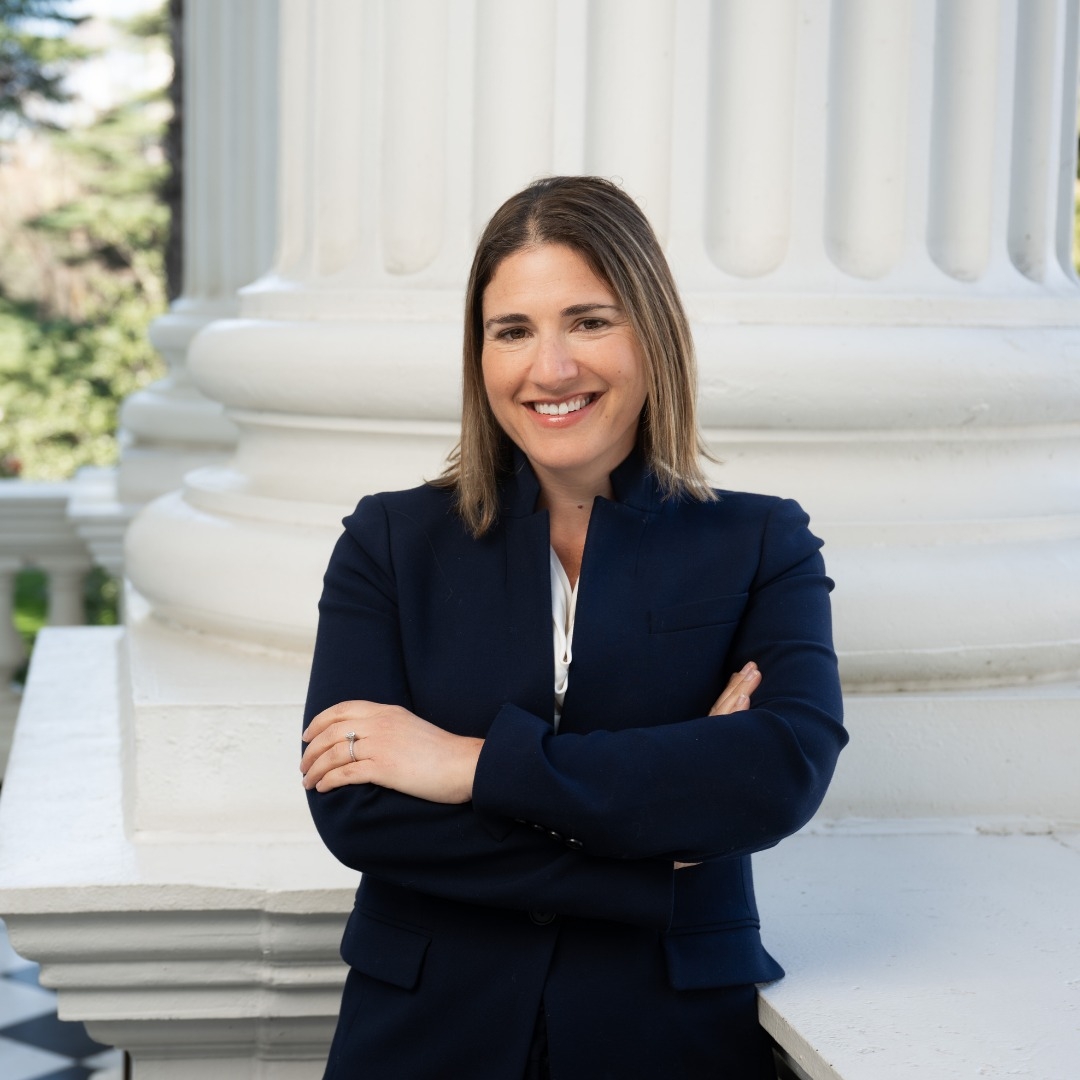
Asm. Rebecca Bauer-Kahan
Sponsored bills
Existing law authorizes a chief administrative officer of a postsecondary educational institution, or an officer or employee designated by the chief administrative officer to maintain order on the school campus or facility, that has a student who has suffered a credible threat of violence made off the school campus or facility from any individual which can reasonably be construed to be carried out or to have been carried out at the school campus or facility, to seek a temporary restraining order and an injunction on behalf of the student and, at the discretion of the court, any number of other students at the campus or facility, as specified. "Postsecondary educational institution" is defined for purposes of these provisions as a private institution of vocational, professional, or postsecondary education. This bill would, beginning January 1, 2026, expand the definition of postsecondary educational institution to include public institutions, expand the conduct for which a restraining order can be sought to include unlawful violence, as defined, and remove the requirements that such conduct occur off the school campus or facility and be construed to be carried out or to have been carried out at the campus or facility.
The California Consumer Privacy Act of 2018 (CCPA) grants to a consumer various rights with respect to personal information, as defined, that is collected by a business, as defined, including by requiring a business that controls the collection of a consumer's personal information to, at or before the point of collection, make certain disclosures to the consumer. The California Privacy Rights Act of 2020, approved by the voters as Proposition 24 at the November 3, 2020, statewide general election, amended, added to, and reenacted the CCPA. The CCPA establishes the California Privacy Protection Agency and vests it with full administrative power, authority, and jurisdiction to implement and enforce the CCPA. This bill would specify that personal information can exist in various formats. The California Privacy Rights Act of 2020 authorizes the Legislature to amend the act to further the purposes and intent of the act by a majority vote of both houses of the Legislature, as specified. This bill would declare that its provisions further the purposes and intent of the California Privacy Rights Act of 2020. This bill would incorporate additional changes to Section 1798.140 of the Civil Code proposed by SB 1223 to be operative only if this bill and SB 1223 are enacted and this bill is enacted last.
Existing law establishes the Government Operations Agency, which is governed by the Secretary of Government Operations. Existing law requires the Secretary of Government Operations to develop a coordinated plan to, among other things, evaluate the impact of the proliferation of deepfakes, defined to mean audio or visual content that has been generated or manipulated by artificial intelligence that would falsely appear to be authentic or truthful and that features depictions of people appearing to say or do things they did not say or do without their consent, on state government, California-based businesses, and residents of the state. Existing law establishes within the Government Operations Agency the Department of Technology, which is supervised by the Director of Technology. Existing law requires the Department of Technology to conduct, in coordination with other interagency bodies as it deems appropriate, a comprehensive inventory of all high-risk automated decision systems that have been proposed for use, development, or procurement by, or are being used, developed, or procured by, any state agency. Existing law defines an "automated decision system" as a computational process derived from machine learning, statistical modeling, data analytics, or artificial intelligence that issues simplified output, including a score, classification, or recommendation, that is used to assist or replace human discretionary decisionmaking and materially impacts natural persons. Existing law requires each local agency, as defined, to provide specified information to the public before approving an economic development subsidy, as defined, within its jurisdiction, and to, among other things, hold hearings and issue annual reports on those subsidies, as provided. Existing law requires those reports to contain, among other things, information about any net job loss or replacement due to the use of automation, artificial intelligence, or other technologies, if known. Existing law establishes the California Online Community College, under the administration of the Board of Governors of the California Community Colleges, for purposes of creating an organized system of accessible, flexible, and high-quality online content, courses, and programs focused on providing industry-valued credentials compatible with the vocational and educational needs of Californians who are not currently accessing higher education. Existing law requires the California Online Community College to develop a Research and Development Unit to, among other things, focus on using technology, data science, behavioral science, machine learning, and artificial intelligence to build out student supports, as provided. Existing law requires a social media company, as defined, to submit a terms of service report on a semiannual basis to the Attorney General, as prescribed. Existing law requires the terms of service report to include, for each social medial platform owned or operated by the company, specified information that is disaggregated into categories, including how content was flagged or actioned by company employees or contractors, artificial intelligence software, community moderators, civil society partners, and users. This bill would define the term "artificial intelligence" for the purposes of the above-described provisions to mean an engineered or machine-based system that varies in its level of autonomy and that can, for explicit or implicit objectives, infer from the input it receives how to generate outputs that can influence physical or virtual environments.

Existing law makes it a crime to post personal information or an image of a reproductive health care services patient, provider, or assistant, or other individuals residing at the same home address with the intent that another person imminently use that information to commit a crime involving violence or a threat of violence against the reproductive health care services patient, provider, or assistant, or other individuals residing at the same home address. Existing law makes a violation of this provision punishable as a misdemeanor. If the violation leads to bodily injury of the person, existing law makes it a misdemeanor punishable by up to one year in a county jail, a fine of up to $50,000, or both that fine and imprisonment. This bill would make a violation of these provisions punishable as either a misdemeanor or as a felony, and would make a violation a felony if bodily injury occurs. By increasing the punishment for a crime, this bill would impose a state-mandated local program. Existing law makes it a misdemeanor to, by force or threat of force, willfully injure, intimidate, interfere with, oppress, or threaten another person in the free exercise or enjoyment of a right or privilege secured by the Constitution or laws of this state or by the Constitution or laws of the United States in whole or in part because of one or more of specified actual or perceived characteristics of the victim, including disability, gender, religion, race, or sexual orientation. This bill would make a violation of this provision punishable either as a misdemeanor or as a felony. By increasing the punishment for a crime, this bill would impose a state-mandated local program. Existing law, the California Freedom of Access to Clinic and Church Entrances Act (the Act) , prohibits specified actions that, by force, threat of force, or physical obstruction, impede access to reproductive health services facilities, as defined. Existing law specifies the penalties for a violation of the Act, including imprisonment as a misdemeanor and specified fines. This bill would increase the penalties for violations of the Act, including making specified violations punishable as either a misdemeanor or as a felony. By increasing the punishment for a crime, this bill would impose a state-mandated local program. The California Constitution requires the state to reimburse local agencies and school districts for certain costs mandated by the state. Statutory provisions establish procedures for making that reimbursement. This bill would provide that no reimbursement is required by this act for a specified reason.
The Planning and Zoning Law, among other things, authorizes a development proponent to submit an application for a housing development that is subject to a specified streamlined, ministerial approval process not subject to a conditional use permit, if the development satisfies certain objective planning standards. The California Environmental Quality Act (CEQA) requires a lead agency, as defined, to prepare, or cause to be prepared, and certify the completion of, an environmental impact report on a project that it proposes to carry out or approve that may have a significant effect on the environment or to adopt a negative declaration if it finds that the project will not have that effect. CEQA does not apply to the approval of ministerial projects. This bill would make a development that meets specified objective planning standards, including that, among other things, it is on a parcel that is within a zone where office, retail, health care, or parking are a principally permitted use, a permitted use and would require a local agency to review an application for that development on an administrative, nondiscretionary basis. The bill would require a local agency, within 60 calendar days of receiving an application pursuant to these provisions, to approve or deny the application subject to specified requirements, including that, among other things, if the local agency determines that the development is in conflict with any of the above-described standards, the local agency is required to provide the development proponent written documentation of which standard or standards the development conflicts with, as specified. The bill would provide that a development eligible for approval pursuant to this process is not a "project" for purposes of CEQA, thereby expanding the exemption for ministerial approval of projects under CEQA. By increasing duties on local governments in reviewing and approving these developments, the bill would impose a state-mandated local program. The bill would authorize a development proponent to bring an action to enforce the bill's provisions, as specified, and would make its provisions enforceable by the Attorney General and provide the Attorney General an unconditional right to intervene to enforce the bill's provisions. The bill would define various terms for these purposes. The California Constitution requires the state to reimburse local agencies and school districts for certain costs mandated by the state. Statutory provisions establish procedures for making that reimbursement. This bill would provide that no reimbursement is required by this act for a specified reason. The bill would include findings that changes proposed by this bill address a matter of statewide concern rather than a municipal affair and, therefore, apply to all cities, including charter cities.
Existing law requires the State Department of Education to incorporate age-appropriate materials relating to, among other things, genocide and the Holocaust into publications that provide examples of curriculum resources for teacher use, consistent with the subject frameworks on history and social science. Under existing law, the Legislature encourages the incorporation of survivor, rescuer, liberator, and witness oral testimony into the teaching of genocide and the Holocaust. This bill would establish the California Teachers Collaborative for Holocaust and Genocide Education, to be responsible for establishing a statewide teacher professional development program on genocide, including the Holocaust, for school district, county office of education, and charter school teachers. The bill would require the collaborative to consist of leading genocide and Holocaust education organizations and institutions, genocide survivors, educators, and community leaders. The bill would provide that the collaborative's mission is to ensure that genocide, including Holocaust, education is taught consistent with, among other things, the content standards, curriculum frameworks, and instructional materials adopted by the State Board of Education, in ways that are interdisciplinary and age-appropriate to pupils of different grade levels. The bill would prescribe the duties of the collaborative, including, among others, developing and providing curriculum resources on genocide and Holocaust education. The bill would authorize other duties of the collaborative, subject to available funding, including, among others, providing, as determined by the department, annual verbal or written reports to the department and the Legislature on the collaborative's achievement of its mission. The bill would make the implementation of these provisions contingent upon an appropriation.
Existing law authorizes the governing board of a school district or its designee to regulate the possession or use of any electronic signaling device that operates through the transmission or receipt of radio waves, including, but not limited to, paging and signaling equipment, by pupils of the school district while the pupils are on campus, attending school-sponsored activities, or under the supervision or control of school district employees. Existing law explicitly authorizes the governing body of a school district, a county office of education, or a charter school to adopt a policy to limit or prohibit the use by its pupils of smartphones while the pupils are at a schoolsite or while the pupils are under the supervision and control of an employee or employees of that school district, county office of education, or charter school. This bill would additionally explicitly authorize the governing board of a school district, a county board of education, or the governing body of a charter school to limit or prohibit the use by its pupils of social media, as defined, while the pupils are at a schoolsite or while the pupils are under the supervision and control of an employee or employees of that school district, county office of education, or charter school, as provided.
Existing law, the Knox-Keene Health Care Service Plan Act of 1975, provides for the licensure and regulation of health care service plans by the Department of Managed Health Care and makes a willful violation of the act a crime. Existing law also provides for the regulation of health insurers by the Department of Insurance. Existing law sets forth specified coverage requirements for health care service plan contracts and health insurance policies. This bill would require a health care service plan contract or health insurance policy, except as specified, to include coverage for evaluation and treatment options for perimenopause and menopause. The bill would require a health care service plan or health insurer to annually provide clinical care recommendations, as specified, for hormone therapy to all contracted primary care providers who treat individuals with perimenopause and menopause. Because a willful violation of these provisions by a health care service plan would be a crime, the bill would impose a state-mandated local program. The California Constitution requires the state to reimburse local agencies and school districts for certain costs mandated by the state. Statutory provisions establish procedures for making that reimbursement. This bill would provide that no reimbursement is required by this act for a specified reason.
The Donahoe Higher Education Act sets forth, among other things, the missions and functions of California's public and independent segments of higher education and their respective institutions of higher education. A provision of the act applies to the University of California only to the extent that the Regents of the University of California, by appropriate resolution, act to make the provision applicable. A portion of the Donahoe Higher Education Act, known as the Equity in Higher Education Act, provides, among other things, that all students have the right to participate fully in the educational process, free from discrimination and harassment, and that California's postsecondary educational institutions have an affirmative obligation to combat racism, sexism, and other forms of bias, and a responsibility to provide equal educational opportunity. This bill would state that the Trustees of the California State University and the Regents of the University of California have the primary responsibility to prevent and address conduct that either creates a hostile environment for students on campus or results in differential treatment of students on campus, as specified. The bill would require the trustees to, among other things, adopt rules and procedures, as specified, to prohibit violent, harassing, intimidating, or discriminatory conduct that creates a hostile environment on campus, to prohibit conduct that limits or denies a person's ability to participate in or benefit from the free exchange of ideas or the educational mission of the California State University, and to establish, and require each campus to publish on campus internet websites, reasonable content-neutral time, place, and manner restrictions and, if applicable, any advance permitting requirements for protests on campus. The bill would require the trustees to develop mandatory training programs to educate students on what constitutes violent, harassing, intimidating, or discriminatory conduct that creates a hostile environment on campus, the procedures for investigating violations of the student code of conduct, when and where protests and gatherings may be held, as specified, and on how to exchange views in an atmosphere of mutual respect and civility. The bill would require the trustees to submit a report, on or before January 2, 2025, and annually thereafter, to the Legislature on the implementation and administration of the bill. The bill would request the University of California to comply with these provisions. The bill would make its provisions severable.