

Existing law makes a person who deprives or violates the personal liberty of another with the intent to obtain forced labor or services guilty of the crime of human trafficking and subject to imprisonment and a specified fine. This bill would establish the California Alliance to Combat Trafficking and Slavery (California ACTS) Task Force to collect and organize data on the nature and extent of trafficking of persons in California. The bill would require the task force to examine collaborative models between local and state governments and nongovernmental organizations for protecting victims of trafficking, among other, related duties. Under the bill, the task force would be comprised of specified state officials and specified individuals who have expertise in human trafficking or provide services to victims of human trafficking, as specified. The bill would require the task force to hold its first meeting no later than July 1, 2020, and would require the task force to meet at least 4 times. The bill would require the task force to report its findings and recommendations to the Office of Emergency Services, the Governor, the Attorney General, and the Legislature by July 1, 2023. The bill would repeal these provisions on January 1, 2024.
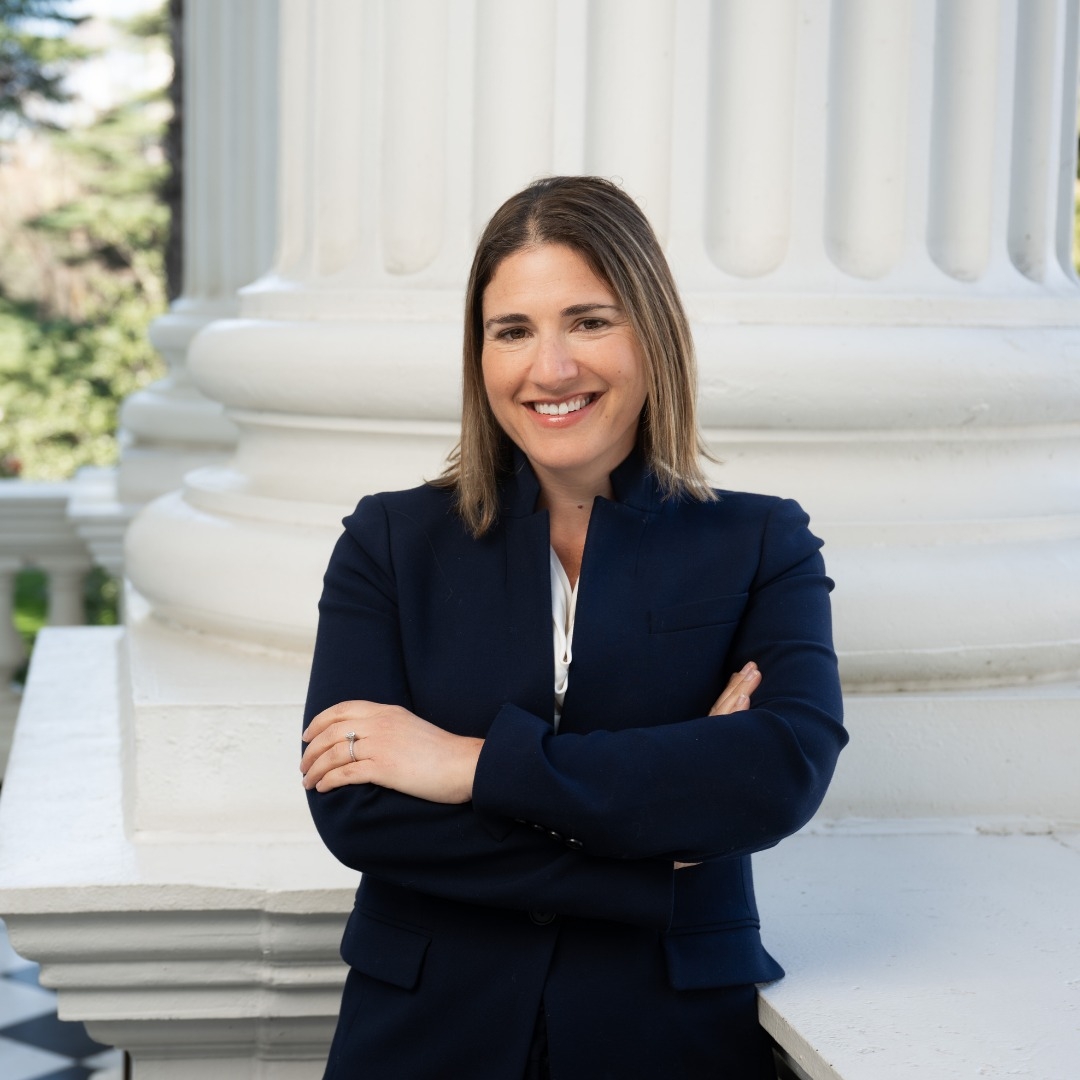
Asm. Rebecca Bauer-Kahan
Sponsored bills
Existing law requires that the holding period for a stray dog or cat impounded in a shelter be 6 business days, not including the day of impoundment, with exceptions, as provided. Existing law requires a shelter, during this holding period and before adoption or euthanasia, to scan the dog or cat for a microchip that identifies the owner of that dog or cat and to make reasonable efforts to contact the owner. This bill would prohibit a public animal control agency or shelter, society for the prevention of cruelty to animals shelter, humane society shelter, or rescue group from releasing a dog or cat to an owner seeking to reclaim it, or adopting out, selling, or giving away a dog or cat to a new owner, unless the dog or cat is microchipped with current information on the owner or new owner. The bill would, if the shelter or rescue group does not have microchipping capability on location, require the shelter or rescue group to first obtain from the owner or new owner an agreement to present to the shelter or rescue group, within the next 30 days, proof that the dog or cat is microchipped with current information on the owner or new owner. The bill would authorize a shelter or rescue group to require proof that a dog or cat is microchipped with current information on the owner reclaiming the dog or cat, or new owner receiving the dog or cat, before releasing, adopting out, selling, or giving away the dog or cat. The bill would, where the shelter or rescue group does not have microchipping capability on location, provide that an owner or new owner is not required to register the microchip number with a microchip registry company that will use, without the owner's or new owner's consent, the personal information of the owner or new owner for purposes other than to reunite the owner or new owner with the dog or cat. The bill would also include an exception for a dog or cat that is medically unfit for a microchipping procedure, as provided. Under the bill, a shelter or rescue group that violates these provisions on or after January 1, 2022, would be subject to a civil penalty of $100, subject to a specified exemption.
This measure would urge specified state departments and the Attorney General to use their authority to ensure that health care service plans and health insurers subject to their authority comply with the federal Paul Wellstone and Pete Domenici Mental Health Parity and Addiction Equity Act of 2008.
Existing law requires a court to consider, when the court has determined that supervised visitation is necessary, whether to use a professional supervised visitation provider, as defined. Existing law requires the Judicial Council to develop standards for professional supervised visitation providers, including that the provider has not been convicted of child molestation or child abuse and that the provider has completed 24 hours of training in specified subjects, including conflicts of interest. Existing law requires the State Department of Social Services to establish and continuously update a trustline registry of persons who provide childcare, supervision, or in-home educational or counseling services who are not required to be licensed and who have either not been convicted of a crime other than a minor traffic violation, or who have been granted an exemption by the department. Existing law prohibits the department from granting an exemption if a person has been convicted of certain crimes, including crimes that require the person to register as a sex offender. Existing law makes it a misdemeanor for a person to falsely represent themselves as a trustline applicant or a registered trustline child care provider. This bill would require, beginning January 1, 2021, a professional supervised visitation provider to register as a trustline provider. The bill would require a professional provider to complete a Live Scan criminal background check before providing supervised visitation services. The bill would require a minimum number of the 24 hours of required training to be classroom instruction on specified subjects and further require, on and after January 1, 2021, a professional provider to complete training relating to child abuse reporting laws through an online training course required for mandated reporters that is provided by the department. The bill would make other related changes. By expanding the scope of a crime, this bill would impose a state-mandated local program. The California Constitution requires the state to reimburse local agencies and school districts for certain costs mandated by the state. Statutory provisions establish procedures for making that reimbursement. This bill would provide that no reimbursement is required by this act for a specified reason.
(1) Existing law establishes the system of public elementary and secondary schools in this state and provides for the establishment of local educational agencies to operate these schools and provide instruction to pupils. Existing law states the policy of the State of California to afford all persons in public schools, regardless of their disability, gender, gender identity, gender expression, nationality, race or ethnicity, religion, sexual orientation, or any other specified characteristic, equal rights and opportunities in the educational institutions of the state. This bill would encourage each school operated by a school district or county office of education and each charter school to use resources developed by the State Department of Education to provide training at least once every 2 years to teachers and other certificated employees at that school that serve pupils in grades 7 to 12, inclusive, and to other certificated employees at that school, on schoolsite and community resources for the support of lesbian, gay, bisexual, transgender, queer, and questioning (LGBTQ) pupils, and strategies to increase support for LGBTQ pupils and thereby improve overall school climate, as specified. The bill, no later than July 1, 2021, would require the State Department of Education to develop resources or, as appropriate, update existing resources for in-service training on schoolsite and community resources for the support of LGBTQ pupils, and strategies to increase support for LGBTQ pupils, as specified.
Existing law establishes the policy of the Legislature to ensure equal access to specific information about the many local regulating and advisory boards, commissions, and committees and to ensure equal opportunity to be informed of vacancies on those boards. Existing law requires each legislative body of a local agency to prepare an appointments list of all regular and ongoing boards, commissions, and committees that are appointed by the legislative body of the local agency. This bill, on and after January 1, 2030, would require, with respect to a city with a population of 50,000 or more, that the city not appoint members of nonsalaried, nonelected boards or commissions consisting of 5 or more members such that individuals of the same gender identity comprise more than 60% of the board or commission's membership. The bill would also prohibit a board or commission with 4 or fewer nonelected and nonsalaried members from being comprised exclusively of people with the same gender identity. The bill would define "gender identity" for purposes of the bill, and would exclude from its provisions a board or commission that has as its primary purpose addressing issues of relevance to a particular gender identity. By imposing new requirements on cities, the bill would impose a state-mandated local program. This bill would include findings that the changes proposed by this bill address a matter of statewide concern rather than a municipal affair and, therefore, apply to all cities, including charter cities. The California Constitution requires the state to reimburse local agencies and school districts for certain costs mandated by the state. Statutory provisions establish procedures for making that reimbursement. This bill would provide that, if the Commission on State Mandates determines that the bill contains costs mandated by the state, reimbursement for those costs shall be made pursuant to the statutory provisions noted above.
Existing federal law, the Patient Protection and Affordable Care Act (PPACA) , requires each state to establish an American Health Benefit Exchange to facilitate the purchase of qualified health benefit plans by qualified individuals and qualified small employers. PPACA requires an American Health Benefit Exchange to provide for an annual open enrollment period for the individual market for policy years beginning on or after January 1, 2018, to begin on November 1 and extend through December 15 of the calendar year preceding the benefit year. Existing federal law establishes special enrollment periods during which a qualified individual may enroll in a qualified health plan when specified triggering events occur, such as when the qualified individual loses minimum essential coverage, as defined. Existing federal regulatory authority authorizes a state to establish additional special enrollment periods to supplement these special enrollment periods provided for under federal law under certain circumstances. Existing state law creates the California Health Benefit Exchange (Exchange) , also known as Covered California, to facilitate the enrollment of qualified individuals and qualified small employers in qualified health plans as required under PPACA. Existing law, the Knox-Keene Health Care Service Plan Act of 1975, provides for the licensure and regulation of health care service plans by the Department of Managed Health Care, and makes a willful violation of the act a crime. Existing law provides for the regulation of health insurers by the Department of Insurance. Existing law requires a health care service plan and a health insurer, for policy years beginning on or after January 1, 2019, to provide a special enrollment period to allow individuals to enroll in individual health benefit plans through the Exchange from October 15 to October 31 of the preceding calendar year, inclusive, and from December 16 of the preceding calendar year, to January 15 of the benefit year, inclusive. Existing law requires, with respect to individual health benefit plans offered outside of the Exchange, that the annual open enrollment period for policy years beginning on or after January 1, 2019, extend from October 15 of the preceding calendar year, to January 15 of the benefit year, inclusive. Existing law specifies the effective coverage dates for individual health benefit plans selected during special enrollment periods. This bill would additionally require a health care service plan and a health insurer, for policy years beginning on or after January 1, 2020, to provide a special enrollment period to allow individuals to enroll in individual health benefit plans through the Exchange from December 16 of the preceding calendar year, to January 31 of the benefit year, inclusive. The bill would also additionally require, with respect to individual health benefit plans offered outside of the Exchange, that the annual open enrollment period for policy years beginning on or after January 1, 2020, extend from November 1 of the preceding calendar year, to January 31 of the benefit year, inclusive. This bill would specify February 1 as the effective date of coverage for enrollment in an individual health benefit plan that occurs from December 16 to January 31, inclusive. The California Constitution requires the state to reimburse local agencies and school districts for certain costs mandated by the state. Statutory provisions establish procedures for making that reimbursement. This bill would provide that no reimbursement is required by this act for a specified reason.
(1) Existing law, subject to exceptions, generally requires the loan of a firearm to be conducted by a firearms dealer. This bill would authorize the temporary transfer of a firearm without a firearms dealer's participation to a person who is 18 years of age or older for safekeeping to prevent it from being used to attempt suicide, as specified. The bill would also authorize the loan of a firearm without a firearms dealer's participation under other specified circumstances and if certain conditions are met, as specified. (2) Under existing law a person commits the crime of criminal storage of a firearm if the person keeps a loaded firearm within a premises with knowledge that a child is likely to gain access to the firearm. This bill would make the crime of criminal storage applicable to the storage of an unloaded firearm. The bill would make it a crime for a person who has been convicted of this crime to own a firearm for a period of 10 years. By expanding the application of a crime and creating a new crime, this bill would impose a state-mandated local program. (3) Existing law makes it a crime to keep a handgun within a premises with knowledge that a child or person prohibited from possessing a firearm is likely to gain access if the child or prohibited person obtains access to the handgun and carries it off premises. This bill would make this crime applicable to any firearm. The bill would make it a crime for a person who has been convicted of this crime to own a firearm for a period of 10 years. By expanding the application of a crime and creating a new crime, this bill would impose a state-mandated local program. (4) Existing law makes it a crime for an owner or legal occupant of a residence to store a firearm in that residence if the person knows another person residing in that residence is prohibited from possessing a firearm unless the firearm is secured, as specified. The bill would make it a crime for a person who has been convicted of this crime to own a firearm for a period of 10 years. The bill would also correct an erroneous cross-reference. By creating a new crime, this bill would impose a state-mandated local program. (5) Existing law provides for the licensure and regulation of community care facilities for adults, residential care facilities for persons with chronic life-threatening illness, and residential care facilities for the elderly by the State Department of Social Services. Violations of the licensing requirements for these different types of care facilities are crimes. This bill would require the department to promulgate regulations prescribing the procedures for a firearm and ammunition to be centrally stored in a locked gun safe within any of those facilities if the facility permits licensees, residents, or clients to possess firearms on its premises. Because a violation of these requirements by a facility would be a crime, the bill would impose a state-mandated local program. The bill would additionally make other conforming changes to regulatory provisions for specified community care facilities for adults. (6) This bill would incorporate additional changes to Section 31700 of the Penal Code proposed by AB 1292 to be operative only if this bill and AB 1292 are enacted and this bill is enacted last. This bill would also incorporate additional changes to Section 26835 of the Penal Code proposed by AB 645 and SB 61 to be operative only if this bill, AB 645, and SB 61 are enacted and this bill is enacted last. (7) The California Constitution requires the state to reimburse local agencies and school districts for certain costs mandated by the state. Statutory provisions establish procedures for making that reimbursement. This bill would provide that no reimbursement is required by this act for a specified reason.
Existing law establishes the Office of Emergency Services within the office of the Governor and under the supervision of the Director of Emergency Services and makes the Office of Emergency Services responsible for the state's emergency and disaster response services for natural, technological, or manmade disasters and emergencies. This bill would establish the California State Nonprofit Security Grant Program under the administration of the director to improve the physical security of nonprofit organizations that are at high risk of violent attacks or hate crimes due to ideology, beliefs, or mission, as specified. The bill would make the operation of the program contingent upon an appropriation in the annual Budget Act for these purposes. The bill would repeal those provisions on January 1, 2025. This bill would declare that it is to take effect immediately as an urgency statute.
Existing law establishes the Department of Corrections and Rehabilitation and sets forth its powers and duties regarding the administration of correctional facilities and the care and custody of inmates. Existing law, until January 1, 2020, authorizes the Secretary of the Department of Corrections and Rehabilitation to enter into one or more agreements with private entities to obtain secure housing capacity in the state or in another state, upon terms and conditions deemed necessary and appropriate to the secretary. Existing law, until January 1, 2020, authorizes the secretary to enter into agreements for the transfer of prisoners to, or placement of prisoners in, community correctional centers, and to enter into contracts to provide housing, sustenance, and supervision for inmates placed in community correctional centers. This bill, on or after January 1, 2020, would prohibit the department from entering into or renewing a contract with a private, for-profit prison to incarcerate state prison inmates, but would not prohibit the department from renewing or extending a contract to house state prison inmates in order to comply with any court-ordered population cap. The bill would also prohibit, after January 1, 2028, a state prison inmate or other person under the jurisdiction of the department from being incarcerated in a private, for-profit prison facility. This bill would also prohibit, with exceptions, the operation of a private detention facility, as defined, within the state.