

Under existing law, the Public Utilities Commission has regulatory authority over public utilities, including telephone corporations. Existing law requires the commission to develop and implement performance reliability standards for backup power systems installed on the property of residential and small commercial customers by a facilities-based provider of telephony services upon determining that the benefits of the standards exceed the costs. This bill would require the commission, in consultation with the Office of Emergency Services and the telecommunications industry, by July 1, 2021, to develop and implement backup electrical supply rules, as specified, for telecommunications service, as defined, that is provided within a commission-designated Tier 2 or Tier 3 High Fire Threat District. Under existing law, a violation of the Public Utilities Act or any order, decision, rule, direction, demand, or requirement of the commission is a crime. Because the provisions of this bill would be a part of the act and because a violation of a commission action implementing the bill's requirements would be a crime, the bill would impose a state-mandated local program. The California Constitution requires the state to reimburse local agencies and school districts for certain costs mandated by the state. Statutory provisions establish procedures for making that reimbursement. This bill would provide that no reimbursement is required by this act for a specified reason.
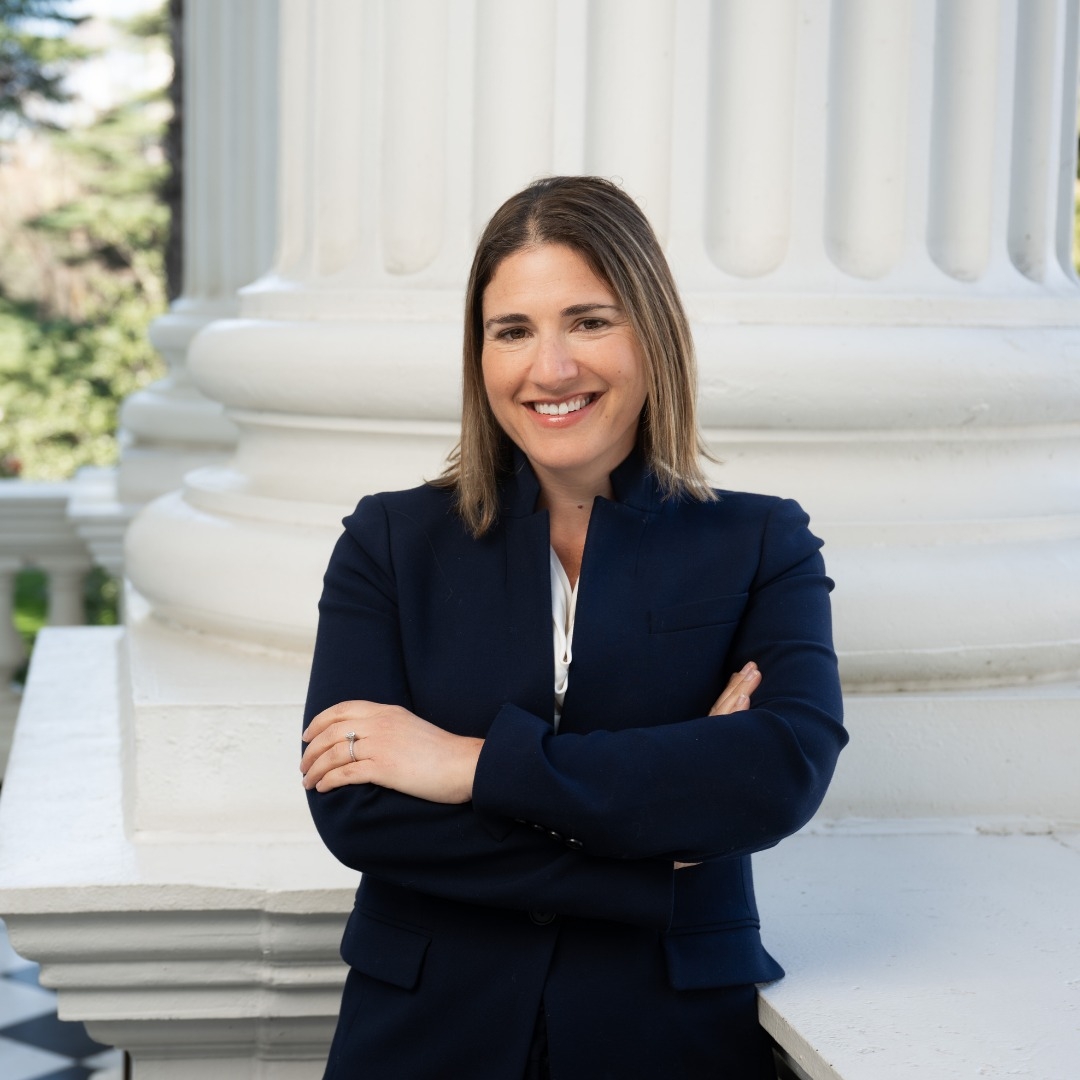
Asm. Rebecca Bauer-Kahan
Sponsored bills
Under existing law, the Public Utilities Commission has regulatory authority over public utilities, including electrical corporations. Existing law requires each electrical corporation to annually prepare and submit a wildfire mitigation plan to the commission for review and approval, as specified. Following approval, the commission is required to oversee compliance with the plans. Existing law requires a wildfire mitigation plan of an electrical corporation to include, among other things, protocols for deenergizing portions of the electrical distribution system that consider the associated impacts on public safety. As part of these protocols, an electrical corporation is required to include protocols related to mitigating the public safety impacts of deenergizing portions of the electrical distribution system that consider customers that receive medical baseline allowances. Existing law authorizes an electrical corporation to deploy backup electrical resources or provide financial assistance for backup electrical resources to a customer receiving a medical baseline allowance if the customer meets specified conditions. This bill would require an electrical corporation to deploy backup electrical resources for the operation of the customer's qualifying medical device or provide financial assistance for backup electrical resources to a customer receiving a medical baseline allowance if the customer meets those conditions and the additional condition that the customer is located in a high fire threat district. The bill would require an electrical corporation to develop its program to provide backup electrical resources or financial assistance in consultation with community disability rights groups or other local disability rights advocates. Under existing law, a violation of any order, decision, rule, direction, demand, or requirement of the commission is a crime. Because this bill would add additional requirements to an electrical corporation's wildfire mitigation plan that would be approved and overseen by the commission and because a violation of an order or decision of the commission implementing its requirements would be a crime, the bill would impose a state-mandated local program by creating a new crime. The California Constitution requires the state to reimburse local agencies and school districts for certain costs mandated by the state. Statutory provisions establish procedures for making that reimbursement. This bill would provide that no reimbursement is required by this act for a specified reason.
Existing sales and use tax laws impose a tax on retailers measured by the gross receipts from the sale of tangible personal property sold at retail in this state, or on the storage, use, or other consumption in this state of tangible personal property purchased from a retailer for storage, use, or other consumption in this state. Those laws provide various exemptions from those taxes, including, until July 1, 2023, an exemption for the sale of, or the storage, use, or other consumption of, menstrual hygiene products, defined as tampons, specified sanitary napkins, menstrual sponges, and menstrual cups. Existing law requires the Department of Finance, beginning on May 15, 2020, to estimate the total dollar amount of revenue that would have been credited to the Local Revenue Fund 2011 if not otherwise exempted under the sales and use tax exemption for menstrual hygiene products and requires the Controller to transfer that amount from the General Fund to the Local Revenue Fund 2011, a continuously appropriated fund, no later than June 30 of each fiscal year. This bill would establish a similar exemption for the sale of, or the storage, use, or other consumption of, menstrual hygiene products beginning July 1, 2023, and would define menstrual hygiene products to additionally include menstrual underwear. The bill would provide that the Department of Finance is required to calculate, and the Controller is required to transfer, the total dollar amount of revenue prior to January 1, 2024, that would have been credited to the Local Revenue Fund 2011 if not otherwise exempted under the sales and use tax with respect to menstrual hygiene products, as specified. The Bradley-Burns Uniform Local Sales and Use Tax Law authorizes counties and cities to impose local sales and use taxes in conformity with the Sales and Use Tax Law, and existing laws authorize districts, as specified, to impose transactions and use taxes in accordance with the Transactions and Use Tax Law, which generally conforms to the Sales and Use Tax Law. Amendments to the Sales and Use Tax Law are automatically incorporated into the local tax laws. Existing law requires the state to reimburse counties and cities for revenue losses caused by the enactment of sales and use tax exemptions. This bill would provide that, notwithstanding Section 2230 of the Revenue and Taxation Code, no appropriation is made and the state shall not reimburse any local agencies for sales and use tax revenues lost by them pursuant to this bill. This bill would take effect immediately as a tax levy.
Existing law establishes the California State Library, which includes the California Research Bureau, as a division within the State Department of Education. This bill would require the California Research Bureau to conduct research on ways to close the digital divide through policies, including, but not limited to, tax policies, that reduce the upfront costs of devices and communications technology purchased by local educational agencies to provide students with equitable access to distance learning. Existing law establishes a system of public elementary and secondary schools in this state and authorizes local educational agencies throughout the state to operate schools and provide instruction to pupils in kindergarten and grades 1 to 12, inclusive. Existing law also establishes the State Department of Education in state government, and vests the department with specified powers and duties relating to the state's public school system. This bill would establish the Bridging the Digital Divide Grant Program under the administration of the State Department of Education for purposes of reducing the gap in access to distance learning due to the COVID-19 statewide shelter-in-place order that has resulted in the closures of public schools and led to the institution of distance learning programs. The bill would, subject to an appropriation for its purposes, provide grant funds to school districts, county office of educations, and charter schools to purchase computers, tablets, computing devices, routers, hardware, software, and other equipment primarily purchased to provide low-income or otherwise disadvantaged students with access to distance learning using communications technology, as provided.
This measure would proclaim the week of March 1, 2020, to March 7, 2020, inclusive, as Women in Construction Week.
This measure would proclaim March 2, 2020, to March 6, 2020, inclusive, as School Breakfast Week.
Under existing law, a registered voter may vote by mail by requesting a vote by mail ballot for a specific election or by becoming a permanent vote by mail voter. County elections officials must begin mailing ballots and other required materials to these voters no later than 29 days before the day of the election. Existing law, the California Voter's Choice Act, authorizes any county to conduct any election occurring on or after January 1, 2020, as an all-mailed ballot election if specified conditions are met. In an all-mailed ballot election held under the act, the county elections official must mail a ballot to every registered voter, regardless of whether the voter requested a vote by mail ballot or is a permanent vote by mail voter. This bill would require county elections officials to mail a ballot to every registered voter for the November 3, 2020, statewide general election. Existing law requires county elections officials to permit voters with a disability, and military or overseas voters, to cast a ballot using a certified remote accessible vote by mail system. This bill would require county elections officials to permit any voter to cast a ballot using a certified remote accessible vote by mail system for the November 3, 2020, statewide general election. Existing law requires the Secretary of State to establish, by January 1, 2020, a system that a county elections official may use to allow a voter to track the voter's vote by mail ballot through the mail system and processing by the county elections official. County elections officials are not required to use the system, however. This bill would require county elections officials to use the Secretary of State's system, or a system that meets the same specifications, for the November 3, 2020, statewide general election. Under existing law, a vote by mail ballot is timely cast if it is voted on or before election day and, if returned by mail, received by the voter's elections official via the United States Postal Service, or a bona fide private mail delivery company, no later than 3 days after election day. This bill would, for the November 3, 2020, statewide general election, extend the deadline by which vote by mail ballots must be received by the county elections official to the 17th day after election day. Under existing law, any jurisdiction having the necessary computer capability may start to process vote by mail ballots on the 10th business day before the election. This processing includes opening vote by mail ballot return envelopes, removing ballots, duplicating any damaged ballots, and preparing the ballots to be machine read, or machine reading them, including processing write-in votes so that they can be tallied by the machine, but under no circumstances may a vote count be accessed or released until 8 p.m. on the day of the election. This bill would authorize these jurisdictions, for the November 3, 2020, statewide general election, to begin processing vote by mail ballots on the 29th day before the election. By requiring county elections officials to mail a ballot to every registered voter, and to take other actions expanding vote by mail voting, including making remote accessible voting available to all voters, this bill would impose a state-mandated local program. The California Constitution requires the state to reimburse local agencies and school districts for certain costs mandated by the state. Statutory provisions establish procedures for making that reimbursement. This bill would provide that, if the Commission on State Mandates determines that the bill contains costs mandated by the state, reimbursement for those costs shall be made pursuant to the statutory provisions noted above. This bill would declare that it is to take effect immediately as an urgency statute.
This measure would declare the week of February 17 to February 21, 2020, inclusive, as California Fitness Week, and would encourage Californians to enrich their lives through proper nutrition and exercise.
This measure would proclaim February 20, 2020, as Introduce a Girl to Engineering Day.
This measure would recognize February 2020 as Black History Month, urge all citizens to join in celebrating the accomplishments of African Americans during Black History Month, encourage the people of California to recognize the many talents of African Americans and the achievements and contributions they make to their communities to create equity and equality for education, economics, and social justice, and recognize the significance in protecting citizens' right to vote and remedying racial discrimination in voting.