

Existing law, the California Private Postsecondary Education Act of 2009, provides, among other things, for student protections and regulatory oversight of private postsecondary institutions in the state. The act is enforced by the Bureau for Private Postsecondary Education within the Department of Consumer Affairs. The act exempts an institution from its application if any of a list of specific criteria are met. Existing law requires an out-of-state private postsecondary educational institution to comply with specified requirements, including providing the bureau evidence of the institution's accreditation. Existing law repeals the act on January 1, 2021. If the operation of the act is extended by another measure, existing law, effective July 1, 2022, requires additional duties by an out-of-state private postsecondary educational institution. This bill would define nonprofit corporation and public institution of higher education specially for purposes of the act. The bill would specify that only an institution of higher education meeting the act's definition of nonprofit corporation or public institution of higher education is exempt from the requirements imposed on an out-of-state private postsecondary educational institution. The bill, commencing January 1, 2022, would prohibit the bureau from verifying the exemption of, or contracting to handle complaints for, a nonprofit institution that operated as a for-profit institution during any period on or after January 1, 2010, unless the Attorney General verifies specified information, and would require the Attorney General to provide written notification to the institution and the bureau of its verification within 90 days of receipt of all information the Attorney General determines is necessary for the verification. The bill, commencing January 1, 2022, would authorize appeal of actions taken by the bureau and the Attorney General to the superior court. The provisions of this bill would be implemented only if the operation of the act is extended by another measure. Under existing law, the act specifies conduct by regulated institutions that, if undertaken, is a crime. Because this bill would extend the application of those criminal provisions, it would impose a state-mandated local program. The California Constitution requires the state to reimburse local agencies and school districts for certain costs mandated by the state. Statutory provisions establish procedures for making that reimbursement. This bill would provide that no reimbursement is required by this act for a specified reason.
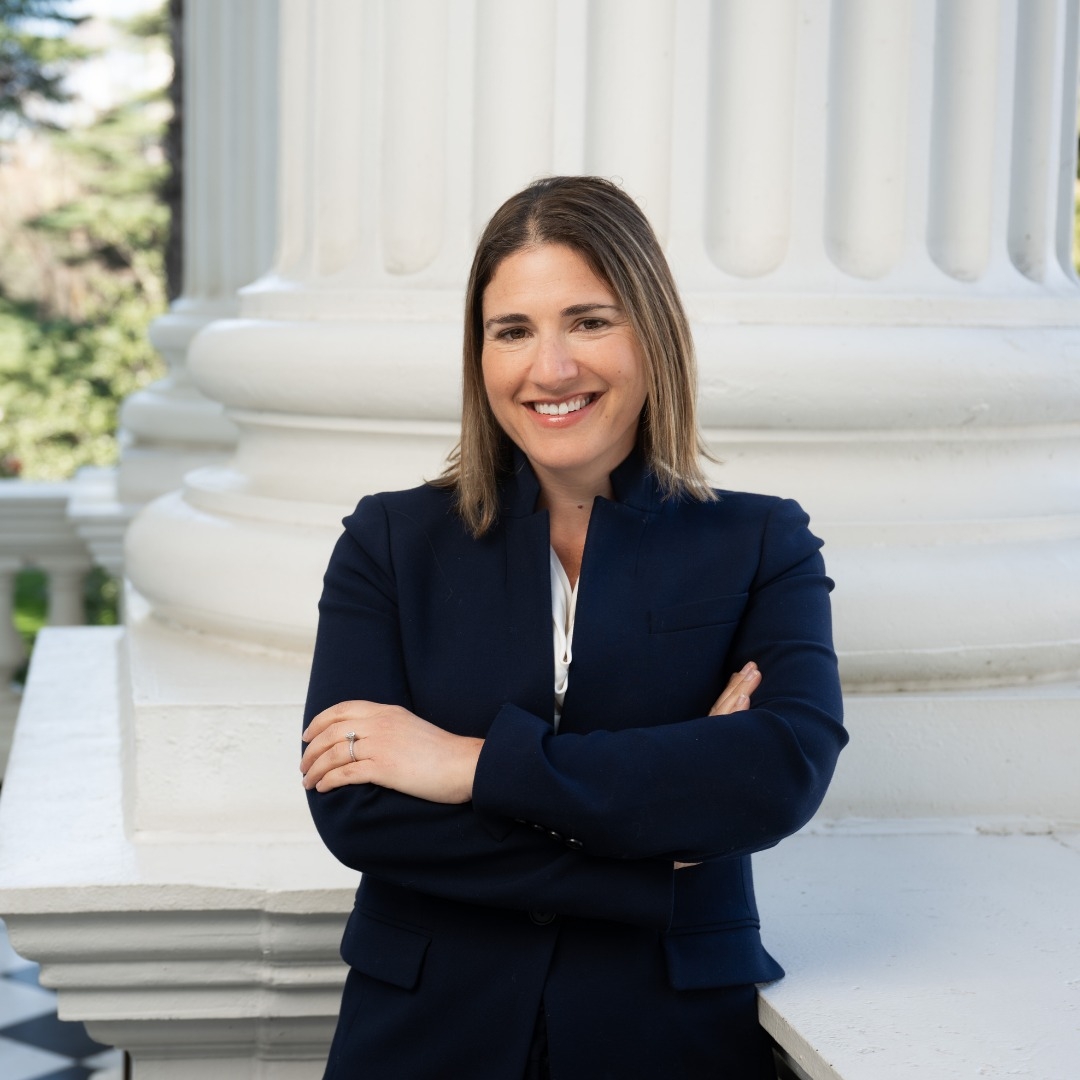
Asm. Rebecca Bauer-Kahan
Sponsored bills
Existing law, the Knox-Keene Health Care Service Plan Act of 1975, provides for the licensure and regulation of health care service plans by the Department of Managed Health Care and makes a willful violation of the act a crime. Existing law also provides for the regulation of disability insurers by the Department of Insurance. Existing law, known as the California Mental Health Parity Act, requires every health care service plan contract or disability insurance policy issued, amended, or renewed on or after July 1, 2000, that provides hospital, medical, or surgical coverage to provide coverage for the diagnosis and medically necessary treatment of severe mental illnesses of a person of any age, and of serious emotional disturbances of a child under the same terms and conditions applied to other medical conditions, as specified. Existing law requires those benefits to include, among other things, outpatient services, inpatient hospital services, partial hospital services, and prescription drugs, if the plan contract or policy includes coverage for prescription drugs. This bill would revise and recast those provisions, and would instead require a health care service plan contract or disability insurance policy issued, amended, or renewed on or after January 1, 2021, to provide coverage for medically necessary treatment of mental health and substance use disorders, as defined, under the same terms and conditions applied to other medical conditions. The bill would prohibit a health care service plan or disability insurer from limiting benefits or coverage for mental health and substance use disorders to short-term or acute treatment. The bill would revise the covered benefits to include basic health care services, as defined, intermediate services, and prescription drugs. This bill would require a health care service plan or disability insurer that provides hospital, medical, or surgical coverage to base medical necessity determinations and the utilization review criteria the plan or insurer, and any entity acting on the plan's or insurer's behalf, applies to determine the medical necessity of health care services and benefits for the diagnosis, prevention, and treatment of mental health and substance use disorders, on current generally accepted standards of mental health and substance use disorder care. The bill would require the health care service plan or insurer to apply specified clinical criteria and guidelines in conducting utilization review of the covered health care services and benefits and would prohibit the plan or insurer from applying different, additional, or conflicting criteria than the criteria and guidelines in the specified sources. The bill would authorize the Director of the Department of Managed Health Care or the Insurance Commissioner, as applicable, to assess administrative or civil penalties, as specified, for violation of the requirements relating to utilization review. The bill would make any provision in a health care service plan issued, delivered, amended, or renewed on or after January 1, 2021, that reserves discretionary authority to the plan, or an agent of the plan, to determine eligibility for benefits or coverage, interprets the terms of the contract, or provides standards of interpretation or review that are inconsistent with California law, void and unenforceable, as specified. The bill would declare that its provisions are severable. Because a willful violation of these requirements with respect to health care service plans would be a crime, this bill would impose a state-mandated local program. The California Constitution requires the state to reimburse local agencies and school districts for certain costs mandated by the state. Statutory provisions establish procedures for making that reimbursement. This bill would provide that no reimbursement is required by this act for a specified reason.
Existing law, the Student Loan Servicing Act, prohibits a person from engaging in the business of servicing a student loan in California without first obtaining a license. Existing law commits the administration of these provisions to the Commissioner of Business Oversight and grants the commissioner various powers in this regard, including the authority to conduct investigations of applicants and licensees. The act requires an applicant for a license to submit audited financial statements prepared in accordance with generally accepted accounting principles and acceptable to the commissioner that indicate a net worth of at least $250,000 and requires a licensee to maintain a minimum net worth of $250,000. Existing law, the Rosenthal Fair Debt Collection Practices Act, regulates the collection of consumer debts by debt collectors, as defined. Under existing law, a debt collector who violates the act is liable to a debtor for actual damages resulting from the violation, and is subject to additional civil penalties for any willful or knowing violation of the act, and other specified remedies. This bill would authorize the commissioner to allow a licensee that is a wholly owned subsidiary of a public holding company required to comply with the requirements of the Securities and Exchange Commission to satisfy the requirement to submit audited financial statements with an application for a license and to maintain a minimum net worth of $250,000 by submitting the annual consolidated audited financial statements filed with the Securities and Exchange Commission, as specified. This bill would impose new requirements on a student loan servicer, defined as any person engaged in the business of servicing student loans in the state. These requirements would include the timely posting, processing, and crediting of student loan payments within certain timeframes, applying overpayments consistent with the best financial interest of a student loan borrower, as defined, applying partial payments to minimize late fees and negative credit reporting, maintaining records, timely processing of paperwork, and diligently overseeing service providers. The bill would require a student loan servicer to provide specialized training for customer service personnel that advises military borrowers, borrowers in public service, borrowers with disabilities, and older borrowers. The bill would prohibit a student loan servicer from engaging in unfair or deceptive practices, or abusive acts or practices in connection with the servicing of a student loan, as specified. The bill would authorize a consumer who suffers damages as a result of a person's failure to comply with these provisions as well as all applicable federal laws relating to student loan servicing to bring an action for actual damages, injunctive relief, restitution, punitive damages, attorney's fees, and other relief, including treble damages in certain circumstances. The bill would require a consumer to give specified notice to a person before bringing an action for damages against that person for a violation of the bill's provisions and would provide that person an opportunity to cure the alleged violation, as specified. The bill would prohibit an attempt to cure a violation by a person who receives a notice of that violation from being admissible in court against that person but would authorize the attempt to cure to be admitted as evidence by that person, as specified. The bill would define terms for purposes of its provisions. The bill would require, beginning on July 1, 2021, the commissioner, as specified, to designate a Student Loan Ombudsman to work within the department and to hire additional staff, as needed to implement these provisions. The bill would require the Student Loan Ombudsman to receive and review complaints, to refer complaints to an appropriate unit within the department that would be authorized to investigate the complaint, and to refer complaints regarding servicers not subject to licensing under the Student Loan Servicing Act to the Department of Justice, which would be permitted to investigate those complaints. The bill would require complaints regarding any private postsecondary educational institution licensed by the Bureau for Private Postsecondary Education to be referred to the Bureau for Private Postsecondary Education's Office of Student Assistance and Relief. The bill would require the Student Loan Ombudsman to confer with the Department of Justice and the Office of Student Assistance and Relief regarding the student loan servicing complaints, the proper referral processes for those complaints, and the reporting requirements imposed by the bill. The bill would require the Student Loan Ombudsman not later than 18 months after the operative date of the bill, and no less than once yearly thereafter, to submit a report to the appropriate committees of the Legislature regarding the implementation of these provisions, the types of complaints received, and other data and analysis on student loan issues. The bill would also, beginning July 1, 2021, authorize the Commissioner of Business Oversight to monitor for risks to consumers in the provision of student loan servicing and would authorize the commissioner to gather information regarding the organization, business conduct, and activities of student loan services. The bill would authorize the commissioner to gather and compile information from student loan servicers and to develop and publicize metrics based on the data collected. Among other actions, the bill would authorize the commissioner to require student loan servicers to file, under oath or otherwise, annual or special reports or answers in writing to specific questions. By expanding the crime of perjury, the bill would impose a state-mandated local program. The bill would include related legislative findings and would make conforming and nonsubstantive changes to provisions in the Student Loan Servicing Act. The California Constitution requires the state to reimburse local agencies and school districts for certain costs mandated by the state. Statutory provisions establish procedures for making that reimbursement. This bill would provide that no reimbursement is required by this act for a specified reason.
This measure would designate a specified portion of State Route 50 in the County of El Dorado as the Deputy Sheriff Brian "Ish" Ishmael Memorial Highway. The measure would request that the Department of Transportation determine the cost of appropriate signs showing this special designation and, upon receiving donations from nonstate sources covering that cost, erect those signs.
This measure would rename the fourth bore of the Caldecott Tunnel the Representative Ellen O'Kane Tauscher Memorial Bore. The measure would request the Department of Transportation to determine the cost of erecting appropriate signs showing this special designation and, upon receiving sufficient donations from nonstate sources to cover that cost, to erect those signs.
The Personal Income Tax Law and the Corporation Tax Law authorize various credits against the taxes imposed by those laws. The Sales and Use Tax Law, in lieu of specified credits allowed under the Personal Income Tax Law and the Corporation Tax Law, allows a qualified taxpayer or affiliate to make an irrevocable election to apply that income tax credit amount against qualified sales and use taxes imposed on the qualified taxpayer in the reporting periods in the 5 years following the reporting period for which the claimant was required to file its most recent sales and use tax return, as specified. Existing law requires any bill authorizing a new tax expenditure to contain, among other things, specific goals, purposes, and objectives the tax expenditure will achieve, detailed performance indicators, and data collection requirements. This bill would allow a credit against the personal income and corporate income taxes for each taxable year beginning on or after January 1, 2020, and before January 1, 2021, to a qualified small business employer that receives a tentative credit reservation, in an amount equal to $1,000 for each net increase in qualified employees, not to exceed one $100,000 for any qualified small business employer. The bill would authorize a qualified small business employer that received a tentative credit reservation to irrevocably elect to apply the credit against qualified sales and use taxes imposed on the qualified small business employer in reporting periods commencing on January 1, 2021, and until April 30, 2026, as specified. The bill would require a qualified small business employer to submit an application to the California Department of Tax and Fee Administration for a tentative credit reservation under these provisions that includes, among other things, whether the qualified small business employer is making the irrevocable election, and would require the department to allocate the credit reservations on a first-come, first-served basis, not to cumulatively exceed $100,000,000. This bill would create the Small Business Hiring Credit Fund in the State Treasury for the sole purpose of applying the credits allowed by the bill against qualified sales and use taxes and would require any unused money remaining in the fund to be transferred to the General Fund by June 1, 2026. This bill would also include additional information required for any bill authorizing a new tax expenditure. This bill would take effect immediately as a tax levy.
Existing law authorizes the legislative body of a city or a county to make, by ordinance, any violation of an ordinance subject to an administrative fine or penalty and limits the maximum fine or penalty amounts for infractions, to $100 for the first violation, $200 for a 2nd violation of the same ordinance within one year of the first violation, and $500 for each additional violation of the same ordinance within one year of the first violation. Existing law also sets specific monetary limits on the fines that may be imposed by city or county authorities for any violation of local building and safety codes that is an infraction, as prescribed. Existing law requires a city or county levying fines pursuant to these provisions to establish a process for granting a hardship waiver in certain cases. This bill would authorize the legislative body of a city or county, for the violation of a short term rental ordinance that is an infraction, to impose a fine not exceeding $1,500 for a first violation, $3,000 for a 2nd violation of the same ordinance within one year, and $5,000 for each additional violation of the same ordinance within one year of the first violation. The bill would define "short term rental" for purposes of these provisions to mean a residential dwelling, or any portion of a residential dwelling, that is rented to a visitor for 30 consecutive days or less, and would not include a commercially operated hotel, motel, bed and breakfast inn, or timeshare property. The bill would also make these violations subject to the process for granting a hardship waiver.
This measure would urge each bank with which the State of California has a business relationship to evaluate its commercial relationship with gun manufacturers and to consider the repercussions of that relationship, and urge all banks to discuss their lending practices with their shareholders and to adopt lending practices that mirror the people of California's values of protecting citizens before profit.
Existing law, the Stop Tobacco Access to Kids Enforcement (STAKE) Act, prohibits a person from selling or otherwise furnishing tobacco products, as defined, to a person under 21 years of age. Existing law also prohibits the use of tobacco products in county offices of education, on charter school or school district property, or near a playground or youth sports event, as specified. This bill would prohibit a tobacco retailer, or any of the tobacco retailer's agents or employees, from selling, offering for sale, or possessing with the intent to sell or offer for sale, a flavored tobacco product or a tobacco product flavor enhancer, as those terms are defined, except as specified. The bill would make a violation of this prohibition an infraction punishable by a fine of $250 for each violation. The bill would state the intent of the Legislature that these provisions do not preempt or prohibit the adoption and implementation of local ordinances that impose greater restrictions on the access to tobacco products than the restrictions imposed by the bill, as specified. The bill would state that its provisions are severable. By creating a new crime, the bill would impose a state-mandated local program. The California Constitution requires the state to reimburse local agencies and school districts for certain costs mandated by the state. Statutory provisions establish procedures for making that reimbursement. This bill would provide that no reimbursement is required by this act for a specified reason.