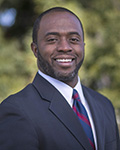
Photo of Tony Thurmond
D California Assembly · District 15

Asm. Tony Thurmond

Compare
Total votes
8,983
all sessions
Attendance
98%
125 missed
Higher than 86% of chamber peers
With party
99%
of cast votes
Higher than 77% of chamber peers
Bipartisan score
0%
crosses aisle rarely
Lower than 80% of chamber peers
Sponsored
747
bills & resolutions
Near the chamber average
Committees
0
assignments
747 bills and resolutions

Sponsored bills

Total
747
Primary
93
Co-sponsor
654
This page
747
matching current filters
Primary AB 1031
Vetoed · California Assembly · Lead sponsor
Public Employees' Medical and Hospital Care Act: contracting entities.

The Public Employees' Medical and Hospital Care Act (PEMHCA) , which is administered by the Board of Administration of the Public Employees' Retirement System, governs the funding and provision of postemployment health care benefits for eligible retired public employees and their families. PEMHCA permits certain public entities that meet specified eligibility criteria to elect to obtain health benefit plans through PEMHCA as contracting members. This bill would specify that a contracting agency that has elected to be subject to PEMHCA is required to fulfill its employer contribution obligations for health benefits, which may include reimbursement for Medicare Part B premiums, as specified.

Vetoed Jan 15, 2016 0 co-sponsors
Co-sponsor AB 74
Vetoed · California Assembly · Co-sponsor
Child care facilities: regulatory visits.

Under existing law, the State Department of Social Services regulates the licensure and operation of child day care centers and family day care homes, and is required to inspect these centers or homes at least once every 5 years and, beginning January 1, 2017, at least once every 3 years. Existing law provides that a child day care center or family day care home is subject to an unannounced inspection by the department, and requires the department to conduct an annual unannounced inspection under specified circumstances, including when a license is on probation, and to conduct annual unannounced inspections of no less than 20%, and commencing January 1, 2017, 30% of these centers or homes that are not subject to an inspection under those specified circumstances. This bill would revise the provisions requiring the department to conduct annual unannounced inspections of a child day care center or family day care home by instead requiring the department to conduct annual unannounced inspections of no less than 20% of those centers or homes on and after January 1, 2018, and until January 1, 2019. The bill would also require, on and after January 1, 2018, and until January 1, 2019, the department to inspect each center or home at least every 2 years. Beginning January 1, 2019, the bill would require the department to conduct an annual unannounced inspection of each child day care center or family day care home.

Vetoed Jan 15, 2016 1 co-sponsor
Co-sponsor AB 176
Vetoed · California Assembly · Co-sponsor
Data collection.

Existing law requires any state agency, board, or commission that directly or by contract collects demographic data as to the ancestry or ethnic origin of Californians to use separate collection categories and tabulations for specified Asian groups and Pacific Islander groups, and requires a state agency, board, or commission to include data on specified collection categories and tabulations in every demographic report on ancestry or ethnic origins of California residents that it publishes or releases. Existing law requires specified agencies to use additional separate collection categories and other tabulations for major Asian groups and Native Hawaiian and other Pacific Islander groups, and also requires those agencies to take additional actions, including, among other things, posting, and annually updating, the demographic data collected on their Internet Web sites, and updating the reporting categories to reflect these Asian and Pacific Islander groups as they are reported for the 2020 decennial census. This bill would require the updating of the reporting categories for future decennial censuses. The bill would require, on or after July 1, 2016, the Department of Managed Health Care to use the additional separate collection categories and other tabulations for specified Asian groups and Pacific Islander groups, and to take additional actions as specified above, under certain circumstances. This bill would, on and after July 1, 2016, require the Board of Governors of the California Community Colleges, the Trustees of the California State University, and the Regents of the University of California, whenever those entities collect demographic data as to the ancestry or ethnic origin of students for a report that includes student admission, enrollment, completion, or graduation rates, to use specified collection and tabulation categories for Asian, Native Hawaiian, and Pacific Islander groups, as specified. The bill would require each entity specified above to make this demographic data publicly available by posting the data on the applicable entity's Internet Web site and would require the updating of the reporting categories for each decennial census. The bill would not apply these categorization requirements to demographic data of graduate and professional schools of the University of California. The bill would be applicable to the University of California only if the Regents of the University of California, by resolution, make it applicable. To the extent the bill would impose additional requirements on community colleges, the bill would impose a state-mandated local program. The California Constitution requires the state to reimburse local agencies and school districts for certain costs mandated by the state. Statutory provisions establish procedures for making that reimbursement. This bill would provide that, if the Commission on State Mandates determines that the bill contains costs mandated by the State, reimbursement for those costs shall be made pursuant to these statutory provisions.


Vetoed Jan 15, 2016 1 co-sponsor
Primary AB 768
Signed into law · California Assembly · Lead sponsor
Smokeless tobacco: baseball stadiums.

Existing law generally prohibits the smoking of tobacco in the workplace and in public buildings, except in specified areas. This bill would, commencing December 1, 2016, prohibit the use or possession of smokeless tobacco products, as defined, on the playing field of a baseball stadium during a professional baseball game or practice. The bill would provide that if any provision or its application is held invalid, that invalidity shall not affect other provisions or applications that can be given effect without the invalid provision or application. The bill would provide that its provisions do not preempt or prohibit the adoption of a more restrictive local ordinance regarding smokeless tobacco possession or use in a baseball stadium.

Signed into law Oct 11, 2015 0 co-sponsors
Co-sponsor SB 4
Signed into law · California Senate · Co-sponsor
Health care coverage: immigration status.

Existing law provides for the Medi-Cal program, which is administered by the State Department of Health Care Services, under which qualified low-income individuals receive health care services. The Medi-Cal program is, in part, governed and funded by federal Medicaid program provisions. Existing law extends eligibility for full-scope Medi-Cal benefits to individuals under 19 years of age who do not have, or are unable to establish, satisfactory immigration status, commencing after the Director of Health Care Services determines that systems have been programmed for implementation of this extension, but in no case sooner than May 1, 2016. Existing law requires these individuals to enroll in a Medi-Cal managed care health plan in those counties in which a Medi-Cal managed care health plan is available. This bill would require individuals under 19 years of age enrolled in restricted-scope Medi-Cal at the time the director makes the above-described determination to be enrolled in the full scope of Medi-Cal benefits, if otherwise eligible, pursuant to an eligibility and enrollment plan, as specified. The bill would require the department, beginning January 31, 2016, and until the director makes the above-described determination, to provide monthly updates to the policy and fiscal committees of the Legislature, as specified. The bill would also require that an individual who is eligible pursuant to these provisions enroll in a Medi-Cal managed care health plan. The bill would not preclude a beneficiary from being enrolled in any other children's Medi-Cal specialty program that he or she would otherwise be eligible for.

Signed into law Oct 9, 2015 1 co-sponsor
Primary AB 1343
Signed into law · California Assembly · Lead sponsor
Criminal procedure: defense counsel.

Existing law requires the court in a noncapital case, if the defendant appears for arraignment without counsel, to inform the defendant that it is his or her right to have counsel before being arraigned and to ask the defendant if he or she desires the assistance of counsel. If the defendant desires and is unable to employ counsel, the court is required to assign counsel to defend him or her as provided. Existing law requires courts, prior to acceptance of a plea of guilty or nolo contendere by a defendant, to inform the defendant that a conviction of the offense charged may have the consequences of deportation, exclusion from admission to the United States, or denial of naturalization pursuant to the laws of the United States. This bill would require defense counsel to provide accurate and affirmative advice about the immigration consequences of a proposed disposition, and when consistent with the goals of and with the informed consent of the defendant, and with professional standards, defend against those consequences. The bill would require the prosecution, in the interests of justice, to consider the avoidance of adverse immigration consequences in the plea negotiation process as one factor in an effort to reach a just resolution. By requiring an increased level of service, this bill would impose a state-mandated local program. The California Constitution requires the state to reimburse local agencies and school districts for certain costs mandated by the state. Statutory provisions establish procedures for making that reimbursement. This bill would provide that, if the Commission on State Mandates determines that the bill contains costs mandated by the state, reimbursement for those costs shall be made pursuant to these statutory provisions.
Signed into law Oct 9, 2015 0 co-sponsors
Co-sponsor AB 288
Signed into law · California Assembly · Co-sponsor
Public schools: College and Career Access Pathways partnerships.

Existing law authorizes the governing board of a school district to allow pupils whom the district has determined would benefit from advanced scholastic or vocational work to attend community college as special part-time or full-time students, subject to parental permission. Existing law requires credit to be awarded to these pupils, as specified, authorizes a school principal to recommend a pupil for community college summer session if the pupil meets specified criteria, and prohibits the principal from recommending more than 5% of the total number of pupils from any particular grade level who completed that grade immediately before the time of recommendation for summer session attendance. This bill would authorize the governing board of a community college district to enter into a College and Career Access Pathways partnership with the governing board of a school district with the goal of developing seamless pathways from high school to community college for career technical education or preparation for transfer, improving high school graduation rates, or helping high school pupils achieve college and career readiness. The bill would require the partnership agreement to outline the terms of the partnership, as specified, and to establish protocols for information sharing, joint facilities use, and parental consent for high school pupils to enroll in community college courses. The bill would authorize specified high school pupils to enroll in up to 15 units per term if those units are required for these pupils' partnership programs and specified conditions are satisfied, and would authorize a community college district to exempt special part-time and full-time students taking up to a maximum of 15 units per term from specified fee requirements. The bill would prohibit a district from receiving a state allowance or apportionment for an instructional activity for which the partnering district has been, or will be, paid an allowance or apportionment under a concurrent enrollment partnership agreement. The bill would require, for each partnership agreement entered into under the bill, the affected community college district and school district to provide an annual report, containing specified data, to the office of the Chancellor of the California Community Colleges. The bill would require the chancellor to prepare a summary report, no later than January 1, 2021, that includes an evaluation of the partnerships, as specified. The bill's provisions would be repealed on January 1, 2022.

Signed into law Oct 8, 2015 1 co-sponsor
Primary AB 1496
Signed into law · California Assembly · Lead sponsor
Methane emissions.

The California Global Warming Solutions Act of 2006 establishes the State Air Resources Board as the state agency responsible for monitoring and regulating sources emitting greenhouse gases. Existing law requires the state board to complete a comprehensive strategy to reduce emissions of short-lived climate pollutants, as defined, in the state. This bill would require the state board to take specified actions and conduct specified analyses with respect to methane emissions.

Signed into law Oct 8, 2015 0 co-sponsors
Co-sponsor AB 96
Signed into law · California Assembly · Co-sponsor
Animal parts and products: importation or sale of ivory and rhinoceros horn.

Existing law makes it a crime to import into the state for commercial purposes, to possess with intent to sell, or to sell within the state, the dead body, or any part or product thereof, of an elephant. Existing law exempts the possession with intent to sell, or sale of the dead body, or any part or product thereof, of any elephant before June 1, 1977, or the possession with intent to sell or the sale of any such item on or after June 1, 1977, if the item was imported before January 1, 1977. This bill would delete this exemption. By changing the definition of a crime, this bill would impose a state-mandated local program. This bill would make it unlawful to purchase, sell, offer for sale, possess with intent to sell, or import with intent to sell ivory or rhinoceros horn, except as specified, and would make this prohibition enforceable by the Department of Fish and Wildlife. The bill would make a violation of this provision or any rule, regulation, or order adopted pursuant to this provision a misdemeanor subject to specified criminal penalties. By creating a new crime, the bill would impose a state-mandated local program. In addition to the specified criminal penalties, the bill would authorize the department to impose an administrative penalty of up to $10,000 for a violation of this provision or any rule, regulation, or order adopted pursuant to this provision. This bill would provide that the provisions of this bill are severable. This bill would make these provisions operative on July 1, 2016. The California Constitution requires the state to reimburse local agencies and school districts for certain costs mandated by the state. Statutory provisions establish procedures for making that reimbursement. This bill would provide that no reimbursement is required by this act for a specified reason.

Signed into law Oct 4, 2015 1 co-sponsor
Co-sponsor AB 532
Signed into law · California Assembly · Co-sponsor
State agencies: collection of data: race or ethnic origin.

Existing law requires state agencies, boards, or commissions that directly or by contract collect demographic data as to the ancestry or ethnic origin of Californians, and state agencies conducting surveys as to the ancestry or ethnic origin of state civil service employees, to use separate collection categories for each major Asian and Pacific Islander group. This bill would require any state agency, board, or commission that directly or by contract collects demographic data, as soon as reasonably feasible and in no event later than January 1, 2022, to provide forms that offer respondents the option of selecting one more ethnic or racial designations.

Signed into law Oct 2, 2015 1 co-sponsor
Showing 601 to 610 of 747 bills
Previous 1 … 60 61 62 … 75 Next