

The Bergeson-Peace Infrastructure and Economic Development Bank Act creates within the Governor's Office of Business and Economic Development the California Infrastructure and Economic Development Bank (bank) and requires it to administer the act, which, among other things, provides for the financing of certain economic development projects. This bill would establish, upon appropriation by the Legislature, the Multifamily Backstop Financing Program (program) , for purposes of supporting multifamily projects through the provision of state-backed credit backstops that would enable surety companies to issue payment and performance bonds to qualified offsite housing factories in the state. The bill would authorize the bank to provide credit backstops to surety companies and surety insurers that issue construction bonds according to specified parameters. The bill would require the bank to adopt rules and regulations necessary to implement the program.
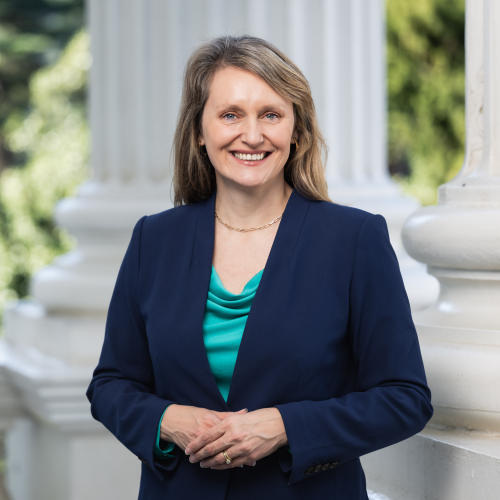
Rep. Buffy Wicks
Sponsored bills
This measure would recognize and affirm the important role of artists, arts organizations, creative arts therapists, and arts for health initiatives in supporting behavioral health, promoting recovery, strengthening community resilience, and contributing to public safety. The measure would encourage and recognize exploration, support, and integration of arts and behavioral health within California's health care, behavioral health, and community-based systems.
Existing law establishes the Active Transportation Program in the Department of Transportation for the purpose of encouraging increased use of active modes of transportation, such as biking and walking. Existing law requires the California Transportation Commission to develop guidelines and project selection criteria for the program, including guidelines with regard to project eligibility that include, among other project types, safe routes to transit projects that will encourage transit by improving biking and walking routes to mass transportation facilities and schoolbus stops. This bill would, on and after January 1, 2028, instead require the guidelines with regard to project eligibility to include projects for safe routes to transit projects that encourage access to transit facilities and schoolbus stops by biking and walking, as specified, and projects that will expand access to transit in underserved or rural areas. Existing law authorizes the guidelines to include incentives to maximize the potential for attracting funds other than program funds for eligible projects. This bill would, on and after January 1, 2028, (1) instead require the guidelines to include incentives intended to maximize the potential for attracting funds other than program funds for eligible projects in order to scale funding for larger or network-level active transportation improvements, (2) require the guidelines to include a progressive range of penalties for an applicant that failed to use previously received program funds in a timely manner, as specified, and (3) require the guidelines to include a requirement for an applicant to consult with the executive officer of a transit agency operating in a project corridor if the project will be adjacent to an existing bus, shuttle, or paratransit route, as specified.
Existing law establishes the Board of State and Community Corrections. Existing law establishes the California Violence Intervention and Prevention Grant Program (CalVIP) award grants to cities disproportionately impacted by community gun violence to fund gun violence reduction initiatives. Existing law authorizes the board to award these grants and to create an executive steering committee for the program. Existing law authorizes the board to reserve up to $2,000,000 of the funds appropriated for the program each year for the costs of administering and promoting the effectiveness of the program. This bill would create the Office of Community Violence Intervention within the Board of State and Community Corrections, and would require the office to be led by a director appointed by the board. The bill would require the board to select the director. The bill would require the board to consult with organizations in the field of community violence intervention on factors to consider when evaluating candidates. The bill would also require the board to consider certain factors when selecting a director. The bill would require the office to, among other things, advise the board on the implementation of community violence intervention and prevention policies, provide technical assistance for community violence intervention and prevention organizations and CalVIP grantees, and, on July 1, 2028, and every 2 years thereafter, to produce a report on community violence intervention and prevention, as specified. This bill would require the office to administer CalVIP, as specified. The bill would require the office to recommend grant awardees to the board and to convene and facilitate the executive steering committee for the program. The bill would require the board to reserve at least $1,000,000 and would authorize the board to reserve up to 5% of the funds appropriated for the program each year for the purposes of the office administering and promoting the effectiveness of the program.
Existing law, the Digital Age Assurance Act (DAAA) , beginning January 1, 2027, requires, among other things related to age verification with respect to software applications, an operating system provider, as defined, to provide an accessible interface at account setup that requires an account holder, as defined, to indicate the birth date, age, or both, of the user of that device for the purpose of providing a signal regarding the user's age bracket to applications available in a covered application store. Existing law defines the term "user" for these purposes to mean a child that is the primary user of a device. This bill would, among other things, delete that definition of "user," would specify that the requirement of an operating system provider to provide an accessible interface applies if an operating system operates on a device and has an account setup feature, and would require the signal to be provided to a covered application store or application developer, as prescribed. The bill would prohibit a person from requesting a signal with respect to a particular user from an operating system provider or a covered application store if not required to do so by the DAAA or any other applicable law.
For purposes of state apportionments based on average daily attendance, as provided, if the average daily attendance of a school district, county office of education, or charter school has been materially decreased during a fiscal year because of a specified emergency, including, among others, the imminence of a major safety hazard as determined by a local law enforcement agency, existing law requires the Superintendent of Public Instruction to estimate the average daily attendance in a manner that credits to the school district, county office of education, or charter school approximately the total average daily attendance that would have been credited to the school district, county office of education, or charter school had the emergency not occurred. This bill, for the above-described purposes, would additionally allow a local fire agency to make a determination of the imminence of a major safety hazard. This bill would declare that it is to take effect immediately as an urgency statute.
Existing law, the Healthy Workplaces, Healthy Families Act of 2014, entitles an employee who works in California for the same employer for 30 or more days within a year from the commencement of employment to paid sick days. Under existing law, an employee accrues paid sick days at a rate of not less than one hour per every 30 hours worked, subject to certain use, accrual, and yearly carryover limitations. This bill would require specified fire departments to provide a paid leave of absence of up to 26 weeks to an active firefighting member who requests leave because the firefighter is disabled by pregnancy, childbirth, or a related medical condition, as provided. The bill would apply to an active firefighting member who has at least 1,250 hours of service with the fire department in the 12-month period before the date on which the paid leave begins and would require the leave to be with full pay, except as specified, at the firefighter's regular rate of pay set forth in a collective bargaining agreement and in accordance with their normal pay schedule. The bill would require all benefits to continue to accrue during the paid leave, as specified, and would require a firefighter returning from the paid leave to be restored to their prior position, as provided. The bill would request a fire department of the University of California to comply with these provisions.
The Manufactured Housing Act of 1980 sets forth various standards relating to manufactured homes, mobilehomes, special purpose commercial coaches, and commercial coaches, including, but not limited to, construction and alteration of those homes. Existing law, including the Manufactured Housing Act of 1980 and the Uniform Commercial Code–Secured Transactions, defines the term "manufactured home" for various purposes to mean a structure that, among other things, is transportable in one or more sections, is 8 body feet or more in width, or 40 body feet or more in length, in the traveling mode, or, when erected on site, is 320 or more square feet, and is built on a permanent chassis. This bill would modify that definition to mean a structure that was constructed on or after June 15, 1976, with or without a foundation system, and has the same meaning as defined in specified federal law. Existing law, pursuant to the National Manufactured Housing Construction and Safety Standards Act of 1974, authorizes the Department of Housing and Community Development to assume responsibility for the enforcement of manufactured home and mobilehome construction and safety standards relating to any issue with respect to which a federal standard has been established. Existing law also authorizes the department to adopt regulations to ensure acceptance by the United States Secretary of Housing and Urban Development of California's plan for the administration and enforcement of federal manufactured home and mobilehome safety and construction standards. Existing law makes any person who knowingly violates any provision of the Manufactured Housing Act of 1980 or any rule or regulation issued pursuant to that act, except as specified, guilty of a misdemeanor. This bill would require the department, by July 1, 2027, to review, revise, and adopt regulations to permit the construction, installation, sale, and occupancy of a manufactured home built without a permanent chassis in parity with those applicable to a manufactured home built with a permanent chassis. The bill would exempt those regulations from the rulemaking provisions of the Administrative Procedure Act. The bill would also require the department to report to the Legislature by July 1, 2027, on the status of the above-described regulations. This bill would require the department, by July 1, 2029, to prepare and submit a report to the Legislature evaluating the statutory and administrative changes necessary to regulate, finance, title, tax, and protect homeowners in divided-tenure and leasehold homeownership arrangements, as specified, and to contract with appropriate outside parties who shall consult with certain entities, including county assessors and recorders, in preparing that report. By imposing additional duties on local officials, and by expanding the scope of a crime, this bill would impose a state-mandated local program. The California Constitution requires the state to reimburse local agencies and school districts for certain costs mandated by the state. Statutory provisions establish procedures for making that reimbursement. This bill would provide that with regard to certain mandates no reimbursement is required by this act for a specified reason. With regard to any other mandates, this bill would provide that, if the Commission on State Mandates determines that the bill contains costs so mandated by the state, reimbursement for those costs shall be made pursuant to the statutory provisions noted above.
This measure would proclaim the month of October 2026 as California Firefighter Appreciation Month and October 3, 2026, as California Firefighters Memorial Day.
Existing law requires the governing board of each school district to have general control of, and be responsible for, all aspects of the interscholastic athletic policies, programs, and activities in its school district, as provided, and requires the governing board of a school district to ensure that all interscholastic policies, programs, and activities in the school district are in compliance with state and federal law. Existing law authorizes the governing board of a school district to enter into associations or consortia with other governing boards for purposes of governing regional or statewide interscholastic athletics, as provided. Existing law describes the California Interscholastic Federation (CIF) as a voluntary organization that consists of school and school-related personnel with responsibility for administering interscholastic athletic activities in secondary schools and states the intent of the Legislature that the CIF, in consultation with the State Department of Education, implement specified policies relating to interscholastic athletics. Existing law, the 1998 California High School Coaching Education and Training Program, declares the intent of the Legislature to establish a California High School Coaching Education and Training Program, to be administered by school districts with an emphasis on specific components, including, among other components, sports psychology. Existing law requires every high school sports coach to complete, at their own expense, a coaching education program that meets the guidelines established by the California High School Coaching Education and Training Program. This bill would require specified trainings for coaches described in AB 1665 of the 2025–26 Regular Session to cover specified mental-health related topics, including, among other topics, trauma-informed care, as provided, and strategies of creating a positive team culture, as provided. The bill would require the department, on or before September 1, 2027, to identify existing training or develop a model youth athletics behavioral and mental health training, as specified, for persons who serve as coaches in youth sports organizations, both for recreational leagues and competitive or club leagues. The bill would require the department to post the training on its internet website and work with local partners to disseminate the training to appropriate youth athletic leagues, youth coaching entities, and relevant statewide organizations and associations. This bill would incorporate additional changes to Section 35179.1 of the Education Code proposed by AB 1665 to be operative only if this bill and AB 1665 are enacted and this bill is enacted last. This bill would make the operation of its provisions contingent upon the enactment of AB 1665 of the 2025–26 Regular Session.