

Existing law establishes the Medi-Cal program, which is administered by the State Department of Health Care Services and under which qualified low-income individuals receive health care services. The Medi-Cal program is, in part, governed and funded by federal Medicaid program provisions. Existing federal law authorizes a state to provide in its Medicaid state plan that in determining eligibility under the federal Medicaid program for a child, the state is authorized to rely on a finding made within a reasonable period from an Express Lane agency, as defined, when it determines whether a child satisfies one or more components of eligibility for medical assistance under the federal Medicaid program. Existing law establishes the California Special Supplemental Nutrition Program for Women, Infants, and Children (WIC Program) , which is administered by the State Department of Public Health and counties and under which nutrition and other assistance are provided to eligible low-income pregnant women, low-income postpartum and lactating women, and low-income infants and children under 5 years of age, who have been determined to be at nutritional risk. Existing law requires the former Managed Risk Medical Insurance Board and former State Department of Health Services, in collaboration with program offices for the WIC Program and other designated entities, to design, promulgate, and implement policies and procedures for an automated enrollment gateway system, subject to appropriation, allowing children applying to the WIC Program to obtain presumptive eligibility for, and to facilitate application for enrollment in, the Medi-Cal program or the former Healthy Families Program, to the extent federal financial participation is available, as specified. This bill would delete the above-described provisions relating to the automated enrollment gateway system and would instead require the State Department of Health Care Services, in collaboration with the same designated entities, to design, promulgate, and implement policies and procedures for an automated enrollment pathway, designating the WIC Program and its local WIC agencies as Express Lane agencies and using WIC eligibility determinations to meet Medi-Cal eligibility requirements. The bill would require the pathway to perform specified functions to streamline Medi-Cal enrollment and maximize health care coverage. The bill would require that benefits for applicants enrolling in the Medi-Cal program using the pathway be provided immediately through accelerated enrollment for children and presumptive eligibility for pregnant women. The bill would also require the pathway to modify the existing WIC enrollment system and Medi-Cal eligibility and enrollment systems to electronically transfer to the WIC Program the Medi-Cal eligibility determinations and contact information of Medi-Cal enrollees who are eligible for the WIC Program for the purpose of local WIC agencies contacting prospective WIC enrollees to complete their enrollment in the WIC Program. The bill would, while the automated enrollment pathway is being developed, require the department, in coordination with the WIC Program and local WIC agencies to, among other things, conduct regular data matches to identify which WIC recipients are not enrolled in the Medi-Cal program and which Medi-Cal beneficiaries are eligible for, but not enrolled in, the WIC Program, and to provide specified notices about program eligibility to those persons. The bill would require the department to seek approval of any amendments to the state plan necessary to implement these provisions, and would condition their implementation on the department obtaining all necessary federal approvals. The bill would also require the department to complete the project approval lifecycle process, as specified, for the automated enrollment pathway prior to implementing these provisions. Because counties are responsible for making eligibility determinations under the Medi-Cal program, by revising eligibility requirements, this bill would impose a state-mandated local program. The California Constitution requires the state to reimburse local agencies and school districts for certain costs mandated by the state. Statutory provisions establish procedures for making that reimbursement. This bill would provide that, if the Commission on State Mandates determines that the bill contains costs mandated by the state, reimbursement for those costs shall be made pursuant to the statutory provisions noted above.
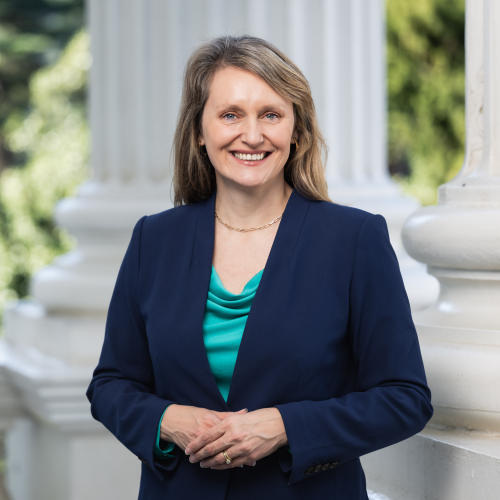
Asm. Buffy Wicks
Sponsored bills
Existing federal law provides for the federal Supplemental Nutrition Assistance Program (SNAP) , known in California as CalFresh, under which nutrition assistance benefits are distributed to eligible individuals by the counties. Existing law establishes eligibility and benefit level requirements for receipt of CalFresh benefits. Existing law establishes the Aid to Families with Dependent Children-Foster Care (AFDC-FC) program, under which counties provide payments to foster care providers on behalf of qualified children in foster care. The program is funded by a combination of federal, state, and county funds. In order to be eligible for AFDC-FC, existing law requires a child or nonminor dependent to be placed in one of several specified placements, including, for nonminor dependents, a supervised independent living setting. Existing law authorizes a nonminor dependent to receive all of the AFDC-FC payment directly if the nonminor dependent is living in a supervised independent living placement and complies with certain requirements. Existing law establishes the Student Aid Commission as the primary state agency for the administration of state-authorized student financial aid programs available to students attending all segments of postsecondary education. Existing law requires the commission to work cooperatively with the State Department of Social Services to develop an automated system to verify a student's status as a foster youth to aid in the processing of applications for federal financial aid. Under existing law, the commission, through an interagency agreement with the State Department of Social Services, operates the Chafee Educational and Training Vouchers Program, to provide federal grants to current and former foster youth with access to postsecondary education. This bill, the End Foster Youth Student Hunger in California Act of 2019, would require the Student Aid Commission to report to the Legislature, no later than July 1, 2020, the amount of funding and the authority it would need to establish a Transition Age Foster Youth Meal Plan Program. The bill would also require the commission to identify the proposed amount, and method of issuance, of a benefit under that program. The act would require the State Department of Social Services to provide a state-funded cash benefit for purposes of food assistance to nonminor dependents in supervised independent living placements, as defined, who directly receive their AFDC-FC payments. The supplemental nutrition benefit would be provided as a cash benefit paid directly to the nonminor dependent, as specified. Existing federal law provides that students who are enrolled in college or other institutions of higher education at least half time are not eligible for SNAP benefits unless they meet one of several specified exemptions, including being employed for a minimum of 20 hours per week and being paid for such employment, as specified, or participating in a state or federally financed work study program during the regular school year. The act would require the State Department of Social Services to establish an official approval process to ensure that paid or unpaid internship hours worked by a foster youth student, as defined, outside of approved federal or state work study will qualify the foster youth student for an exemption to the student eligibility rule described above. The act would require the department to issue guidance to county human services agencies to require certain practices identified by the department to increase rates of completed CalFresh applications and CalFresh participation rates of exiting foster youth. By imposing these duties on counties with respect to foster youth participation in CalFresh, the bill would create a state-mandated local program. The California Constitution requires the state to reimburse local agencies and school districts for certain costs mandated by the state. Statutory provisions establish procedures for making that reimbursement. This bill would provide that, if the Commission on State Mandates determines that the bill contains costs mandated by the state, reimbursement for those costs shall be made pursuant to the statutory provisions noted above.
Existing law requires every peace officer to participate in expanded training prescribed by the Commission on Peace Officer Standards and Training that includes and examines evidence-based patterns, practices, and protocols that make up racial and identity profiling, including implicit bias. Once basic training is completed, existing law requires specified peace officers to complete a refresher course on racial and identity profiling at least every 5 years. This bill would require those peace officers currently required to take the refresher course every 5 years, and additional peace officers, as specified, to instead take refresher training on racial and identity profiling, including the understanding of implicit bias and the promotion of bias-reducing strategies, at least every 2 years. The bill would require this training to include implicit association testing before and after the training. By imposing additional training duties on local law enforcement entities, this bill would impose a state-mandated local program. The California Constitution requires the state to reimburse local agencies and school districts for certain costs mandated by the state. Statutory provisions establish procedures for making that reimbursement. This bill would provide that, if the Commission on State Mandates determines that the bill contains costs mandated by the state, reimbursement for those costs shall be made pursuant to the statutory provisions noted above.
Existing law provides for the California Health and Human Services Agency, which includes the State Department of Health Care Services, the State Department of Developmental Services, and the Department of Managed Health Care. Under existing law, various state and local agencies are responsible for providing or arranging for the provisions of behavioral health services to adults and children in the state. Existing law provides for the Medi-Cal program, which is administered by the State Department of Health Care Services, under which qualified low-income individuals receive health care services, including Early and Periodic Screening, Diagnostic, and Treatment (EPSDT) services, which encompass screening services, vision services, and other necessary services to correct or ameliorate defects and physical and mental illnesses and conditions discovered by the screening services, whether or not the services are covered under the state plan, for any individual under 21 years of age. The Medi-Cal program is, in part, governed and funded by federal Medicaid Program provisions. This bill would require the California Health and Human Services Agency, under the oversight of the Secretary of California Health and Human Services or their designee, to convene, by March 30, 2020, and monthly thereafter, the Children's Behavioral Health Action Team, which would consist of no fewer than 30 individuals, including the Director of Health Care Services, Director of Social Services, the Director of Managed Health Care, and representatives from community-based behavioral health agencies, to maximize the Medi-Cal program's investment in the social, emotional, and developmental health and well-being of children in California who receive health care through the Medi-Cal program. The bill would require the Action Team to develop and report specified findings and recommendations, including identifying opportunities for the state to better ensure that Medi-Cal eligible children receive behavioral health services, to prepare a final implementation plan, to distribute the reports and plan to specified entities, including the Legislature and the public, and to disband upon the submission of the plan.
Existing law requires the Office of Systems Integration to implement a statewide automated welfare system for specified public assistance programs. Existing law declares the intent of the Legislature that representatives from the State Department of Social Services, the State Department of Health Care Services, the Office of Systems Integration, the Interim Statewide Automated Welfare System (SAWS) consortia, and counties meet with advocates, clients, and other stakeholders at least quarterly to review the development status of the California Statewide Automated Welfare System (CalSAWS) project and to engage with stakeholders to discuss current and planned functionality changes, among other topics. This bill would additionally require those entities to discuss and recommend how the public-facing elements of CalSAWS may allow users to initiate applications for other health and human services benefits serving low-income Californians, including, but not limited to, the California Special Supplemental Nutrition Program for Women, Infants, and Children (WIC) , and other programs that are in substantial use, as specified, in order to minimize the burdens of the overall enrollment processes for eligible individuals and households to receive health and human services benefits. Existing federal law provides for the Supplemental Nutrition Assistance Program (SNAP) , known in California as CalFresh, under which supplemental nutrition assistance benefits allocated to the state by the federal government are distributed to eligible individuals by each county. Existing law requires the State Department of Social Services, in conjunction with the State Department of Public Health and appropriate stakeholders, to develop and submit to the Legislature a community outreach and education campaign to help families learn about, and apply for, CalFresh. This bill would require the State Department of Social Services to oversee a state and local accountability partnership to increase CalFresh participation and retention, to foster continuous quality improvement in the administration of the CalFresh program, and establish specified statewide goals for CalFresh participation and improvement. The bill would require the department to take specified actions to support counties in increasing and retaining CalFresh participants so that counties can achieve the statewide participation goals, including, among others, maintaining a dynamic and publicly available CalFresh data dashboard. The bill would require county human services agencies to work with the department to increase CalFresh participation and retention rates and identify the most effective actions to increase access to, and participation in, CalFresh. The bill would encourage counties to implement cost-effective actions that can be implemented within existing resources or at the expense of the county, but would prohibit counties from being required to implement specific improvements that require additional funds unless the state provides the county with those additional funds. By imposing new requirements on counties, this bill would impose a state-mandated local program. Existing law requires each county welfare department, to the extent permitted by federal law, to exempt a household from complying with face-to-face interview requirements for the purpose of determining eligibility at initial application and recertification. This bill would, to the extent permitted by federal law, give an individual the option to apply, report, and recertify for CalFresh in person, by mail, online, or by telephone, and permit an individual to complete the interview requirement and client signature by telephone. The bill would authorize counties to implement any method of telephonic or electronic signature that is supported by county business practice and technology. The bill would require the department, with the input of stakeholders, to develop and execute a plan of support for counties that have not already implemented a telephone-based application and renewal process and to provide technical assistance or resources. The bill would require the application process to satisfy specified criteria, including simple, user-friendly language and instructions. The bill would require certain counties to comply with these provisions beginning on or before January 1, 2022, and require the remaining counties to comply with the provisions beginning on or before January 1, 2023. By imposing new duties on counties, this bill would impose a state-mandated local program. The California Constitution requires the state to reimburse local agencies and school districts for certain costs mandated by the state. Statutory provisions establish procedures for making that reimbursement. This bill would provide that, if the Commission on State Mandates determines that the bill contains costs mandated by the state, reimbursement for those costs shall be made pursuant to the statutory provisions noted above.
Existing law makes an able-bodied person 18 years of age or older who neglects or refuses to join the posse comitatus or power of the county, by neglecting or refusing to aid and assist, as described, in making an arrest, retaking into custody a person who has escaped from arrest or imprisonment, or preventing a breach of the peace or the commission of any criminal offense, after being lawfully required by a uniformed peace officer or a judge, guilty of a misdemeanor and subject to punishment by a fine of not less than $50 nor more than $1,000. This bill would repeal that provision and make conforming changes.
The Off-Highway Motor Vehicle Recreation Act of 2003 creates the Division of Off-Highway Motor Vehicle Recreation within the Department of Parks and Recreation. The act gives the division certain duties and responsibilities, including the planning, acquisition, development, conservation, and restoration of lands in state vehicular recreation areas. Existing law creates the Off-Highway Vehicle Trust Fund to be the repository of certain moneys, including certain fees received by the department for the use of state vehicular recreation areas. Existing law requires the revenues in the fund to be available, upon appropriation, for grants and cooperative agreements, as specified, the support of the division, and the planning, acquisition, development, mitigation, construction, maintenance, administration, operation, restoration, and conservation of lands in state vehicular recreation areas and certain other areas. This bill would authorize the department to dispose of the portion of the Carnegie State Vehicular Recreation Area known as the "Alameda-Tesla Expansion Area" to permanently preserve that land for conservation purposes, as specified, if the department determines that disposing of the land is in the public interest. The bill would require that the land only be sold to a local agency or nonprofit organization for use as a park or other open-space purpose, as specified. The bill would require any revenue from the disposition of the land to, upon appropriation by the Legislature, first be used to reimburse the Department of General Services for any cost or expense incurred in the disposition of the land, and then would require any remaining revenue to be deposited in the Off-Highway Vehicle Trust Fund.
Existing law establishes a public school financing system that requires state funding for county superintendents of schools, school districts, and charter schools to be calculated pursuant to a local control funding formula. Existing law requires the Superintendent of Public Instruction to determine the amount of funding to be provided for each special education local plan area in accordance with specified calculations. Existing law requires the Superintendent, for the 2013–14 fiscal year, to compute an equalization adjustment for each special education local plan area for purposes of increasing the funding rates for special education local plan areas with funding rates below the 90th percentile, as specified. This bill would increase that percentile to the 95th percentile and would require the Superintendent to compute that equalization adjustment commencing with the first fiscal year after funds are apportioned pursuant to a specified formula and for each fiscal year thereafter in which an equalization appropriation is made, as specified. The bill would require the Superintendent to make certain computations following each year in which an equalization appropriation is made. The bill would establish the high-cost service allowance for the purpose of providing supplemental funding to a special education local plan area on the basis of the number of pupils who are severely disabled and the number pupils with both deafness and blindness, traumatic brain injury, or multiple disabilities, and would require the Superintendent to make specified computations that would determine the high-cost service allowance for each special education local plan area. The bill would require, commencing with the first fiscal year after funds are apportioned pursuant to a specified formula, a special education local plan area that reports serving children 3 or 4 years of age who meet the definition of an "individual with exceptional needs" to count 3 times all units of average daily attendance generated by children enrolled in kindergarten less those children eligible for transitional kindergarten, for purposes of calculating units of average daily attendance, except as provided. By adding to the duties of special education local plan areas, the bill would impose a state-mandated local program. Existing law defines "average daily attendance reported for the special education local plan area" for purposes of these and other provisions to mean the total number of units of average daily attendance reported in the school district or districts and in the county office of education or county offices of education, or portion of a county office of education that is a part of more than one special education local plan area, as specified. The bill would revise that definition to mean the total number of units of average daily attendance reported for the current school year or the prior school year, whichever is greater, in those same entities, as specified. The California Constitution requires the state to reimburse local agencies and school districts for certain costs mandated by the state. Statutory provisions establish procedures for making that reimbursement. This bill would provide that, if the Commission on State Mandates determines that the bill contains costs mandated by the state, reimbursement for those costs shall be made pursuant to the statutory provisions noted above.
Existing law, the Children's Mental Health Services Act, establishes an interagency system of care for the delivery of mental health services to seriously emotionally and behaviorally disturbed children and their families. Existing law, the Mental Health Services Act, an initiative statute enacted by the voters as Proposition 63 at the November 2, 2004, statewide general election, also funds a system of county mental health plans for the provision of mental health services, as specified. Existing law provides for the operation and administration of various mental health programs by the Mental Health Services Oversight and Accountability Commission. This bill would require the commission, subject to an appropriation, to administer an Integrated Youth Mental Health Program for purposes of establishing local centers to provide integrated youth mental health services, as specified. The bill would authorize the commission to establish the core components of the program, subject to specified criteria, and would require the commission to develop the selection criteria and process for awarding funding to local entities for these purposes. The bill would authorize the commission to implement these provisions by means of an informational letter, bulletins, or similar instructions.