

Public social services.
Summary
Existing law requires the Office of Systems Integration to implement a statewide automated welfare system for specified public assistance programs. Existing law declares the intent of the Legislature that representatives from the State Department of Social Services, the State Department of Health Care Services, the Office of Systems Integration, the Interim Statewide Automated Welfare System (SAWS) consortia, and counties meet with advocates, clients, and other stakeholders at least quarterly to review the development status of the California Statewide Automated Welfare System (CalSAWS) project and to engage with stakeholders to discuss current and planned functionality changes, among other topics. This bill would additionally require those entities to discuss and recommend how the public-facing elements of CalSAWS may allow users to initiate applications for other health and human services benefits serving low-income Californians, including, but not limited to, the California Special Supplemental Nutrition Program for Women, Infants, and Children (WIC) , and other programs that are in substantial use, as specified, in order to minimize the burdens of the overall enrollment processes for eligible individuals and households to receive health and human services benefits. Existing federal law provides for the Supplemental Nutrition Assistance Program (SNAP) , known in California as CalFresh, under which supplemental nutrition assistance benefits allocated to the state by the federal government are distributed to eligible individuals by each county. Existing law requires the State Department of Social Services, in conjunction with the State Department of Public Health and appropriate stakeholders, to develop and submit to the Legislature a community outreach and education campaign to help families learn about, and apply for, CalFresh. This bill would require the State Department of Social Services to oversee a state and local accountability partnership to increase CalFresh participation and retention, to foster continuous quality improvement in the administration of the CalFresh program, and establish specified statewide goals for CalFresh participation and improvement. The bill would require the department to take specified actions to support counties in increasing and retaining CalFresh participants so that counties can achieve the statewide participation goals, including, among others, maintaining a dynamic and publicly available CalFresh data dashboard. The bill would require county human services agencies to work with the department to increase CalFresh participation and retention rates and identify the most effective actions to increase access to, and participation in, CalFresh. The bill would encourage counties to implement cost-effective actions that can be implemented within existing resources or at the expense of the county, but would prohibit counties from being required to implement specific improvements that require additional funds unless the state provides the county with those additional funds. By imposing new requirements on counties, this bill would impose a state-mandated local program. Existing law requires each county welfare department, to the extent permitted by federal law, to exempt a household from complying with face-to-face interview requirements for the purpose of determining eligibility at initial application and recertification. This bill would, to the extent permitted by federal law, give an individual the option to apply, report, and recertify for CalFresh in person, by mail, online, or by telephone, and permit an individual to complete the interview requirement and client signature by telephone. The bill would authorize counties to implement any method of telephonic or electronic signature that is supported by county business practice and technology. The bill would require the department, with the input of stakeholders, to develop and execute a plan of support for counties that have not already implemented a telephone-based application and renewal process and to provide technical assistance or resources. The bill would require the application process to satisfy specified criteria, including simple, user-friendly language and instructions. The bill would require certain counties to comply with these provisions beginning on or before January 1, 2022, and require the remaining counties to comply with the provisions beginning on or before January 1, 2023. By imposing new duties on counties, this bill would impose a state-mandated local program. The California Constitution requires the state to reimburse local agencies and school districts for certain costs mandated by the state. Statutory provisions establish procedures for making that reimbursement. This bill would provide that, if the Commission on State Mandates determines that the bill contains costs mandated by the state, reimbursement for those costs shall be made pursuant to the statutory provisions noted above.
Bill status
passed
3 of 5 stages cleared
Introduction
Feb 2019
Committee Review
Aug 2019
Senate Passage
May 2019
Assembly Passage
Governor
Introduced Feb 13, 2019
Last action Aug 30, 2019
Floor votes · Senate May 21, 2019
How they voted
35–0
Passed
Total votes 35
May 21, 2019
D
Democratic27
100% Yea
R
Republican8
100% Yea
Vote distribution
All Yea
All Nay
Mixed
No data
Full legislative history
Actions timeline
Total actions
21
Key actions
6
Committee
6
Amendments
1
Aug 30, 2019
Lower · Passed
August 30 hearing: Held in committee and under submission.
lower
Jul 5, 2019
Lower · Passed
From committee: Do pass as amended and re-refer to Com. on APPR. (Ayes 7. Noes 0.) (July 2).
lower
May 30, 2019
Committee
Referred to Com. on HUM. S.
lower
May 21, 2019
Upper · Passed
Read third time. Passed. (Ayes 38. Noes 0. Page 1200.) Ordered to the Assembly.
upper
May 17, 2019
Upper · Passed
Read second time and amended. Ordered to second reading.
upper
May 17, 2019
Upper · Passed
From committee: Do pass as amended. (Ayes 6. Noes 0. Page 1095.) (May 16).
upper
Apr 23, 2019
Upper · Passed
From committee: Do pass and re-refer to Com. on APPR. (Ayes 6. Noes 0. Page 775.) (April 22). Re-referred to Com. on APPR.
upper
Feb 21, 2019
Committee
Referred to Com. on HUMAN S.
upper
Feb 13, 2019
Introduced
Introduced. Read first time. To Com. on RLS. for assignment. To print.
upper
1 primary · 3 co-sponsors
Sponsors
Role
Legislator
Party
State
District
P
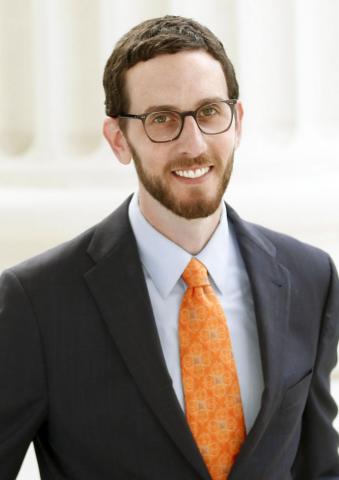
Scott Wiener
DDemocratic
Co
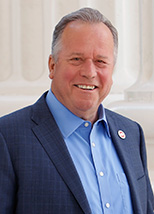
Bill Dodd
DDemocratic
Co
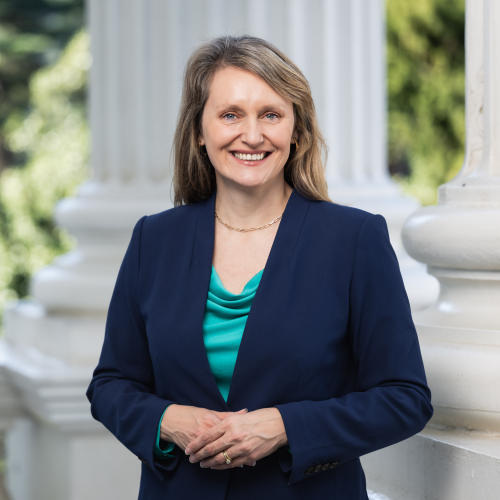
Buffy Wicks
DDemocratic
Co
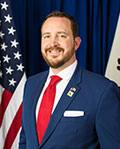
Devon Mathis
RRepublican
Ask Maddy
·
AI policy assistant
Ask Maddy about SB 285
Scope: CA
Hi! I can help you understand SB 285. What would you like to know?
Try one of these
i
Maddy answers using official bill text and legislative records. Always verify before sharing.
Sources cited inline