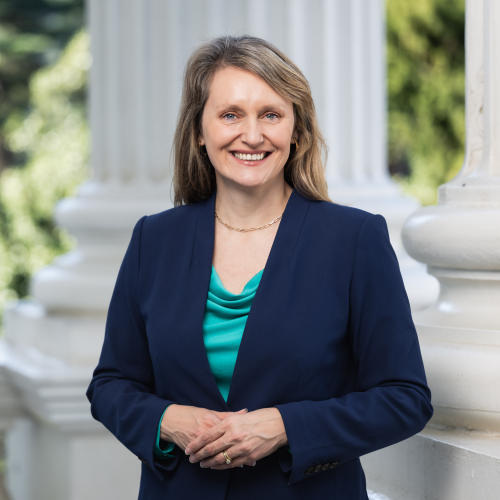
Photo of Buffy Wicks
D California Assembly · District 14 On the 2026 ballot

Asm. Buffy Wicks

Compare
Total votes
20,934
all sessions
Attendance
93%
978 missed
Near the chamber average
With party
99%
of cast votes
Near the chamber average
Bipartisan score
0%
crosses aisle rarely
Near the chamber average
Sponsored
1,740
bills & resolutions
Near the chamber average
Committees
9
assignments
1,740 bills and resolutions

Sponsored bills

Total
1,740
Primary
165
Co-sponsor
1,575
This page
1,740
matching current filters
Primary AB 1310
died · California Assembly · Lead sponsor
Board of Juvenile Hearings: rules and regulations.

Existing law requires the rules and regulations promulgated by the Board of Juvenile Hearings to be promulgated and filed pursuant to the Administrative Procedure Act and, to the extent practical, be stated in language that is easily understood by the general public. Existing law requires the board to maintain, publish, and make available to the general public a compendium of its rules and regulations. This bill would make technical, nonsubstantive changes to those provisions.

died Feb 1, 2022 0 co-sponsors
Primary AB 1530
died · California Assembly · Lead sponsor
Private employment: mass layoffs.

Existing law prohibits an employer from ordering a mass layoff, relocation, or termination at a covered establishment, as defined, unless, 60 days before the order takes effect, the employer gives written notice to affected employees, as specified. Under existing law, an employer who fails to give the necessary notice is liable to employees who were entitled to notice who lost their jobs for back pay and the value of the cost of benefits, as specified. This bill would make nonsubstantive changes in the provisions relating to employer liability described above.

died Feb 1, 2022 0 co-sponsors
Primary AB 1333
died · California Assembly · Lead sponsor
Check sellers, bill payers, and proraters.

Existing law, the Check Sellers, Bill Payers and Proraters Law, defines and regulates the activities of check sellers, bill payers, and proraters. Existing law defines a check seller as, among other things, a person who, for compensation, engages in the business of selling checks, drafts, money orders, or other commercial paper or for receiving money as agent of an obligor for the purpose of paying bills, invoices, or accounts of an obligor. This bill would make nonsubstantive changes in the title of the Check Sellers, Bill Payers and Proraters Law.

died Feb 1, 2022 0 co-sponsors
Primary AB 1119
Failed · California Assembly · Lead sponsor
Employment discrimination.

Existing law, the California Fair Employment and Housing Act (FEHA) , protects the right to seek, obtain, and hold employment without discrimination because of prescribed characteristics. FEHA makes various employment practices unlawful and empowers the Department of Fair Employment and Housing to investigate and prosecute complaints alleging unlawful practices. This bill would expand the protected characteristics to include family responsibilities, defined to mean the obligations of an employee to provide direct and ongoing care for a minor child or a care recipient. The bill would define additional terms for this purpose. FEHA makes it an unlawful practice for an employer or other entity to fail to make reasonable accommodation for the known physical or mental disability of an applicant or employee. FEHA further makes it an unlawful practice for an employer or other entity to fail to engage in a timely, good faith, interactive process with the employee or applicant to determine effective reasonable accommodations, if any, in response to a request for reasonable accommodation by an employee or applicant with a known physical or mental disability or known medical condition. This bill would additionally make it an unlawful practice for an employer or other entity to fail to make reasonable accommodation, and to fail to engage in a timely, good faith, interactive process to determine effective reasonable accommodations, the known family responsibilities of an applicant or employee related to obligations arising from an unforeseen need to care for a minor child or care recipient whose school or place of care is closed or otherwise unavailable. The bill would also make it an unlawful practice for an employer or other entity to retaliate or otherwise discriminate against a person for requesting accommodation under the bill's provisions, regardless of whether the request was granted.

Failed Feb 1, 2022 0 co-sponsors
Co-sponsor AB 1516
Failed · California Assembly · Co-sponsor
Income taxes: credits: low-income housing.

The Personal Income Tax Law and the Corporation Tax Law allow various credits against the taxes imposed by those laws. This bill, for taxable years beginning on or after January 1, 2022, and before January 1, 2027, would allow a credit against those taxes to a taxpayer that is transferred, and allocated, credits pursuant to the sale of a multifamily rental housing development or mobilehome park to a qualified developer, as defined, that has received a credit reservation from the California Tax Credit Allocation Committee, in specified amounts. The bill would require the credits to be reserved on a first-come-first-served basis. The bill would limit the aggregate amount of credit that may be allocated by the committee, as provided. The bill would also provide that the credit amount shall be $0 for each taxable year beginning on or after January 1, 2022, and before January 1, 2027, unless otherwise specified in a bill providing for appropriations related to the Budget Act. Existing law requires that any bill introduced on or after January 1, 2020, that would authorize certain tax expenditures, as defined, or tax exemptions contain, among other things, specific goals, purposes, and objectives that the tax expenditure or exemption will achieve, detailed performance indicators, and data collection requirements. This bill would include additional information required for any bill authorizing a new tax expenditure. This bill would take effect immediately as a tax levy.

Failed Feb 1, 2022 1 co-sponsor
Co-sponsor AB 1090
Failed · California Assembly · Co-sponsor
Legislative Task Force on the California Master Plan on Homeownership.

Existing law establishes the California Statewide Housing Plan to serve as a state housing plan for all relevant purposes. Existing law requires that the plan incorporate, among other things, a statement of housing goals, policies, and objectives and that the Department of Housing and Community Development update and provide a revision of the plan to the Legislature every 4 years. Existing law establishes the California Housing Finance Agency (CalHFA) within the Department of Housing and Community Development, administered by a board of directors, with the primary purpose of meeting the housing needs of persons and families of low or moderate income. Existing law requires the Governor, subject to confirmation by the Senate, to appoint an executive director of CalHFA and requires the executive director, subject solely to supervision by the board of directors, to administer and direct the day-to-day operations of CalHFA. This bill would establish the Legislative Task Force on the California Master Plan on Homeownership. The bill would require the Executive Director of CalHFA to serve as the chair of the task force and to appoint a homeownership advisory committee, as provided. The bill would require the task force to evaluate policy and regulatory impediments to increasing the rate of homeownership for Californians and, no later than October 31, 2022, to develop a final report that includes specified information and recommendations and submit that report to the Legislature. The bill would make findings in this regard.

Failed Feb 1, 2022 1 co-sponsor
Co-sponsor AB 1182
Failed · California Assembly · Co-sponsor
Product liability: products purchased online.

Existing law imposes strict liability upon persons who place a defective product on the market, including retailers engaged in the business of distributing goods to the public, for injuries caused by the product. Existing law exempts a manufacturer or seller from liability, except as provided, in any action for injury or death caused by a product, other than an action based on a manufacturing defect or breach of an express warranty, if the product is inherently unsafe and the product is known to be unsafe by the ordinary consumer who consumes the product with the ordinary knowledge common to the community and the product is a common consumer product intended for personal consumption, as specified. This bill would, in any strict products liability action, make an electronic place that, by contract or other arrangement with one or more third parties, engages in specified acts strictly liable for all damages proximately caused by a defective product that is purchased or sold through the electronic place to the same extent as a retailer would be liable for selling the defective product in the retailer's physical store, regardless of whether the electronic place ever takes physical possession of, or title to, the defective product.

Failed Feb 1, 2022 1 co-sponsor
Co-sponsor AB 21
Failed · California Assembly · Co-sponsor
Forestry: electrical transmission and distribution lines: clearance: penalties.

Existing law requires a person that owns, controls, operates, or maintains any electrical transmission or distribution line upon any mountainous land or forest-covered land, brush-covered land, or grass-covered land to maintain around and adjacent to any pole or tower that supports a switch, fuse, transformer, lightning arrester, line junction, or dead-end or corner pole a firebreak, as specified. Existing law requires a person that owns, controls, operates, or maintains any electrical transmission or distribution line upon any mountainous land or in forest-covered land, brush-covered land, or grass-covered land to maintain a clearance between all vegetation and all conductors that are carrying electric current, as specified. This bill would impose a civil penalty of up to $100,000 for each violation of the above-described provisions after the person that owns, controls, operates, or maintains any electrical transmission or distribution line is offered a reasonable opportunity to cure. The bill would impose an additional civil penalty of up to $1,000 for each acre burned by a fire resulting from a violation of the above-described provisions after the person that owns, controls, operates, or maintains any electrical transmission or distribution line is offered a reasonable opportunity to cure. The bill would require 50% of the penalties collected to be deposited into the Utility Accountability and Wildfire Prevention Fund, which the bill would establish in the State Treasury, and would distributed the remaining 50%, as provided. The bill would provide that the moneys in the Utility Accountability and Wildfire Prevention Fund, upon appropriation by the Legislature, are available for purposes of enhancing forest management, fire planning, wildfire prevention and suppression, and fire-related enforcement activities. The bill would require the Department of Forestry and Fire Protection to develop regulations to define what a reasonable opportunity to cure means for the above-described purposes.

Failed Feb 1, 2022 1 co-sponsor
Co-sponsor AB 400
Failed · California Assembly · Co-sponsor
Unemployment insurance: Unemployment Insurance Oversight Advisory Board.

Existing law authorizes the Employment Development Department to administer the state unemployment and disability compensation programs. Existing law requires the department, among other duties, to make unemployment and disability compensation payments, as prescribed. This bill would establish the Unemployment Insurance Oversight Advisory Board (board) in the Labor and Workforce Development Agency as an advisory body to review the operations of the Employment Development Department (department) under the state unemployment and disability compensation programs and make recommendations to the department, the Governor, and the Legislature to, among other things, enhance the efficiency of those operations and ensure equitable access to benefits administered by the department. The bill would require the board to consist of 7 members, as specified, who serve without compensation, but would require members to be reimbursed for their necessary and reasonable expenses incurred in performing their duties and responsibilities, upon appropriation by the Legislature. The bill would require, beginning on and after January 1, 2022, the board to hold at least 2 public meetings a year, during which the board members would be required to accept public comment. The bill would also require, beginning on and after July 1, 2022, the board to issue biannual public reports with its recommendations. The bill would require the department to submit a yearly report to the Assembly Committee on Budget and the Senate Committee on Budget and Fiscal Review regarding the recommendations of the board for state disability insurance and paid family leave benefits, as provided.

Failed Feb 1, 2022 1 co-sponsor
Primary AB 1545
Failed · California Assembly · Lead sponsor
Children: internet safety: platform operators.

Existing law, the California Consumer Privacy Act of 2018 (CCPA) , grants consumers certain rights in regard to businesses, as defined, that collect personal information about them, including the right to know what information is collected and the right to opt-out of the sale of that information. Existing law, the California Privacy Rights Act of 2020, approved by the voters as Proposition 24 at the November 3, 2020, statewide general election, among other changes in the CCPA, establishes the California Privacy Protection Agency and vests it with full administrative power, authority, and jurisdiction to implement and enforce the CCPA. Existing law prohibits specified unfair, dishonest, deceptive, destructive, fraudulent, and discriminatory practices by which fair and honest competition is destroyed or prevented. Existing law prohibits a business from selling personal information of consumers that the business knows are less than 16 years of age unless that sale is affirmatively authorized, as specified. Existing law, commencing January 1, 2023, also prohibits a business from sharing personal information of consumers that the business knows are less than 16 years of age unless that sale is affirmatively authorized, as specified. This bill would enact the Kids Internet Design and Safety Act for purposes of keeping children safe and protecting their interests on the internet. The bill would, among other things, prohibit an operator of a platform, as defined, from incorporating certain features with respect to content viewable by a covered user, as defined, without first obtaining consent from the parent or guardian of the covered user, including an auto-play setting that, without input from a covered user, commences additional video content directly following the video content initially selected by the covered user, except as specified. This bill would provide that a violation of these provisions constitutes unfair competition. This bill would require an operator of a platform to, among other things, allow a parent or guardian to create an account or profile for that person's child who is under 13 years of age. The bill would, beginning on or before June 1, 2023, upon appropriation by the Legislature, require the Attorney General to conduct an annual audit of platforms to determine compliance with specified state and federal law.


Failed Feb 1, 2022 0 co-sponsors
Showing 1,161 to 1,170 of 1,740 bills