

Passed Feb 3, 2022
1 co-sponsor
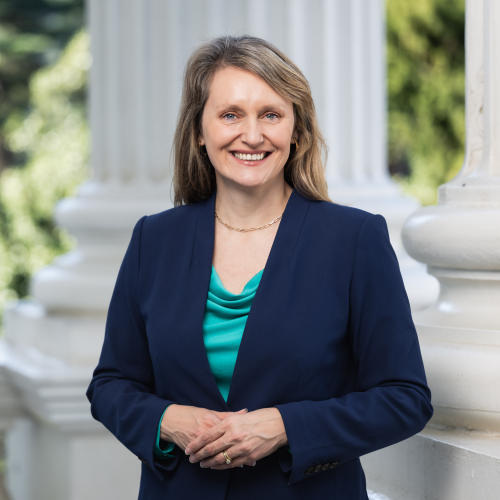
Asm. Buffy Wicks
Total votes
20,934
all sessions
Attendance
93%
978 missed
Near the chamber average
With party
99%
of cast votes
Near the chamber average
Bipartisan score
0%
crosses aisle rarely
Near the chamber average
Sponsored
1,740
bills & resolutions
Near the chamber average
Committees
9
assignments
1,740 bills and resolutions
Sponsored bills
Total
1,740
Primary
165
Co-sponsor
1,575
This page
1,740
matching current filters
Passed Feb 3, 2022
1 co-sponsor
Economic development: low- to moderate-income communities: Equity in Lending and Fair Recovery Act.
Existing law, the Small Business Financial Assistance Act of 2013, requires the California Infrastructure and Economic Development Bank to administer the Small Business Finance Center, which administers programs that assist businesses seeking new capital resources, including, but not limited to, the Small Business Loan Guarantee Program. Existing law establishes the Small Business Expansion Fund and requires, among other things, that the fund provide guarantees to loans offered by financial institutions and financial companies, as those terms are defined, to small businesses, as provided. Existing law, the California Pollution Control Financing Authority Act, establishes the California Pollution Control Financing Authority, with specified powers and duties, and authorizes the authority to approve financing for projects or pollution control facilities to prevent or reduce environmental pollution. This bill would enact the Equity in Lending and Fair Recovery Act to require the California Pollution Control Financing Authority to establish and administer the Equity in Lending and Fair Recovery Program, in accordance with specified requirements, for the purpose of supporting and expanding eligible lender access to lending capital and borrower access to responsible installment loans for low- to moderate-income individuals and communities. The bill would require the program to provide partial loan guarantees and other credit enhancements for eligible lenders, as defined, to access additional capital to expand the availability of eligible loans, as defined. This bill would, among other things, require the authority to require that participating eligible lenders pay premiums, fees, and interest sufficient to cover the reasonable administrative costs of the program and manage the risk of defaults associated with the program. The bill would require that these premiums, fees, and interest payments be deposited into the Equity in Lending and Fair Recovery Fund, which this bill would establish as a continuously appropriated fund, thereby making an appropriation. This bill would authorize the authority to establish and operate a program to provide grants to support minority-owned small businesses, as defined, allocated through a competitive application process in accordance with specified requirements. The bill would make moneys in the fund available for these grants only to the extent that there are sufficient moneys in the fund for purposes of this bill's provisions. The bill would require the authority to charge an application fee to each grantee under this program, in an amount sufficient to cover the reasonable costs of the authority in administering that program. This bill would appropriate $25,000,000 to the authority for deposit into the fund, to be used for initial startup costs relating to the establishment and operation of the Equity in Lending and Fair Recovery Program.
In committee Feb 2, 2022
1 co-sponsor
Hosting platforms.
Existing law requires a hosting platform to provide an offeror listing a residence for short-term rental on the hosting platform with a specific notice relating to certain liability considerations and risks of listing the residence. Existing law defines "hosting platform" as a marketplace that is created for the primary purpose of facilitating the rental of a residential unit, as specified. This bill would make a nonsubstantive change to that definition.
died Feb 1, 2022
0 co-sponsors
Donor-advised funds.
Existing law, the Supervision of Trustees and Fundraisers for Charitable Purposes Act, governs charitable corporations, unincorporated associations, trustees, commercial fundraisers, fundraising counsel, commercial coventurers, and other legal entities holding or soliciting property for charitable purposes over which the state or the Attorney General has enforcement and supervisory powers. Under the act, any person who violates any of the act's provisions with intent to deceive or defraud any charity or individual is liable for a specified civil penalty. The act also authorizes the Attorney General to impose other specified civil penalties for related acts and omissions. This bill would express the intent of the Legislature to enact legislation that would relate to donor-advised funds for the purpose of improving accountability of charitable giving.
died Feb 1, 2022
0 co-sponsors
Homelessness funding: Bring California Home Act.
(1) The Personal Income Tax Law, in conformity with federal income tax law, generally defines gross income as income from whatever source derived, except as specifically excluded, and provides various exclusions from gross income. Existing federal law, for purposes of determining a taxpayer's gross income for federal income taxation, requires that a person who is a United States shareholder of any controlled foreign corporation to include in their gross income the global intangible low-taxed income for that taxable year, as provided. This bill, for taxable years beginning on or after January 1, 2022, would include a taxpayer's global intangible low-taxed income in their gross income for purposes of the Personal Income Tax Law, in modified conformity with the above-described federal provisions. The bill would exempt any regulation, standard, criterion, procedure, determination, rule, notice, or guideline established or issued by the Franchise Tax Board to implement its provisions from the rulemaking provisions of the Administrative Procedure Act. The Corporation Tax Law, when the income of a taxpayer subject to tax under that law is derived from or attributable to sources both within and without the state, generally requires that the tax be measured by the net income derived from or attributable to sources within this state, as provided. Notwithstanding this requirement, the Corporation Tax Law authorizes a qualified taxpayer, as defined, to elect to determine its income derived from or attributable to sources within this state pursuant to a water's-edge election, as provided. For taxable years beginning on or after January 1, 2003, existing law requires that a water's-edge election be made on an original, timely filed return for the year of the election, as provided, and provides for the continued effect or termination of that election. This bill, beginning January 1, 2022, would require that a taxpayer that makes a water's-edge election under these provisions take into account 50% of the global intangible low-taxed income and 40% of the repatriation income of its affiliated corporations, as those terms are defined. The bill would allow a taxpayer, for calendar year 2022 only, the opportunity to revoke a water's-edge election if the taxpayer includes global intangible low-taxed income pursuant to these provisions. The bill would prohibit the total of all business credits, as defined, and all credits allowed under specified provisions of the Corporation Tax Law, with specified exceptions, from reducing the additional tax liability added by this bill's provisions by more than $5,000,000, as provided. The bill would exempt any regulation, standard, criterion, procedure, determination, rule, notice, or guideline established or issued by the Franchise Tax Board to implement its provisions from the rulemaking provisions of the Administrative Procedure Act. This bill would state the intent of the Legislature that any revenue resulting from the above-described changes to the Personal Income Tax Law and the Corporation Tax Law be used for purposes of the Bring California Home Act, as described below. (2) Existing law requires the Governor to create the Homeless Coordinating and Financing Council (council) . Existing law specifies the duties of the coordinating council, including creating partnerships among state agencies and departments, local government agencies, and specified federal agencies and private entities, for the purpose of arriving at specific strategies to end homelessness. Existing law requires the Governor to appoint up to 19 members of the council, including representatives from specified state agencies and departments, and a formerly homeless person and a formerly homeless youth who both live in California, and requires the Senate Committee on Rules and the Speaker of the Assembly to each appoint one member to the council from 2 different stakeholder organizations. This bill would delete the provisions relating to the appointment authority of the Governor and the Legislature, and would instead restructure the council, including requiring the council to be composed of prescribed individuals, including the directors of specified state agencies and departments, such as the State Department of Public Health. The bill would require the council to seek guidance from, and meet with, an advisory committee composed of specified individuals, including a survivor of gender-based violence who formerly experienced homelessness and a formerly homeless person who lives in California. This bill would require the council, its technical services provider, or an entity with which the council contracts to identify, analyze, and collect various data in regards to homelessness in this state, including identifying state programs that provide housing or housing-based services to persons experiencing homelessness, as provided. The bill would require the council to report on this information to specified committees of the Legislature by July 31, 2022. The bill would require the council to seek technical assistance offered by the United States Department of Housing and Urban Development, if available, for purposes of conducting this statewide needs and gaps analysis. The bill would require a state department or agency with a member on the council to assist in data collection for the analysis by responding to data requests within 180 days, as specified. The bill would require the council to convene a funder's workgroup, composed of specified individuals, including staff of the council and staff working for agencies or departments represented on the council, to accomplish prescribed goals, and would authorize that workgroup to invite philanthropic organizations focused on ending homelessness, reducing health disparities, ending domestic violence, or ensuring Californians do not exit foster care or incarceration to homelessness to participate in specific meetings. The bill would require the workgroup to perform specified duties, including collaborating with state agency staff to develop a universal application for service providers and other entities to apply to agencies and departments represented on the council for funding for homeless services and housing, and to coordinate state agencies and departments to reduce the risk of long-term homelessness by developing specific protocols and procedures that accomplish prescribed goals, such as assisting individuals reentering communities from jails and prisons with housing navigation, housing acquisition support, and obtaining permanent housing. Existing law requires agencies and departments administering state programs to collaborate with the council to adopt guidelines to revise or adopt guidelines and regulations to incorporate core components of Housing First, as provided. Existing law defines "state programs" for these purposes to mean any programs a California state agency or department funds, implements, or administers for the purpose of providing housing or housing-based services to people experiencing homelessness or at risk of homelessness, but excludes federally funded programs with inconsistent requirements or programs that fund emergency shelters. This bill would delete the exclusion for programs that fund emergency shelters from this definition of "state programs," thereby expanding the scope of programs required to incorporate core components of Housing First, as described above. (3) Existing law establishes, among various other programs intended to address homelessness in this state, the Homeless Housing, Assistance, and Prevention program for the purpose of providing jurisdictions with one-time grant funds to support regional coordination and expand or develop local capacity to address their immediate homelessness challenges informed by a best-practices framework focused on moving homeless individuals and families into permanent housing and supporting the efforts of those individuals and families to maintain their permanent housing. Existing law provides for the allocation of funding under the program among continuums of care, cities, and counties in 2 rounds, the first of which is administered by the Business, Consumer Services, and Housing Agency and the second of which is administered by the coordinating council. This bill would enact the Bring California Home Act, which would establish the Bring California Home Fund in the State Treasury and continuously appropriate moneys in that fund for the purpose of implementing that act. The bill would require the Controller to annually transfer specified amounts, determined as provided by the Franchise Tax Board based on the above-described changes made by this bill to the Personal Income Tax Law and the Corporation Tax Law, to the Bring California Home Fund. The bill would require that recipients and subrecipients under the program ensure that any expenditure of moneys allocated to them serve the eligible population, unless otherwise expressly provided in the bill. The bill would define various terms for these purposes. The bill would require the council to administer allocations to counties and continuums of care that apply jointly and to large cities, as provided. The bill would require the council to set aside $200,000,000 for bonus awards, as provided. Of the remaining amount in the fund, the bill would require the council to allocate 60% to counties and continuums of care applying jointly and 40% to large cities, in accordance with a specified formula and subject to certain requirements. The bill would establish eligibility criteria for a county and continuum of care or a large city to receive an allocation under these provisions and specify the eligible uses for those moneys. The bill would authorize a jointly applying county and continuum of care to request that the State Department of Social Services contract with local agencies or nonprofit organizations providing the housing and housing-based services under the program in exchange for a percentage of the allocation to the county and continuum of care for administrative costs, as provided. The bill would require the council to allocate available funding in 2-year cycles, with the first round allocated no later than March 31, 2023, and to develop a simple application that an eligible entity may use to apply for funding, as well as common standards for recipients to monitor, report, and ensure accountability, provide services, and subsidize housing. The bill would require the council and each recipient to establish performance outcomes for the initial cycle and to establish outcome goals before each subsequent grant cycle, as provided, and require the council to award bonus funding to a recipient, if the recipient has achieved those performance outcomes, or reduce or deny that bonus funding the if the recipient has not achieved those performance outcomes. The bill, except as otherwise provided, would require each recipient to contractually obligate 100% of the amount allocated to it within 3 years, for the first grant cycle, or 1 year, for each subsequent cycle, and to expend the entirety of that amount within 4 years, for the first grant cycle, or 2 years, for each subsequent cycle. If a recipient fails to comply with these deadlines, uses moneys allocated to it for an unauthorized purpose, or fails to apply for an allocation within the initial award cycle, the bill would require the council to either select an alternative entity to administer the recipient's allocation in accordance with specified requirements or solely establish performance outcomes and program priorities for that recipient jurisdiction and work with local, regional, or statewide entities to administer the allocation on behalf of the recipient. The bill would require each recipient to annually report to the council specified information relating to allocations made under these provisions. The bill would require the council to conduct regular monitoring and audits of the activities and outcomes of recipients that are joint county-continuum of care applicants or large cities. No later than January 1, 2024, and every 5th January 1 thereafter, the bill would require the council to evaluate the outcomes of this program and submit a report, containing specified information, to specified committees of the Legislature. The bill would require the council to establish an advisory committee to inform state and local policies, practices, and programs with respect to the experiences of specified demographic groups experiencing homelessness. (4) Existing law provides for the Medi-Cal program, which is administered by the State Department of Health Care Services, under which qualified low-income individuals receive health care services pursuant to a schedule of benefits. The Medi-Cal program is, in part, governed and funded by federal Medicaid program provisions. By January 1, 2025, this bill would require the department to seek federal approval for a Medi-Cal benefit to fund prescribed services, including housing navigation and housing acquisition support services, for beneficiaries experiencing homelessness, to convene a stakeholder advisory group representing counties, health care consumers, and homeless advocates in developing this plan, to work with counties to determine an effective process for funding the state's share of the federal medical assistance percentage, and to pursue philanthropic funding to carry out the administrative duties related to these provisions. The bill would authorize the department to use up to 20% of the county-continuum allocation from the Bring California Home Fund, as described above, to pay for the state's federal medical assistance percentage associated with this benefit. (5) This bill would declare that it is to take effect immediately as an urgency statute.
died Feb 1, 2022
1 co-sponsor
Collective bargaining: Legislature.
Existing law, the Ralph C. Dills Act (Dills Act) , governs collective bargaining between the state and recognized state public employee organizations. Existing law excludes certain employees from coverage under the Dills Act, including, among others, managerial employees, supervisory employees, and confidential employees, as defined. Existing law creates the Public Employment Relations Board and authorizes it, among other things, to determine appropriate state employee bargaining units, as specified. This bill would enact the Legislature Employer-Employee Relations Act, to provide employees of the Legislature, including some supervisory and managerial employees, the right to form, join, and participate in the activities of employee organizations of their own choosing for the purpose of representation on all matters of employer-employee relations. The bill would prescribe rights, duties, and prohibitions in this context that parallel those in the Dills Act. The bill would prohibit the Public Employment Relations Board from including employees of the Legislature in a bargaining unit that includes employees other than those of the Legislature. The bill would make it a misdemeanor for any person to willfully resist, prevent, impede, or interfere with any member of the board, or any of its agents, in the performance of duties pursuant to its provisions. By expanding the definition of a crime, this bill would impose a state-mandated local program. The bill would provide that the provisions of the Legislature Employer-Employee Relations Act are severable. The California Constitution requires the state to reimburse local agencies and school districts for certain costs mandated by the state. Statutory provisions establish procedures for making that reimbursement. This bill would provide that no reimbursement is required by this act for a specified reason.
died Feb 1, 2022
1 co-sponsor
Housing.
The State Housing Law establishes statewide construction and occupancy standards for buildings used for human habitation. That law requires the building department of every city or county to enforce within its jurisdiction the provisions of the State Building Standards Code, the provisions of the State Housing Law, and specified other rules and regulations promulgated pursuant to that law. This bill would make nonsubstantive changes to the provision naming the State Housing Law.
died Feb 1, 2022
0 co-sponsors
Property taxation: welfare exemption: museums.
Pursuant to constitutional authorization, existing property tax law provides a welfare exemption, pursuant to which property used exclusively for religious, hospital, scientific, or charitable purposes owned and operated by specified types of entities is exempt from taxation if it meets certain criteria, including that the property is used for the actual operation of the exempt activity, and does not exceed an amount of property reasonably necessary to the accomplishment of the exempt purpose. Under existing property tax law, property used exclusively for the charitable purposes of museums owned and operated by a religious, hospital, scientific, or charitable fund, foundation, limited liability company, or corporation that meets these criteria is deemed to be within the welfare exemption. Existing property tax law requires a person claiming the welfare exemption to file that claim with the assessor and obtain an organizational clearance certificate from the State Board of Equalization, as provided. This bill would define the term "museum" for these purposes. The bill would provide that property used exclusively for the charitable purposes of museums includes property that a museum makes available for special events, including private rental events for its individual or corporate members, that provide access to the museum's exhibitions, collections, or other educational offerings as part of the events, or that the museum makes available to other nonprofit or government organizations for charitable or governmental purposes, regardless of whether the museum charges any fee or receives charitable contributions in connection with those special events. The bill would further provide that these special event uses shall be considered related to the primary charitable purposes of museums and reasonably necessary or incidental to those purposes. By adding to the duties of assessors in administering the welfare exemption, this bill would impose a state-mandated local program. The California Constitution requires the state to reimburse local agencies and school districts for certain costs mandated by the state. Statutory provisions establish procedures for making that reimbursement. This bill would provide that, if the Commission on State Mandates determines that the bill contains costs mandated by the state, reimbursement for those costs shall be made pursuant to the statutory provisions noted above. Existing law requires the state to reimburse local agencies annually for certain property tax revenues lost as a result of any exemption or classification of property for purposes of ad valorem property taxation. This bill would provide that, notwithstanding those provisions, no appropriation is made and the state shall not reimburse local agencies for property tax revenues lost by them pursuant to the bill. This bill would take effect immediately as a tax levy.
In committee Feb 1, 2022
1 co-sponsor
Guaranteed Health Care for All.
Existing federal law, the federal Patient Protection and Affordable Care Act (PPACA) , requires each state to establish an American Health Benefit Exchange to facilitate the purchase of qualified health benefit plans by qualified individuals and qualified small employers. PPACA defines a "qualified health plan" as a plan that, among other requirements, provides an essential health benefits package. Existing state law creates the California Health Benefit Exchange, also known as Covered California, to facilitate the enrollment of qualified individuals and qualified small employers in qualified health plans as required under PPACA. Existing law, the Knox-Keene Health Care Service Plan Act of 1975, provides for the licensure and regulation of health care service plans by the Department of Managed Health Care. Existing law provides for the regulation of health insurers by the Department of Insurance. Existing law provides for the Medi-Cal program, which is administered by the State Department of Health Care Services, under which qualified low-income individuals receive health care services. The Medi-Cal program is, in part, governed and funded by federal Medicaid program provisions. This bill, the California Guaranteed Health Care for All Act, would create the California Guaranteed Health Care for All program, or CalCare, to provide comprehensive universal single-payer health care coverage and a health care cost control system for the benefit of all residents of the state. The bill, among other things, would provide that CalCare cover a wide range of medical benefits and other services and would incorporate the health care benefits and standards of other existing federal and state provisions, including the federal Children's Health Insurance Program, Medi-Cal, ancillary health care or social services covered by regional centers for persons with developmental disabilities, Knox-Keene, and the federal Medicare program. The bill would require the board to seek all necessary waivers, approvals, and agreements to allow various existing federal health care payments to be paid to CalCare, which would then assume responsibility for all benefits and services previously paid for with those funds. This bill would create the CalCare Board to govern CalCare, made up of 9 voting members with demonstrated and acknowledged expertise in health care, and appointed as provided, plus the Secretary of California Health and Human Services or their designee as a nonvoting, ex officio member. The bill would provide the board with all the powers and duties necessary to establish CalCare, including determining when individuals may start enrolling into CalCare, employing necessary staff, negotiating pricing for covered pharmaceuticals and medical supplies, establishing a prescription drug formulary, and negotiating and entering into necessary contracts. The bill would require the board, on or before July 1, 2024, to conduct and deliver a fiscal analysis to determine whether or not CalCare may be implemented and whether revenue is more likely than not to pay for program costs, as specified. The bill would require the board to convene a CalCare Public Advisory Committee with specified members to advise the board on all matters of policy for CalCare. The bill would establish an 11-member Advisory Commission on Long-Term Services and Supports to advise the board on matters of policy related to long-term services and supports. This bill would provide for the participation of health care providers in CalCare, including the requirements of a participation agreement between a health care provider and the board, provide for payment for health care items and services, and specify program participation standards. The bill would prohibit a participating provider from discriminating against a person by, among other things, reducing or denying a person's benefits under CalCare because of a specified characteristic, status, or condition of the person. This bill would prohibit a participating provider from billing or entering into a private contract with an individual eligible for CalCare benefits regarding a covered benefit, but would authorize contracting for a health care item or service that is not a covered benefit if specified criteria are met. The bill would authorize health care providers to collectively negotiate fee-for-service rates of payment for health care items and services using a 3rd-party representative, as provided. The bill would require the board to annually determine an institutional provider's global budget, to be used to cover operating expenses related to covered health care items and services for that fiscal year, and would authorize payments under the global budget. This bill would state the intent of the Legislature to enact legislation that would develop a revenue plan, taking into consideration anticipated federal revenue available for CalCare. The bill would create the CalCare Trust Fund in the State Treasury, as a continuously appropriated fund, consisting of any federal and state moneys received for the purposes of the act. Because the bill would create a continuously appropriated fund, it would make an appropriation. This bill would prohibit specified provisions of this act from becoming operative until the Secretary of California Health and Human Services gives written notice to the Secretary of the Senate and the Chief Clerk of the Assembly that the CalCare Trust Fund has the revenues to fund the costs of implementing the act, the people of California have approved the necessary revenue mechanisms, and the Legislature has approved implementation of the CalCare by statute. The California Health and Human Services Agency would be required to publish a copy of the notice on its internet website. Existing constitutional provisions require that a statute that limits the right of access to the meetings of public bodies or the writings of public officials and agencies be adopted with findings demonstrating the interest protected by the limitation and the need for protecting that interest. This bill would make legislative findings to that effect.
died Feb 1, 2022
1 co-sponsor
Ask Maddy
·
AI policy assistant
Ask Maddy about Buffy Wicks
Scope: CA
Hi! I can help you understand Buffy Wicks's legislative record. What would you like to know?
Try one of these
i
Maddy answers using official bill text and legislative records. Always verify before sharing.
Sources cited inline