

Passed Feb 10, 2014
1 co-sponsor
Total votes
17,605
all sessions
Attendance
89%
1,801 missed
Lower than 93% of chamber peers
With party
97%
of cast votes
Lower than 94% of chamber peers
Bipartisan score
1%
crosses aisle rarely
Higher than 85% of chamber peers
Sponsored
1,359
bills & resolutions
Lower than 92% of chamber peers
Committees
0
assignments
1,359 bills and resolutions
Sponsored bills
Total
1,359
Primary
212
Co-sponsor
1,147
This page
1,359
matching current filters
Vehicles: electronic wireless communications devices: prohibitions.
Under existing law, a person is prohibited from driving a motor vehicle while using an electronic wireless communications device to write, send, or read a text-based communication, unless the person is using an electronic wireless communications device that is specifically designed and configured to allow voice-operated and hands-free operation to dictate, send, or listen to a text-based communication, and it is used in that manner while driving. A violation of this provision is an infraction. This bill would delete the exception to that prohibition for the use, while driving, of an electronic wireless communications device that is specifically designed and configured to allow voice-operated and hands-free operation to dictate, send, or listen to a text-based communication. The bill would make a related statement of legislative intent regarding distracted driving. By expanding the scope of a crime, this bill would impose a state-mandated local program. The California Constitution requires the state to reimburse local agencies and school districts for certain costs mandated by the state. Statutory provisions establish procedures for making that reimbursement. This bill would provide that no reimbursement is required by this act for a specified reason.
Failed Feb 3, 2014
0 co-sponsors
Public utilities: intervenor fees: customers.
Under existing law, the Public Utilities Commission has regulatory authority over public utilities, including electrical, gas, telephone, telegraph, and water corporations, as defined, and can establish its own procedures, subject to statutory limitations or directions and constitutional requirements of due process. Existing law requires the commission to award reasonable advocate's fees, reasonable expert witness fees, and other reasonable costs to customers, as defined, of an electrical, gas, telegraph, telephone, and water corporation who comply with specified procedures, if the customer's presentation makes a substantial contribution, as defined, to the adoption, in whole or in part, of the commission's order or decision and the customer's participation or intervention without an award of fees or costs imposes a significant financial hardship, as defined. A "substantial contribution" is defined as meaning that, in the judgment of the commission, the customer's presentation has substantially assisted the commission in the making of its order or decision because the order or decision has adopted in whole or in part one or more factual contentions, legal contentions, or specific policy or procedural recommendations presented by the customer. This bill would require the commission, by July 1, 2015, to adopt rules establishing standards to verify that a customer representative is authorized by consumers, customers, or subscribers of any electrical, gas, telephone, telegraph, or water corporation to represent their interests. The bill would revise the definition of "substantial contribution" to additionally require that the commission find that the customer's participation promoted a public purpose that directly benefits other customers. The bill would require the commission to award reasonable advocate's fees, reasonable expert witness fees, and other reasonable costs to customers of an electrical, gas, telegraph, telephone, and water corporation who comply with specified procedures, if the customer's presentation makes a substantial contribution to the adoption, in whole or in part, of the commission's order or decision and promotes a public purpose that benefits other customers, and the customer's participation or intervention without an award of fees or costs imposes a significant financial hardship, as defined. The bill would prohibit the total amount the commission annually awards for intervenor compensation from exceeding the mean average of awards for the previous 3 calendar years. Existing law provides that participation by a customer that materially supplements, complements, or contributes to the presentation of another party, including the commission staff, may be fully eligible for compensation if the participation makes a substantial contribution to a commission order or decision, consistent with specified requirements. Existing law establishes a division within the commission, known as the Division of Ratepayer Advocates, to represent the interests of public utility customers and subscribers, with the goal of obtaining the lowest possible rate for service consistent with reliable and safe service levels. This bill would provide that a customer's participation that substantially duplicates the presentation of the commission's Division of Ratepayer Advocates, or that falls within the scope and purview of the division, is not eligible for compensation, unless the commission determines that it provided a substantial contribution to promote a public purpose that the division did not provide. Existing law requires a customer who intends to seek an award for intervenor fees to timely file and serve on all parties to the proceeding a notice of intent to claim compensation which includes a statement of the nature and extent of the customer's planned participation in the proceeding and an itemized estimate of the compensation that the customer expects to request, given the likely duration of the proceeding as it appears at the time of the filing of the notice. This bill would additionally require that the notice of intent to claim compensation include a verification of the individual customer or group of customers being represented.
Failed Feb 3, 2014
0 co-sponsors
Driver's licenses: veteran designation.
(1) Under existing law, when the Department of Motor Vehicles determines that an applicant is lawfully entitled to a driver's license, the department is required to issue that license to the applicant. Existing law specifies the contents of a driver's license and requires the application for a driver's license or identification card to contain a space for an applicant to indicate whether he or she has served in the Armed Forces of the United States and to give his or her consent to be contacted regarding eligibility to receive state or federal veterans benefits. This bill would, commencing January 1, 2015, require the application for a driver's license or identification card to also allow a person to present to the department, in a manner determined by the department, a Certificate of Release or Discharge from Active Duty, as specified, and to request the driver's license or identification card be printed with the word "VETERAN." The bill would require the department to allow an applicant to present a verification from the county veterans service officer that the person has received that form. The department would be required to print the word "VETERAN" on the face of a driver's license or identification card issued to a person who makes that request and presents that form to the department. (2) Existing law establishes certain fee amounts for the applications for, and renewal of, driver's licenses and identification cards. This bill would require the department to charge an additional fee in an unspecified amount to a person who requests that the person's driver's license or identification card be designated, as provided above. The bill would require the department to forward $1 of the amount collected to the Controller, for deposit in the Veterans Service Office Fund. The bill would require the revenues deposited in the Veterans Service Office Fund to be expended, upon appropriation by the Legislature, for the support of county veterans service offices.
Failed Feb 3, 2014
0 co-sponsors
Timber harvesting plans: exempt activities.
The Z'berg-Nejedly Forest Practice Act of 1973 prohibits a person from conducting timber operations unless a timber harvesting plan prepared by a registered professional forester has been submitted to the Department of Forestry and Fire Protection. The act authorizes the State Board of Forestry and Fire Protection to exempt from those provisions of the act a person engaging in specified forest management activities, including, among other things, the harvesting of only trees less than 18 inches in stump diameter, measured at 8 inches above ground level. However, existing law permits the removal of trees less than 24 inches in stump diameter to achieve the goal of fuel reduction if the removal of any such tree is within 500 feet of a legally permitted structure, or in an area prioritized as a shaded fuel break in a community wildfire protection plan approved by a public fire agency, if the goal of fuel reduction cannot be achieved by removing only trees less than 18 inches in stump diameter. This bill would, instead, exempt the removal of trees less than 28 inches in stump diameter, measured at 8 inches above ground level. However, the bill would permit the removal of trees less than 28 inches in stump diameter to achieve the goal of fuel reduction if the removal of any such tree is within 500 feet of a legally permitted structure, in an area prioritized as a shaded fuel break in a community wildfire protection plan approved by a public fire agency, if the goal of fuel reduction cannot be achieved by removing only trees less than 28 inches in stump diameter.
Failed Feb 3, 2014
1 co-sponsor
Child abuse and neglect: reports.
Existing federal and state law requires the State Department of Social Services, as the state agency that administers and oversees the state's child welfare program and as a condition of receiving certain federal funding, to, among other things, monitor and evaluate activities carried out in the state's child welfare programs and report suspected instances of physical or mental injury, sexual abuse or exploitation, or negligent treatment or maltreatment of a child receiving specified aid. This bill would restate the duties of the State Department of Social Services relating to the state's child welfare programs. The bill would require the department to continue performing those duties by establishing policies and procedures that ensure the department is notified of child deaths by each county, investigates those deaths, and concludes whether the deaths were preventable by systemic reforms at the county level. Existing law requires the custodian of records within a county child welfare agency, within 5 business days of learning that a child fatality has occurred in the county and that there is a reasonable suspicion that the fatality was caused by abuse or neglect, to release specified records upon request, subject to the redaction of certain identifying personal information, of child abuse or neglect that results in the death of a child. Existing law requires each county welfare agency or department to notify the State Department of Social Services, as provided, of all child fatalities that occurred within its jurisdiction that were the result of child abuse or neglect. Existing law requires the State Department of Social Services to annually issue a report identifying the child fatalities and any systemic issues or patterns revealed by the notices submitted by county welfare services departments or agencies and other relevant information. This bill would require this report to include additional information, including an analysis of the circumstances leading to each child's death if the child had previously received child welfare services in the county in which the death occurred or in which the child had been the subject of a report of possible abuse or neglect and an evaluation and conclusion of whether child welfare services provided to the child, if any, were provided in a manner that is consistent with state law, federal law, and county policies and procedures.
Failed Feb 3, 2014
0 co-sponsors
Youth sports: criminal background checks.
Existing law authorizes specified entities to receive state summary criminal history information from the Department of Justice. Existing law also requires mandated reporters, as defined, to report child abuse and neglect to local law enforcement. This bill would require the department to provide state summary criminal history information to the director of a community youth athletics program, or his or her designee, for the purposes of screening volunteers or employees who are left alone with minors and would prohibit a person from having access to minors as an employee or volunteer if the person has been convicted of or pled guilty or nolo contendere to, a crime of child abuse, sexual abuse, or domestic violence. The bill would provide that completing the background check does not limit the liability of a mandated reporter.
Failed Feb 3, 2014
1 co-sponsor
Passed Jan 29, 2014
1 co-sponsor
Relative to Martin Luther King, Jr. Day.
This measure would designate that January 20, 2014, be observed as the official memorial of the late Dr. Martin Luther King, Jr.'s birth and commemorate Martin Luther King, Jr. Day and the work of Dr. Martin Luther King, Jr. and the Civil Rights Movement in changing public policy in California and in the United States of America. This measure would also recognize the anniversaries of the Emancipation Proclamation and the March on Washington in connection with the advancement of civil rights.
Signed into law Jan 28, 2014
1 co-sponsor
Prevailing wages: payroll records.
Existing law requires the Labor Commissioner, if the commissioner or his or her designee determines after an investigation that there has been a violation of the public works provisions, to issue a civil wage and penalty assessment to the contractor or subcontractor, or both. The assessment is required to be in writing, describe the nature of the violation and the amount of wages, penalties, and forfeitures due, and include the basis for the assessment. The assessment is required to be served not later than 180 days after the filing of a valid notice of completion in the office of the county recorder in each county in which the public work or some part thereof was performed, or not later than 180 days after acceptance of the public work, whichever occurs last. If the assessment is served after the expiration of the 180-day period, but before the expiration of an additional 180 days, and the awarding body has not yet made full payment to the contractor, the assessment is valid up to the amount of the funds retained. This bill would change the deadline for service of the assessment to not later than 18 months after the filing of a valid notice of completion in the office of the county recorder in each county in which the public work or some part thereof was performed, or not later than 18 months after acceptance of the public work, whichever occurs last. The bill would delete the provisions with regard to an assessment served after the expiration of the 180-day period. Existing law requires contractors engaged in public works to pay employees the prevailing wage, as determined by the Director of Industrial Relations, and to comply with requirements relating to recordkeeping and employee work schedules. A joint labor-management committee, established pursuant to a specified provision of federal law, is authorized to bring an action against any employer who fails to pay prevailing wages as required by state law. The action is required to be commenced not later than 180 days after the filing of a valid notice of completion in the office of the county recorder in each county in which the public work, or some part thereof, was performed, or not later than 180 days after acceptance of the public work, whichever occurs last. This bill would delete the 180-day requirement and would instead require that the action be commenced not later than 18 months after the filing of a valid notice of completion in the office of the county recorder in each county in which the public work or some part thereof was performed, or not later than 18 months after acceptance of the public work, whichever occurs last. The bill would require, among other things, the court, in an action on prevailing wages, to award restitution to an employee for unpaid wages, plus interest, from the date the wages became payable, and liquidated damages equal to the amount of unpaid wages owed, and would authorize the imposition of civil penalties only against an employer that failed to pay the prevailing wage to its employees, injunctive relief, or any other appropriate equitable relief. Existing law requires each contractor and subcontractor to keep accurate payroll records showing the name, address, social security number, work classification, straight time, and overtime hours worked each day and week, and the actual per diem wages paid to each journeyman, apprentice, worker, or other employee employed by him or her in connection with the public work. Any copy of records made available for inspection by, or furnished to, a joint labor-management committee is required to be marked or obliterated only to prevent disclosure of an individual's name and social security number. This bill would instead require that any copy of payroll records made available for inspection by, or furnished to, a joint labor-management committee, established pursuant to federal law, is required to be marked or obliterated only to prevent disclosure of an individual's social security number. The bill would also require that any copy of records made available for inspection by, or furnished to, a multiemployer Taft-Hartley trust fund that requests the records for the purposes of allocating contributions to participants be marked or obliterated only to prevent disclosure of an individual's full social security number, but provide the last 4 digits of the social security number. The bill would make other technical, nonsubstantive changes to these provisions.
Signed into law Oct 13, 2013
0 co-sponsors
Ask Maddy
·
AI policy assistant
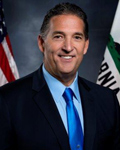
Ask Maddy about Jim Frazier
Scope: california
Hi! I can help you understand Jim Frazier's legislative record. What would you like to know?
Try one of these
i
Maddy answers using official bill text and legislative records. Always verify before sharing.
Sources cited inline