Issue · Technology

Technology (Social Media)

Every technology bill, vote, and legislator stance in California, automatically classified by Maddy, our AI policy reader.

Total bills
24
2025-2026 Regular Session
Top supporter
Christopher Cabaldon
100% support rate
Top opponent
Ali Macedo
0% support rate
Ranked legislators
10
5 support · 5 oppose
Key legislators

Who's moving social media in California

Legislators moving social media in California
Legislator Party Stance Support rate Votes
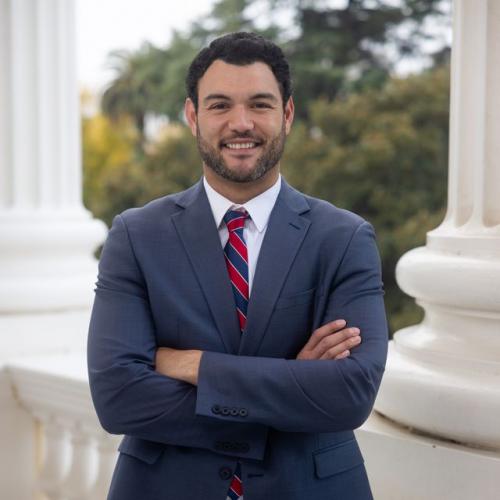
Christopher Cabaldon
Christopher Cabaldon Senate · District 3
D
Strong +
100% 16
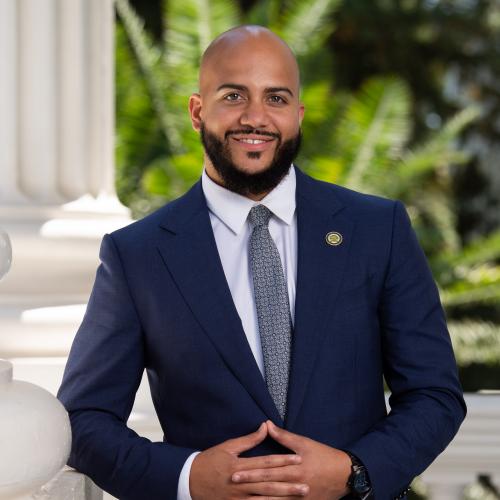
Aisha Wahab
Aisha Wahab Senate · District 10
D
Strong +
100% 14
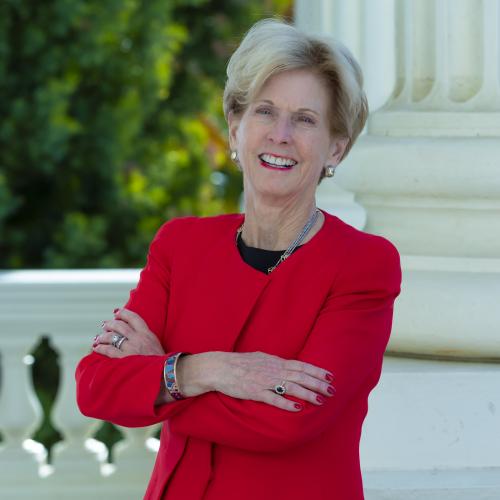
Gail Pellerin
Gail Pellerin House · District 28
D
Strong +
100% 14
Isaac Bryan
Isaac Bryan House · District 55
D
Strong +
100% 14
Buffy Wicks
Buffy Wicks House · District 14
D
Strong +
100% 13
Ali Macedo
Ali Macedo House · District 33
R
Strong −
0% 13
Kelly Seyarto
Kelly Seyarto Senate · District 32
R
Strong −
0% 12
Diane Dixon
Diane Dixon House · District 72
R
Strong −
0% 11
Carl DeMaio
Carl DeMaio House · District 75
R
Strong −
0% 10
David Tangipa
David Tangipa House · District 8
R
Strong −
0% 9
Showing 21–24 of 24 bills

All technology bills

signed · California · Assembly Oct 13, 2025

AB 1043: Age verification signals: software applications and online services.

Existing law generally provides protections for minors on the internet, including the California Age-Appropriate Design Code Act that, among other things, requires a business that provides an online service, product, or feature likely to be accessed by children to do certain things, including estimate the age of child users with a reasonable level of certainty appropriate to the risks that arise from the data management practices of the business or apply the privacy and data protections afforded to children to all consumers and prohibits an online service, product, or feature from, among other things, using dark patterns to lead or encourage children to provide personal information beyond what is reasonably expected to provide that online service, product, or feature or to forego privacy protections. This bill, beginning January 1, 2027, would require, among other things related to age verification with respect to software applications, an operating system provider, as defined, to provide an accessible interface at account setup that requires an account holder, as defined, to indicate the birth date, age, or both, of the user of that device for the purpose of providing a signal regarding the user's age bracket to applications available in a covered application store and to provide a developer, as defined, who has requested a signal with respect to a particular user with a digital signal via a reasonably consistent real-time application programming interface regarding whether a user is in any of several age brackets, as prescribed. The bill would require a developer to request a signal with respect to a particular user from an operating system provider or a covered application store when the application is downloaded and launched. This bill would prohibit an operating system provider or a covered application store from using data collected from a third party in an anticompetitive manner, as specified. This bill would punish noncompliance with a civil penalty to be enforced by the Attorney General, as prescribed. This bill would declare its provisions to be severable.
signed · California · Senate Oct 13, 2025

SB 243: Companion chatbots.

Existing law requires a social media platform to take various steps to prevent cyberbullying of minors on the platform, including by requiring the platform to establish a prominent mechanism within its internet-based service that allows any individual, whether or not that individual has a profile on the internet-based service, to report cyberbullying or any content that violates the existing terms of service related to cyberbullying. Existing law authorizes the State Department of Public Health to establish the Office of Suicide Prevention in the department, as prescribed. This bill would, among other things related to making a companion chatbot platform safer for users, if a reasonable person interacting with a companion chatbot would be misled to believe that the person is interacting with a human, require an operator of a companion chatbot platform to issue a clear and conspicuous notification indicating that the companion chatbot is artificially generated and not human. The bill would also require an operator to take certain actions with respect to a user the operator knows is a minor, including disclose to the user that the user is interacting with artificial intelligence. The bill would also require an operator to prevent a companion chatbot on its companion chatbot platform from engaging with users unless the operator maintains a protocol for preventing the production of suicidal ideation, suicide, or self-harm content to the user, as specified, and would require an operator to publish details on that protocol on the operator's internet website. This bill would, beginning July 1, 2027, require an operator to annually report to the Office of Suicide Prevention certain things, including protocols put in place to detect, remove, and respond to instances of suicidal ideation by users, and would require the office to post data from that report on its internet website. The bill would authorize a person who suffers injury in fact as a result of noncompliance with the bill to bring a certain civil action.
signed · California · Assembly Oct 13, 2025

AB 56: Social media: warning labels.

Existing law generally regulates social media platforms, including, among other laws, the Protecting Our Kids from Social Media Addiction Act that prohibits an operator of an addictive internet-based service or application, including a social media platform, from providing an addictive feed, as defined, to a minor user, except as prescribed. This bill would enact the Social Media Warning Law that would require a covered platform, as defined, to display a certain black box warning to certain users each day the user initially accesses the social media platform, again after 3 hours of cumulative active use, and thereafter at least once per hour of cumulative active use, as prescribed. This bill would specify that its provisions shall not be interpreted to serve as the basis for a private right of action, as specified. The bill would make its provisions operative on January 1, 2027, and would declare these provisions severable.
Sub-Topics Social Media
signed · California · Assembly Oct 13, 2025

AB 853: California AI Transparency Act.

The California AI Transparency Act requires a person that creates, codes, or otherwise produces a generative artificial intelligence system that has over 1,000,000 monthly visitors or users and is publicly accessible within the geographic boundaries of the state to make available an AI detection tool at no cost to the user that, among other things, allows a user to assess whether image, video, or audio content, or content that is a combination thereof, was created or altered by that person's generative artificial intelligence system and outputs any system provenance data that is detected in the content. Existing law makes the California AI Transparency Act operative on January 1, 2026. This bill would delay the operation of the California AI Transparency Act until August 2, 2026. This bill would, beginning January 1, 2027, additionally require a large online platform, as defined, to, among other things related to the provenance of content on the platform, detect whether any provenance data that is compliant with widely adopted specifications adopted by an established standards-setting body is embedded into or attached to content distributed on the large online platform. The bill would also require, beginning January 1, 2028, a capture device manufacturer, with respect to any capture device the capture device manufacturer first produced for sale in the state on or after January 1, 2028, to, among other things, provide a user with the option to include a latent disclosure in content captured by the capture device that conveys certain information, including the name of the capture device manufacturer. The bill would define "capture device" to mean a device that can record photographs, audio, or video content, including, but not limited to, video and still photography cameras, mobile phones with built-in cameras or microphones, and voice recorders. Existing law requires a covered provider to include a latent disclosure in AI-generated image, video, or audio content, or content that is any combination thereof, created by the covered provider's GenAI system that, among other things, conveys certain information and is permanent or extraordinarily difficult to remove, to the extent it is technically feasible. This bill would, beginning January 1, 2027, prohibit a GenAI system hosting platform, as defined, from knowingly making available a GenAI system that does not place disclosures, pursuant to those provisions. This bill would declare that its provisions are severable.
Showing 21 to 24 of 24 bills