Issue · Labor & Employment

Labor & Employment (Minimum Wage)

Every labor & employment bill, vote, and legislator stance in California, automatically classified by Maddy, our AI policy reader.

Total bills
7
2025-2026 Regular Session
Top supporter
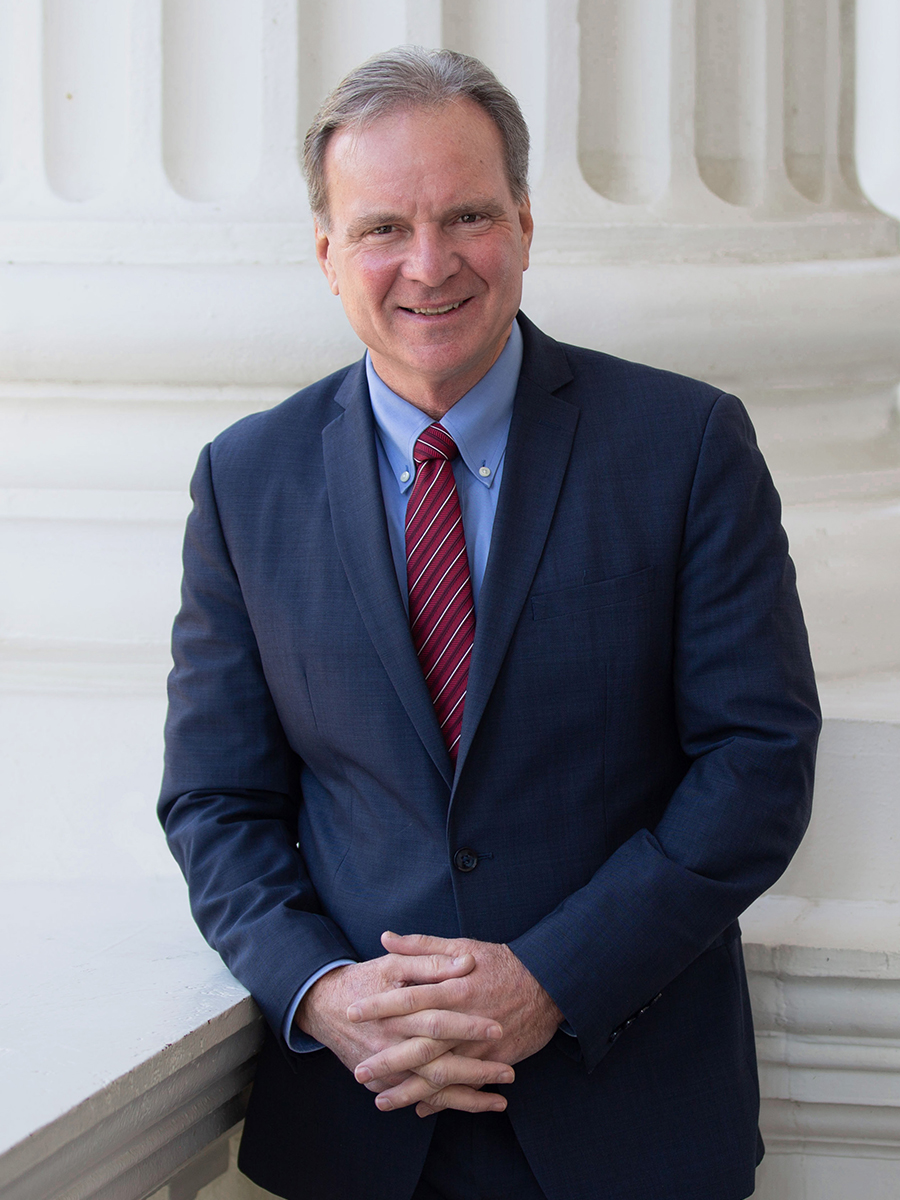
Dave Cortese
100% support rate
Top opponent
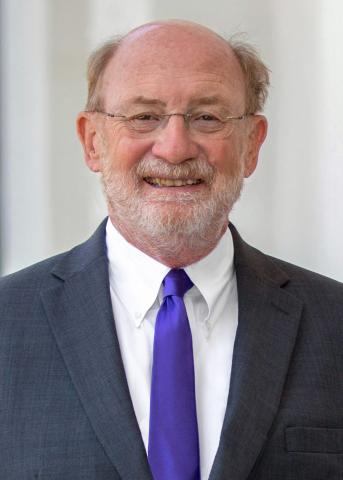
Kelly Seyarto
0% support rate
Ranked legislators
10
5 support · 5 oppose
Key legislators

Who's moving minimum wage in California

Legislators moving minimum wage in California
Legislator Party Stance Support rate Votes
Dave Cortese
Dave Cortese Senate · District 15
D
Strong +
100% 9
John Laird
John Laird Senate · District 17
D
Strong +
100% 9
Laura Richardson
Laura Richardson Senate · District 35
D
Strong +
100% 9
ME
María Elena Durazo Senate · District 26
D
Strong +
100% 9
Tim Grayson
Tim Grayson Senate · District 9
D
Strong +
100% 9
Kelly Seyarto
Kelly Seyarto Senate · District 32
R
Strong −
0% 9
Tony Strickland
Tony Strickland Senate · District 36
R
Strong −
0% 9
Suzette Valladares
Suzette Valladares Senate · District 23
R
Strong −
0% 6
Diane Dixon
Diane Dixon House · District 72
R
Strong −
0% 5
Marie Alvarado-Gil
Marie Alvarado-Gil Senate · District 4
R
Strong −
0% 5
Showing 7 of 7 bills

All labor & employment bills

passed · California · Senate Aug 13, 2026

SB 1185: Pharmaceutical facilities: skilled and trained workforce.

Existing law requires a skilled and trained workforce to be used in the construction, alteration, demolition, installation, repair, or maintenance work of certain public works and privately-owned facilities engaged in certain petroleum-related activities, manufacturing hydrogen, biofuels, or certain specified chemicals, or capturing, sequestering, or using carbon dioxide, as specified. Existing law defines "skilled and trained workforce" to include, among other criteria, skilled journeypersons who are paid at least a rate equivalent to the applicable prevailing hourly wage rate. This bill would require an owner, operator, or developer of a facility that will be used for the research, development, or production of pharmaceutical products to, when contracting for the performance of construction, alteration, demolition, installation, repair, or maintenance work on the facility, require that its contractors and subcontractors use a skilled and trained workforce to perform all onsite work within an apprenticeable occupation in the building and construction trades, and would require all contractors and subcontractors performing the work to use a skilled and trained workforce. The bill would require the owner, operator, or developer of the facility to provide to the Labor Commissioner a monthly report demonstrating compliance with the bill's provisions that includes, among other things, the full name and other identifying information relating to each worker relied on to satisfy the apprenticeship graduation percentage requirements. If the Labor Commissioner determines that a contractor or subcontractor failed to use a skilled and trained workforce, the bill would require the contractor or subcontractor to forfeit, as a civil penalty to the state, up to $5,000 per month of work performed for a first violation, and, for a second or subsequent violation, up to $10,000 per month of work performed. The bill would authorize the Labor Commissioner to reduce or waive the penalty under specified circumstances.
passed both · California · Assembly Aug 25, 2026

AB 2646: Employment: minimum wages: agricultural workers.

Existing law establishes a minimum wage for all industries and imposes criminal penalties for violation of these wage provisions. Existing law authorizes the Labor Commissioner to collect due and unpaid wages or benefits on behalf of workers. Under existing law, the commissioner acts as trustee and deposits collected wages and benefits into the Industrial Relations Unpaid Wage Fund, which is continuously appropriated for the purpose of remitting the collected wages or benefits. This bill would require the minimum hourly wage for an approved agricultural employee and corresponding employee, as defined, to be $19.75 per hour. Commencing January 1, 2027, and each January thereafter, the bill would require the above-described minimum hourly wage to be adjusted by an amount equal to the cost-of-living adjustment for social security benefits, as specified. By expanding the scope of a crime, the bill would impose a state-mandated local program. By increasing the revenue to the Industrial Relations Unpaid Wage Fund, a continuously appropriated fund, and expanding the purposes for which moneys in that fund may be used, the bill would make an appropriation. The California Constitution requires the state to reimburse local agencies and school districts for certain costs mandated by the state. Statutory provisions establish procedures for making that reimbursement. This bill would provide that no reimbursement is required by this act for a specified reason.
passed · California · Senate Jun 18, 2026

SB 1177: Wage statements: airline cabin crew employees.

Existing law requires an employer, semimonthly or at the time of payment of wages, to furnish an employee an accurate, itemized, written statement containing specified information regarding the amounts earned, hours worked, and the employee's identity, among other things, subject to certain variations. Existing law provides that an itemized wage statement furnished by an employer pursuant to these provisions is not required to show total hours worked by the employee if, among other things, the employee is exempt from the payment of minimum wage and overtime under specified law. Existing federal law, the Railway Labor Act, regulates labor relations for rail and air carriers and entitles employees to organize and bargain collectively. This bill would provide that an itemized wage statement may, in lieu of total hours worked, show all applicable hourly rates in effect during the pay period and the corresponding number of hours worked at each hourly rate if the employee is a flight deck crewmember or cabin crewmember covered by the federal Railway Labor Act and the employer makes available certain information regarding duty hours in accordance with federal regulations, as specified. The bill would also provide that an itemized wage statement may not be required to show the number of piece-rate units earned and any applicable piece rate for a covered employee under specified circumstances. The bill would prohibit a person, commencing June 11, 2026, from filing a new legal action by or on behalf of a crewmember asserting specified violations of the wage statement requirements.
in committee · California · Assembly May 14, 2026

AB 2205: Personal Income Tax Law: Corporation Tax Law: New Employment Credit.

The Personal Income Tax Law and the Corporation Tax Law allow various credits against the taxes imposed by those laws, including, for taxable years beginning on or after January 1, 2014, and before January 1, 2026, a credit for hiring qualified full-time employees, as defined, within a designated census tract or economic development area in an amount equal to 35% of the qualified wages, defined in part as those wages that exceed 150% of minimum wage but do not exceed 350% of minimum wage, paid to those employees multiplied by the applicable percentage for that taxable year. Existing law exempts certain taxpayers from the above-described census tract or economic development area requirement, as specified, and disallows the above-described credit for specified businesses. Existing law repeals the above-described provisions on December 1, 2029. This bill would extend the operative date for the above-described tax credits through taxable years beginning before January 1, 2031. The bill would extend the above-described repeal date to December 1, 2034. Existing law requires any bill authorizing a new tax expenditure to contain, among other things, specific goals that the tax expenditure will achieve, detailed performance indicators, and data collection requirements. This bill also would include additional information required for any bill authorizing a new tax expenditure. This bill would take effect immediately as a tax levy.
failed · California · Assembly Feb 2, 2026

AB 398: Personal income tax: Earned Income Tax Credit.

The Personal Income Tax Law, in modified conformity with federal income tax laws, allows an earned income tax credit against personal income tax and a payment from the Tax Relief and Refund Account, a continuously appropriated fund, for an allowable credit in excess of tax liability to an eligible individual that is equal to that portion of the earned income tax credit allowed by federal law, as determined by the earned income tax credit adjustment factor, as specified. The law provides that the amount of the credit is calculated as a percentage of the eligible individual's earned income and is phased out above a specified amount as income increases, and provides alternative calculation factors under specified circumstances. Existing law, for taxable years beginning on or after January 1, 2020, and until and including the taxable year in which the minimum wage is set at $15 per hour, requires the phaseout percentage for eligible individuals to be recalculated by the Franchise Tax Board so that the calculated amount of credit for a taxpayer with an earned income of $30,000 is equal to zero. This bill, for taxable years beginning on or after January 1, 2025, if the amount of credit computed for an eligible individual is less than $355, as specified, would allow the credit for the eligible individual to be $355 instead, except as otherwise specified. By authorizing additional payments from a continuously appropriated account, this bill would make an appropriation. Existing law requires any bill authorizing a new tax expenditure to contain, among other things, specific goals that the tax expenditure will achieve, detailed performance indicators, and data collection requirements. This bill also would include additional information required for any bill authorizing a new tax expenditure.
failed · California · Senate Feb 2, 2026

SB 77: State vehicle fleet: light-duty vehicles: raw materials: child labor.

Existing law requires the Department of General Services, beginning no later than the 2024–25 fiscal year, to ensure that at least 50% of the light-duty vehicles purchased for the state vehicle fleet each fiscal year are zero-emission vehicles, except as provided. If the department determines that it cannot meet the needs of the state while fulfilling that requirement, existing law requires the department to cease implementing that requirement, as specified. This bill would require the department to require a supplier of light-duty vehicles purchased for the state vehicle fleet to certify that the raw materials used in the manufacturing of the light-duty vehicles, including, but not limited to, aluminum, cobalt and lithium, come from mining operations that are free of child labor, except as specified. The bill would require the supplier of light-duty vehicles purchased for the state vehicle fleet to provide to the department the locations where the raw materials used in the production of the light-duty vehicles were mined and the average hourly wage of the workers that mined the raw materials, and would require the department to post on its internet website that information provided by the supplier and a list of the light-duty vehicles purchased for the state vehicle fleet that are certified to be made with raw materials that come from mining operations that are free of child labor.
signed · California · Senate Oct 8, 2025

SB 642: Employment: payment of wages.

Existing law imposes varying requirements upon employers to share the pay scale for a position with an applicant or in a job posting, as provided. Existing law defines "pay scale" as the salary or hourly wage range that the employer reasonably expects to pay for the position. This bill would revise the definition of "pay scale" to mean an estimate of this expected wage range that an employer reasonably expects to pay for the position upon hire and is made in good faith. Existing law prohibits an employer from paying its employees at wage rates less than the rates paid to employees of the opposite sex or another race or ethnicity for substantially similar work, except under specified circumstances. Existing law requires a civil action to recover wages for a violation of those provisions to be commenced no later than 2 years after the cause of action occurs or, if the cause of action arises out of a willful violation, no later than 3 years after the cause of action occurs. This bill would prohibit an employer from paying employees at wage rates less than the rates paid to employees of another sex instead of the opposite sex, and would require a civil action to recover wages to be commenced no later than 3 years after the last date the cause of action occurs. The bill would provide that an employee is entitled to obtain relief for the entire period of time in which a violation of its provisions exists, but not to exceed 6 years. This bill would specify that a cause of action occurs when an alleged unlawful compensation decision or practice is adopted, when an individual becomes subject to the decision or practice, or when an individual is affected by the application of the decision or practice. The bill would provide that its provisions do not prohibit the application of prescribed legal doctrine. The bill would define "wages," "wage rates," and "sex" for purposes of those provisions, and would specify that its provisions shall not be construed to define these terms for other purposes.