Issue · Labor & Employment

Labor & Employment

Every labor & employment bill, vote, and legislator stance in California, automatically classified by Maddy, our AI policy reader.

Total bills
258
2025-2026 Regular Session
Top supporter
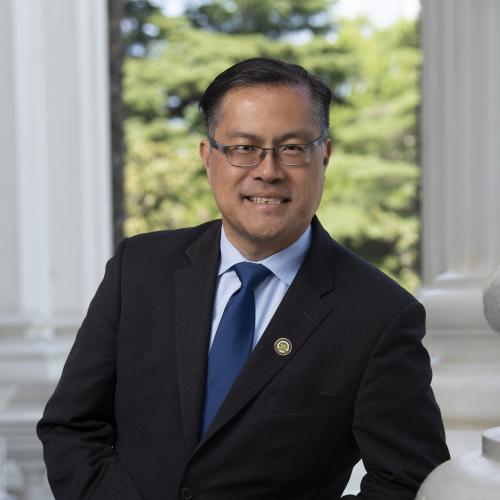
Mike Fong
100% support rate
Top opponent
Natasha Johnson
0% support rate
Ranked legislators
10
5 support · 5 oppose
Key legislators

Who's moving labor & employment in California

Legislators moving labor & employment in California
Legislator Party Stance Support rate Votes
Mike Fong
Mike Fong House · District 49
D
Strong +
100% 538
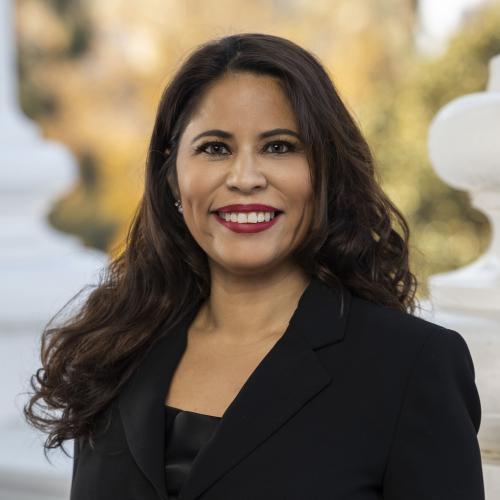
Celeste Rodriguez
Celeste Rodriguez House · District 43
D
Strong +
100% 301
JS
José Solache House · District 62
D
Strong +
100% 504
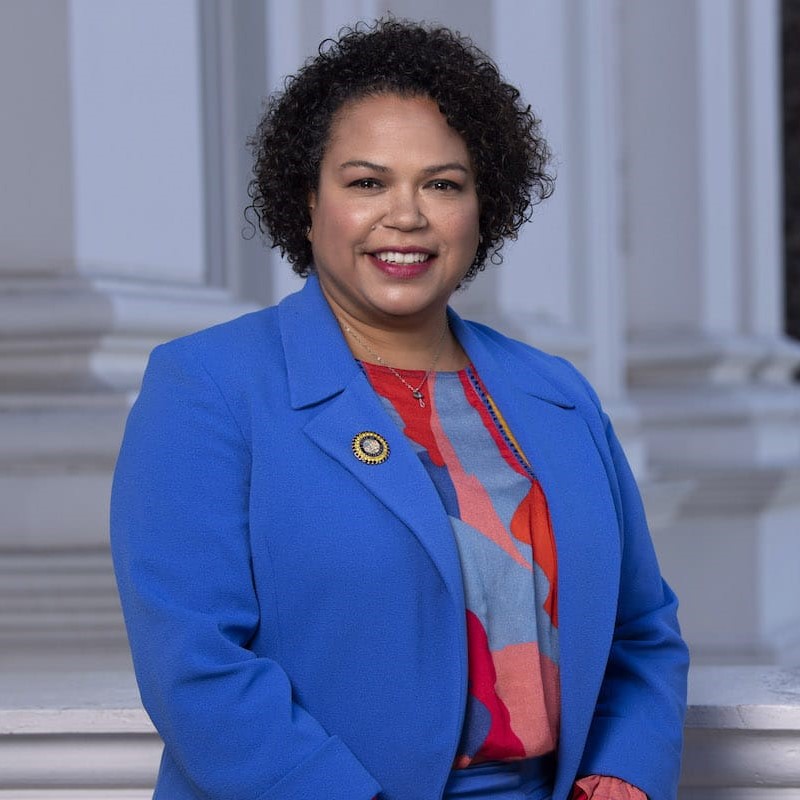
Liz Ortega
Liz Ortega House · District 20
D
Strong +
100% 391
Mia Bonta
Mia Bonta House · District 18
D
Strong +
100% 368
Natasha Johnson
Natasha Johnson House · District 63
R
Strong −
0% 231
Carl DeMaio
Carl DeMaio House · District 75
R
Strong −
0% 401
Stan Ellis
Stan Ellis House · District 32
R
Strong −
0% 365
Kelly Seyarto
Kelly Seyarto Senate · District 32
R
Strong −
1% 638
Diane Dixon
Diane Dixon House · District 72
R
Strong −
1% 532
Showing 141–150 of 258 bills

All labor & employment bills

vetoed · California · Assembly Jan 22, 2026

AB 1309: State employees: compensation: firefighters.

Existing law provides that in order for the state to recruit skilled firefighters for the Department of Forestry and Fire Protection, it is the policy of the state to consider prevailing salaries and benefits prior to making salary recommendations. Existing law requires the Department of Human Resources, in order to provide comparability in pay, to take into consideration the salary and benefits of other jurisdictions employing 75 or more full-time firefighters who work in California. This bill would require the state to pay firefighters who are rank-and-file members of State Bargaining Unit 8, employed by the Department of Forestry and Fire Protection, within 15% of the average salary for corresponding ranks in 20 listed California fire departments. The bill would require the state and the exclusive representative for State Bargaining Unit 8 to jointly survey annually and calculate the estimated average salaries for those fire departments. The bill would also require the Department of Human Resources, on or before January 1, 2027, to conduct and report to the Department of Forestry and Fire Protection a cursory survey on the salaries and benefits for the prior year of each of the fire chiefs for 5 listed California fire departments. The bill would provide that when determining compensation for uniformed classifications of the Department of Forestry and Fire Protection, it is the policy of the state to consider the salary of corresponding ranks within the comparable jurisdictions listed, as well as other factors, including internal comparisons. The bill would require any salary increase for firefighters under these provisions to be implemented through a memorandum of understanding, in accordance with specified procedures governing collective bargaining agreements. The bill would include legislative findings and declarations related to its provisions.
signed · California · Senate Oct 13, 2025

SB 62: Health care coverage: essential health benefits.

Existing law, the Knox-Keene Health Care Service Plan Act of 1975, requires the Department of Managed Health Care to license and regulate health care service plans and makes a willful violation of the act a crime. Existing law requires an individual or small group health care service plan contract issued, amended, or renewed on or after January 1, 2017, to include, at a minimum, coverage for essential health benefits pursuant to the federal Patient Protection and Affordable Care Act. Existing law requires a health care service plan contract to cover the same health benefits that the benchmark plan, the Kaiser Foundation Health Plan Small Group HMO 30 plan, offered during the first quarter of 2014, as specified. This bill would express the intent of the Legislature to review California's essential health benefits benchmark plan and establish a new benchmark plan for the 2027 plan year for health care service plans. The bill would require, commencing January 1, 2027, if the United States Department of Health and Human Services approves a new essential health benefits benchmark plan for the state, as specified, the benchmark plan for health care service plans to include certain additional benefits, including coverage for specified fertility services and specified durable medical equipment. Because a violation of the bill by a health care service plan would be a crime, the bill would impose a state-mandated local program. The California Constitution requires the state to reimburse local agencies and school districts for certain costs mandated by the state. Statutory provisions establish procedures for making that reimbursement. This bill would provide that no reimbursement is required by this act for a specified reason.
Sub-Topics Insurance
passed · California · Assembly Aug 29, 2025

AB 694: Department of Industrial Relations: advisory committee: occupational safety and health.

Existing law establishes the Division of Occupational Safety and Health in the Department of Industrial Relations, and charges the division with the enforcement of various laws affecting safe working conditions, including the California Occupational Safety and Health Act of 1973. Existing law requires the Director of Industrial Relations to prepare and submit to the Legislature an annual report on the activities of the Division of Occupational Safety and Health, as specified. Existing law establishes the University of California, under the administration of the Regents of the University of California, as one of the segments of postsecondary education in the state. Existing law requires the Department of Industrial Relations to contract with the University of California, Los Angeles Labor Center, to conduct a study evaluating opportunities to improve worker safety and safeguard employment rights, as specified, and to convene an advisory committee to make recommendations regarding the scope of the study, as described. This bill would require the department, upon appropriation by the Legislature, to contract with the University of California, Berkeley Labor Occupational Health Program and the University of California, Los Angeles Labor Occupational Safety and Health Program to conduct a study to evaluate the understaffing and vacancies within the division and make recommendations to the department, the Department of Human Resources, and the Legislature on policies the state shall use to inform the consideration and establishment of career pathways to the Compliance Safety and Health Officer classification. The bill would authorize the University of California to subcontract the responsibility for conducting the study to other specified entities. The bill would require the University of California and its subcontractors, if any, to issue a report that includes certain information about the understaffing and vacancies of Compliance Safety and Health Officers within the division. The bill would further require the University of California to convene an advisory committee consisting of members from specified state agencies, worker advocacy organizations, other academic institutions, and other entities, as specified, to make recommendations regarding the scope of the above-described study, and provide specified findings and recommendations to the division, as prescribed. The bill would require the advisory committee, within 60 days of entering into the contract the University of California, to hold at least one meeting, and the department, 18 months after entering into the contract with the University of California, to post the completed report on the division's internet website and to forward the completed report to the members of the advisory committee, the Governor, and specified legislative committee chairs. The bill would define terms for these purposes, and include finding and declaration relating to these provisions.
Sub-Topics Workplace Safety
signed · California · Senate Jul 30, 2025

SB 693: Employees: meal periods.

Existing law generally prohibits an employer from employing an employee for a work period of more than 5 hours per day without providing the employee with a meal period of not less than 30 minutes. Existing law creates exceptions from this prohibition for employees in specified occupations, including employees of an electrical corporation, a gas corporation, or a local publicly owned electric utility covered by a valid collective bargaining agreement meeting certain conditions. Existing law charges the Labor Commissioner with enforcement of these provisions. This bill would also create an exception from the above-described prohibition for employees of a water corporation, as defined.
passed both · California · Assembly Aug 25, 2026

AB 1440: Pesticide testing.

Existing law requires the Director of Pesticide Regulation to adopt regulations relating to worker health in areas where pesticides are used so that pesticide residue levels are not a significant factor in cholinesterase depression or other health effects. Existing law requires that an employer who has an employee who regularly handles pesticides have an agreement with a medical supervisor who is registered with the Office of Environmental Health Hazard Assessment (OEHHA) . Existing law requires that a laboratory that performs tests ordered by a medical supervisor report specified information to the Department of Pesticide Regulation on, at a minimum, a monthly basis. Existing law requires that the reports be submitted via electronic media and formatted in a manner approved by the director. Existing law requires the Department of Pesticide Regulation to share information from cholinesterase reports with the OEHHA and the State Department of Public Health on an ongoing basis, in an electronic format. Existing law requires the registered medical supervisor ordering a cholinesterase test to note in the test order the name of the medical supervisor and the purpose of the test, and ensure that the person tested and the employer receive a copy of the cholinesterase test results and any recommendations from the medical supervisor based upon those results within 14 days of the medical supervisor's receipt of the results. Existing law requires the medical supervisor to report any worker with cholinesterase depression indicating pesticide exposure to the local health officer within 24 hours. These provisions are operative until January 1, 2027. This bill would extend these provisions until January 1, 2030.
Sub-Topics Public Health
passed · California · Assembly Aug 29, 2025

AB 824: Protective orders: firearms and ammunition.

(1) Existing law establishes procedures by which a person may petition the court for certain protective or restraining orders, including civil harassment restraining orders, domestic violence restraining orders, elder or dependent adult abuse restraining orders, gun violence restraining orders, postsecondary school restraining orders, and workplace violence restraining orders, to enjoin a restrained person from taking specified actions. Beginning January 1, 2026, upon a court's issuance of such a protective order, existing law will require the restrained person to relinquish any firearm and ammunition in that person's immediate possession or control, according to specified procedures. Existing law prescribes procedures by which the restrained person must certify compliance with the court, and for the court to determine, by a preponderance of the evidence, whether the person has a firearm in violation of the order. This bill would make clarifying and conforming changes to the procedures relating to the protective or restraining orders described above by explicitly requiring the restrained person to relinquish, in addition to any firearm, any ammunition in that person's immediate possession or control. The bill would require courts to permit a party, support person, or witness to appear remotely at a hearing for a postsecondary educational institution or workplace violence restraining order at no cost. This bill would also require courts to develop rules and instructions for such remote appearances and to post them on its website. (2) Existing law requires a peace officer who is at the scene of a domestic violence incident or enforcing a domestic violence restraining order or gun violence restraining order to take temporary custody of any firearm or other deadly weapon in plain sight or discovered pursuant to a consensual or otherwise lawful search, as specified. This bill would additionally require a peace officer to take temporary custody of any ammunition in plain sight or discovered pursuant to such a search. By expanding the duties of local law enforcement agencies, this bill would impose a state-mandated local program. The California Constitution requires the state to reimburse local agencies and school districts for certain costs mandated by the state. Statutory provisions establish procedures for making that reimbursement. This bill would provide that, if the Commission on State Mandates determines that the bill contains costs mandated by the state, reimbursement for those costs shall be made pursuant to the statutory provisions noted above.
passed · California · Assembly Aug 29, 2025

AB 340: Employer-employee relations: confidential communications.

Existing law that governs the labor relations of public employees and employers, including, among others, the Meyers-Milias-Brown Act, the Ralph C. Dills Act, provisions relating to public schools, and provisions relating to higher education, prohibits employers from taking certain actions relating to employee organization, including imposing or threatening to impose reprisals on employees, discriminating or threatening to discriminate against employees, or otherwise interfering with, restraining, or coercing employees because of their exercise of their guaranteed rights. Those provisions of existing law further prohibit denying to employee organizations the rights guaranteed to them by existing law. This bill would prohibit a public employer from questioning a public employee, a representative of a recognized employee organization, or an exclusive representative regarding communications made in confidence between an employee and an employee representative in connection with representation relating to any matter within the scope of the recognized employee organization's representation. The bill would also prohibit a public employer from compelling a public employee, a representative of a recognized employee organization, or an exclusive representative to disclose those confidential communications to a third party. The bill would not apply to a criminal investigation or when a public safety officer is under investigation and certain circumstances exist.
Sub-Topics Public Employees
signed · California · Senate Jul 30, 2025

SB 648: Employment: gratuities: enforcement.

Existing law creates the Department of Industrial Relations, and establishes within the department the Division of Labor Standards Enforcement (DLSE) , which is headed by the Labor Commissioner. The DLSE is generally charged with enforcing employment statutes and regulations, either in administrative actions or through litigation. Existing law imposes various administrative sanctions, civil fines and penalties, and criminal penalties for violations of employment statutes or regulations. Existing law prohibits an employer or agent from collecting, taking, or receiving any gratuity or a part thereof that is paid, given to, or left for an employee by a patron, or deducting any amount from wages due an employee on account of a gratuity, or requiring an employee to credit the amount, or any part thereof, of a gratuity against and as a part of the wages due the employee from the employer, and requires the Department of Industrial Relations to enforce these provisions. This bill would authorize the Labor Commissioner to investigate and issue a citation or file a civil action for gratuities taken or withheld in violation of the above-described provisions, as prescribed.
Sub-Topics Labor Standards
failed · California · Assembly Feb 2, 2026

AB 398: Personal income tax: Earned Income Tax Credit.

The Personal Income Tax Law, in modified conformity with federal income tax laws, allows an earned income tax credit against personal income tax and a payment from the Tax Relief and Refund Account, a continuously appropriated fund, for an allowable credit in excess of tax liability to an eligible individual that is equal to that portion of the earned income tax credit allowed by federal law, as determined by the earned income tax credit adjustment factor, as specified. The law provides that the amount of the credit is calculated as a percentage of the eligible individual's earned income and is phased out above a specified amount as income increases, and provides alternative calculation factors under specified circumstances. Existing law, for taxable years beginning on or after January 1, 2020, and until and including the taxable year in which the minimum wage is set at $15 per hour, requires the phaseout percentage for eligible individuals to be recalculated by the Franchise Tax Board so that the calculated amount of credit for a taxpayer with an earned income of $30,000 is equal to zero. This bill, for taxable years beginning on or after January 1, 2025, if the amount of credit computed for an eligible individual is less than $355, as specified, would allow the credit for the eligible individual to be $355 instead, except as otherwise specified. By authorizing additional payments from a continuously appropriated account, this bill would make an appropriation. Existing law requires any bill authorizing a new tax expenditure to contain, among other things, specific goals that the tax expenditure will achieve, detailed performance indicators, and data collection requirements. This bill also would include additional information required for any bill authorizing a new tax expenditure.
signed · California · Senate Jan 28, 2026

SJR 9: Immigrants in California: mass immigration raids.

This measure would strongly condemn and denounce mass immigration raids that target immigrant workers and families in California and the engagement of the military in immigration enforcement operations and in response to community protests. This measure would affirm support for safeguarding the rights and safety of all Californians, regardless of immigration status, and support, among other things, the expansion of legal services and emergency response resources to protect workers, children, and families affected by immigration enforcement.
Showing 141 to 150 of 258 bills
Previous 1 14 15 16 26 Next