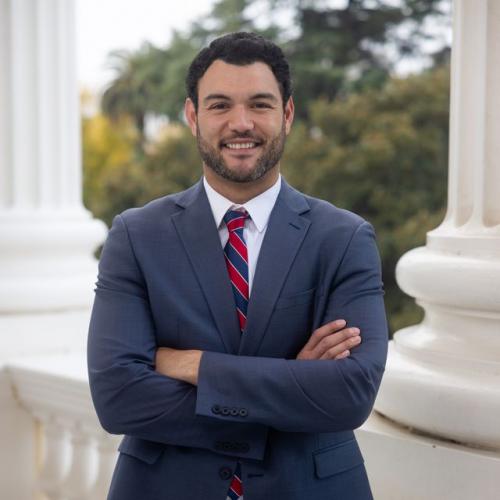
Senate Resolution 108 formally recognizes May 5, 2026, as World Asthma Day in California. The measure highlights the disproportionate impact of asthma on vulnerable populations, including communities of color and farmworker families, who face higher risks due to poor air quality and limited healthcare access. While the resolution does not create new laws, it expresses the Senate's support for asthma education, improved air quality standards, and evidence-based management practices in schools and healthcare settings. Additionally, the bill honors the Central California Asthma Collaborative for its work in community health programs.
Existing law establishes a system of public elementary and secondary education in this state. Under this system, local educational agencies throughout the state provide instruction to pupils in kindergarten and grades 1 to 12, inclusive, and existing law establishes courses of study for those pupils. This bill would encourage school districts, county offices of education, and charter schools to integrate outdoor learning into standards-aligned instruction across all grades and subject areas, as provided. Existing law establishes the State Department of Education under the administration of the Superintendent of Public Instruction, and assigns the department numerous duties relating to the governance and funding of local educational agencies. This bill would require the department, on or before July 1, 2028, to curate and maintain on its internet website resources for educators on outdoor learning. The bill would also encourage the department, in carrying out these provisions, to consult with county offices of education, classroom educators, tribal partners, mental and physical health professionals and researchers, environmental literacy experts, and community organizations with experience in outdoor learning. The bill would authorize the department to provide resources to address the particular needs of each local educational agency. The bill would authorize the department to accept voluntary contributions to be deposited into the Outdoor Learning and Environmental Literacy Account, which the bill would create in the State Treasury, to fund, upon appropriation by the Legislature, the costs of these provisions.
Existing law establishes the Natural Resources Agency, composed of departments, boards, conservancies, and commissions responsible for the restoration, protection, and management of the state's natural and cultural resources. This bill would authorize the Secretary of the Natural Resources Agency to appoint an individual or to identify one or more University of California centers to oversee and administer a Secretariat for International Climate Coordination and Cooperation to assist the legislative and executive branches' engagement in international climate policy, as specified.
The Western Joshua Tree Conservation Act prohibits any person or public agency from importing into the state, exporting out of the state, or taking, possessing, purchasing, or selling within the state, a western Joshua tree or any part or product of the tree, except as specified. The act authorizes the Department of Fish and Wildlife to permit the taking of a western Joshua tree if specified conditions are met, including, but not limited to, that the permittee mitigates all impacts to, and taking of, the western Joshua tree through measures that are roughly proportional in extent to the impact of the authorized taking of the western Joshua tree. The act authorizes, in lieu of completing the mitigation measures, a permittee to elect to satisfy the mitigation obligation by paying fees pursuant to a specified fee schedule, as provided. Existing law authorizes the department to include permit conditions that require the permittee to relocate one or more of the western Joshua trees, as specified. Existing law requires the department to adopt guidelines and relocation protocols, based on the best available science, to relocate western Joshua trees successfully. This bill would authorize the department to authorize, by permit, and without payment of fees or other mitigation, the relocation of up to 10 individual western Joshua trees from a parcel, as provided. The bill would require a person seeking a relocation permit to submit a permit application to the department and meet certain conditions including, among other conditions, that the tree identified in the application would be relocated within 2.5 kilometers of its original location and that the relocation be consistent with the guidelines and relocation protocols adopted by the department. The bill would require the department to maintain a list of relocation permits issued pursuant to this authority and sufficient information regarding each relocation to be able to assess the success or failure of the relocation and the factors contributing to that success or failure.
The California Environmental Quality Act (CEQA) requires a lead agency, as defined, to prepare, or cause to be prepared, and certify the completion of, an environmental impact report (EIR) on a project that it proposes to carry out or approve that may have a significant effect on the environment or to adopt a negative declaration if it finds that the project will not have that effect. CEQA also requires a lead agency to prepare a mitigated negative declaration for a project that may have a significant effect on the environment if revisions in the project would avoid or mitigate that effect and there is no substantial evidence that the project, as revised, would have a significant effect on the environment. CEQA requires a lead agency, before releasing an environmental review document for a project, to begin consultation with a California Native American tribe that is traditionally and culturally affiliated with the geographic area of the proposed project, as provided. CEQA authorizes the parties, as a part of the consultation, to propose mitigation measures capable of avoiding or substantially lessening potential significant impacts to a tribal cultural resource or alternatives that would avoid significant impacts to a tribal cultural resource. CEQA defines a tribal cultural resource as including, among other things, a site, feature, place, cultural landscape, sacred place, or object with cultural value to a California Native American tribe that is included or determined to be eligible for inclusion in the California Register of Historical Resources or included in a local register of historical resources, as provided. This bill would modify the definition of tribal cultural resource to, among other things, include a site, feature, place, cultural landscape, sacred place, or object with cultural value to a California Native American tribe that is identified by the Native American Heritage Commission as a sacred place, as provided, or included in a local tribal register and provided to the lead agency by a consulting California Native American tribe. CEQA requires public agencies, when feasible, to avoid damaging effects to tribal cultural resources and specifies mitigation measures that may be considered to avoid or minimize significant adverse impacts to tribal cultural resources if the consultation process fails to result in agreed-upon mitigation measures. This bill would revise and recast those provisions to instead require a lead agency, when feasible, to adopt mitigation measures, as provided, to avoid or minimize the significant adverse impacts to tribal cultural resources. The bill would require avoidance and preservation of the resource in place to be considered when requested by the consulting California Native American tribe, and if avoidance and preservation are determined to not be feasible, the bill would require the lead agency to document the basis for that determination with substantial evidence and, when feasible, to incorporate other measures to avoid or minimize significant adverse impacts to the resource consistent with CEQA. The bill would authorize the consulting California Native American tribe to identify culturally appropriate mitigation measures, which the bill would require the lead agency to consider and incorporate, to the extent feasible, in developing mitigation and treatment measures. This bill would require the lead agency, if archaeological methods and standards are used in the identification of tribal cultural resources instead of tribal methods and standards or tribal traditional knowledge submitted by a California Native American tribe during tribal consultation, to explain its decision to use archaeological methods and standards. The bill would require the lead agency, if treatment and mitigation measures preferred and submitted by a California Native American tribe during tribal consultation are not recommended for adoption by the lead agency, to explain its decision. By imposing additional duties on local agencies in their implementation of CEQA, the bill would impose a state-mandated local program. The California Constitution requires the state to reimburse local agencies and school districts for certain costs mandated by the state. Statutory provisions establish procedures for making that reimbursement. This bill would provide that no reimbursement is required by this act for a specified reason.
(1) Existing law prohibits the dumping of waste matter upon a road or highway or in other locations, as specified. A violation of this prohibition, generally, is an infraction punishable by specified fines that escalate for subsequent convictions. Under existing law, the dumping of commercial quantities of waste, as defined, is punishable as a misdemeanor and also includes escalating fines. Under existing law, each day that waste is placed, deposited, or dumped in violation of these provisions is a separate violation. This bill would repeal that latter provision making each day a separate violation. The bill would increase the fine for the dumping of commercial quantities of waste from not less than $3,000 nor more than $6,000 to not less than $4,500 nor more than $8,000 for the 2nd conviction and from not less than $6,000 nor more than $10,000 to not less than $8,000 nor more than $10,000 for the 3rd and any subsequent convictions. The bill would increase the fine for the dumping of commercial quantities of waste by a business that employs more than 10 employees from not less than $3,000 nor more than $10,000 to not less than $6,000 nor more than $10,000 for the 2nd conviction and from not less than $6,000 nor more than $20,000 to not less than $15,000 nor more than $25,000 for the 3rd and any subsequent convictions. (2) Existing law establishes the Department of Resources Recycling and Recovery and vests the department with all of the authority, duties, powers, purposes, responsibilities, and jurisdiction of the former California Integrated Waste Management Board, except as specified. This bill would require the department to be the lead state agency to act as a resource for cities and counties to address illegal dumping and would require the department to create an internet website with resources to help cities and counties combat, prevent, and clean up illegal dumping, as specified.
Existing law requires the Wildfire and Forest Resilience Task Force to develop a comprehensive implementation strategy to track and ensure the achievement of the goals and key actions identified in the state's "Wildfire and Forest Resilience Action Plan," as provided. Existing law requires, on or before March 1, 2026, and every 5 years thereafter, the task force to update the action plan. This bill would require the task force, on or before July 1, 2028, and in cooperation with the Office of Environmental Health Hazard Assessment, the State Air Resources Board, and the State Department of Public Health, to assess the health costs and impacts of wildfire smoke using existing wildfire smoke and health data, as provided. The bill would require the task force, in developing this assessment, to, among other things, develop a model to determine the approximate health benefits of achieving the goals identified in the action plan and make recommendations on how the action plan can increase its health benefits. The bill would authorize the task force to enter into contracts with an independent group to assist with this assessment. The bill would require the task force to include this assessment and additional actions to reduce the health impact of wildfire smoke in the next update to the action plan, as provided.
Existing law, the California Clean Energy Jobs Act, expresses a goal of creating good-paying energy efficiency and clean energy jobs in California. Existing law establishes in state government the Labor and Workforce Development Agency, under the supervision of the Secretary of Labor and Workforce Development, which consists of the Office of the Secretary of Labor and Workforce Development and the California Workforce Development Board, among others. Existing law creates the position of Deputy Secretary for Climate within the agency, subject to appropriation by the Legislature, for the purpose of assisting in the oversight of California's workforce transition to a sustainable and equitable carbon neutral economy. This bill would, upon appropriation by the Legislature, establish an Electric Vehicle Economic Opportunity Zone (EVEOZ) for the County of Riverside, administered by the Labor and Workforce Development Agency, for the purpose of creating programs to make electric vehicle manufacturing jobs and education more accessible to lower income communities. The bill would require the agency to collaborate with the County of Riverside in determining the geographical boundaries of the EVEOZ. By imposing additional duties on local officials, the bill would impose a state-mandated local program. The bill would authorize the agency to partner with educational institutions, electric vehicle manufacturing businesses, and local and national financial intuitions to develop EVEOZ education, training, and investment programs, as specified. This bill would make legislative findings and declarations as to the necessity of a special statute for the County of Riverside. The California Constitution requires the state to reimburse local agencies and school districts for certain costs mandated by the state. Statutory provisions establish procedures for making that reimbursement. This bill would provide that, if the Commission on State Mandates determines that the bill contains costs mandated by the state, reimbursement for those costs shall be made pursuant to the statutory provisions noted above.
Existing law establishes the California Community Colleges, under the administration of the Board of Governors of the California Community Colleges, as one of the 3 segments of public postsecondary education in this state. Existing law establishes community college districts throughout the state, and authorizes them to provide instruction to students at community college campuses. One of these districts is the Los Angeles Community College District. Existing law appropriates $5,000,000 to the Los Angeles Community College District for the development and initial operations of the California Center for Climate Change Education at the West Los Angeles College with the mission to promote climate change education at the California Community Colleges and establish opportunities for students to engage in hands-on internships and other learning opportunities. This bill would codify the establishment of the center. This bill would make legislative findings and declarations as to the necessity of a special statute for the Los Angeles Community College District.
Existing law, the California Integrated Waste Management Act of 1989, administered by the Department of Resources Recycling and Recovery, establishes an integrated waste management program and requires the department to adopt rules and regulations, as necessary, to carry out the act. Existing law requires each city, county, and regional agency, if any, to develop a source reduction and recycling element, household hazardous waste element, and nondisposal facility element of an integrated waste management plan. The act requires the source reduction and recycling element to divert from disposal 50% of all solid waste subject to the element through source reduction, recycling, and composting activities, with specified exceptions. This bill would require a city or county that requires a refundable deposit, performance security, or similar financial guarantee as a condition of issuing a construction, demolition, or building permit for the purpose of ensuring compliance with a construction or demolition debris requirement to return the full amount of the deposit if documentation demonstrating compliance with the terms of the deposit is provided, as specified.