






Issue · Education

Education

Every education bill, vote, and legislator stance in California, automatically classified by Maddy, our AI policy reader.

Total bills
295
2025-2026 Regular Session
Top supporter
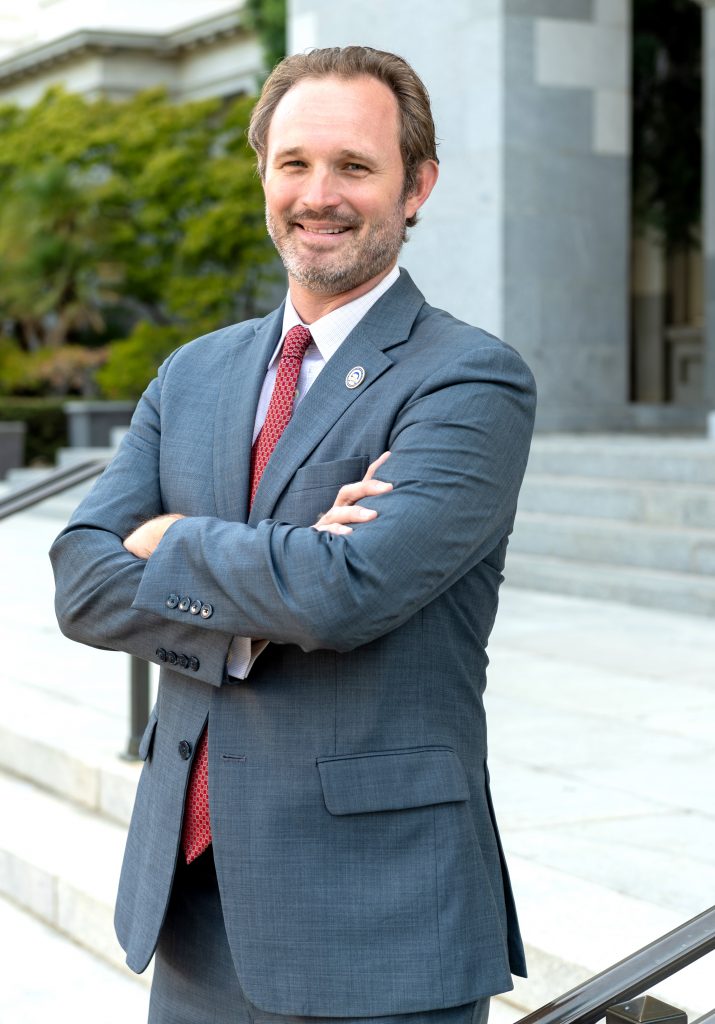
Pilar Schiavo
100% support rate
Top opponent
Stan Ellis
0% support rate
Ranked legislators
10
5 support · 5 oppose
Key legislators

Who's moving education in California

Legislators moving education in California
Legislator Party Stance Support rate Decisive votes
Pilar Schiavo
Pilar Schiavo House · District 40
D
Strong +
100% 54
Eloise Reyes
Eloise Reyes Senate · District 29
D
Strong +
100% 53
Cottie Petrie-Norris
Cottie Petrie-Norris House · District 73
D
Strong +
100% 51
Ash Kalra
Ash Kalra House · District 25
D
Strong +
99% 70
Catherine Stefani
Catherine Stefani House · District 19
D
Strong +
99% 68
Stan Ellis
Stan Ellis House · District 32
R
Strong −
0% 48
Natasha Johnson
Natasha Johnson House · District 63
R
Strong −
0% 36
James Gallagher
James Gallagher House · District 3
R
Strong −
2% 40
Ali Macedo
Ali Macedo House · District 33
R
Strong −
3% 62
Roger Niello
Roger Niello Senate · District 6
R
Strong −
4% 49
Showing 171–180 of 295 bills

All education bills

in committee · California · Senate May 14, 2026

SB 961: CalFresh: student eligibility.

Existing federal law provides for the Supplemental Nutrition Assistance Program (SNAP) , known in California as CalFresh, under which supplemental nutrition assistance benefits allocated to the state by the federal government are distributed to eligible individuals by each county. Under existing state law, households are eligible to receive CalFresh benefits to the extent permitted by federal law. Existing federal law provides that students who are enrolled in college or other institutions of higher education at least half-time are not eligible for SNAP benefits unless they meet one of several specified exemptions, including participating in an employment and training program for low-income households that is operated by a state or local government, as specified. Existing law requires the State Department of Social Services, on or before May 31, 2022, to issue a guidance letter to counties, the office of the Chancellor of the California Community Colleges, the office of the Chancellor of the California State University, and the office of the President of the University of California that clarifies the state and federal eligibility requirements for a campus-based program to be a state-approved local educational program that increases employability that qualifies for the CalFresh student eligibility exemption and that clarifies the application and approval process for a campus-based program to be approved by the department as a state-approved local educational program that increases employability. Existing law requires the department to maintain, regularly update, and post on its internet website a list of the state-approved local educational programs, and requires the department to include in the list, to the extent permitted by federal law, adult education and career technical education programs. This bill would repeal the existing approval process for a campus-based program to be approved by the department as a state-approved local educational program that increases employability, and would instead require the department to issue a similar guidance letter, on or before May 31, 2027, to the same entities that makes a determination, to the extent permitted by federal law, that all adult education, career technical education, certificate, and associate, bachelor's, master's, and doctoral degree programs at a public institution of higher education and specified state-funded programs, including, among others, Educational Opportunity Program and Guardian Scholars Program, are required to be considered as a state-approved local educational program that increases employability, as specified. The bill would authorize a campus-based program at a campus of the California Community Colleges, the California State University, or the University of California that is not one of the previously described programs to submit a certification application to the department, and would require the department to determine whether the certification applications for campus-based programs meet the requirements to be considered as a state-approved local educational program that increases employability. The bill would require the department to implement these provisions through all-county letters or similar instruction, as specified. Existing law, the Cal Grant Program, establishes the Cal Grant A Entitlement Awards, the Cal Grant B Entitlement Awards, the California Community College Expanded Entitlement Awards, the California Community College Transfer Entitlement Awards, the Competitive Cal Grant A and B Awards, the Cal Grant C Awards, and the Cal Grant T Awards under the administration of the Student Aid Commission. Existing law requires the commission to prescribe the use of standardized student financial aid applications to be used for the Cal Grant Program, among other financial aid programs. The Cal Grant Reform Act revises and recasts the provisions establishing and governing the existing Cal Grant Program into a new Cal Grant Program. Existing law specifies that the act becomes operative only if General Fund moneys over the multiyear forecasts beginning in the 2024–25 fiscal year are available to support ongoing augmentations and actions, and if funding is provided in the annual Budget Act to implement the act. The act requires the commission to determine the timelines and procedures for the application process for awards, as provided. This bill would require the State Department of Social Services and the commission to develop a data-sharing agreement under which the commission is required to share student contact information with the department for the sole purpose of identifying, supporting, and linking students to on- and off-campus basic needs services and resources, including CalFresh direct outreach. The bill would require the commission, upon entering into the data-sharing agreement, to amend the commission's Grant Delivery System to ensure (1) students that might be eligible for the CalFresh program are identified, (2) identified students are able to provide their separate and distinct consent for their contact information to be shared, as specified, for the previously described purpose, and (3) identified students are linked to on- and off-campus basic needs services and resources. The bill would authorize the department to share student information with the appropriate county human services agency and the appropriate public postsecondary education systemwide office of the campus in which the student is enrolled, and would require each campus of the California Community Colleges and the California State University, and would request each campus of the University of California, commencing with the 2028–29 academic year, to contact those students who opted in to have their information shared with the department. To the extent the bill would increase the duties of counties, the bill would impose a state-mandated local program. The California Constitution requires the state to reimburse local agencies and school districts for certain costs mandated by the state. Statutory provisions establish procedures for making that reimbursement. This bill would provide that, if the Commission on State Mandates determines that the bill contains costs mandated by the state, reimbursement for those costs shall be made pursuant to the statutory provisions noted above.
in committee · California · Senate May 14, 2026

SB 1006: Student financial aid: Cal Grant B access costs award.

Existing law, the Cal Grant Program, establishes the Cal Grant A Entitlement Awards, the Cal Grant B Entitlement Awards, the California Community College Expanded Entitlement Awards, the California Community College Transfer Entitlement Awards, the Competitive Cal Grant A and B Awards, the Cal Grant C Awards, and the Cal Grant T Awards under the administration of the Student Aid Commission. Existing law establishes eligibility requirements for awards under the Cal Grant Program for participating students attending qualifying postsecondary educational institutions. Existing law limits an award for access costs, as defined, under the Cal Grant B Program to no more than $1,551, except as specified, but allows this amount to be adjusted in the annual Budget Act. This bill, commencing with the 2027–28 award year, would instead require the award for access costs under the Cal Grant B program to be at least the maximum per-student amount provided in the 2025–26 award year and would require that award amount to be increased annually by the amount of the percentage increase, if any, in the California Consumer Price Index for All Urban Consumers, as specified.
in committee · California · Senate May 14, 2026

SB 915: Health care provider entities: patients accompanied by immigration enforcement officers.

Under existing law, the State Department of Public Health is responsible for the licensing and regulation of various facilities and settings that provide health care services, as specified. Existing law, the Confidentiality of Medical Information Act prohibits, except to the extent expressly authorized by a patient, enrollee, or subscriber, or as otherwise permitted or required, a provider of health care, health care service plan, contractor, or corporation and its subsidiaries and affiliates from disclosing medical information for immigration enforcement. Existing law requires health care provider entities, as defined, to establish or amend procedures for monitoring, documenting, and receiving visitors to health care provider entities to the extent possible, and prohibits, unless required by state or federal law, a health care provider entity and its personnel from allowing any person access to nonpublic areas of the provider's facilities for immigration enforcement purposes, except as specified. This bill would, among other things, require a health care provider entity to, when there is a patient accompanied by an immigration enforcement officer, verify and document the identities and agencies of the accompanying immigration enforcement officers, to the extent possible. The bill would require a health care provider entity to ask an immigration enforcement officer to step out of the patient's room when discussing any matters pertaining to patient care, or performing any physical examination, or providing any medical care, except as specified, would prohibit an immigration enforcement officer from having any authority to make, influence, or participate in medical decisions on behalf of patient they accompany, and would require the health care provider entity personnel to report a refusal to comply with the requirements of this bill to the health care provider entity management, administration, or legal counsel, who is required to then document the actions, and, to the extent possible, the name and badge number of an immigration enforcement officer. The bill would also prohibit a health care provider entity from using blackout policies when admitting a patient who is accompanied by an immigration enforcement officer, except as specified, and defines blackout policies to mean any policy that is used by health care provider entities to conceal a patient's presence or identity at the entity's facility, including, but not limited to, registering patients under a pseudonym, removing the patient's name from the health care provider entity's directory, or prohibiting personnel from confirming that a patient is in the health care provider entity.
signed · California · Assembly May 12, 2026

ACR 130: Relative to Sylvia Mendez Day.

This bill designates April 14 of every year as Sylvia Mendez Day to honor the civil rights activist who challenged school segregation in California. The measure is a commemorative resolution that does not change laws, allocate funding, or alter government operations. By establishing this annual observance, the state recognizes Mendez's historical contributions to education and civil rights.
died · California · Senate Apr 22, 2026

SB 1321: Public postsecondary education: remedial classes and supports: audit.

Existing law requires the California Postsecondary Education Commission, on or before November 15 of each year, to submit a higher education report to the Legislature and the Governor that provides information to the citizens of the state on the significant indicators of performance of the public colleges and universities, as specified. Existing law requires the commission to consider including, for community colleges, the proportion of remedial or developmental education courses taught by full-time faculty. The Budget Act of 2011 deleted funding and personnel from the California Postsecondary Education Commission. This bill would require the California State Auditor, on or before September 1, 2027, to report to the chairs of certain legislative committees the results of an audit of the California State University and the University of California regarding the use of remedial instruction and supports, as specified.
died · California · Senate Apr 22, 2026

SB 1086: Microschools and micro-education entities.

Existing law authorizes the legislative body of any county or city to adopt ordinances that, among other things, regulate the use of buildings, structures, and land as between industry, business, residences, open space, and other purposes. This bill would require the Office of Land Use and Climate Innovation, in consultation with specified state entities, to develop and publish one or more model ordinances regarding micro-education entities and microschools. The bill would define various terms for these purposes.
signed · California · Assembly Apr 21, 2026

ACR 138: California Association of Future Farmers of America.

This measure would recognize and commend the California Association of Future Farmers of America for its nearly 100 years of service to students, educators, and the agricultural industry and would honor members, advisors, alumni, and supporters of the association for their dedication to developing future leaders and sustaining California's agricultural legacy.
signed · California · Assembly Apr 21, 2026

ACR 133: Relative to Introduce a Girl to Engineering Day.

This bill designates February 26, 2026, as "Introduce a Girl to Engineering Day" to highlight the importance of encouraging young women to pursue careers in engineering. The measure serves as a commemorative resolution rather than creating new laws or funding requirements. It does not alter existing policies or directly affect government operations, but instead establishes a specific date for awareness and celebration.
signed · California · Senate Apr 21, 2026

SCR 147: Relative to Arts Education Month.

This measure would proclaim March 2026 as Arts Education Month and urge all residents to become interested in and give full support to quality arts education programs for children and youth.
signed · California · Assembly Apr 21, 2026

ACR 135: Relative to School Breakfast Week.

This bill designates the week of March 2 through March 6, 2026, as "School Breakfast Week." It serves as a ceremonial proclamation to raise awareness about school breakfast programs without changing any laws or funding. The measure directly affects schools and communities by encouraging focus on nutrition initiatives during that specific time period. As a commemorative resolution, it does not alter policy or require new actions from government officials.
Showing 171 to 180 of 295 bills
Previous 1 … 17 18 19 … 30 Next