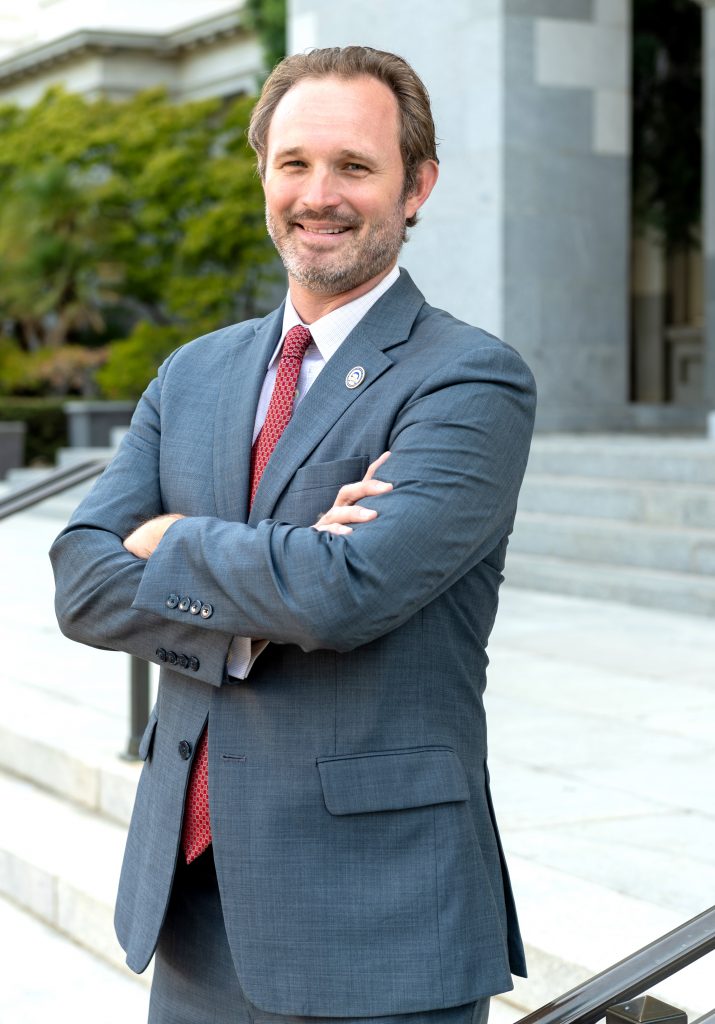
This measure would declare Monday, April 13, 2026, to Friday, April 24, 2026, inclusive, as High School Voter Education Weeks and would encourage local educational agencies to dedicate at least one of those 2 weeks to educating pupils in grades 9 to 12, inclusive, on the electoral process, as provided. The measure would encourage local educational agencies to provide digital and physical resources necessary to provide this information and would encourage the governing boards or bodies of local educational agencies to contract with third-party nonprofit organizations, as provided, to accomplish this endeavor.
Existing law sets forth the missions and functions of California's public and independent segments of higher education, and details the ways in which their respective institutions are to be differentiated. Existing law specifies that the California State University (CSU) shall offer undergraduate and graduate instruction through the master's degree in the liberal arts and sciences and professional education. Existing law authorizes the CSU to award undergraduate and graduate degrees jointly with international institutions of higher education. Existing law vests the University of California (UC) with the sole authority in public higher education to award doctoral degrees in all fields of learning, except that the CSU may award doctoral degrees jointly (1) with the UC in selected fields, (2) with independent institutions of higher education if the proposed doctoral program is approved by the California Postsecondary Education Commission, and (3) with international institutions of higher education if, among other things, the doctoral degrees are for professional or applied doctoral degrees that do not duplicate UC doctoral degrees, and the CSU complies with a specified review and approval process, as provided. This bill would authorize the CSU to award doctoral degrees jointly with one or more independent institutions of higher education without approval by the California Postsecondary Education Commission. The bill would also authorize the CSU to award undergraduate and graduate degrees jointly with one or more independent institutions of higher education. The bill would authorize the CSU to jointly award doctoral degrees with accredited international institutions of higher education without (1) limiting it to professional or applied doctoral degrees that do not duplicate UC doctoral degrees, and (2) complying with the specified review and approval process.
Existing law establishes various food assistance programs, including the federal Supplemental Nutrition Assistance Program (SNAP) , known in California as CalFresh, under which supplemental nutrition assistance benefits allocated to the state by the federal government are distributed to eligible individuals by each county. Existing law declares that it is the established policy of the state that every human being has the right to access sufficient affordable and healthy food. Existing law requires all relevant state agencies, as specified, to consider this state policy when revising, adopting, or establishing policies, regulations, and grant criteria when those policies, regulations, and grant criteria are pertinent to the distribution of sufficient affordable food. This bill would revise that declaration to provide that every human being has the right to access sufficient affordable and healthy food that is locally grown and raised. The bill would require the specified state agencies to, within existing resources, identify opportunities and strategies to improve farm-to-fork infrastructure, including, but not limited to, in public programs, particularly school meals and other nutrition initiatives. The bill would require the Trustees of the California State University and the Board of Governors of the California Community Colleges, and encourage the Regents of the University of California, to consider that state policy in their policies, guidelines, and procurement practices related to campus food services and student nutrition.
This bill designates April 14 of every year as Sylvia Mendez Day to honor the civil rights activist who challenged school segregation in California. The measure is a commemorative resolution that does not change laws, allocate funding, or alter government operations. By establishing this annual observance, the state recognizes Mendez's historical contributions to education and civil rights.
This House Resolution encourages California high schools to participate in High School Voter Education Weeks, a designated period from September 14 to 25, 2026. The measure asks school administrators to promote voter preregistration and registration for eligible students, designate coordinators to lead civic engagement activities, and participate in the statewide Student Mock Election. It also reminds schools that students in grades 6 through 12 may take an excused absence to attend civic events with prior notice. The resolution does not change existing laws but serves as a formal recommendation to boost youth participation in the upcoming 2026 general election.
This measure would recognize and commend the California Association of Future Farmers of America for its nearly 100 years of service to students, educators, and the agricultural industry and would honor members, advisors, alumni, and supporters of the association for their dedication to developing future leaders and sustaining California's agricultural legacy.
This bill designates February 26, 2026, as "Introduce a Girl to Engineering Day" to highlight the importance of encouraging young women to pursue careers in engineering. The measure serves as a commemorative resolution rather than creating new laws or funding requirements. It does not alter existing policies or directly affect government operations, but instead establishes a specific date for awareness and celebration.
This measure would proclaim March 2026 as Arts Education Month and urge all residents to become interested in and give full support to quality arts education programs for children and youth.
This bill designates March 22, 2026, as California STEAM Robotics Day to recognize the importance of robotics within science, technology, engineering, arts, and mathematics education. The measure directly affects schools and educational organizations across the state by providing a specific date for them to host events or activities focused on robotics. It does not create new funding, change laws, or mandate specific actions, but rather serves as a formal proclamation to raise awareness about the field. The legislation was passed by the state legislature and signed into law as part of the 2026 statutes.
This bill urges state and local education leaders to formally evaluate new reporting requirements by asking six specific questions about their purpose, audience, value, feasibility, duplication, and duration. It aims to reduce administrative burdens on school districts by ensuring that any new data collection efforts directly support student learning rather than diverting resources. The resolution calls on the Legislature, Governor, and various state agencies to adopt this structured analysis process before implementing additional planning or accountability mandates. By promoting a more coherent system, the bill seeks to help schools use public funds more effectively for classrooms and pupil well-being.