Issue · Criminal Justice

Criminal Justice

Every criminal justice bill, vote, and legislator stance in California, automatically classified by Maddy, our AI policy reader.

Total bills
310
2025-2026 Regular Session
Top supporter
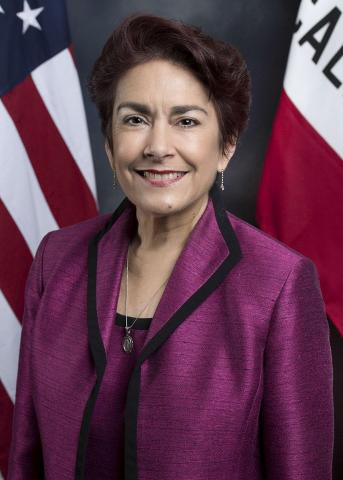
Anna Caballero
92% support rate
Top opponent
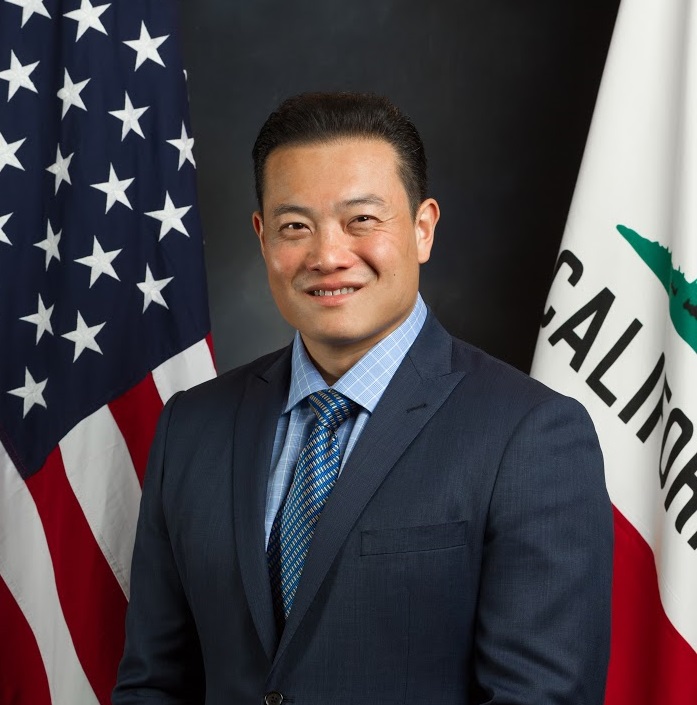
Phillip Chen
8% support rate
Ranked legislators
10
5 support · 5 oppose
Key legislators

Who's moving criminal justice in California

Legislators moving criminal justice in California
Legislator Party Stance Support rate Votes
Anna Caballero
Anna Caballero Senate · District 14
D
Strong +
92% 732
Joaquin Arambula
Joaquin Arambula House · District 31
D
Strong +
92% 528
Celeste Rodriguez
Celeste Rodriguez House · District 43
D
Strong +
91% 364
Rebecca Bauer-Kahan
Rebecca Bauer-Kahan House · District 16
D
Strong +
91% 467
Aisha Wahab
Aisha Wahab Senate · District 10
D
Strong +
90% 765
Phillip Chen
Phillip Chen House · District 59
R
Strong −
8% 316
Heath Flora
Heath Flora House · District 9
R
Strong −
11% 275
Brian Jones
Brian Jones Senate · District 40
R
Strong −
11% 398
Carl DeMaio
Carl DeMaio House · District 75
R
Strong −
12% 468
Ali Macedo
Ali Macedo House · District 33
R
Strong −
12% 532
Showing 241–250 of 310 bills

All criminal justice bills

failed · California · Senate Feb 2, 2026

SB 421: Criminal procedure: protective orders.

Existing law allows the court to issue a protective order restraining a defendant from any contact with the victim if the defendant has been convicted of a crime of domestic violence, human trafficking, a crime in furtherance of a criminal street gang, or a registerable sex offense. Under existing law, the protective order may be valid for up to 10 years, as determined by the court. This bill would additionally allow the court to issue a permanent protective order restraining a defendant from any contact with the victim if the defendant has been convicted of any serious or violent felony, as defined, or any felony requiring registration as a sex offender. The bill would also authorize the court to permanently extend certain previously issued orders under certain circumstances. The bill would require the Judicial Council to develop forms, instructions, and rules relating to these orders. The bill would make other conforming changes. By authorizing the issuance of protective orders in certain circumstances and the extension of certain protective orders, a violation of which is punishable as a crime, this bill would impose a state-mandated local program. The California Constitution requires the state to reimburse local agencies and school districts for certain costs mandated by the state. Statutory provisions establish procedures for making that reimbursement. This bill would provide that no reimbursement is required by this act for a specified reason.
failed · California · Assembly Jan 7, 2026

AB 68: School safety: armed school resource officers.

Existing law authorizes the governing board of a school district to establish a security department under the supervision of a chief of security as designated by, and under the direction of, the superintendent of the school district. Existing law also authorizes the governing board of a school district to establish a school police department under the supervision of a school chief of police and to employ peace officers. This bill would require, commencing with the 2028–29 school year, and each school year thereafter, a rural school district or charter school, as defined, to determine the appropriate number of armed school resource officers, as defined, authorized to carry a loaded firearm for each school of the rural school district or charter school. The bill would require the governing board of the school district or the governing body of the charter school to ensure that at least one armed school resource officer is present during regular school hours at each school of the rural school district or charter school that meets specified criteria, as provided. By imposing an additional requirement on school districts and charter schools, the bill would impose a state-mandated local program. The bill would authorize the governing board or body, if it is unable to comply with these requirements due to the unavailability of funding or personnel who qualify to serve as an armed school resource officer, to claim a good cause exception to these requirements by adopting a resolution, as provided. The California Constitution requires the state to reimburse local agencies and school districts for certain costs mandated by the state. Statutory provisions establish procedures for making that reimbursement. This bill would provide that, if the Commission on State Mandates determines that the bill contains costs mandated by the state, reimbursement for those costs shall be made pursuant to the statutory provisions noted above.
failed · California · Assembly Feb 2, 2026

AB 284: Law enforcement: Racial and Identity Profiling Advisory Board (RIPA).

Existing law requires each state and local agency that employs peace officers to annually report to the Attorney General specified data on all stops conducted by that agency's peace officers for the preceding calendar year. Existing law defines "stop" for purposes of these provisions to mean any detention by a peace officer of a person or any peace officer interaction with a person in which the peace officer conducts a search of the person's body or property in the person's possession or control. Existing law requires the Attorney General to establish the Racial and Identity Profiling Advisory Board (RIPA) for the purpose of eliminating racial and identity profiling and improving diversity and racial and identity sensitivity in law enforcement. Existing law requires RIPA to include various members, including 2 representatives of human or civil rights tax-exempt organizations, 2 representatives of community organizations, and 2 religious clergy members, as specified. Existing law authorizes the Governor, President pro Tempore of the Senate, and Speaker of the Assembly to each prescribe up to 2 other members to membership of RIPA. This bill would require RIPA to include in its membership the president of the California District Attorneys Association, or their designee. Existing law requires RIPA to issue a report annually that provides RIPA's analysis of, among other things, the reported stop data described above. Existing law also requires the report to provide detailed findings on the past and current status of racial identity profiling and to make policy recommendations for eliminating racial and identity profiling, as specified. This bill would authorize any member of RIPA to cause a dissenting opinion to be included in the report, as specified. The bill would additionally authorize RIPA to include a response to a dissenting opinion in its report.
failed · California · Assembly Feb 2, 2026

AB 722: Reentry Housing and Workforce Development Program.

Existing law establishes the Department of Housing and Community Development in the Business, Consumer Services, and Housing Agency and makes the department responsible for administering various housing programs throughout the state, including, among others, the Multifamily Housing Program. This bill would establish the Reentry Housing and Workforce Development Program. The bill would require the department, on or before July 1, 2026, to take specified actions to, upon appropriation by the Legislature, provide grants to applicants, as defined, for innovative or evidence-based housing, housing-based services, and employment interventions to allow people with recent histories of incarceration to exit homelessness and remain stably housed. The bill would require the department to establish a process, in collaboration with the Department of Corrections and Rehabilitation and with counties in which recipients are operating, for referral of participants, in accordance with certain guidelines and procedures. The bill would require the department to score applicants to the program competitively according to specified criteria. The bill would require recipients of funds from the program to use those funds for, among other things, long-term rental assistance in permanent housing, incentives to landlords, and innovative or evidence-based services to assist participants in accessing permanent supportive housing. The bill would require the department to distribute funds allocated by executing contracts with awarded entities for a term of 5 years, subject to automatic renewal. The bill would require a recipient of the program to submit an annual report to the department. The bill would require the department to hire an independent evaluator to assess outcomes from the program and would require the department to submit that analysis to specified committees of the Legislature.
failed · California · Assembly Feb 2, 2026

AB 746: Inmate Cooperative Program.

Existing law creates specified programs that employ inmates, including the joint venture program, which is established by the Secretary of Department of Corrections and Rehabilitation within state prisons that allows a public entity, nonprofit or for-profit entity, organization, or business to employ inmates confined in the state prison system for the purpose of producing goods or services. Existing law also establishes the Prison Industry Authority within the department for the purpose of developing and operating industrial, agricultural, and service enterprises employing prisoners in institutions under the jurisdiction of the department and for the purpose of creating and maintaining working conditions within the enterprises to ensure prisoners employed have the opportunity to work productively, to earn funds, and to acquire or improve effective work habits and occupational skills. Existing law requires, upon appropriation by the Legislature, the Office of Small Business Advocate within the Governor's Office of Business and Economic Development to establish the California Employee Ownership Hub that would, among other things, work with all California state agencies whose regulations and programs affect employee-owned companies, and businesses with the potential to become employee owned, to enhance opportunities and reduce barriers. Existing law, the Cooperative Corporation Law, governs the organization and operation of cooperatives, including, among others, worker cooperatives. Existing law defines a worker cooperative as a corporation formed under the Cooperative Corporation Law that includes a class of worker-members who are natural persons whose patronage consists of labor contributed to or other work performed for the corporation. Existing law requires specified information to be included in the articles of incorporation or bylaws, including, among other things, the apportionment and distribution of net earnings and losses of a worker cooperative. Existing law makes the violation of specified provisions under the Cooperative Corporation Law a crime. This bill would require the Department of Corrections and Rehabilitation to establish the Inmate Cooperative Program to facilitate operations of inmate worker cooperatives within state prison facilities. The bill would authorize a group of inmates who seek to establish a worker cooperative to apply to the program by submitting an application to the warden of the facility. The bill would require the warden to approve an application only if the applicant, or a cooperative community partner acting on their behalf, submits a plan of operation to the warden containing specified information, including, among other things, the cooperative's draft bylaws, which describe the cooperative's mission, the cooperative's internal governance structure, an initial management structure, and compensation structure. The bill would define a cooperative community partner as a nonprofit organization, cooperative association, cooperative corporation, or individual that supports the inmates with the establishment, operation, and governance of certified inmate cooperatives. This bill would require a group of inmates seeking to form a worker cooperative to incorporate as a worker cooperative following the approval of an application by the warden. The bill would require the Inmate Cooperative Program to certify the worker cooperative following approval of an application by the warden and incorporation of the cooperative. The bill would require the department to enter into a contract with the cooperative to outline the terms of operation, responsibilities, and compliance requirements. The bill would require a certified cooperative, as a condition to operate in a state prison facility, to write into their bylaws that their cooperative community partner is required to deduct 40% from each inmate's gross wages and deposit the wages into a specified account. The bill would authorize a certified cooperative to engage in the production of goods, agricultural products, or services for the cooperative's use and sale. This bill would require the California Employee Ownership Hub to choose a cooperative institution, which would, among other things, assist in the selection of a financial institution that would steward and manage an account that would be used to, among other things, create economic opportunities for survivors of crime and other persons impacted by their interactions with the criminal justice system with grants for specified purposes. The bill would define a cooperative institution as a nongovernmental nonprofit organization, cooperative association, or similar entity that is dedicated to supporting, overseeing, and promoting cooperative enterprises. The bill would require the financial institution to submit an annual report to the Governor detailing the account's activities, resource allocations, and measurable outcomes of funded initiatives. This bill would also require the department to deduct from inmate wages mandatory deductions for restitution orders and fines, among other things. The bill would require the department to provide certified cooperatives with access to necessary equipment, materials, and resources to support their operations, with no obligation for the department to fund these resources. The bill would prohibit an employee of the department from serving as a member, officer, or board member of any cooperative established under the Inmate Cooperative Program or from having any direct or indirect financial interest in the cooperative or its operations.
failed · California · Senate Feb 2, 2026

SB 823: Mental health: the CARE Act.

Existing law, the Community Assistance, Recovery, and Empowerment (CARE) Act, authorizes specified adult persons to petition a civil court to create a voluntary CARE agreement or a court-ordered CARE plan and implement services, to be provided by county behavioral health agencies, to provide behavioral health care, including stabilization medication, housing, and other enumerated services, to adults who are currently experiencing a severe mental illness and have a diagnosis identified in the disorder class schizophrenia and other psychotic disorders, and who meet other specified criteria. This bill would include bipolar I disorder in the criteria for a person to receive services under the CARE Act. By increasing the duties on the county behavioral health agencies, this bill would impose a state-mandated local program. The California Constitution requires the state to reimburse local agencies and school districts for certain costs mandated by the state. Statutory provisions establish procedures for making that reimbursement. This bill would provide that, if the Commission on State Mandates determines that the bill contains costs mandated by the state, reimbursement for those costs shall be made pursuant to the statutory provisions noted above.
Sub-Topics Mental Health
passed both · California · Assembly Aug 27, 2026

AB 464: Sexual assault in prison.

(1) Existing law tolls the periods of limitation to bring specific civil actions for up to 2 years, if during that time that the claimant is imprisoned on a criminal charge, as specified. However, under existing law these tolling provisions do not apply to an action brought against a public entity or public employee, as specified. This bill would, notwithstanding any other law, provide that the period for bringing an action for sexual assault against a public entity or public employee that is alleged to have occurred while the claimant was imprisoned on a criminal charge, or in execution under the sentence of a criminal court, is tolled during the entire period of the claimant's imprisonment or sentence. Under the bill, any claim for sexual assault against a public entity or public employee subject to that provision is exempt from all state and local government claim presentation requirements. (2) Existing law establishes the Office of the Sexual Abuse in Detention Elimination Ombudsperson with the authority to inspect all of the Department of Corrections and Rehabilitation institutions and to interview all inmates and wards. Under existing law, if an investigation confirms that any employee of the department has sexually abused an inmate or ward, that employee is required to be terminated. Existing law prohibits retaliation against an inmate or ward for making an allegation of sexual abuse. Existing law requires the department to keep statistics on the sexual abuse of inmates and wards and make that data available to the Office of the Sexual Abuse in Detention Elimination Ombudsperson. This bill would prohibit an employee who has been terminated after an investigation confirms that the employee has sexually abused an incarcerated person or ward from future employment with the department. This bill would require the department to monitor for 90 days an incarcerated person who reports sexual assault, and the incarcerated person reported to have suffered the sexual assault, by a staff member for possible retaliation. The bill would require the department to make specific notifications and reporting after an incarcerated person is reported to have suffered a sexual assault. The bill would require the department, on or before January 1, 2028, to develop and implement procedures for notifications of an incarcerated person's contact person, as defined. The bill would require the department to minimize the transfer of an incarcerated person who is reported to have suffered a sexual assault by a staff member for 90 days following the report, unless there is an operational need to do so or there are safety, security, or health concerns. The bill would define terms for its purposes and declare these provisions are severable.
Sub-Topics Violent Crime
failed · California · Senate Feb 2, 2026

SB 311: Correctional facilities: women's prisons.

Existing law requires the Department of Corrections and Rehabilitation to institute certain practices to prevent sexual violence and promote inmate and ward safety in the Department of Corrections and Rehabilitation, including reviewing and providing handbooks regarding sexual abuse in detention to inmates and wards. Existing law establishes 2 institutions for the punishment, treatment, supervision, custody, and care of women convicted of felonies, known as the California Institution for Women and the Central California Women's Facility. This bill would require the department to establish a secure facility at each women's prison to house transgender women, in order to protect the security needs of biological women, as specified. The bill would also prohibit certain inmates convicted of specified sexual offenses from being housed at a women's prison.
Sub-Topics Corrections
passed both · California · Senate Aug 30, 2026

SB 691: Body-worn cameras: policies.

Existing law requires law enforcement agencies, departments, or entities to consider specified best practices regarding the downloading and storage of body-worn camera data, such as specifically stating the length of time that recorded data is to be stored, when establishing policies and procedures for the implementation and operation of a body-worn camera system, as specified. This bill would require, on or before July 1, 2027, each law enforcement agency that has a body-worn camera policy to update that policy to include a procedure for emergency service personnel to request the redaction of evidentiary and nonevidentiary recordings of a patient undergoing medical or psychological evaluation, procedure, or treatment by emergency service personnel, and to maintain an unredacted copy of the recording consistent with the policies and procedures of the agency. By requiring local law enforcement agencies to adopt new policies, this bill would impose a state-mandated local program. The California Constitution requires the state to reimburse local agencies and school districts for certain costs mandated by the state. Statutory provisions establish procedures for making that reimbursement. This bill would provide that, if the Commission on State Mandates determines that the bill contains costs mandated by the state, reimbursement for those costs shall be made pursuant to the statutory provisions noted above.
failed · California · Senate Feb 2, 2026

SB 554: Law enforcement: immigration enforcement.

Existing law, the California Values Act, generally prohibits California law enforcement agencies from investigating, interrogating, detaining, detecting, or arresting persons for immigration enforcement purposes, including providing information regarding a person's release date or responding to requests for notification by providing release dates or other information, as specified. Existing law provides that responses are never required, but are permitted, provided that they do not violate any local law or policy. Existing law provides the above-described prohibition does not prevent a California law enforcement agency from performing certain limited exceptions to this prohibition that do not violate any policy of the law enforcement agency or any local law or policy of the jurisdiction in which the agency is operating. Existing law provides a law enforcement official with discretion to cooperate with immigration authorities only if doing so would not violate any federal, state, or local law, or local policy, and where permitted by the California Values Act. This bill would instead provide that responses relating to a person's release date, as described above, are required. The bill would instead require a California law enforcement agency to perform certain limited exceptions to the prohibition, as specified. The bill would instead require a law enforcement official to cooperate with immigration authorities only if doing so would not violate any federal or state law or policy, and where permitted by the California Values Act. By imposing new duties on local agencies, this bill would impose a state-mandated local program. The California Constitution requires the state to reimburse local agencies and school districts for certain costs mandated by the state. Statutory provisions establish procedures for making that reimbursement. This bill would provide that, if the Commission on State Mandates determines that the bill contains costs mandated by the state, reimbursement for those costs shall be made pursuant to the statutory provisions noted above.
Showing 241 to 250 of 310 bills
Previous 1 24 25 26 31 Next