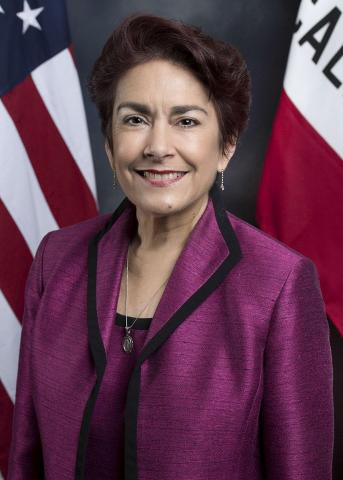
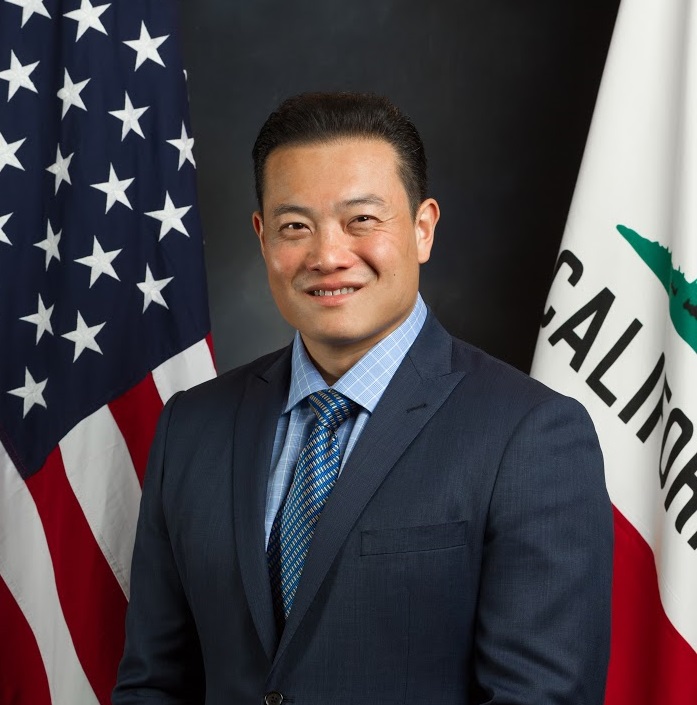
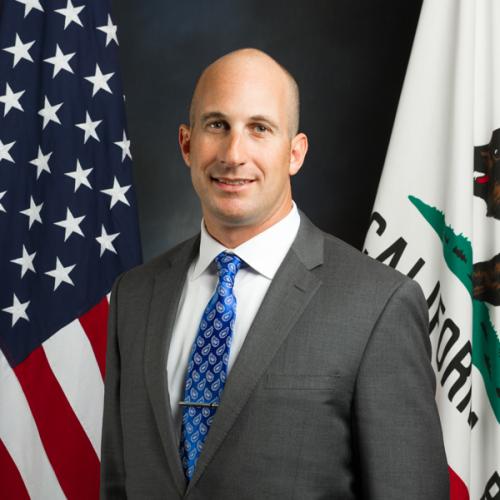
This measure would strongly condemn and denounce mass immigration raids that target immigrant workers and families in California and the engagement of the military in immigration enforcement operations and in response to community protests. This measure would affirm support for safeguarding the rights and safety of all Californians, regardless of immigration status, and support, among other things, the expansion of legal services and emergency response resources to protect workers, children, and families affected by immigration enforcement.
Existing law allows a defendant who successfully participated in the California Conservation Camp program as an incarcerated individual hand crew member, successfully participated as a member of a county incarcerated individual hand crew, or participated in an institutional firehouse program, except as specified, to petition the court to have the pleading dismissed, as described, thus releasing the person of any penalties and disabilities of conviction, except as otherwise provided. Existing law requires the court to provide a copy of the petition to the Department of Corrections and Rehabilitation or the appropriate county authority. Under existing regulations of the Emergency Medical Services Authority, specified public safety personnel, including peace officers and firefighters, are required to have specified emergency medical services training, which may be satisfied by certification as an emergency medical technician. This bill would require the Department of Corrections and Rehabilitation or a county authority, upon the release of a defendant, to certify to the court in the county where the defendant was sentenced that the individual successfully participated in one of the above-described programs and to provide a copy of that certification to the defendant. The bill would delete the requirement that a court provide a copy of a defendant's petition to the department or a county authority. The bill would prohibit an individual who has had their criminal pleading dismissed under these provisions from being denied a certification as an emergency medical technician or any other license or certification required to work as a firefighter based solely on their arrest or conviction history, as described. By requiring additional reporting from county authorities, the bill would impose a state-mandated local program. The California Constitution requires the state to reimburse local agencies and school districts for certain costs mandated by the state. Statutory provisions establish procedures for making that reimbursement. This bill would provide that, if the Commission on State Mandates determines that the bill contains costs mandated by the state, reimbursement for those costs shall be made pursuant to the statutory provisions noted above.
Existing law prohibits the prosecuting attorney, attorney for the defendant, or investigator for either the prosecution or the defendant from interviewing, questioning, or speaking to a victim or witness whose name has been disclosed pursuant to existing law without first clearly identifying themselves and identifying the full name of the agency by whom they are employed, and identifying whether they represent, or have been retained by, the prosecution or the defendant. Under existing law, if an interview takes place in person, the party is also required to show the victim or witness a business card, official badge, or other form of official identification before commencing the interview or questioning. This bill would require a peace officer, as defined, or a prosecuting attorney, before any initial formal interview of an immediate family member of a person who has been killed or seriously injured by a peace officer, to clearly identify themselves and if the interview takes place in person, to show identification, to inform the person of the status of their family member, to inform the person that they are conducting a formal interview for the purposes of an investigation, as specified, and to inform the person that they have a choice to come to the station for the formal interview if they are asked to go and can have a trusted support person with them. The bill would provide that its provisions do not apply if the immediate family member is under custodial interrogation, as specified, or if the delay would result in the loss or destruction of evidence or pose an imminent threat to public safety. By increasing duties on local law enforcement, this bill would impose a state-mandated local program. The California Constitution requires the state to reimburse local agencies and school districts for certain costs mandated by the state. Statutory provisions establish procedures for making that reimbursement. This bill would provide that, if the Commission on State Mandates determines that the bill contains costs mandated by the state, reimbursement for those costs shall be made pursuant to the statutory provisions noted above.
Existing law, the Pharmacy Law, provides for the licensure and regulation of pharmacists and pharmacies by the California State Board of Pharmacy. Existing law, until January 1, 2026, authorizes a physician or pharmacist to, without a prescription or permit, furnish hypodermic needles and syringes for human use to a person 18 years of age or older, and authorizes a person 18 years of age or older to, without a prescription or license, obtain hypodermic needles and syringes solely for personal use from a physician or pharmacist, as a public health measure, as specified. Existing law, until January 1, 2026, requires a pharmacy that furnishes nonprescription syringes to provide written information or verbal counseling to consumers, as specified, at the time of furnishing or sale of nonprescription hypodermic needles or syringes. Existing law, when no other penalty is provided, makes a knowing violation of the Pharmacy Law a misdemeanor and, in all other instances, makes a violation punishable as an infraction. This bill would delete the January 1, 2026, repeal date, thereby extending those provisions indefinitely, and would make other conforming changes. By indefinitely extending an existing requirement under the Pharmacy Law, the violation of which is a crime, the bill would impose a state-mandated local program. The California Constitution requires the state to reimburse local agencies and school districts for certain costs mandated by the state. Statutory provisions establish procedures for making that reimbursement. This bill would provide that no reimbursement is required by this act for a specified reason.
Existing law authorizes a court, on its own motion within 120 days of the date of the defendant's commitment, or at any time if the applicable sentencing laws have changed or upon a recommendation from the Secretary of the Department of Corrections and Rehabilitation, the Board of Parole Hearings, or the district attorney, to recall a defendant's sentence and resentence that defendant to a lesser sentence. Existing law establishes the California Conservation Camps for the purpose of having incarcerated persons work on projects supervised by the Department of Forestry and Fire Protection. Existing law requires the department to utilize incarcerated persons assigned to conservation camps in performing fire prevention, fire control, and other work at the department. This bill would require the Department of Corrections and Rehabilitation, no later than July 1, 2027, to promulgate regulations, as specified, regarding the referral of participants in the California Conservation Camp program and incarcerated persons working at institutional firehouses for resentencing.
Existing law revives certain claims seeking to recover damages suffered as a result of a sexual assault that occurred on or after the plaintiff's 18th birthday when one or more entities are legally responsible for damages and the entity or their agents engaged in a cover up, as defined, that would otherwise be barred prior to January 1, 2023, solely because the applicable statute of limitations has or had expired. Existing law authorizes a cause of action for any such claim to proceed if already pending in court on January 1, 2023, or, if not filed by that date, to be commenced between January 1, 2023, and December 31, 2023. Existing law revives such claims brought by a plaintiff who alleges all of the following: (1) the plaintiff was sexually assaulted, (2) one or more entities are legally responsible for damages arising out of the assault, and (3) the entity or entities engaged in a cover up or attempted cover up, as defined, of a previous instance or allegations of sexual assault. This bill would extend the eligibility period for revival of claims of the type described above to include claims that would otherwise be barred prior to January 1, 2026, because the applicable statute of limitations has or had expired. The bill would instead require a revived claim against an entity, as defined, to allege that the plaintiff was sexually assaulted and that (1) one or more entities or persons are legally responsible for damages arising out of sexual assault by an alleged perpetrator against the plaintiff, and (2) an entity or entities, including their specified representatives, engaged in a cover up or attempted a cover up of a previous instance or allegations of sexual assault by an alleged perpetrator. The bill would additionally revive a claim against the person who committed the sexual assault brought by a plaintiff who alleges, among other things, that one or more entities or persons are legally responsible for damages arising out of the sexual assault. The bill would specify that failure to allege a cover up as to one entity does not affect revival of a claim or claims against any other entity or person, including the perpetrator. The bill would permit a cause of action for any such claim to proceed if already pending in court on the effective date of the bill or, if not filed by that date, to be commenced between January 1, 2026, and December 31, 2027. The bill would exempt public entities from these provisions and would provide that public entities are not required to indemnify perpetrators of sexual assault, as specified. The bill would make conforming changes.
Existing law prohibits the state from seeking, obtaining, or imposing a criminal conviction or sentence on the basis of race, ethnicity, or national origin. Under existing law, a defendant may pursue relief for a violation of this prohibition by filing a motion pursuant to the provisions that prohibit this conduct, a petition for a writ of habeas corpus, or a motion to vacate a conviction or sentence. This bill would authorize the defendant in these proceedings to file a motion for disclosure of all relevant evidence related to a potential violation of the prohibition on the state seeking, obtaining, or imposing a criminal conviction or sentence on the basis of race, ethnicity, or national origin, as specified. The bill would also authorize the court to remedy a violation of these provisions with any other remedy not prohibited by another law. The bill would make other technical changes. This bill makes legislative findings and declarations in support of its provisions. This bill would incorporate additional changes to Sections 745, 1473, and 1473.7 of the Penal Code proposed by SB 734 to be operative only if this bill and SB 734 are enacted and this bill is enacted last.
Existing law requires the court, prior to the acceptance of a plea of guilty or nolo contendere, to advise the defendant that if they are not a citizen, conviction of the crime charged may result in deportation, exclusion from admission to the United States, or denial of naturalization. After January 1, 1978, if the court fails to advise the defendant, as required, and the defendant shows that conviction of the offense to which the defendant pleaded guilty or nolo contendere may have the consequences for the defendant of deportation, exclusion from admission to the United States, or denial of naturalization pursuant to the laws of the United States, the court, on the defendant's motion, is required to vacate the judgment and permit the defendant to withdraw the plea of guilty or nolo contendere, and enter a plea of not guilty. This bill would require the court to give the above-described advisement verbatim and would clarify the advisement to state that if the defendant is not a citizen of the United States, conviction may result in the specified immigration consequences. The bill would state that for a plea accepted prior to January 1, 2026, it is not the intent of the Legislature that a court's failure to provide the advisement verbatim requires vacation of judgment and withdrawal of the plea or constitutes grounds for finding a prior conviction invalid, as specified.
Existing law makes a person who, with the intent to cause cruel or extreme pain and suffering for the purpose of revenge, extortion, persuasion, or for any sadistic purpose, inflicts great bodily injury upon the person of another guilty of torture, and makes the crime punishable by imprisonment in the state prison for a term of life. Existing law specifies that an inmate imprisoned under a life sentence shall not be paroled until they have served a term of at least 7 years or as established pursuant to a law that establishes a minimum term. This bill would prohibit a person imprisoned for committing the crime of torture from being eligible for parole until they have served at least 10 years, if the defendant is an adult who had care or custody of the victim and the victim was 14 years of age or younger at the time of the crime. By creating a new sentencing enhancement, the bill would impose a state-mandated local program. The California Constitution requires the state to reimburse local agencies and school districts for certain costs mandated by the state. Statutory provisions establish procedures for making that reimbursement. This bill would provide that no reimbursement is required by this act for a specified reason.
Existing law, the California Public Records Act, generally requires public records to be open for inspection by the public. Existing law provides numerous exceptions to this requirement. Under existing law, the personnel records of peace officers and custodial officers are confidential and not subject to public inspection. Existing law provides certain exemptions to this confidentiality, including the reports, investigations, and findings of certain incidents involving the use of force by a peace officer. Existing law authorizes an agency to redact the records disclosed for specified purposes including, among others, to remove personal data or information, as specified, and where there is a specific, articulable, and particularized reason to believe that disclosure of the record would pose a significant danger to the physical safety of the peace officer, custodial officer, or another person. This bill would require a court in an action to compel disclosure pursuant to specified provisions, in determining whether there is a specific, articulable, and particularized reason to believe that disclosure of the record would pose a significant danger to the physical safety of a person, to consider whether a particular peace officer is currently operating undercover and their duties demand anonymity. This bill would incorporate additional changes to Section 832.7 of the Penal Code proposed by AB 847 and AB 1388, to be operative only if this bill and AB 847 or AB 1388 are enacted and this bill is enacted last.