Issue · Budget & Taxes

Budget & Taxes

Every budget & taxes bill, vote, and legislator stance in California, automatically classified by Maddy, our AI policy reader.

Total bills
427
2025-2026 Regular Session
Top supporter
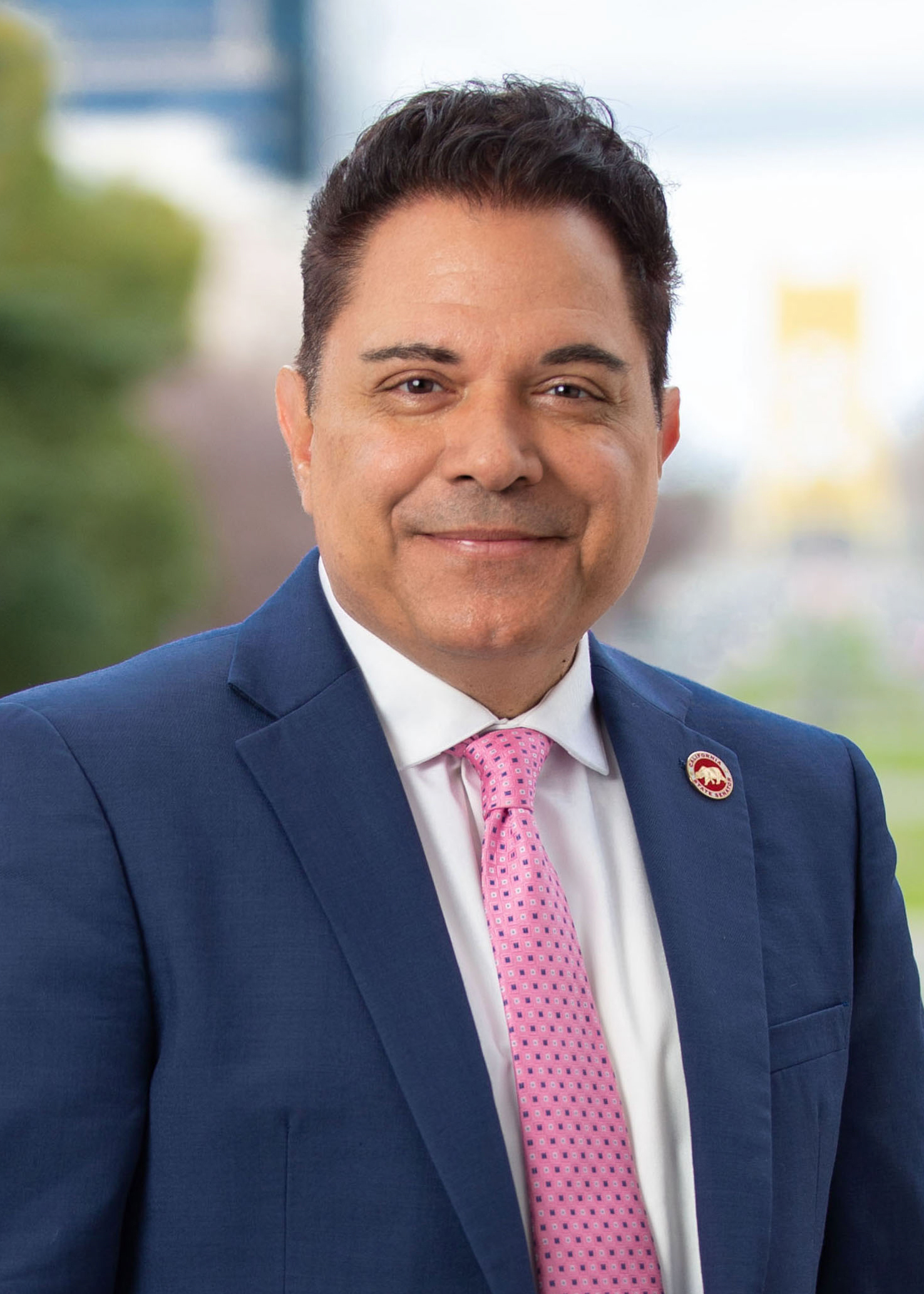
Steve Padilla
97% support rate
Top opponent
Natasha Johnson
4% support rate
Ranked legislators
10
5 support · 5 oppose
Key legislators

Who's moving budget & taxes in California

Legislators moving budget & taxes in California
Legislator Party Stance Support rate Votes
Steve Padilla
Steve Padilla Senate · District 18
D
Strong +
97% 408
JA
Jesse Arreguín Senate · District 7
D
Strong +
97% 509
Susan Rubio
Susan Rubio Senate · District 22
D
Strong +
97% 390
Esmeralda Soria
Esmeralda Soria House · District 27
D
Strong +
97% 342
Darsh Patel
Darsh Patel House · District 76
D
Strong +
97% 368
Natasha Johnson
Natasha Johnson House · District 63
R
Strong −
4% 215
Kelly Seyarto
Kelly Seyarto Senate · District 32
R
Strong −
4% 633
Brian Jones
Brian Jones Senate · District 40
R
Strong −
5% 346
Stan Ellis
Stan Ellis House · District 32
R
Strong −
5% 410
Ali Macedo
Ali Macedo House · District 33
R
Strong −
6% 447
Showing 81–90 of 427 bills

All budget & taxes bills

passed both · California · Assembly Aug 27, 2026

AB 1711: Fairs: funding.

Existing law appropriates certain unallocated moneys and other specified moneys deposited into the Fair and Exposition Fund, a continuously appropriated fund, to the Secretary of Food and Agriculture for capital outlay to California fairs for, among other things, fair projects involving public health and safety, fair projects involving major and deferred maintenance, and fair projects necessary due to any emergency, as specified. This bill would instead appropriate those moneys described above to the secretary for capital outlay to California fairs for fair projects involving public health, fire and life safety, and emergency services improvement projects at fairs, California Code of Regulations compliance projects, and maintenance projects at fairgrounds, as specified. By expanding the purposes for which those moneys may be used, the bill would make an appropriation. The bill would require moneys deposited into the fund after November 1 of each year to be allocated within 90 days of the receipt of the moneys, as provided. The bill would require all available moneys in the fund to be allocated to the network of California fairs pursuant to an approved expenditure plan no later than December 31 of each calendar year, except that beginning January 1, 2027, and every year thereafter, a reasonable amount may be retained from year to year as a prudent reserve for contingencies, as specified.
passed both · California · Assembly Aug 27, 2026

AB 2084: Corporation Tax Law: tax-exempt organizations: revocation of tax-exempt status.

Existing law, the Corporation Tax Law, exempts organizations that are organized and operated for nonprofit purposes, as specified, from taxes imposed by that law if the Franchise Tax Board issues a determination exempting the organization from tax, except as provided. To receive a determination of exemption from the board, existing law requires the organization to either submit an application for exemption or to submit documentation of exemption from federal income tax law, as provided. For organizations that submit documentation of their federal exemption, existing law requires the board to suspend or revoke, as applicable, an organization's state exemption upon notification that the organization's federal exemption is suspended or revoked. This bill would instead authorize the board, in its discretion, to retain the organization's tax-exempt status for state income tax purposes if it determines this suspension or revocation occurred for reasons other than fraud, intentional misrepresentation, misuse or diversion of organizational funds, failure to file necessary returns or reports, or other breaches of organizational reporting or governance requirements. This bill would take effect immediately as a tax levy.
passed both · California · Senate Aug 30, 2026

SB 1168: Data centers: rate structures.

Existing law vests the Public Utilities Commission with regulatory authority over public utilities. Existing law authorizes the commission to fix the rates and charges for every public utility and requires that those rates and charges be just and reasonable. This bill would require the commission to assess opportunities for rate structures to ensure data centers pay a reasonable share of their costs associated with transmission and distribution needs, ensure that data centers pay for their proportionate share of load increases and procurements needed to reliably serve their loads while maintaining consistency with the applicable integrated resource planning requirements, and alleviate cost pressures on residential ratepayers.
Sub-Topics Business Taxes
passed both · California · Assembly Aug 27, 2026

AB 2526: Special education local plan areas: apportionments: alternate assessments.

Existing law prescribes a calculation to annually apportion funding to special education local plan areas for each pupil with low-incidence disabilities, defined to include pupils with hearing impairments, vision impairments, and severe orthopedic impairments, or any combination thereof, in accordance with a per-pupil entitlement based on the number of pupils with low-incidence disabilities reported in the prior fiscal year. Existing law requires the Superintendent of Public Instruction to apportion these funds to special education local plan areas for purposes of providing special education and related services as required under the individualized education program for each pupil with low-incidence disabilities. This bill would, contingent upon an appropriation for its purposes, (1) require the per-pupil entitlement to also be based on the number of pupils eligible to take specified alternative assessments and (2) require the Superintendent to apportion these funds to special education local plan areas for purposes of also providing special education and related services as required under the individualized education program for each pupil who is eligible to take those alternative assessments.
passed both · California · Assembly Aug 27, 2026

AB 2270: Low-income housing tax credit: farmworker housing.

Existing law establishes a low-income housing tax credit program for which the California Tax Credit Allocation Committee (CTCAC) provides procedures and requirements for the allocation, in modified conformity with federal law, of state insurance, personal income, and corporation tax credit amounts to qualified low-income housing projects that have been allocated, or qualify for, a federal low-income housing tax credit, and farmworker housing. Existing law limits the total annual amount of the state low-income housing credit for which a federal low-income housing credit is required to the sum of $70,000,000, as increased by any percentage increase in the Consumer Price Index for the preceding calendar year, any unused credit for the preceding calendar years, and the amount of housing credit ceiling returned in the calendar year. Existing law governing the taxation of insurers, the Personal Income Tax Law, and the Corporation Tax Law provided an allocation of $500,000,000 for the 2020 calendar year and, for calendar years beginning in 2021, also provides for an additional amount that may be allocated, up to $500,000,000, to specified low-income housing projects that are new buildings that are federally subsidized, as specified. Existing law provides that this additional amount is only available for allocation pursuant to an authorization in the annual Budget Act. Existing law requires specified regulatory action by CTCAC aimed at increasing production and containing costs, including a scoring system that maximizes the efficient use of public subsidy and benefit created through the low-income housing tax credit program, as specified. This bill would require CTCAC to consider amending the regulatory scoring system to establish a housing type for farmworker housing projects, as specified in the existing CTCAC regulation. The bill would also require the CTCAC to consider using the same point allocations provided for rural set-aside projects in assigning points to farmworker housing based on the proximity of amenities to an eligible farmworker housing project. Existing federal immigration law authorizes employment of nonimmigrant agricultural workers, known as H-2A workers, if specified requirements are met, including that the employer furnish housing, as provided. Existing law generally prohibits providing state funding to an employer or its agent who employs an H-2A worker for the purposes of funding housing and requires an employer that receives state funding for that purpose to reimburse the state by that amount, as specified. Existing law defines "state funding" for this purpose to exclude the allocation of federal or state low-income housing tax credits. This bill, for taxable years beginning on or after January 1, 2027, would include the allocation of state low-income housing tax credits within the definition of "state funding" and would prohibit providing low-income housing tax credits for projects to provide farmworker housing used to comply with the above-described H2-A housing requirement. This bill would incorporate additional changes to Sections 12206, 17058, and 23610.5 of the Revenue and Taxation Code proposed by Senate Bill 1072 to be operative only if this bill and Senate Bill 1072 are enacted and this bill is enacted last. This bill would include a change in state statute that would result in a taxpayer paying a higher tax within the meaning of Section 3 of Article XIIIA of the California Constitution, and thus would require for passage the approval of 23 of the membership of each house of the Legislature. This bill would take effect immediately as a tax levy.
passed both · California · Assembly Aug 30, 2026

AB 2689: Low-income housing tax credits: lease nonrenewal: good cause.

Existing law, in modified conformity with federal income tax laws, establishes a low-income housing tax credit program through which the California Tax Credit Allocation Committee allocates low-income housing tax credits aimed at providing affordable low-income housing within and throughout the state. Existing federal law sets limitations and guidelines regarding what projects are eligible for credits, including a requirement that an extended low-income housing commitment is in effect, and a prohibition against eviction except for good cause. This bill would specify, for housing projects where the low-income housing commitment requires 100% of the units, not including any manager's units, to be restricted to lower income households, as defined, that good cause for nonrenewal of a lease includes cases where the nonrenewal relates to a household whose income exceeds 140% of the area median income for at least 2 consecutive years and 30% of the household's monthly income exceeds the fair market rent, determined as specified. The bill would require an owner to provide notice of the potential of good cause for nonrenewal described above if the household's income exceeds 140% of the area median income during any income certification, as specified. The bill would also require an owner electing to not renew a lease as described above to issue a notice of nonrenewal describing the basis of good cause for nonrenewal at least 90 days prior to the expiration of the lease, as specified.
passed · California · Assembly Aug 13, 2026

AB 2022: Property taxation: exemption: disabled veteran homeowners.

The California Constitution provides that all property is taxable and requires that it be assessed at the same percentage of fair market value, unless otherwise provided by the California Constitution or federal law. The California Constitution and existing property tax law provide various exemptions from taxation, including, among others, a disabled veterans' exemption and a veterans' organization exemption. This bill would exempt from taxation, as provided, 50% of the full value of the property owned by, and that constitutes the principal place of residence of, a veteran, the veteran's spouse, or the veteran and the veteran's spouse jointly, if the veteran is 100% disabled. The bill would provide an unmarried surviving spouse a property exemption in the same amount that they would have been entitled to if the veteran were alive and if certain conditions are met. In the case of a disabled veteran or unmarried surviving spouse whose household income does not exceed a specified amount for the relevant assessment year, as prescribed, the bill would exempt 100% of the full value of the property from taxation. The bill would require certain documentation to be provided to the county assessor to receive the exemption and would prohibit any other real property tax exemption from being granted to the claimant if receiving the exemption provided by the provisions of this bill. The bill would make these exemptions applicable for property tax lien dates occurring on or after January 1, 2027, but occurring before January 1, 2032. By imposing additional duties on local tax officials, the bill would impose a state-mandated local program. Existing law requires any bill authorizing a new tax expenditure to contain, among other things, specific goals, purposes, and objectives that the tax expenditure will achieve, detailed performance indicators, and data collection requirements. This bill also would include additional information required for any bill authorizing a new tax expenditure. The California Constitution requires the state to reimburse local agencies and school districts for certain costs mandated by the state. Statutory provisions establish procedures for making that reimbursement. This bill would provide that, if the Commission on State Mandates determines that the bill contains costs mandated by the state, reimbursement for those costs shall be made pursuant to the statutory provisions noted above. Existing law requires the state to reimburse local agencies annually for certain property tax revenues lost as a result of any exemption or classification of property for purposes of ad valorem property taxation. This bill would provide that, notwithstanding those provisions, no appropriation is made and the state shall not reimburse local agencies for property tax revenues lost by them pursuant to the bill. This bill would take effect immediately as a tax levy.
in committee · California · Assembly Apr 20, 2026

AB 2345: Student loans: medical, nursing, social work, and social welfare students: California Health Care Workforce Supplemental Loan Program.

Existing law establishes the Student Aid Commission as the primary state agency for the administration of state-authorized student financial aid programs available to students attending all segments of postsecondary education. This bill would establish the California Health Care Workforce Supplemental Loan Program, under the administration of the commission, for the purpose of providing eligible students, as defined, with access to the same level of financial assistance toward the cost of attendance at an accredited medical or nursing school, or at a school's accredited social work or social welfare program, that was available on or before January 20, 2025, through federal direct unsubsidized loans and federal direct grad PLUS loans. The bill would require the commission to establish an application process and would require the loans issued under the program to have equivalent financial terms as the federal Direct PLUS Loans, as those terms existed on January 20, 2025, except for changes that the commission determines to be necessary to administer the program. The bill would create the Health Care Workforce Supplemental Loan Fund in the State Treasury.
in committee · California · Assembly Apr 27, 2026

AB 2427: Personal Income Tax Law: Corporation Tax Law: tax credits: farming.

The Personal Income Tax Law and the Corporation Tax Law allow various credits against the taxes imposed by those laws. This bill, for taxable years beginning on or after January 1, 2027, and before January 1, 2032, would allow a credit against the taxes imposed by those laws for specified agricultural businesses that operate on at least 50 acres of land, as provided, equal to 25% of the business's qualified expenditures, as defined. The bill would increase the credit to 30% of qualified expenditures if the taxpayer purchases specified low-emission equipment or the qualified taxpayer has qualified expenditures related to operations in a high or very high fire hazard severity zone, as specified. The bill would limit the credit to no more than $1,000,000. The bill would cap the aggregate amount of the credit allowed at $250,000,000 for each taxable year, and would require a taxpayer to request a credit reservation from the Department of Food and Agriculture, as provided. The bill would require the Department of Food and Agriculture to coordinate with the Franchise Tax Board for the administration of the credit. The bill would require the Franchise Tax Board and the Department of Food and Agriculture to share specified information, and would make the unauthorized disclosure of that information a misdemeanor. By expanding the scope of a crime, this bill would impose a state-mandated local program. Existing law requires any bill authorizing a new tax expenditure to contain, among other things, specific goals, purposes, and objectives that the tax expenditure will achieve, detailed performance indicators, and data collection requirements. This bill would also include additional information required for any bill authorizing a new tax expenditure. The California Constitution requires the state to reimburse local agencies and school districts for certain costs mandated by the state. Statutory provisions establish procedures for making that reimbursement. This bill would provide that no reimbursement is required by this act for a specified reason. This bill would take effect immediately as a tax levy.
Tags Agriculture
passed · California · Senate Aug 11, 2026

SCA 5: A resolution to propose to the people of the State of California an amendment to the Constitution of the State, by adding Section 16 to Article XIIIB thereof, and by amending Section 8 of, and adding Section 8.7 to, Article XVI thereof, relating to education finance.

The Classroom Instructional Improvement and Accountability Act, an initiative approved by the voters as Proposition 98 at the November 8, 1988, statewide general election, amended the California Constitution to, among other things, set forth a formula for computing the minimum amount of revenues that the state is required to appropriate for the support of school districts and community college districts in any given fiscal year. The California Constitution creates the Public School System Stabilization Account in the General Fund and requires the Controller to transfer, pursuant to a schedule provided by the Director of Finance, a specified amount from the General Fund to the account in each fiscal year, except as provided. The California Constitution generally prohibits the total annual appropriations subject to limitation of the state and each local government from exceeding the appropriations limit of the entity of government for the prior fiscal year, adjusted for the change in the cost of living and the change in population. The California Constitution defines "appropriations subject to limitation" for these purposes. Existing law establishes a public school financing system that requires state funding for county superintendents of schools, school districts, and charter schools to be calculated pursuant to a local control funding formula (LCFF) , as specified. Under existing law, school districts that do not receive an apportionment of state funds under the LCFF because their local revenues exceed the amount calculated pursuant to the LCFF are considered "basic aid school districts" or "excess tax entities." This measure would establish the Equalization Reserve Account in the General Fund. The measure would require the Controller, in any fiscal year in which there is an increase over the preceding fiscal year in the minimum amount of revenues the state is required to appropriate for the support of school districts and community college districts, to transfer from the General Fund to the Equalization Reserve Account an amount equal to the total amount transferred from the General Fund to the Public School System Stabilization Account in that fiscal year, as provided. The measure would require interest earned on funds in the Equalization Reserve Account to be deposited in the account and would require the Legislature, in each fiscal year, to allocate at least 80% of that interest to increase per-pupil funding in non-basic aid school districts. The measure would define non-basic aid school districts as school districts that received an apportionment of state funds under the LCFF in any of the preceding 3 fiscal years. The measure would authorize the Legislature to suspend the required transfers from the General Fund in any fiscal year in which average per-pupil funding in non-basic aid school districts equals or exceeds the average per-pupil funding in basic aid school districts. The measure would prohibit the allocation of funds transferred to the account from the General Fund. The measure would exclude funds transferred to or allocated from the account from computations of the minimum amount of revenues that the state is required to appropriate for the support of school districts and community college districts, from the moneys allocated for purposes of meeting that minimum funding obligation, and from the total annual state appropriations subject to the limitation described above.
Showing 81 to 90 of 427 bills
Previous 1 8 9 10 43 Next