Issue · Budget & Taxes

Budget & Taxes

Every budget & taxes bill, vote, and legislator stance in California, automatically classified by Maddy, our AI policy reader.

Total bills
402
2025-2026 Regular Session
Top supporter
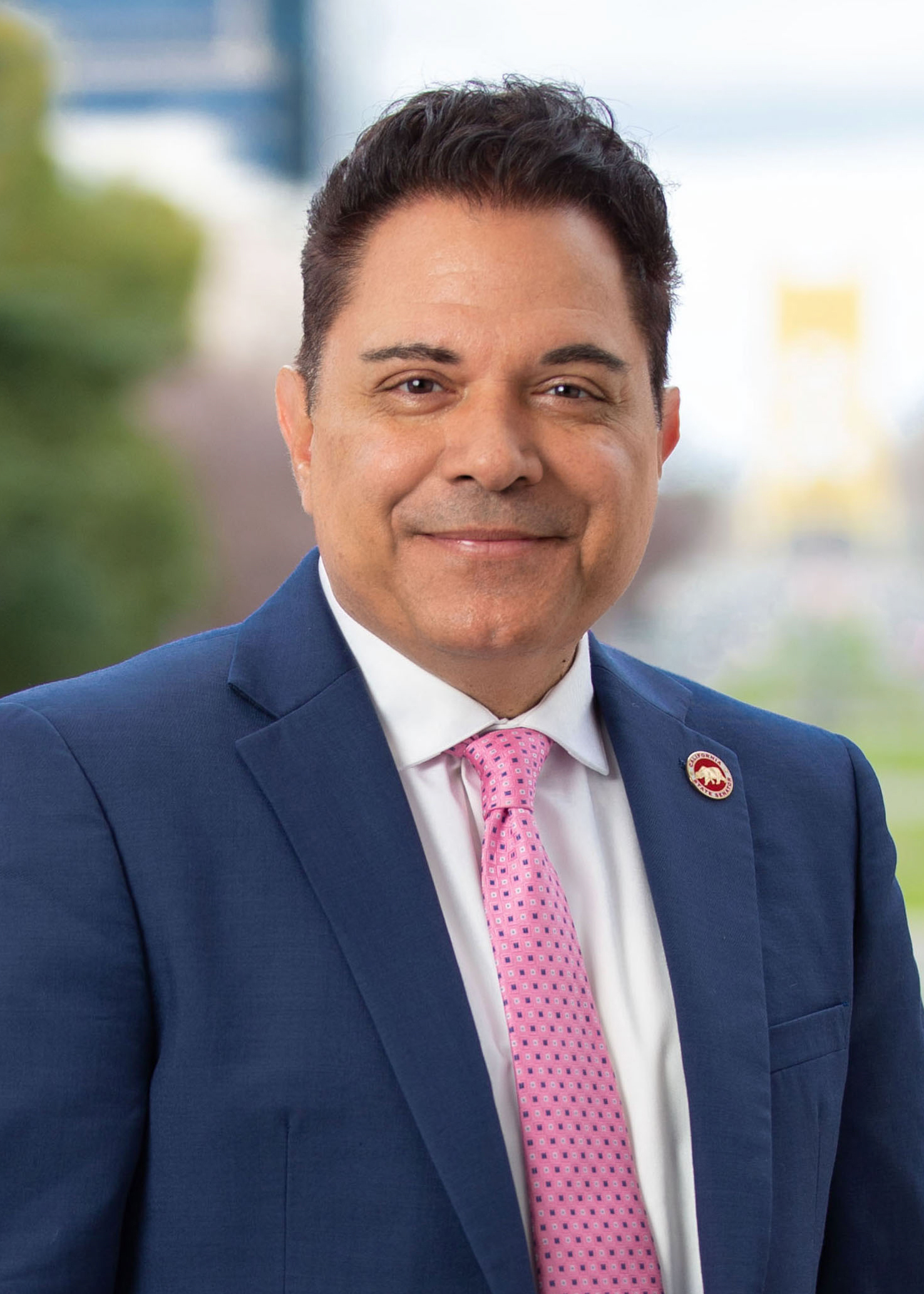
Steve Padilla
97% support rate
Top opponent
Natasha Johnson
4% support rate
Ranked legislators
10
5 support · 5 oppose
Key legislators

Who's moving budget & taxes in California

Legislators moving budget & taxes in California
Legislator Party Stance Support rate Votes
Steve Padilla
Steve Padilla Senate · District 18
D
Strong +
97% 408
JA
Jesse Arreguín Senate · District 7
D
Strong +
97% 509
Susan Rubio
Susan Rubio Senate · District 22
D
Strong +
97% 390
Esmeralda Soria
Esmeralda Soria House · District 27
D
Strong +
97% 342
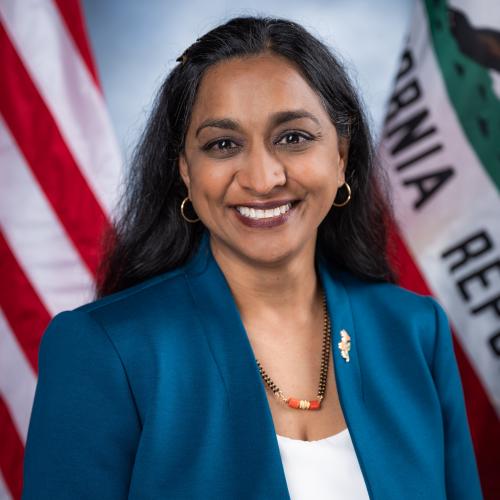
Darsh Patel
Darsh Patel House · District 76
D
Strong +
97% 368
Natasha Johnson
Natasha Johnson House · District 63
R
Strong −
4% 215
Kelly Seyarto
Kelly Seyarto Senate · District 32
R
Strong −
4% 633
Brian Jones
Brian Jones Senate · District 40
R
Strong −
5% 346
Stan Ellis
Stan Ellis House · District 32
R
Strong −
5% 410
Ali Macedo
Ali Macedo House · District 33
R
Strong −
6% 447
Showing 91–100 of 402 bills

All budget & taxes bills

in committee · California · Senate Mar 4, 2026

SB 1231: Claims against the state: appropriation.

Under existing law, if sufficient appropriations are not available for the payment of certain claims, settlements, or judgments, the Attorney General is required to report the claims, settlements, and judgments to the chairperson of either the Senate Committee on Appropriations or the Assembly Committee on Appropriations, who is then required to cause introduction of legislation appropriating the funds necessary for payment. This bill would appropriate an unspecified amount from the General Fund to the Attorney General to pay the judgment in an unspecified case. This bill would declare that it is to take effect immediately as an urgency statute.
died · California · Senate Aug 13, 2026

SB 1096: Personal income tax: senior tax credit: dependents: qualifying child.

The Personal Income Tax Law allows various credits against the taxes imposed by that law, including a credit of $227 for each dependent, as defined, of a taxpayer for each taxable year beginning on or after January 1, 1999, as adjusted for inflation, and which may be reduced if a taxpayer's federal adjusted gross income exceeds a threshold amount. This bill would allow a credit against the taxes imposed by the Personal Income Tax Law for each taxable year beginning on or after January 1, 2026, and before January 1, 2031, to a qualified taxpayer in an amount equal to $1,500 per qualified dependent, as defined. The bill would define "qualified taxpayer" for these purposes to mean a taxpayer who is or would have been, or whose spouse is or would have been, as applicable, 65 years of age or older as of the last day of the taxable year and for whom no part of their adjusted gross income for the taxable year consists of earned income, as defined. Existing law requires any bill authorizing a new tax expenditure to contain, among other things, specific goals that the tax expenditure will achieve, detailed performance indicators, and data collection requirements. This bill also would include additional information required for any bill authorizing a new tax expenditure. This bill would take effect immediately as a tax levy.
in committee · California · Assembly May 14, 2026

AB 1671: Rural medical services grant program.

Existing law establishes the Office of Rural Health within the California Health and Human Services Agency to promote a strong working relationship between state government and local and federal agencies, universities, private and public interest groups, rural consumers, health care providers, foundations, and other offices of rural health, as well as to develop health initiatives and maximize the use of existing resources without duplicating existing effort. Existing law requires the office to serve as a key information and referral source to promote coordinated planning for the delivery of health services in rural California. This bill would require the office to develop and administer, upon appropriation by the Legislature, a competitive grant program for the delivery of, or the support, sustenance, or expansion of the delivery of, medical services, as defined, to individuals who reside in rural areas, as defined. The bill would authorize the office upon that appropriation to expend up to $3,000,000 annually and would authorize a qualified provider, as defined, to apply to the office once per year for a grant of up to $10,000 for those purposes. The bill would require the office to establish specified standards and procedures, including criteria and standards for eligibility and the measurement of outcomes achieved, and, on or before January 1, 2028, and annually thereafter, to publish this information on its internet website.
Tags Rural Communities
in committee · California · Senate Apr 27, 2026

SB 1144: Personal income taxes: exemption credit: dependents.

The Personal Income Tax law authorizes an exemption credit of $227 for each dependent of a taxpayer for each taxable year beginning on or after January 1, 1999, adjusted for inflation, which may be reduced if a taxpayer's federal adjusted gross income exceeds a threshold amount. The credit amount for the 2025 taxable year is $475. This bill would increase that credit to $700 for taxable years beginning on or after January 1, 2026, and before January 1, 2031, and would require that the Franchise Tax Board adjust that amount for inflation for taxable years beginning on or after January 1, 2027, as prescribed. This bill would take effect immediately as a tax levy.
in committee · California · Senate May 14, 2026

SB 1137: Personal income tax: deduction: medical expenses.

The Personal Income Tax Law, in conformity or modified conformity with federal income tax laws, allows various deductions in computing the income that is subject to the taxes imposed by that law, including a deduction for the medical and dental expenses paid during the taxable year, not compensated for by insurance or otherwise, for the medical or dental care of the taxpayer, spouse, or a dependent, to the extent that such expenses exceed 7.5% of federal adjusted gross income. This bill would, for taxable years beginning on or after January 1, 2026, and before January 1, 2031, allow a deduction from adjusted gross income for the costs of medical care, as defined, of a qualified taxpayer to the extent the costs exceed 4% of the qualified taxpayer's federal adjusted gross income. The bill would limit the deduction to $5,000. The bill would define "qualified taxpayer" for this purpose to mean an individual with adjusted gross income that does not exceed 300% of the federal poverty level and who does not take an itemized deduction for costs of medical care pursuant to the above-referenced provisions on their California income tax return. Existing law requires any bill authorizing a new tax expenditure to contain, among other things, specific goals that the tax expenditure will achieve, detailed performance indicators, and data collection requirements. This bill also would include additional information required for any bill authorizing a new tax expenditure. This bill would take effect immediately as a tax levy.
passed both · California · Senate Aug 27, 2026

SB 1406: Sales and Use Tax Law: vehicles: shell companies.

The Sales and Use Tax Law imposes a tax on retailers measured by the gross receipts from the sale of tangible personal property sold at retail in this state, or on the storage, use, or other consumption in this state of tangible personal property purchased from a retailer for storage, use, or other consumption in this state, measured by sales price. Under the Sales and Use Tax Law, there is a presumption that a vehicle, vessel, or aircraft shipped or brought into this state within 12 months from the date of its purchase was acquired for storage, use, or other consumption in this state and is subject to the use tax if any of specified conditions are satisfied, including where the vehicle is purchased by a resident of this state, as defined. Existing law provides that, for purposes of this presumption, a closely held company or limited liability company is considered a resident of this state if 50% or more of the shares or membership interests are held by shareholders or members who are residents of this state. This bill would additionally provide that a partnership, limited partnership, or limited liability partnership is a resident of this state if 50% of the partnership, limited partnership, or limited liability partnership interests are held by partners that are residents of this state. The bill would also provide that, for purposes of the above-described presumption, a shell company, as defined, is a resident of this state if any shareholder, partner, member, or beneficial owner is a resident of this state. The bill would hold any officer, manager, partner, beneficial owner, or member of a shell company personally liable for any unpaid taxes, and any interest and penalties on those taxes, the nonpayment of which may constitute a crime, due on the purchase of a vehicle, vessel, or aircraft. By expanding the scope of crimes related to the violation of the Sales and Use Tax Law, this bill would impose a state-mandated local program. The bill would also make nonsubstantive and conforming changes to these provisions. This bill would include a change in state statute that would result in a taxpayer paying a higher tax within the meaning of Section 3 of Article XIIIA of the California Constitution, and thus would require for passage the approval of 23 of the membership of each house of the Legislature. The California Constitution requires the state to reimburse local agencies and school districts for certain costs mandated by the state. Statutory provisions establish procedures for making that reimbursement. This bill would provide that no reimbursement is required by this act for a specified reason. This bill would take effect immediately as a tax levy.
passed both · California · Senate Aug 28, 2026

SB 1151: Sales and Use Tax Law: exemptions: infant formula.

Existing sales and use tax laws impose taxes on retailers measured by the gross receipts from the sale of tangible personal property sold at retail in this state, or on the storage, use, or other consumption in this state of tangible personal property purchased from a retailer for storage, use, or other consumption in this state. The Sales and Use Tax Law provides various exemptions from those taxes, including an exemption for the gross receipts from the sale of, and the storage, use, or other consumption in this state of, food products for human consumption, as specified. This bill would specify that "food products" includes infant formula. This bill would take effect immediately as a tax levy.
Sub-Topics Sales Tax
in committee · California · Assembly May 14, 2026

AB 1971: Property tax: exclusion from reassessment: home hardening retrofitting improvements.

The California Constitution generally limits ad valorem taxes on real property to 1% of the full cash value of that property. For purposes of this limitation, "full cash value" is defined as the assessor's valuation of real property as shown on the 1975–76 tax bill under "full cash value" or, thereafter, the appraised value of that real property when purchased, newly constructed, or a change in ownership has occurred. The California Constitution specifies that "newly constructed" does not include the construction or reconstruction of seismic retrofitting components, as defined by the Legislature. Existing law, pursuant to that constitutional authorization, defines seismic retrofitting components to mean seismic retrofitting improvements and improvements utilizing earthquake hazard mitigation technologies. Existing law, pursuant to constitutional authorization, also excludes from the definition of "newly constructed" the construction or installation of certain fire sprinkler systems, or other fire extinguishing systems, fire detection systems, or fire-related egress improvements. This bill would require the State Board of Equalization to clarify that a home hardening retrofitting improvement, as defined, to an existing structure is considered nonassessable repair and maintenance, provided that the improvement does not add square footage, change the property's use, include structural reconfigurations, or include substantial rehabilitation.
in committee · California · Assembly Apr 14, 2026

AB 2214: Government finance: deposits.

Existing law requires the Treasurer to invest, or deposit into banks and other financial institutions, specified state moneys designated as surplus as a part of the Pooled Money Investment Account and determined to be available for that purpose by the Pooled Money Investment Board. Existing law generally requires banks and other financial institutions to deposit with the Treasurer securities in a value at least 10% in excess of the amount deposited with the institution to be eligible to receive deposits of state funds, except as specified. This bill would create within the Pooled Money Investment Account the Community Reinvestment Account from which deposits shall be made to institutions that meet specified performance standards including verified small business lending in underserved census tracts and first-time or first-generation home buyer lending. The bill would require the Treasurer to transfer $4 billion from the Pooled Money Investment Account to the Community Reinvestment Account. Because the moneys invested and reinvested as part of the Pooled Money Investment Account are continuously appropriated, this bill would make an appropriation. Notwithstanding the above-described securities requirement, this bill would instead require securities, for a deposit from the Community Reinvestment Account or under the Small Business Lending Time Deposit Program, to be in an amount in value of at least 90% of the amount deposited with the institution. The bill would require the Treasurer to deposit moneys from the Community Reinvestment Account with qualified institutions that have committed to specified lending activities, including, among other things, that at least 50% of the moneys from the account are used for affordable housing lending, as defined and specified. The bill would require institutions that receive deposits from the Community Reinvestment Account to submit quarterly, nonidentifying, performance reports to the Treasurer and the Treasurer to publish the data it receives in a publicly available report.
Sub-Topics Appropriations
passed both · California · Assembly Aug 27, 2026

AB 2316: School facilities: Charter School Facilities Program: undue financial burden.

The Leroy F. Greene School Facilities Act of 1998 provides for the adoption of rules, regulations, and procedures, under the administration of the Director of General Services, for the allocation of state funds by the State Allocation Board for the construction and modernization of public school facilities. Existing law establishes the Charter Schools Facilities Program within the Leroy F. Greene School Facilities Act of 1998 to provide funding to qualifying entities for the purpose of establishing school facilities for charter school pupils. Existing law requires that a 50% matching share be provided by charter schools applying for facilities funding under the program. Existing law requires the California School Finance Authority, in consultation with the board, to adopt regulations for the program, including, among other regulations, the process for determining the manner in which the applicant will pay its local matching share, including the method for determining lease payments to be made in lieu of the local matching share. This bill would, commencing January 1, 2028, for filing rounds opened on or after January 1, 2028, if the 50% local share matching obligation or lease payments would result in the applicant charter school suffering an undue financial burden, as provided, require the authority to notify the board and authorize the board to reduce the 50% local share matching obligation or lease payments, and correspondingly increase the grant amount, as necessary for the school to reach a reasonable level of debt service. The bill would require the authority, in consultation with the board, to adopt regulations for that purpose and would require the authority and the board to adopt the method for determining whether the 50% local share matching obligation or lease payments would result in the charter school suffering an undue financial burden, in consultation with the department and the County Office Fiscal Crisis and Management Assistance Team. The bill would also make conforming changes.
Showing 91 to 100 of 402 bills
Previous 1 9 10 11 41 Next